You just crushed your last set. The barbell is racked, your shirt is soaked, and your legs feel like wet sandbags. You did the hard part—or so you think.
Let me take you back to a Tuesday night about seven years ago. I had just finished a brutal squat session. 5×5 at 85% of my max. I was dizzy, proud, and starving. So I grabbed a protein shake, chugged it, and collapsed on the couch. No real food. No carbs. Just powder and water.
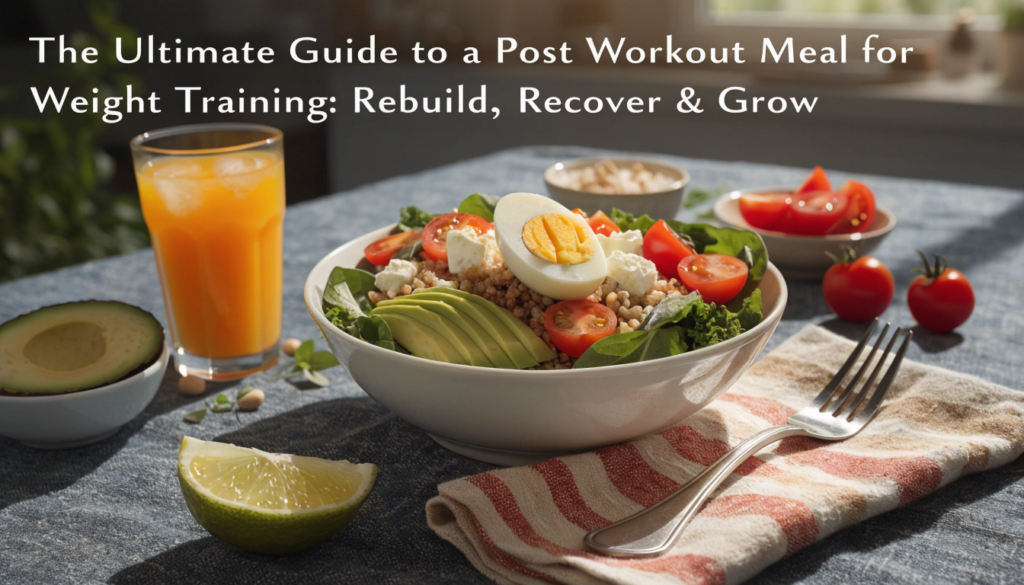
The next morning? I could barely walk down stairs. My quads screamed for three straight days. And my next squat session? I failed on the third set.
I had no idea that my post workout meal for weight training was the real game-changer. Not the lifting. Not the sweat. The plate.
You don’t have to make that same mistake. What you put in your mouth during that golden window after your last rep decides whether you’ll stall out for weeks or finally smash through that plateau. Let’s talk about why this matters more than your actual workout.
Why The Post Workout Meal for Weight Training Matters More Than Your Actual Workout
Here is something most gym bros get backwards. They spend ninety minutes obsessing over their bench press angle but five seconds thinking about recovery food. That’s like baking a cake and throwing it on the floor before anyone takes a bite.
When you lift heavy, you’re not getting stronger in the gym. You’re actually breaking yourself down. Those micro-tears in your muscle fibers? That’s damage. The real growth happens later, on your couch, in your kitchen, while you eat.
What actually goes on under the hood after your last set:
Your glycogen stores—think of them as your muscles’ gas tank—are running on fumes. A sixty-minute weight training session can drain thirty to forty percent of that tank. Maybe more if you’re doing high volume. Meanwhile, those tiny tears in your muscle tissue are sending emergency signals throughout your body. “Fix this. Rebuild. Now.”
The International Society of Sports Nutrition published findings back in 2023 that shook up what we thought we knew. That famous “anabolic window” you’ve heard about? It’s not just thirty minutes. It’s actually two to four hours. That takes some pressure off, sure. But here is the catch: the sooner you feed your body, the faster you stop cortisol from eating away at your hard-earned muscle.
Cortisol is that stress hormone that spikes during heavy lifting. If you walk out of the gym and then wait three hours to eat, cortisol keeps floating around in your bloodstream, encouraging muscle breakdown. You basically undo half the work you just did.
So no, that post workout meal for weight training isn’t optional. It’s the difference between spinning your wheels and actually moving forward.
The Golden Ratio: Protein, Carbs & Fats (Don’t Fear the Carbs)
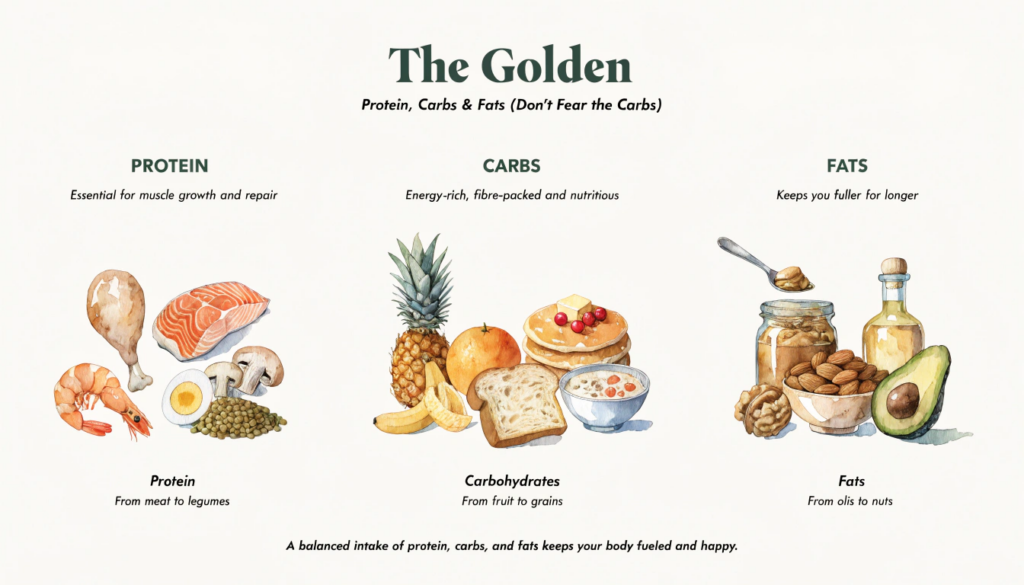
You have probably heard someone at your gym say, “I don’t eat carbs after six PM.” Or maybe you have a buddy who swears by fat-heavy keto meals post-workout. Let me save you some frustration: those people are accidentally sabotaging themselves.
Your muscles do not care about diet trends. They care about three things right after you lift.
Protein – The Brick Layer
Protein provides amino acids, specifically leucine, which flips the switch for muscle protein synthesis (MPS). Without enough leucine, your body never gets the memo to start repairing.
Target number: 0.4 to 0.5 grams per kilogram of your body weight.
For a 175-pound lifter (that’s about 80 kilograms), you need 32 to 40 grams of protein. Not ten. Not fifteen. Thirty-two at the absolute minimum.
Carbs – The Re-Fueling Crew
This is where people get weird. They think carbs make them soft. Here is the truth: after weight training, carbohydrates are your best friend. They restock that glycogen gas tank. Skip them, and your next workout will feel like running through wet cement.
Target number: 1.0 to 1.2 grams per kilogram.
For our 175-pound example, that is 80 to 96 grams of carbs. That is roughly a cup and a half of cooked jasmine rice or two medium sweet potatoes.
Fats – The Slow Lane
Fats are not evil. You need them for hormone production, including testosterone. But in your immediate post workout meal for weight training, fats act like a speed bump. They slow down digestion, which means protein and carbs take longer to reach your muscles.
Target number: Keep it under 15 grams in that first meal.
That means no ribeye steaks. No half an avocado. No peanut butter slathered all over everything. Save those for later meals.
Quick reference list for that 175-pound lifter:
- Protein: 32-40g (one scoop of whey plus a chicken breast, or two cans of tuna)
- Carbs: 80-96g (one large banana plus a cup of cooked white rice)
- Fats: 5-10g (just what naturally comes with your protein source, plus maybe a spray of avocado oil for cooking)
Does that seem like a lot of food? It is. You just earned it.
Best Foods for a Post Workout Meal for Weight Training (Fast vs. Whole Food)
Not every day looks the same. Sometimes you are rushing from the gym to pick up your kid. Other times you have a lazy Sunday afternoon to cook. You need options for both.
Option A – Fast Absorption (Zero to Sixty Minutes Post-Gym)
These are for when you need something immediately. Maybe you trained fasted. Maybe you feel shaky or lightheaded. Maybe you just want to lock in those gains before your work meeting starts.
List – Quick and practical options:
- Whey isolate mixed with dextrose powder or Gatorade. The sugar is not junk here—it shuttles protein into muscles faster.
- A tall glass of chocolate milk. Studies from multiple sports science journals show that dairy’s natural 3:1 carb-to-protein ratio works nearly as well as expensive recovery drinks.
- Greek yogurt with honey. Get the plain kind. Fruit-on-the-bottom versions have way too much added junk.
- Rice cakes with turkey slices. Dry, yes. Effective, absolutely.
These are not meant to be your full meal. Think of them as a bridge. Something to stop the cortisol flood while you drive home or shower.
Option B – Whole Food Meal (Sixty to One Hundred Twenty Minutes Post-Gym)
This is where the real magic happens. Real food gives you micronutrients—potassium, magnesium, zinc—that powders just cannot replicate.
List – Meal prep friendly whole food options:
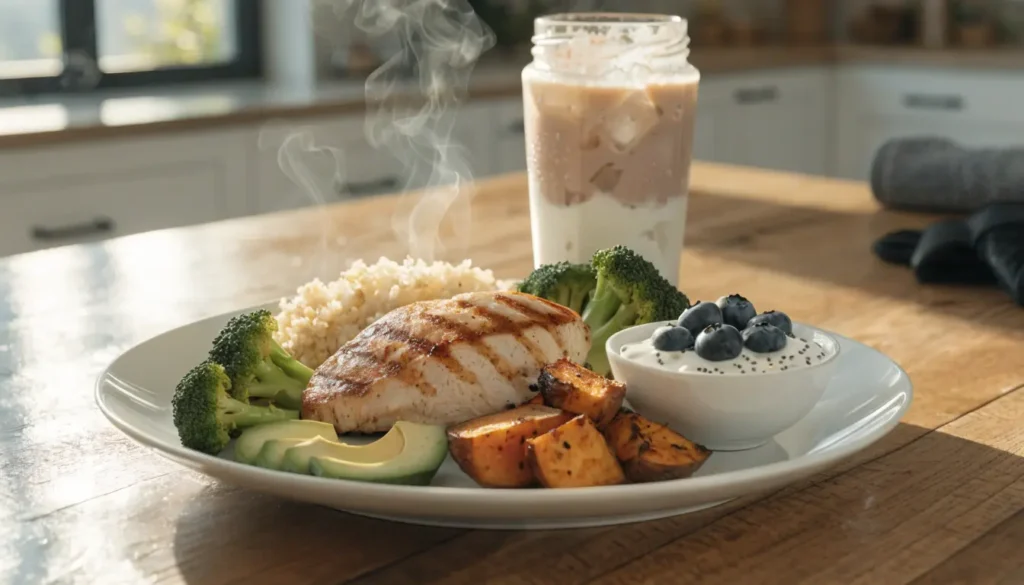
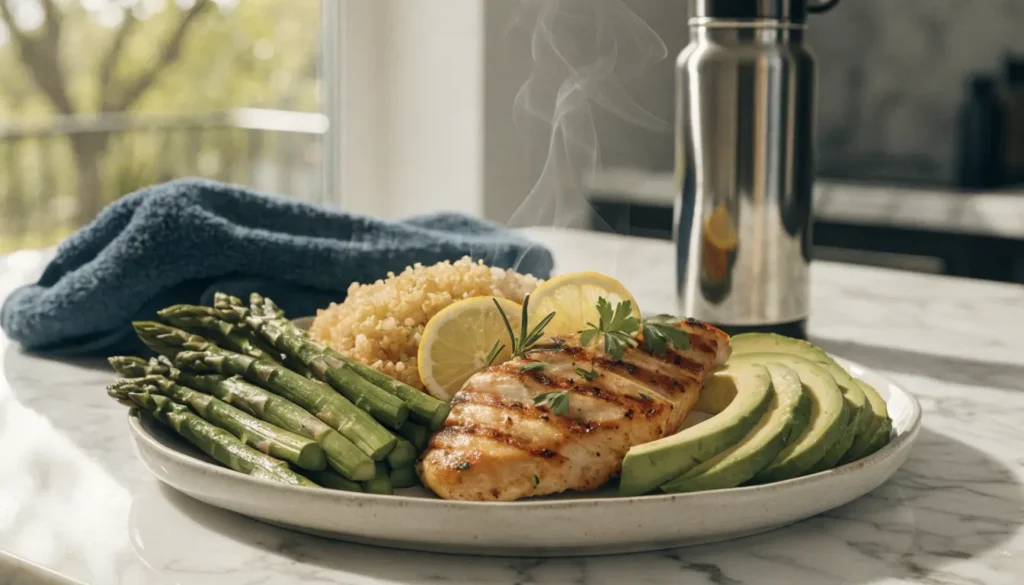
- Grilled chicken (6oz) + jasmine rice (1.5 cups cooked) + steamed spinach. Spinach provides magnesium, which helps with muscle cramping.
- Salmon (6oz) + sweet potato (one large) + asparagus. Salmon’s omega-3s reduce post-workout inflammation without slowing down digestion.
- Tofu stir-fry (8oz firm tofu) + quinoa (1 cup cooked) + bok choy. For plant-based lifters, this combination gives you a complete amino acid profile.
Pro tip for morning lifters: If you train before eating anything, prioritize faster-digesting carbs within that first thirty minutes. A banana or two rice cakes. Your blood sugar will crash otherwise, and you will feel terrible for the rest of the day.
Sample Post Workout Meal for Weight Training Templates (By Goal)
You are not the same as the person next to you on the leg press. Your goals change what your plate should look like. Here are three templates based on what you are trying to accomplish.
For Muscle Gain (Hypertrophy Focus)
You want to get bigger. You are eating in a slight surplus. Your post workout meal needs to be calorie-dense without being stupid about it.
The meal: 6oz lean ground beef (93/7 or leaner) + 1.5 cups cooked pasta + tomato sauce with hidden veggies (blend zucchini or carrots into the sauce).
Why this works: Beef gives you creatine and zinc naturally. Pasta is a high-glycemic carb that spikes insulin just enough to push amino acids into muscle tissue. The tomato sauce adds lycopene, which fights exercise-induced oxidative stress.
For Fat Loss While Weight Training
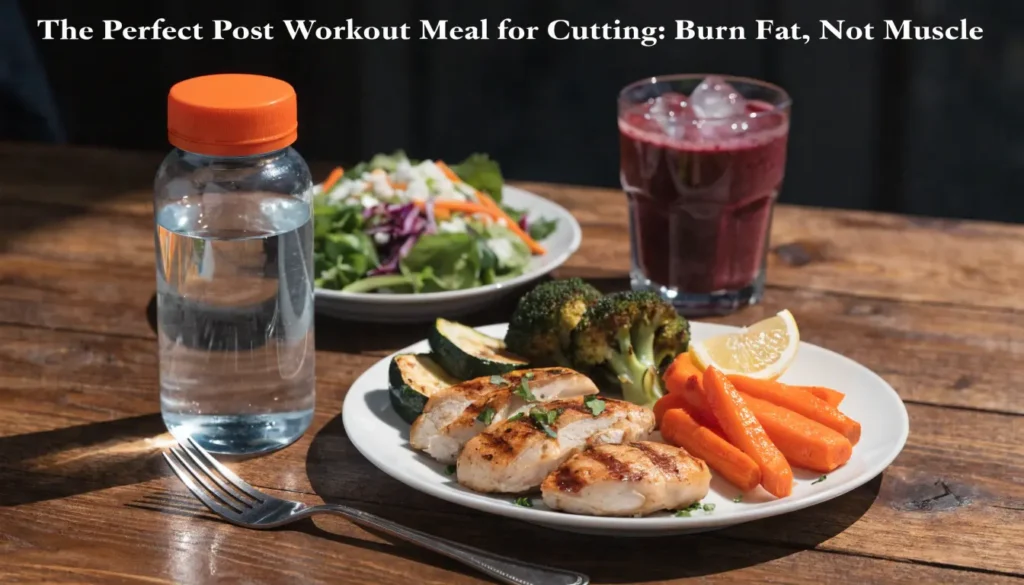
You want to drop body fat but keep every ounce of muscle you have built. Your post workout meal for weight training needs to be high-protein, moderate-carb, and low-fat.
The meal: 8oz liquid egg whites (cooked like scrambled eggs) + 1 cup dry oats (cooked) + one scoop plant protein stirred into the oats.
Why this works: Egg whites are almost pure protein with negligible fat. Oats provide slow-burning carbs that will not spike insulin too hard. The extra scoop of protein keeps you full for hours, which matters when you are eating in a deficit.
For Vegan Lifters
Plant-based does not mean weak. But you have to be smarter about amino acids, especially leucine.
The meal: Seitan (8oz, about 30g protein) + white rice (1.5 cups cooked) + edamame (half cup, shelled).
Why this works: Seitan is wheat gluten—high protein but low in leucine. Edamame fills that gap. Together, they form a complete protein. White rice digests quickly, giving you energy without fiber bloat.
Extra note: Consider adding pumpkin seeds or nutritional yeast for extra leucine. Plant proteins just do not have as much as whey or meat, so you have to be intentional.
Common Mistakes That Sabotage Your Post Workout Meal for Weight Training
You could follow every template in this article and still mess it up. Here is how.
Bulleted list – Avoid these at all costs:
- Skipping carbohydrates entirely. You see this with keto dieters and intermittent fasters who refuse to break their fast post-workout. All you are doing is keeping cortisol high and encouraging muscle breakdown. Your body will scavenge amino acids from your own muscles to make glucose. That is the opposite of growth.
- Drinking only a shake and calling it done. Liquid meals miss the micronutrients your connective tissue needs. Magnesium, potassium, zinc, and calcium are barely present in most protein powders. Your tendons and ligaments need those minerals just as much as your muscles do.
- Eating too much fat in that first meal. A ribeye steak might taste incredible after a hard lift, but it will sit in your stomach for three to four hours. During that time, your muscles are waiting for protein and carbs that cannot get through because fat is clogging the digestive highway.
- Waiting longer than three hours. Data from Medicine & Science in Sports & Exercise shows that glycogen resynthesis drops by roughly fifty percent after the three-hour mark. You are literally missing half your potential recovery by being lazy or busy.
- Forgetting to drink water. Weight training makes you sweat more than you realize. A liter or two of fluid loss is normal. Dehydration makes every recovery process slower. Drink water before you eat.
Timing & Practical Scheduling for Real People
Theory is nice. Real life is messy. Let us get practical about when you actually eat this meal based on when you train.
Key scheduling realities:
If you lift in the morning, your body has been fasting all night. Your glycogen stores are already low before you even pick up a barbell. You need that fast-digesting snack within thirty minutes. Prepare it the night before so you are not fumbling around post-shower.
If you lift in the evening, your post workout meal can double as your dinner. Just add extra vegetables for fiber and micronutrients. The only adjustment: keep portions slightly lighter if you eat within two hours of bedtime. A completely full stomach can mess with sleep quality.
If you are a woman, pay extra attention to carbs. Some emerging evidence suggests that estrogen makes women rely more on carbohydrates for fuel during exercise. You might need slightly more post-workout carbs than a male lifter of similar size.
List – Three real-world schedules that work:
- Train at 7 AM: Fast shake at 7:45 AM (whey + Gatorade). Whole meal at 9 AM (eggs, oats, spinach).
- Train at 12 PM (lunch break lifter): Fast snack at 12:45 PM (Greek yogurt + honey). Full lunch at 1:30 PM (chicken, rice, broccoli).
- Train at 6 PM: Fast snack at 6:45 PM (chocolate milk). Dinner at 8 PM (salmon, sweet potato, asparagus) – slightly smaller portion for sleep quality.
Hydration & Supplements – Do They Replace Food?
Short answer: no. Long answer: also no, but let me explain.
Before you eat anything, drink water. Plain water. Not a diet soda, not coffee. You lost fluid through sweat. Your muscles are literally dehydrated at the cellular level. Dehydrated muscle cells cannot synthesize protein efficiently. You are leaving gains on the table.
Electrolytes matter too. Sodium and potassium are the big ones. If you are a heavy sweater, add a pinch of salt to your post workout meal or drink coconut water.
What about supplements?
- Creatine (5g daily): Take it with your post workout carbs. Insulin from those carbs helps shuttle creatine into muscle cells. Do not bother cycling it. Just take it every day.
- Glutamine: Skip it. A massive meta-analysis found zero benefit for muscle soreness or recovery if your total protein intake is already adequate. Save your money.
- BCAAs alone: Do not rely on these. Branched-chain amino acids ignore the other nine essential amino acids your body needs for tendon and ligament repair. You will end up with weak connective tissue even if your muscles feel fine.
Supplements add maybe five percent to your results. Real food adds eighty percent. Do the math.
Frequently Asked Questions (FAQ)
Q: Can I eat a post workout meal for weight training two hours after lifting?
A: Yes, but with a caveat. Try to get a small, fast-digesting snack like a banana with whey protein within the first sixty minutes. Then eat your full meal at the two-hour mark. Pushing that full meal past three hours cuts muscle repair efficiency by roughly thirty percent according to ISSN data.
Q: What is the cheapest post workout meal for weight training?
A: Canned tuna in water (two cans) + white rice (one cup dry, cooked) + frozen peas (half cup). Total cost comes out to about two dollars and fifty cents. That gives you thirty-five grams of protein and seventy grams of carbs. Your wallet and your muscles both win.
Q: Do I need a post workout meal for weight training if I am trying to lose belly fat?
A: Yes, and here is why. Skipping this meal leads to muscle loss. Muscle loss lowers your resting metabolic rate. A lower metabolic rate means you burn fewer calories all day long, even while sleeping. Keep your post workout calories controlled—maybe three hundred to four hundred instead of six hundred—but never skip it entirely.
Q: Is chocolate milk really as good as a shake?
A: For moderate weight training sessions under ninety minutes, yes. Chocolate milk has a naturally favorable 3:1 carb-to-protein ratio. But for heavy powerlifting sessions or anyone over two hundred pounds, you need more protein. Chocolate milk only gives you eight to twelve grams per cup. That is not enough. Add a scoop of whey to it if you go that route.
Conclusion – Your Next Lift Starts With What You Eat After This One
That barbell does not know how hard you pushed. It only knows one thing: did you come back stronger next week?
A thoughtful post workout meal for weight training is not complicated. It does not require exotic supplements or expensive meal delivery services. It asks for three simple things from you: enough protein to rebuild, enough carbs to refuel, and the consistency to do it after every single session.
You already did the hard part. You showed up. You lifted. You bled a little bit in that gym.
Do not throw that effort away because you could not be bothered to cook some rice or drink a shake. Future you—the one who finally deadlifts four plates, or fits back into those jeans, or simply wakes up without hobbling to the coffee maker—that version of you is built right now. In your kitchen. With a fork in your hand.
Your call to action:
Tonight, before you go to bed, pick one template from this article. Cook it. Pack it in a labeled container. Put it in the fridge. Tomorrow, after your workout, eat that container before you check your phone, scroll Instagram, or answer work emails.
Then message me or leave a comment about how you feel the next morning. Was the soreness better? Did you have more energy? I want to hear your win.
Because that feeling? That is not just recovery. That is transformation. Go earn it.