You just finished a brutal evening session. Your legs feel like concrete, your shirt clings to your back, and your brain is somehow both fried and buzzing. You glance at the clock—10:47 PM. Now you are standing in your kitchen, staring into the open fridge like it holds the secrets to the universe. Eat and risk lying awake until 2 AM? Skip the meal and wake up feeling like you got hit by a truck? Yeah, that dilemma stings.
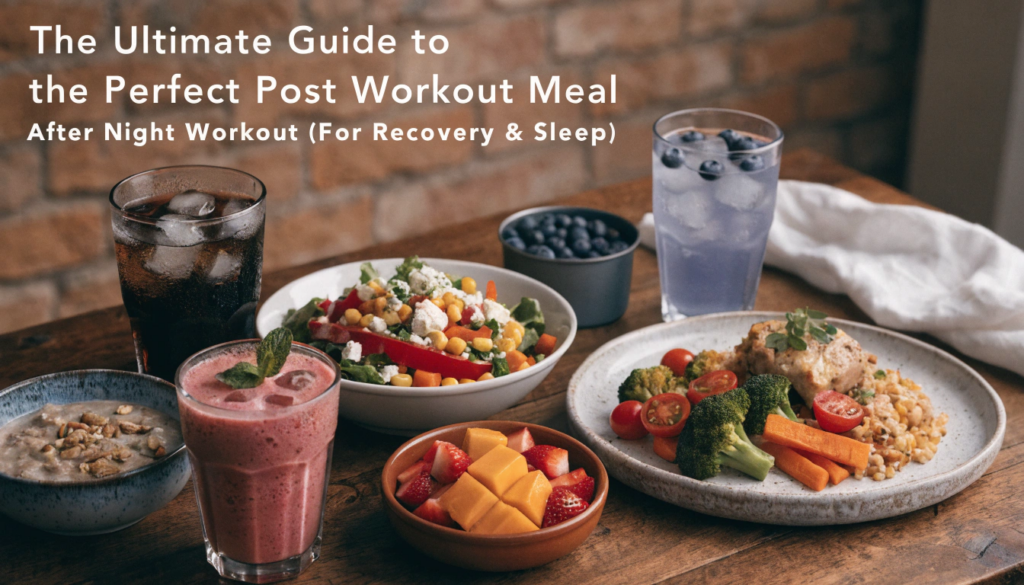
I have been exactly where you are right now. After years of 9 PM jiu-jitsu classes and late-night gym sessions that ended after most people had already brushed their teeth, I learned one hard truth: a post workout meal after night workout isn’t just about packing on muscle. It is about protecting your sleep, balancing your hormones, and making sure you do not hate yourself at 6 AM when the alarm goes off. Let me walk you through exactly how to nail this without turning your bedroom into a restless tossing-and-turning zone.
Why Your Post Workout Meal After Night Workout Is Different From Daytime Recovery
You have probably heard the old rule: eat within an hour after training. Solid advice for a noon gym trip. But nighttime throws a wrench into that plan. Your body runs on a roughly 24-hour internal clock called the circadian rhythm. After sunset, your digestion naturally slows down. Your stomach empties at a lazier pace. Your insulin sensitivity drops. That means the same bowl of rice and chicken you eat at 1 PM will act very differently at 10 PM.
Here is what makes the nighttime recovery meal unique:
- Melatonin and digestion clash. Your body starts producing melatonin in the evening to prep you for sleep. Melatonin relaxes your gut muscles. That is great for winding down but terrible for processing a heavy steak.
- Growth hormone peaks while you sleep. Most growth hormone release happens during deep sleep, not right after exercise. If your meal spikes your blood sugar, you blunt that natural pulse.
- Core body temperature matters. Eating a large meal raises your internal temperature. A higher core temp delays REM sleep. You might fall asleep but you will not stay in deep sleep long enough to repair torn muscle fibers.
A 2019 study in Sports Medicine highlighted that nighttime protein intake can boost overnight muscle protein synthesis, but only when you keep fats low and portion sizes modest. Another paper from the European Journal of Applied Physiology found that skipping the evening recovery meal cuts overnight muscle repair by nearly half. Half. That is not a small number.
So yes, you need to eat. But you need to eat smarter than your daytime self would.
The 4 Critical Goals of a Nighttime Recovery Meal
Let us break down exactly what you are trying to accomplish here. Think of this as your mission brief before you open that fridge door again.
1. Replenish Glycogen Without a Blood Sugar Spike
Your muscles burn through stored carbohydrates called glycogen during exercise. You need to top off that tank. But if you slam a sugary sports drink or a bowl of white rice, your blood sugar rockets up. Then it crashes hard around 2 AM. That crash wakes you up with a racing heart and a sudden craving for cookies.
- Avoid high-glycemic carbs like white bread, candy, or most breakfast cereals.
- Use slow-digesting carbs such as a small banana, a quarter cup of oatmeal, or two tablespoons of tart cherry juice.
- Keep total carbohydrates under 30 grams if sleep quality is your priority.
2. Deliver Rapid Amino Acids for Muscle Repair
Your muscles tear down during exercise. They rebuild when you rest. But they need raw materials. Protein provides those materials in the form of amino acids. The tricky part is that your body cannot store amino acids for later. You have to supply them right after training.
- Aim for 25 to 40 grams of protein. That is roughly one scoop of powder plus a little something extra.
- Choose a blend of whey and casein. Whey hits your bloodstream fast. Casein clots in your stomach and releases slowly over six to eight hours.
- Skip the giant ribeye. Large cuts of meat take four or more hours to fully digest. You will be burping steak at midnight.
3. Reduce Cortisol & Inflammation
Hard training raises cortisol. That is your stress hormone. A little cortisol is fine. Too much, especially at night, keeps your brain alert and your muscles inflamed. You need to cool that fire before bed.
- Include omega-3 fatty acids from a small piece of salmon or a handful of walnuts.
- Add magnesium-rich foods like spinach, pumpkin seeds, or a quarter of an avocado.
- Magnesium also calms your nervous system. It is like a natural sedative for your muscles.
4. Support, Not Sabotage, Your Sleep Architecture
Sleep is not just one block of unconsciousness. It cycles through stages: light sleep, deep slow-wave sleep, and REM sleep. Deep sleep repairs your body. REM sleep processes emotions and solidifies motor memory from that new deadlift technique you practiced. A bad meal can wreck both.
- No caffeine. This seems obvious, but check your pre-workout. Some “non-stim” formulas still contain theobromine, a cousin of caffeine.
- No spicy foods. Hot peppers raise body temperature and trigger acid reflux when you lie down.
- Include tryptophan or glycine. Cottage cheese contains tryptophan. Bone broth delivers glycine. Both help you transition into sleep faster.
What to Eat: The Best Post Workout Meal After Night Workout (Sample Foods)
You do not need a culinary degree to pull this off. Keep it simple. Keep it small. Keep it effective.
Top 5 Night-Optimized Recovery Meals (Under 300 Calories)
- Greek Yogurt Bowl – One cup of 2% Greek yogurt mixed with one tablespoon of tart cherry juice and ten grams of crushed walnuts.
- Casein Shake – One scoop of casein powder blended with water and a few ice cubes. Optional: add five grams of collagen powder for extra joint support.
- Scrambled Eggs + Avocado – Two eggs scrambled with no added oil, served with a quarter of a small avocado. Skip the toast.
- Cottage Cheese & Cinnamon – Half a cup of 2% cottage cheese sprinkled with cinnamon. Cinnamon helps lower the blood sugar response to any remaining lactose.
- Bone Broth + Rice Cakes – One cup of warm bone broth with two plain rice cakes. Stir in a scoop of hydrolyzed collagen for extra protein.
Foods to Absolutely Avoid Before Bed
- Deep fried foods. Anything from a fryer takes forever to break down. You will likely deal with acid reflux around 1 AM.
- Large volumes of liquid. A 20-ounce protein shake might seem harmless, but your bladder will wake you up before your muscles finish recovering.
- High-sugar protein bars. Many bars pack 15 to 20 grams of sugar. That sets you up for a 2 AM blood sugar crash and a groggy morning.
- Spicy chicken wings. Capsaicin from peppers keeps your core temperature elevated for hours. Hot body equals restless sleep.
Sample Timing Strategy: When to Eat Your Post Workout Meal After Night Workout
Let us run a realistic scenario. You finish your workout at 9:30 PM. You plan to be in bed by 11:00 PM. Here is your timeline:
- 9:30 PM – Final set ends. Start your cool-down.
- 9:35 PM – Begin drinking a liquid recovery shake. Sip it over five to seven minutes.
- 9:45 PM – Finish the shake. Start your shower.
- 10:15 PM – If you want a small solid snack (like the Greek yogurt bowl), eat it now.
- 10:45 PM – Brush your teeth. No more food or drink except small sips of water.
- 11:00 PM – Lights out.
Liquid meals digest about thirty to forty-five minutes faster than solid meals. That is why a shake works well for the first wave of nutrition right after training.
The “Shower First or Eat First” Debate
Some folks argue that you should shower immediately to cool down. Others say eat first to catch the anabolic window. Here is the truth:
- Eat first (within fifteen minutes) if your workout lasted longer than sixty minutes. Endurance sessions deplete more glycogen, so you need faster replenishment.
- Shower first if you lifted very heavy. Blood flow shifts to your muscles during lifting. Eating too soon can cause stomach cramps. Let your body redistribute blood flow, then eat.
- Best compromise: Sip a small protein drink in the shower. Keep a shaker bottle on the shower shelf. Take a sip between shampoo and conditioner. By the time you dry off, your stomach is ready for a bit more.
Data from the Journal of the International Society of Sports Nutrition (2020) showed that protein intake within thirty minutes after exercise improves overnight muscle synthesis by twenty-two percent compared to waiting two hours. That is a meaningful difference for a small change in habit.
How to Adapt Your Post Workout Meal After Night Workout for Different Goals
Your goal changes what you put on your plate. Here is how to tweak the same basic approach.
For Fat Loss
- Keep total calories under two hundred.
- Skip all carbohydrates. Use a scoop of psyllium husk fiber mixed into water instead of carbs. Fiber fills you up without spiking insulin.
- Use egg whites instead of whole eggs. You get pure protein without the fat.
- Add decaffeinated green tea extract. It provides a mild thermogenic effect without keeping you awake.
For Muscle Gain (Bulking)
- Increase protein to fifty grams. That is one scoop of whey plus one scoop of casein.
- Add twenty grams of fast-digesting carbohydrates. White rice or a quarter serving of Gatorade powder works.
- Include extra leucine. Leucine is the amino acid that flips the muscle-building switch. Cottage cheese and whey are both rich in it.
For Endurance Athletes (Runners, Cyclists, Swimmers)
- Prioritize glycogen with a one-to-one ratio of carbs to protein. That means twenty grams of protein and twenty grams of carbs.
- Add electrolytes. Magnesium glycinate and potassium salt help prevent morning cramps.
- Drink tart cherry juice. It reduces inflammation and contains natural melatonin. Two birds, one stone.
3 Common Mistakes That Ruin Your Sleep & Recovery
You will make mistakes. Everyone does. Learn from these so you do not repeat them.
Mistake #1 – The “I’ll Just Skip It” Trap
You tell yourself you are not hungry. Or you think skipping the meal will help you lose fat. Wrong on both counts. When you skip your post workout meal after night workout, your cortisol stays elevated through the night. You wake up flat, irritable, and sore. Your metabolism does not speed up. It slows down because your body thinks you are starving.
Data point: Research in the European Journal of Applied Physiology found that overnight protein synthesis drops forty-five percent without post-exercise feeding. That means you basically undid half the benefit of your workout.
Mistake #2 – Eating a Full Heavy Meal
Maybe you are genuinely hungry. Maybe you crave comfort food after a hard session. A full plate of pasta with meat sauce will wreck your sleep. Large meals raise your core body temperature. A higher core temperature delays REM sleep onset by sixty to ninety minutes. You lose the deepest, most restorative part of your sleep cycle.
Solution: Split your recovery into two mini-meals. Eat seventy percent right after training. Save the other thirty percent for right before you brush your teeth. Smaller portions digest faster.
Mistake #3 – Drinking a Standard Pre-Workout Shake Too Late
You used a pre-workout at 8 PM for your 9 PM workout. That product probably contains two hundred to three hundred milligrams of caffeine. Caffeine has a half-life of roughly five hours. That means at 1 AM, you still have one hundred milligrams circulating in your blood. No wonder you are staring at the ceiling.
Solution: Switch to stimulant-free pump formulas after 6 PM. Look for ingredients like citrulline malate and beta-alanine. They give you the pump without the buzz.
Real-Life Night Workout Scenarios & Meal Solutions
Let us make this practical. Pick the scenario that matches your life.
Scenario A – You finished CrossFit at 10 PM and bed at 11:30 PM
The challenge: High intensity. Lots of muscle damage. Short window before sleep.
Your meal: One scoop of casein powder blended with water and half a banana. Drink this at 10:10 PM.
Why this works: The liquid digests quickly. The banana provides fast glycogen without weighing down your stomach. Casein feeds your muscles slowly through the night.
Scenario B – You did late-night yoga (9 PM) and bed at 10:30 PM
The challenge: Low intensity but lots of stretching and fascia work. You need collagen support.
Your meal: Half a cup of bone broth with two rice cakes and one teaspoon of coconut oil.
Why this works: Bone broth delivers glycine and collagen for connective tissue. The coconut oil provides a small fat boost for hormone production. Rice cakes are light and will not bloat you.
Scenario C – You finished a 10 PM soccer game and must sleep by 12 AM
The challenge: High volume of running. Lots of eccentric loading on legs. You are sweaty and depleted.
Your meal: Three hard-boiled eggs with only two of the yolks, plus a small cold sweet potato.
Why this works: The cold sweet potato contains resistant starch. Resistant starch feeds your gut bacteria and helps stabilize overnight blood sugar. The eggs provide complete protein. Removing one yolk cuts unnecessary fat.
Frequently Asked Questions (FAQ)
Q1: Is it bad to eat a post workout meal after night workout if I want to lose belly fat?
Not at all. In fact, skipping your post workout meal after night workout raises cortisol. Chronic high cortisol encourages your body to store fat right around your midsection. Keep your meal under two hundred calories, high in protein, low in carbs, and very low in fat. You will support fat loss, not sabotage it.
Q2: Can I drink a protein shake as my post workout meal after night workout?
Yes, but choose your powder carefully. A pure whey shake digests in about ninety minutes. That can cause a blood sugar dip at 2 AM. A casein-dominant blend releases amino acids steadily for six to eight hours. Look for a product labeled “nighttime recovery” or simply buy straight casein powder.
Q3: How soon before bed should I finish my post workout meal after night workout?
Finish eating at least sixty minutes before lying down. If you struggle with acid reflux or GERD, make it ninety minutes. Liquid meals can be finished forty-five minutes before bed because they leave your stomach faster.
Q4: What if I am not hungry after a late workout?
This is common. Hard exercise diverts blood flow away from your digestive system. Your stomach literally goes offline temporarily. Do not force a solid meal. Drink a liquid post workout meal after night workout instead. Bone broth with collagen or a thin casein shake works perfectly. You might not feel hungry, but your muscles are starving. Feed them anyway.
Q5: Will a post workout meal after night workout cause nightmares or vivid dreams?
Possibly, but only if you eat the wrong foods. High-sugar or high-fat meals increase brain activity during REM sleep. That extra activity can translate into bizarre or intense dreams. Stick to protein and slow-digesting carbs. You will actually dream more restoratively because of better serotonin production from the protein.
Conclusion – Your 3-Step Night Recovery Checklist
You push your body when most people are already half asleep on their couches. That takes a different kind of commitment. Do not let a simple meal decision ruin your recovery or rob you of deep sleep.
Here is your promise to yourself starting tonight:
Step 1 – Prepare before you train
Set out your casein shake or portion your Greek yogurt before you leave for the gym. Future you at 10:30 PM will be grateful.
Step 2 – Eat within thirty minutes
Even if it is just one hundred fifty calories. Even if you are not hungry. Your muscles do not care about your feelings. They care about amino acids.
Step 3 – Avoid the three killers
No heavy fats. No sugar spikes. No hidden caffeine. Stick to that rule and you will wake up feeling like a different person.
Tomorrow morning, you will open your eyes feeling recovered. Your legs will still be sore, but it will be a good sore—the kind that says you earned your rest. You will swing out of bed without groaning. And you will know exactly what to eat after your next late-night workout.
Call to action: Try one of the five night-optimized meals tonight. Come back to this article tomorrow and leave a comment letting me know which one worked best for you. And if you have a night-training friend who keeps complaining about insomnia after the gym, share this guide with them. You might just save their gains and their sanity.