You know that feeling when you’re standing in your kitchen, hungry and tired, and the takeout menu starts looking like a love letter? Yeah, me too.
There was this one night—honestly, it still stings a little to remember it. I had just finished a full week of eating like a monk. Chicken breast without sauce. Steamed broccoli that tasted like regret. And for what? I stepped on the scale and saw… nothing. No change. Just hunger and a bad attitude.
So I ordered fried rice. The big carton. The kind that smells like heaven and feels like a hug.
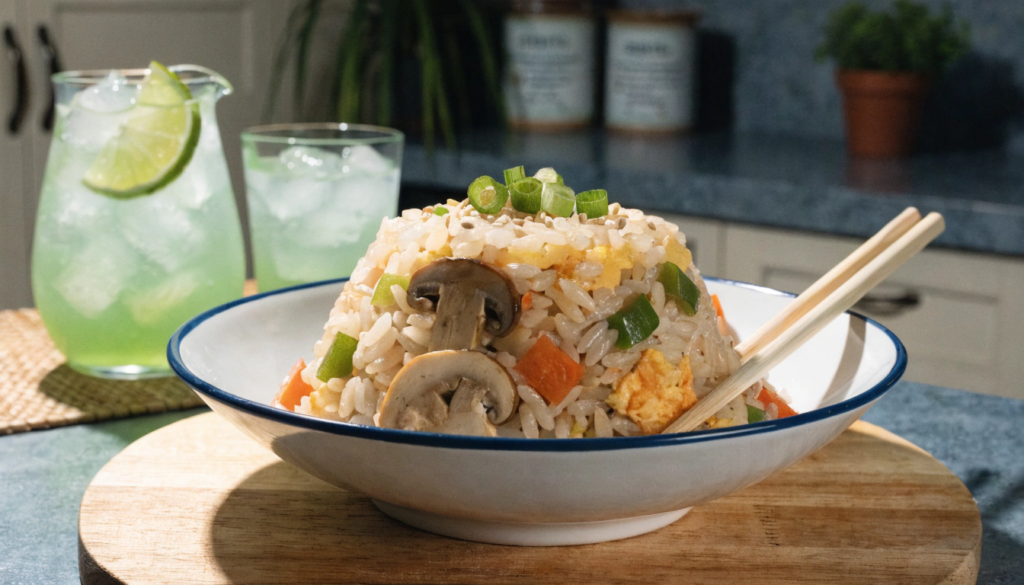
Halfway through, I flipped the container over to read the nutrition label. Twelve hundred calories. For rice. I remember setting my fork down and just staring at the wall. Not because I was full, but because I felt tricked. How was I supposed to win if comfort food cost that much?
Here is what took me another three years to figure out. You don’t have to choose between food that tastes good and food that fits your jeans. That is a lie the diet industry sold you. And this fried rice recipe low calorie is the proof.
Let me show you how to get all the smoky, savory, eggy magic of your favorite takeout without the side order of guilt.
Why Traditional Fried Rice Sabotages Your Goals (And How We Fix It)
Let’s talk about what is actually happening inside that white paper carton.
Restaurant fried rice is not designed to keep you healthy. It is designed to keep you happy for eight minutes and hungry again in two hours. The math is brutal once you break it down.
The three biggest calorie traps in takeout fried rice:
- Excessive oil. Most woks get a glug of vegetable oil, then another glug, then another. We are talking three to four tablespoons minimum. That is nearly 500 calories just from the cooking fat before a single grain of rice hits your plate.
- Dense white rice. One cup of cooked jasmine or long-grain white rice packs about 200 calories. But here is the kicker. It offers almost no volume and very little fiber. You eat it fast, your blood sugar spikes, and an hour later your stomach is growling again.
- Sugar-heavy sauces. Dark soy sauce, oyster sauce, and the mysterious “house brown sauce” are loaded with added sugar and sodium. That sweet-savory flavor you love? That is refined sugar coating your cravings.
How this recipe flips the script.
You are not going to feel deprived. You are going to feel clever.
- Oil gets reduced by about seventy-five percent. You will use a non-stick pan or well-seasoned cast iron and deglaze with broth instead of dumping in more fat.
- White rice gets swapped for cauliflower rice or a half-and-half blend. This cuts the calorie density while doubling the volume of food on your plate.
- Sugary sauces become coconut aminos or low-sodium tamari paired with rice vinegar and a touch of zero-calorie sweetener if you need the sweetness.
Here is a number worth remembering. A standard restaurant serving of vegetable fried rice averages 1,200 calories. The recipe you are about to make comes in under 400. Same size bowl. Same satisfaction. Completely different outcome for your waistline.
Essential Ingredients for the Best Fried Rice Recipe Low Calorie
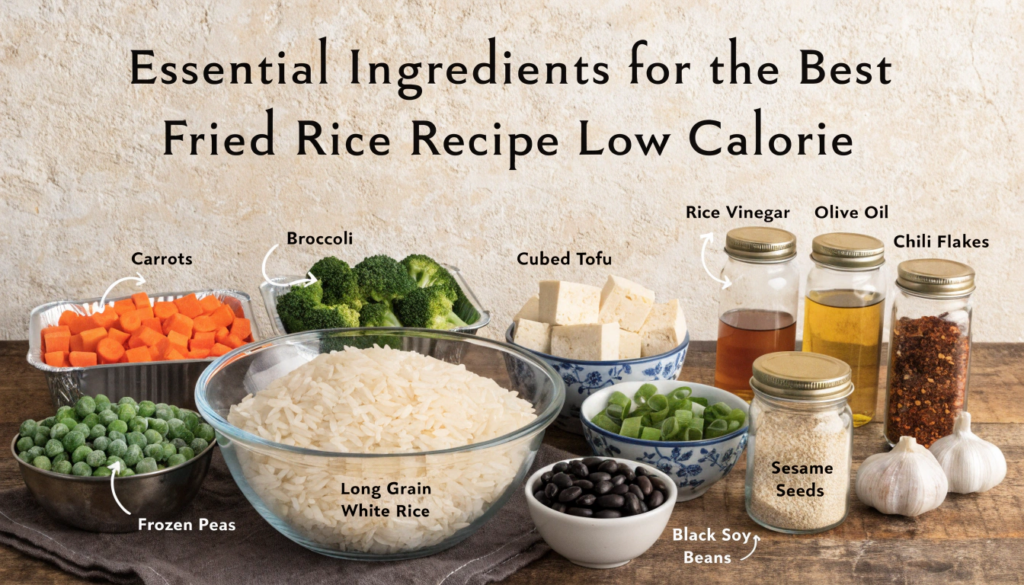
You do not need weird ingredients from a specialty health store. Everything on this list is either already in your kitchen or one quick grocery trip away.
The Carb Swap That Changes Everything
You have two excellent options here. Pick the one that fits your lifestyle.
Option A (Low carb / keto friendly): Four cups of fresh cauliflower rice. Do not buy the frozen stuff if you can avoid it. Frozen cauliflower releases too much water and turns mushy. Pulse fresh florets in a food processor until they look like rice grains, then salt them lightly and squeeze out the extra moisture using a clean kitchen towel.
Option B (Volume eater / balanced macros): Two cups of cooked brown rice mixed with two cups of riced broccoli. This gives you the chew of real grains plus the fiber and bulk of vegetables. You get the best of both worlds.
Why does this work so well? Fiber. Cauliflower and broccoli pack grams of fiber that white rice simply does not have. That fiber slows down digestion, keeps your blood sugar steady, and leaves you feeling full for three to four hours instead of forty-five minutes.
The Flavor Bombs (Almost No Calories)
You might think low calorie means low taste. That could not be further from the truth.
Aromatics you will use every time:
- Fresh ginger (grated or minced fine)
- Fresh garlic (crushed or chopped)
- Green onions (both white and green parts)
Total calorie impact from all three? Less than ten. But the flavor impact is enormous.
Umami boosters that trick your brain:
- Nutritional yeast. This sounds weird if you have never used it. But it adds a savory, almost cheesy flavor for about twenty calories per tablespoon. Sprinkle it in with your vegetables.
- Shiitake mushroom powder. Grind dried shiitakes in a spice grinder. Half a teaspoon adds deep, meaty richness without any fat.
The egg trick for more volume, less fat.
Use one whole egg plus two additional egg whites. You get the richness from the yolk and the bulk from the whites. The total fat stays low while the protein climbs. Scramble these first, set them aside, and add them back at the end.
The Low-Calorie Sauce Formula
Mix these together in a small bowl before you start cooking. Having everything ready ahead of time is the difference between a smooth stir-fry and a burned mess.
- 2 tablespoons low-sodium tamari or coconut aminos (about 40 calories)
- 1 tablespoon rice vinegar (zero calories, adds brightness)
- 1 teaspoon sesame oil (40 calories and worth every single one)
- ¼ cup vegetable broth (5 calories, helps you scrape up the browned bits)
- 1 teaspoon erythritol or monk fruit sweetener (zero calories, balances the salt)
This sauce is salty, tangy, slightly sweet, and deeply savory. You will not miss the heavy restaurant sauces at all.
Step-by-Step: How to Make Low Calorie Fried Rice (10 Minutes)
Set a timer. You are about ten minutes away from dinner.
Before You Turn On the Heat
Take three minutes to get organized.
- Prep your cauliflower rice if you are using it. Salt it lightly in a colander. Let it sit for five minutes, then press out the water with paper towels or a clean dishcloth. Dry cauliflower browns. Wet cauliflower steams.
- Dice your protein into half-inch cubes. Chicken, shrimp, tofu, whatever you picked. Even pieces mean even cooking.
- Measure out two cups of frozen peas and carrots. No need to thaw them. They will warm through in the pan.
The Cooking Method That Works Every Time
Grab your largest non-stick skillet or cast-iron pan. Crank the heat to medium-high. Here is the sequence.
Step one: Cook the eggs first.
Spray your pan with one or two spritzes of zero-calorie oil spray. Pour in your one whole egg plus two egg whites. Scramble them quickly until they are just set but still soft. Remove them to a plate. Do not wash the pan. Those little browned bits are free flavor.
Step two: Bloom the aromatics.
Add one teaspoon of sesame oil to the same pan. Toss in your minced garlic and ginger. Stir constantly for twenty seconds. That is all it takes. Any longer and the garlic burns and turns bitter.
Step three: Crisp your rice substitute.
Add your prepared cauliflower rice or your brown rice and broccoli blend. Spread it into a thin, even layer across the entire pan. Now do something that feels wrong. Leave it alone. Do not stir. Let it sit untouched for two full minutes. This creates browning and texture, which creates flavor.
Step four: Deglaze the pan.
Pour two tablespoons of vegetable broth directly onto the hot surface. Use your spatula to scrape up every browned bit stuck to the bottom. That brown residue is pure concentrated flavor. You just rescued it without adding extra oil.
Step five: Add everything else.
Toss in your vegetables, your protein, and your cooked eggs. Stir everything together and let it cook for one minute. The frozen vegetables will release a little moisture, which helps everything combine.
Step six: Finish with the sauce.
Pour your prepared sauce mixture around the edges of the pan, not directly into the middle. The hot sides of the pan will steam the sauce and distribute it evenly. Toss everything for about thirty seconds. Taste it. Adjust with a pinch of salt or a few drops of tamari if needed.
Serve immediately. Garnish with the green tops of your scallions.
3 High-Protein Variations of This Fried Rice Recipe Low Calorie
Once you master the basic method, you can spin it in a dozen different directions. Here are three favorites.
The Post-Workout Chicken Version
Nutrition: 390 calories, 35 grams of protein.
Add four ounces of shredded rotisserie chicken breast. Remove the skin first. Toss the shredded meat with a half teaspoon of smoked paprika before you add it to the pan. That tiny step adds a subtle barbecue note that works beautifully with the tamari and ginger.
The Pescatarian Shrimp Bowl
Nutrition: 340 calories, 30 grams of protein.
Add six ounces of large raw shrimp. Peeled and deveined. Shrimp cook incredibly fast. Add them during step five, right after the vegetables, and cook for ninety seconds maximum. Any longer and they turn rubbery. You want them just pink and curled.
The Tofu Egg Vegan Version
Nutrition: 320 calories, 20 grams of plant protein.
Skip the eggs entirely. Crumble four ounces of extra-firm tofu into small pieces. Sprinkle with black salt, also called Kala Namak. This salt contains sulfur compounds that taste exactly like eggs. Add a half cup of frozen edamame for extra protein and a pop of green color.
Pro Chef Secrets for Wok Hei Without a Wok
Wok hei is that smoky, charred flavor you get from restaurant stir-fries. Chefs achieve it with jet-engine burners that you cannot install in your home. But you can get close.
Use a cast-iron skillet instead of a non-stick pan.
Cast iron holds heat like a battery. When you add your cauliflower rice, the pan temperature does not crash. Non-stick pans lose heat too quickly and end up steaming your food instead of browning it.
Do not overcrowd the pan.
If you double this recipe, cook it in two batches. Overcrowding drops the pan temperature and creates steam. Steamed cauliflower rice is sad, mushy, and nothing like fried rice. Give your ingredients room to breathe.
Fixing texture problems.
- If your rice turns out mushy, your heat was too low or you did not squeeze out enough water from your cauliflower. Next time, crank the heat higher and cook one minute less.
- If your rice seems dry and crumbly, sprinkle one tablespoon of water over the top, cover the pan for thirty seconds, then uncover and toss. The trapped steam will rehydrate everything without making it soggy.
Meal Prep & Storage (Stay on Track All Week)
This recipe holds up beautifully in the refrigerator. Make a double batch on Sunday and eat it through Thursday.
Store it right.
Use airtight glass containers. Plastic can absorb the garlic and ginger smell over time. Glass stays clean and neutral. Portion your rice into individual servings so you are not tempted to eat straight from a large container.
Reheat without ruining it.
Skip the microwave. Microwaved cauliflower rice turns into a wet sponge. Instead, dump your portion into a dry non-stick pan over medium heat. Add a tiny splash of water, cover for one minute, then uncover and stir until hot. The water creates steam without adding oil.
Freezer method.
Portion your cooled fried rice into silicone muffin cups or small freezer bags. Stack them flat. When you need a quick meal, pop one out and reheat it directly from frozen in a hot pan. Add two minutes to the cooking time and a few extra drops of broth.
Frequently Asked Questions
Can I really call this a fried rice recipe low calorie if it uses cauliflower?
Yes, and here is why. Fried rice is defined by a cooking technique, not a single ingredient. High-heat stir-frying. Eggs scrambled into grains. Aromatics blooming in hot fat. Soy sauce hitting the pan and steaming up. Cauliflower delivers on every single one of those sensory experiences while cutting the calorie load by more than two thirds.
How many calories are in one serving of this low calorie fried rice?
A generous two-cup serving ranges from 320 to 390 calories depending on which protein you choose. Compare that to the same volume of takeout fried rice, which averages 1,200 calories. You are saving between 800 and 880 calories per meal without eating less food.
Will this actually keep me full?
The data says yes. High-volume, low-calorie meals that are rich in fiber and protein consistently outperform calorie-dense, low-volume meals for satiety. In practical terms, you will feel satisfied for three to four hours instead of craving a snack forty-five minutes later.
Can I use leftover takeout rice?
Only if it is brown rice, and only if you mix it fifty-fifty with cauliflower rice. Leftover white rice actually develops resistant starch, which is good for blood sugar control. But it still packs 200 calories per cup. Diluting it with cauliflower gives you the texture of real rice with half the calorie density.
Your New Favorite Weeknight Hero
Here is what I want you to take away from all of this.
You are not broken because you crave fried rice. You are not weak because takeout wins sometimes. The system is stacked against you. Restaurants prioritize taste and speed over your health because that is what keeps you coming back.
But you just learned something most people never figure out. You can have the exact same flavors, the same textures, the same emotional comfort, for a fraction of the metabolic cost. That is not a compromise. That is a upgrade.
Tonight, when hunger hits and the takeout apps start looking tempting, you have a better option. Open your fridge. Grab that head of cauliflower. Heat your pan until it shimmers. And make yourself a mountain of savory, smoky, satisfying fried rice that loves you back.
Your turn. Make this recipe within the next forty-eight hours. Come back and tell me what you think. Did it scratch the itch? Did you change anything? What protein did you use? Drop a comment below or tag me in your photo. I read every single one.
You have got this. And you have got dinner.