You know that feeling when you take a bite of a burger, and it’s so dry you almost choke?
Yeah. Me too.
Here’s the thing nobody tells you about eating lighter. You can swap the beef patty for turkey. You can use a lettuce wrap instead of a bun. You can load up on tomatoes and onions until your plate looks like a salad bar exploded. But if that first bite still feels like chewing on cardboard? You won’t stick with it. Nobody blames you.
I remember staring at a dry, naked turkey burger late one night and thinking, “If this is what healthy eating tastes like, I’d rather just skip dinner entirely.”
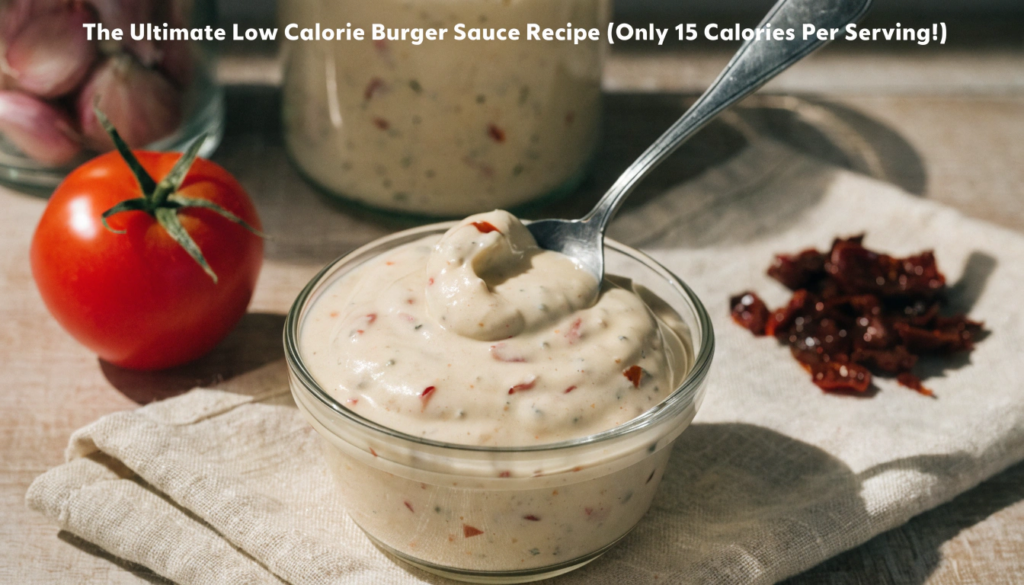
What I really wanted was that creamy, tangy, slightly sweet kick of a good burger sauce. You know the one. The kind that drips down your fingers and makes you close your eyes for a second. But every bottle on the grocery shelf packed over 100 calories into just two tiny spoonfuls. Some even hit 150.
So I did what any desperate burger lover would do. I walked into my kitchen at 10 PM, grabbed a bowl and a whisk, and refused to come out until I cracked the code.
Six tries later, this low calorie burger sauce recipe was born.
And now? I drizzle it on everything. Black bean patties. Sweet potato fries. Even scrambled eggs. Not once have I felt that familiar pinch of guilt.
Here’s the honest truth. You don’t have to choose between flavor and your goals. Let’s fix sad, dry burgers for good.
Why Most Store-Bought Burger Sauces Sabotage Your Low-Calorie Goals
Let me paint you a picture.
You’re standing in the condiment aisle. On your left, there’s the regular stuff—creamy, orange-tinted, promising “restaurant flavor.” On your right, there’s the “light” version. Same brand. Same bottle shape. Just a little green leaf on the label to make you feel better about yourself.
But here’s what the front of the bottle isn’t telling you.
Most store-bought burger sauces—even the ones marketed as “reduced fat” or “light”—are packed with hidden sugars, cheap vegetable oils, and preservatives that do absolutely nothing for your taste buds or your waistline.
Let’s look at the numbers.
A standard two-tablespoon serving of regular burger sauce usually lands somewhere between 100 and 150 calories. That’s before you add cheese, bacon, or a bun. And be honest with yourself. Who actually measures out just two tablespoons? You squeeze until it looks right, right?
I pulled nutrition labels from five popular brands to give you a clearer picture. Keep in mind these are averages based on publicly available USDA and manufacturer data.
| Brand | Calories (2 tbsp) | Added Sugar |
|---|---|---|
| Regular bottled burger sauce | 140 cal | 4g |
| Fast food signature sauce | 120 cal | 3.5g |
| Major brand “light” version | 90 cal | 3g |
| Low-fat “burger spread” | 110 cal | 4g |
| This low calorie burger sauce recipe | 15 cal | 0g |
See the difference?
That’s not a small gap. That’s the kind of gap that turns a reasonable meal into a calorie bomb before you even take your first bite.
And here’s the part that really gets me. You’re not even getting real flavor for all those extra calories. Most commercial sauces use modified food starch, propylene glycol alginate (a thickener), and artificial colors to fake the creamy texture you’re craving.
Making your own sauce puts you back in the driver’s seat. No hidden junk. No mystery ingredients. Just real food that tastes like something you’d actually want to eat.
Low Calorie Burger Sauce Recipe – Ingredients That Don’t Sacrifice Flavor
Alright, let’s get down to business. You came here for a recipe, and I’m not going to make you scroll through twelve paragraphs of my life story to find it.
But I will give you one quick piece of advice before we start. Don’t skip the smoked paprika. That’s the secret weapon here. It adds a deep, almost smoky richness that tricks your brain into thinking there’s way more fat in this sauce than there actually is.
The Core 5 Ingredients (Plus 2 Optional Twists)
Here’s everything you need to pull together this low calorie burger sauce recipe. Most of these are probably already sitting in your fridge.
The non-negotiable five:
- ¼ cup nonfat plain Greek yogurt – This is your creamy backbone. Don’t use regular yogurt unless you want a runny mess. Greek yogurt is thicker, tangier, and packs nearly double the protein per serving. Fage 0% or Chobani Nonfat are solid choices.
- 1 tablespoon sugar-free ketchup – Regular ketchup adds unnecessary sugar. Brands like Primal Kitchen or G. Hughes make versions sweetened with allulose or stevia. If you can’t find sugar-free, use half the amount of regular and balance with extra mustard.
- 1 tablespoon yellow mustard – Zero calories. Zero sugar. All tang. This brightens up the whole mixture and cuts through the richness of the yogurt.
- 1 tablespoon finely chopped dill pickles – Small dice here. You want little pops of crunch and vinegar, not giant pickle chunks falling off your burger. Sweet pickles won’t work the same way.
- ½ teaspoon smoked paprika – This is the magic dust. Regular paprika is fine if that’s all you have, but smoked paprika adds a layer of complexity that makes people swear there’s bacon fat in here.
Optional add-ins (still low calorie):
- 1 teaspoon white wine vinegar – Extra zing if you like your sauce on the sharper side.
- Dash of cayenne pepper – A little heat wakes everything up. Plus, spicy foods have been shown to slightly increase metabolism in some studies, though I’d call that a bonus rather than a reason to go overboard.
Exact Measurements + Swaps for Dietary Needs
Maybe you don’t eat dairy. Maybe you’re doing a Whole30 round. Maybe you just hate buying ten different ingredients for one recipe.
I’ve got you covered.
Vegan version – Swap the Greek yogurt for unsweetened plain plant-based yogurt. Look for Kite Hill plain (almond-based) or Forager Project (cashew-based). Coconut yogurts tend to be too sweet and thin.
Whole30 compliant – Greek yogurt isn’t allowed on a standard Whole30. Replace it with two tablespoons of mashed avocado plus one extra teaspoon of white wine vinegar. The texture will be slightly thinner, but the creaminess holds up surprisingly well.
No artificial sweeteners – Some sugar-free ketchups use stevia or monk fruit. If those bother you, use one teaspoon of date syrup in regular ketchup instead. You’ll add about 10 calories per serving, which is still a steal compared to store-bought sauce.
Step-by-Step Instructions (5 Minutes or Less)
I’m not going to pretend this takes any real skill. A child could make this low calorie burger sauce recipe. Actually, my nephew made it last weekend, and he usually burns cereal.
The “Whisk & Chill” Method
Here’s the five-minute game plan:
- Grab a small mixing bowl. Nothing fancy. A cereal bowl works fine.
- Scoop in your Greek yogurt, sugar-free ketchup, and yellow mustard. Don’t overthink the order. They’re all going to the same place.
- Add your chopped pickles and smoked paprika. Sprinkle the paprika evenly so you don’t end up with one orange blob in the corner.
- Whisk vigorously until smooth. You’re looking for a pale pink-orange color with no streaks of white yogurt left behind. This usually takes about 30 seconds.
- Taste and adjust. This is the most important step. Your pickles might be saltier than mine. Your mustard might be spicier. Add a pinch of salt if needed, or an extra squeeze of mustard if you want more tang.
- Chill for 10 minutes. This part is optional, but I highly recommend it. Cold temps thicken the yogurt slightly and let all those flavors get friendly with each other.
Pro tip that took me way too long to learn: Make a double batch. This low calorie burger sauce recipe stays fresh in an airtight jar for five full days. That means you can make it once on Sunday and eat great burgers all week without touching a single bottle of store-bought junk.
Nutritional Breakdown – Proof This Low Calorie Burger Sauce Recipe Works
Numbers don’t lie. And these numbers are pretty hard to argue with.
I ran this recipe through the USDA FoodData Central database to make sure every calorie was accounted for. Here’s what you’re actually getting per two-tablespoon serving.
Nutrition facts (per serving):
- Calories: 15
- Protein: 2g
- Fat: 0.3g
- Carbohydrates: 1.5g
- Fiber: 0g
- Sugar: 0g
- Sodium: 180mg
Now let’s put that in perspective.
A regular two-tablespoon serving of traditional burger sauce has about 140 calories and 4 grams of sugar. That means this homemade version delivers 90 percent fewer calories and zero grams of sugar.
But here’s what the numbers don’t fully capture. Satisfaction matters. You could eat a dry burger with no sauce for 140 fewer calories, but you’d be miserable. Or you could use this sauce, save those calories anyway, and actually enjoy your meal.
A small 2018 study published in the Journal of Nutrition Education and Behavior found that people who used lower-calorie condiments were significantly more likely to stick with their dietary goals over a six-month period compared to those who eliminated condiments entirely.
Makes sense, right? Flavor keeps you coming back. Deprivation just makes you cranky.
7 Delicious Ways to Use Your Low Calorie Burger Sauce (Beyond Burgers)
Here’s the thing about finding a good recipe. You don’t want to use it just once. You want to slather it on everything until your family starts side-eyeing you at the dinner table.
Go ahead. I won’t judge.
Seven unexpected uses for this sauce:
- As a veggie dip – Carrot sticks, cucumber rounds, bell pepper slices, even broccoli. Turns a boring snack into something you actually look forward to.
- On a turkey burger – This is the original use case, and it still holds up. The tang cuts through the leanness of ground turkey beautifully.
- As a salad dressing – Thin it out with a teaspoon of water or lemon juice and drizzle over a taco salad or chopped romaine.
- On a baked potato – Forget sour cream. This sauce brings creaminess plus tang and a little smoke. Way more interesting.
- For grilled chicken wraps – Spread a thin layer inside a low-carb tortilla, then add shredded lettuce, grilled chicken, and a few pickle slices.
- As a fry dip – Air-fried zucchini fries, sweet potato wedges, or even classic russet fries. This sauce is better than anything labeled “special sauce” at a drive-thru.
- Inside an omelet – Swirl in a spoonful just before folding. Adds moisture and flavor without making your eggs soggy.
Expert Tips to Customize Your Low Calorie Burger Sauce Recipe
Once you’ve made the basic version a couple of times, you’ll probably start wondering what else you can do with it.
Good news. This low calorie burger sauce recipe is incredibly forgiving.
Make It Spicy
Add one teaspoon of sriracha or half a teaspoon of chipotle paste. If you really want to turn up the heat, mince a small fresh jalapeño (remove the seeds unless you’re feeling brave) and stir it in.
Make It Smoky BBQ Style
Swap the sugar-free ketchup for sugar-free barbecue sauce. G Hughes makes a decent one that’s widely available. The flavor shifts from tangy-sweet to tangy-smoky, which works especially well on grilled chicken burgers.
Make It Creamier (Still Low Cal)
Blend in one tablespoon of low-fat cottage cheese before adding the other ingredients. This sounds weird, I know. But cottage cheese adds extra protein and a thicker, almost whipped texture without bumping calories significantly.
Meal Prep Storage Guide
- In the fridge: Store in a sealed glass jar or airtight container for up to five days. Give it a quick stir before each use because some separation is normal.
- In the freezer: Don’t bother. Freezing breaks down the yogurt’s protein structure, and you’ll end up with a grainy, watery mess. Just make a fresh batch. It takes five minutes.
Frequently Asked Questions (FAQ) – Low Calorie Burger Sauce Recipe
Q1: Can I use this low calorie burger sauce recipe for meal prep?
Yes, absolutely. It holds up beautifully for four to five days in the fridge. Just stir it well before using, as natural separation can happen. That’s the yogurt, not a sign of spoilage.
Q2: Will this low calorie burger sauce recipe work on veggie burgers?
Without a doubt. It’s fantastic on black bean burgers, chickpea patties, or portobello mushroom caps. In fact, the tanginess complements plant-based proteins even better than beef sometimes.
Q3: What’s the best low calorie yogurt for this recipe?
Nonfat plain Greek yogurt, specifically. Fage 0% has the thickest texture. Chobani Nonfat is a close second. Stay away from anything labeled “Greek-style” that isn’t actually strained—those are thinner and will make your sauce runny.
Q4: Can I make it without pickles?
You can. Replace the chopped pickles with half a teaspoon of fresh dill (finely minced) plus one teaspoon of pickle juice from the jar. You’ll keep the dill flavor and acidity without the actual pickle chunks.
Q5: Is this low calorie burger sauce recipe keto-friendly?
Yes. With only 1.5 grams of carbohydrates per serving, it fits easily into a standard keto macro plan. If you want to lower the carbs even further, look for ketchup sweetened with erythritol instead of allulose.
Q6: How do I make it thicker?
Line a small fine-mesh strainer with a coffee filter or cheesecloth. Add your Greek yogurt and let it drain over a bowl in the fridge for a few hours or overnight. The whey will drip out, leaving you with yogurt that’s almost cream cheese consistency. Then mix your sauce as usual.
Conclusion – Stop Settling for Dry Burgers
You didn’t come this far in your health journey to eat sad, flavorless food.
Think about all the meals you’ve choked down just because someone told you they were “good for you.” Dry chicken breast. Naked baked potatoes. Burgers that crumble into dust before you even get them to your mouth.
That stops today.
This low calorie burger sauce recipe proves that small swaps—Greek yogurt for mayonnaise, sugar-free ketchup for the bottled sugar bombs—can transform a meal from “diet food” to “damn, that’s good.”
Try it tonight. Drizzle it over a juicy turkey burger. Dip a crispy sweet potato fry. Or just eat it by the spoonful straight from the bowl. No judgment here.
Then come back and tell me what you put it on.
Here’s what I want you to do right now:
- Save this recipe to Pinterest so you don’t lose it.
- Share it with one friend who thinks healthy eating has to be boring.
- Leave a comment below telling me your favorite way to use this sauce.
Let’s start a flavor revolution. One low-calorie burger at a time.