There’s a specific kind of morning magic that only French toast can deliver. You know the one—where the scent of vanilla and cinnamon drifts from the kitchen, pulling you out of bed before your alarm even has a chance to go off. It’s the taste of lazy Sundays, childhood memories, and comfort wrapped in a warm, custardy package.
But let’s be honest with each other for a moment. If you’re like most of us, that magic often comes with a side of guilt. You sit down to enjoy that golden-brown stack, and somewhere between the second bite and the third, a little voice starts whispering about calories, about goals, about whether you’ve just undone a week’s worth of effort. I’ve been there. For years, I convinced myself that “eating healthy” meant saying goodbye to the breakfasts I actually loved. I’d stare longingly at brunch menus, then order something bland and feel quietly resentful about it.
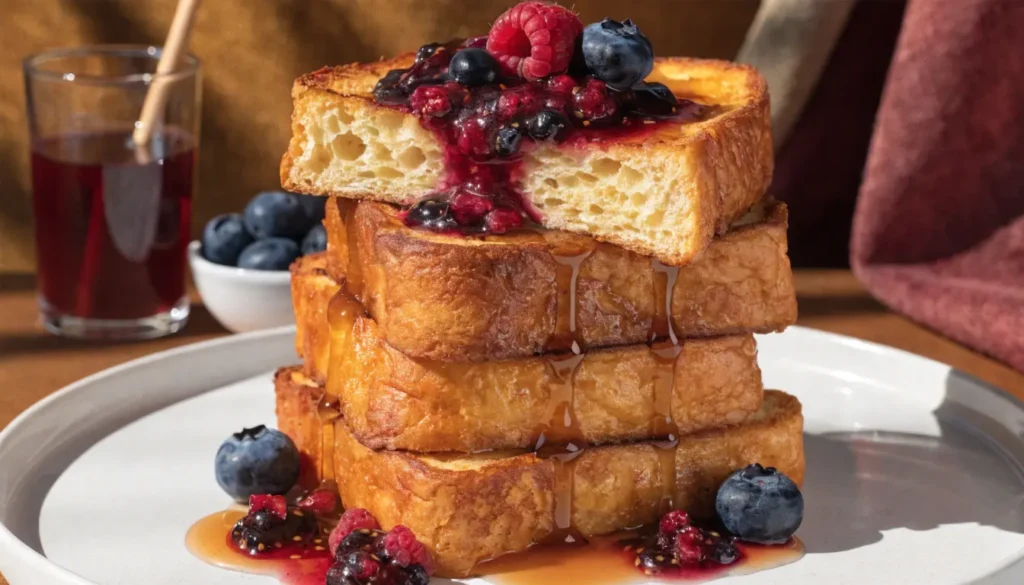
Then one morning, I decided I’d had enough of that trade-off. I wanted the nostalgia and the nutrition. I wanted to feel good about what I was eating while I was eating it. So I started tinkering. I went through dozens of attempts—soggy slices that collapsed under their own weight, rubbery textures that squeaked against my teeth, and one memorable disaster that tasted more like cardboard than comfort. But eventually, I cracked it. What I landed on is this french toast recipe low calorie, and it’s become my way of proving that you don’t have to choose between taking care of your body and feeding your soul.
This recipe gives you the best of both worlds. Two thick, golden slices that taste every bit as indulgent as the classic version, yet clock in at under 350 calories. No tricks. No weird ingredients. Just smart swaps and a method that actually works. By the time you’re done here, you’ll have a breakfast that feels like a celebration, not a compromise.
Why This Low Calorie French Toast Recipe Actually Works
Before we get our hands messy with whisking and flipping, let’s talk about the mechanics. Traditional French toast isn’t inherently unhealthy because of some grand conspiracy—it’s just built on ingredients that weren’t designed with moderation in mind. Once you understand where the calories are hiding, you can start making swaps that don’t sacrifice the experience.
The Three Culprits of Calorie Overload
- The Bread
Most classic recipes call for thick-cut brioche, challah, or Texas toast. These are beautiful breads—fluffy, slightly sweet, and absolutely decadent. But they’re also calorie-dense. A single slice of brioche can easily run you 150 to 200 calories before it even touches the custard. Multiply that by two slices, and you’re already nearing 400 calories before you’ve added milk, eggs, or butter. - The Custard Base
Traditional French toast custard relies on whole milk, heavy cream, and often two to three whole eggs per serving. Heavy cream alone packs over 50 calories per tablespoon. When you’re soaking bread in that mixture, you’re essentially adding a liquid calorie bomb that gets fully absorbed into every bite. - The Cooking Method
Even if you nail the bread and custard, the cooking process can undo your progress. Most recipes instruct you to fry the slices in a generous pat of butter—sometimes two or three tablespoons across the batch. Butter adds about 100 calories per tablespoon, and those calories don’t just disappear. They soak right into that crispy exterior.
How We Flip the Script
This french toast recipe low calorie addresses each of those problems head-on without asking you to eat something that resembles diet food.
- Bread Swap: We use high-fiber, low-calorie bread. Brands like Sara Lee Delightful or Nature’s Own Life offer slices at roughly 45 calories each. That’s 90 calories for two slices versus 300 to 400 calories with traditional options.
- Custard Redesign: Instead of whole milk and cream, we turn to unsweetened almond milk. It cuts the liquid calories by roughly 80 percent. We also use a combination of one whole egg and two egg whites. You keep the richness from the yolk—that irreplaceable custard texture—without the extra fat and calories from additional yolks.
- Smarter Cooking: We ditch the butter bath. A high-quality non-stick skillet with a spritz of light butter spray does the job beautifully. Even better? An air fryer. That method requires zero added oil and creates a caramelized crust that’s genuinely better than what most stovetop methods produce.
The Essential Ingredients for a Low Calorie French Toast Recipe
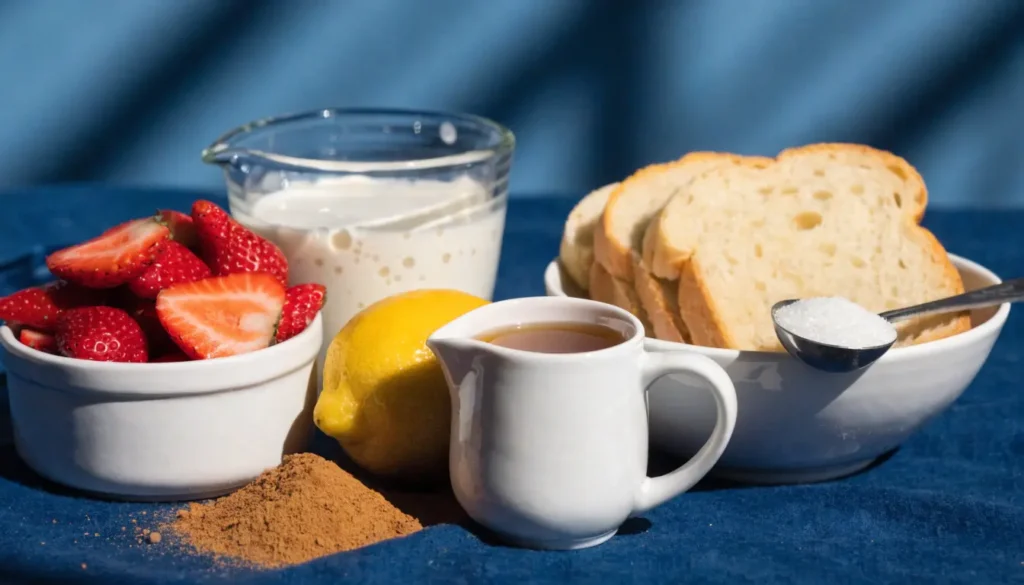
Getting the ingredients right is half the battle. Skimp on quality here, and no amount of technique will save you. Let’s walk through each component so you know exactly what to grab.
The Bread: Volume vs. Calories
You want a bread that gives you substance without the calorie hangover. Here’s what to look for.
- Best Standard Option: Sara Lee Delightful (45 calories per slice). It’s widely available, toasts well, and has a neutral flavor that lets the custard shine.
- Best Gluten-Free Option: Carbonaut gluten-free bread (40 to 50 calories per slice). It’s one of the few gluten-free options that doesn’t turn into mush when soaked.
- A Critical Pro Tip: Stale bread absorbs custard better than fresh bread. If your bread is fresh out of the bag, pop it in the toaster on the lowest setting for one cycle. You’re not trying to brown it—just dry it out enough that it acts like day-old bread. This single step prevents the dreaded sogginess that ruins so many French toast attempts.
The Custard Base: Protein-Packed & Flavorful
This is where the calorie savings really add up. Let’s look at the side-by-side comparison.
| Traditional Ingredient | Calorie Cost (per serving) | Our Low-Calorie Swap | Benefit |
|---|---|---|---|
| Whole Milk (⅓ cup) | ~50 kcal | Unsweetened Almond Milk (⅓ cup) | ~10 kcal |
| Heavy Cream (2 tbsp) | ~100 kcal | Omitted entirely | 100 kcal saved |
| 2 Whole Eggs | ~140 kcal | 1 Whole Egg + 2 Egg Whites | ~90 kcal, higher protein |
| Granulated Sugar (1 tbsp) | ~50 kcal | Monk Fruit or Erythritol (1 tbsp) | 0 kcal |
The result is a custard that still feels luxurious—thanks to that single yolk—but comes in at a fraction of the calories. The almond milk adds a subtle nuttiness that pairs beautifully with cinnamon and vanilla.
The Cooking Method: Air Fryer vs. Pan
You have two excellent options here. Both work. Choose based on your preference for texture.
- Pan Method: Use a high-quality non-stick skillet. Heat it over medium heat and spray lightly with butter-flavored cooking spray. Cook each slice for about two to three minutes per side until golden brown. This method gives you a slightly softer interior.
- Air Fryer Method: This is my personal favorite. Place the dipped slices in a single layer in your air fryer basket. Lightly spray the tops with coconut oil spray. Air fry at 375°F for six to eight minutes, flipping halfway through. The result is a crispy, caramelized exterior that feels like you’re eating something far more decadent than a low-calorie breakfast.
Step-by-Step: The Perfect French Toast Recipe Low Calorie
Let’s bring everything together. Follow this sequence, and you’ll get consistent results every single time.
Preparation (5 Minutes)
- Whisk the custard. In a shallow bowl—something wide enough to fit a slice of bread flat—combine ⅓ cup unsweetened almond milk, one large egg, two egg whites, one teaspoon of vanilla extract, one tablespoon of zero-calorie sweetener (monk fruit or Swerve work beautifully), and a generous dash of ground cinnamon. Whisk until the egg whites are fully incorporated. You shouldn’t see any streaks.
- Prepare your bread. If your bread isn’t stale, toast it lightly. Just enough to remove moisture, not enough to brown it.
- Heat your cooking surface. If you’re using the stovetop, set your non-stick skillet over medium heat now so it’s ready when you are.
The Dip (The Secret to Not Soggy Toast)
This step separates success from failure. Do not treat this like a sponge.
- Timing is everything. Dip each slice for 15 to 20 seconds per side. That’s it. Any longer, and the bread becomes waterlogged.
- Let the excess drip off. Hold the slice over the bowl for a few seconds after dipping. You want a thorough coating, not a saturated mess.
Cooking
- Option A (Air Fryer): Place the dipped slices in your air fryer basket in a single layer. They shouldn’t overlap. Spray the tops lightly with coconut oil or avocado oil spray. Air fry at 375°F for six to eight minutes, flipping at the halfway mark. The slices should be golden brown and slightly crisp to the touch.
- Option B (Stove Top): Place the dipped slices in your preheated non-stick skillet. Cook for two to three minutes per side. You’ll know it’s time to flip when you see bubbles forming on the surface and the edges look set. Flip carefully—low-calorie bread is lighter than brioche, so it requires a gentle touch.
Toppings That Won’t Break the Calorie Bank
Here’s where many people accidentally undo all their hard work. You can have a perfect 300-calorie plate of French toast, and then drown it in 400 calories of maple syrup and butter. Let’s avoid that.
The Best Low-Calorie Syrups
- Maple Grove Farms Sugar-Free Syrup: This is a staple in my kitchen. A quarter cup costs you only 15 calories, and the taste is remarkably close to the real thing.
- Warm Berry Compote: Take a handful of frozen strawberries or blueberries. Microwave them for 45 seconds, then mash slightly with a fork. You get a naturally sweet, vibrant syrup with zero added sugar and a boost of antioxidants.
High-Volume, Low-Calorie Toppings
- Light Whipped Topping: Two tablespoons add about 15 calories and a lovely creaminess. Look for brands like Reddi-wip’s zero-sugar option.
- Greek Yogurt “Crème Fraîche”: Mix two tablespoons of non-fat plain Greek yogurt with a drop of vanilla extract and a pinch of your zero-calorie sweetener. It mimics the tangy richness of crème fraîche for a fraction of the calories.
- Powdered Sweetener Dusting: A fine mesh sieve and a sprinkle of powdered erythritol makes your French toast look like it came from a high-end brunch spot. Zero calories, all the aesthetics.
Nutritional Breakdown
Let’s look at the numbers so you can see exactly what you’re working with. This is based on using two slices of low-calorie bread, the custard mixture described above, and a light spray of cooking oil.
- Calories: 335
- Protein: 22 grams
- Carbohydrates: 28 grams
- Fiber: 8 grams
- Fat: 7 grams
Source: USDA FoodData Central database and independent recipe analysis.
That protein count is significant. At 22 grams, this breakfast will actually keep you full until lunchtime—something that traditional, sugar-heavy French toast often fails to do.
Expert Tips to Avoid Common Low-Calorie French Toast Fails
I’ve made every mistake in the book so you don’t have to. Here’s how to troubleshoot the most common issues.
- The Soggy Problem: If your French toast comes out limp and wet in the center, your heat was too low. You need medium-high heat to create an immediate seal on the outside of the bread. Low heat allows the liquid to slowly steam the bread rather than cook it.
- The Rubbery Texture: This happens when you use only egg whites. You need at least one yolk. Egg yolks contain lecithin and fat, which give French toast its signature tender, custard-like texture. Without it, you’re left with a springy, rubbery bite.
- The Bland Flavor: Don’t forget the salt. A tiny pinch—literally just a few grains—in your custard mixture wakes up the vanilla and cinnamon. It doesn’t make the dish salty; it makes it taste more like itself.
- Sticking to the Pan: If your bread is sticking, your pan wasn’t hot enough when you added the slices. Let the skillet preheat for a full three to four minutes before cooking.
Frequently Asked Questions (FAQ)
Can I make this french toast recipe low calorie dairy-free?
Yes, absolutely. The recipe already uses unsweetened almond milk as the base. To go fully dairy-free, just ensure that your bread doesn’t contain milk or butter ingredients (most low-calorie sandwich breads are dairy-free, but check the label) and use a plant-based butter spray for cooking if you’re using the stovetop method.
Is this low calorie french toast recipe good for meal prep?
Yes, but you’ll want to follow a specific process. Cook the French toast fully, then let the slices cool on a wire rack. Don’t stack them while they’re warm—that traps steam and makes them soggy. Once cooled, store them in a single layer in a zip-top bag or airtight container in the refrigerator for up to three days. To reheat, pop them in the toaster or air fryer for two to three minutes. They crisp right back up.
How many Weight Watchers points is this?
Points values vary slightly based on the specific brands you use, but this recipe typically calculates to 4 to 5 WW points for the full serving of two slices with the recommended toppings. If you use the berry compote instead of syrup, it may come in even lower.
Can I use a different type of milk?
You can, but be mindful of the calorie impact. Unsweetened oat milk works well but adds about 40 to 50 calories per serving. Unsweetened cashew milk is another excellent low-calorie option. Avoid sweetened vanilla versions—they add unnecessary sugar that doesn’t improve the texture.
What if I don’t have an air fryer or non-stick skillet?
If you’re cooking on a stainless steel or cast iron pan, you’ll need a small amount of oil to prevent sticking. Use avocado oil or a light coating of butter—about half a teaspoon per slice. It will add around 20 calories per slice but is manageable if you account for it. The key is to keep the heat at medium and give the pan plenty of time to preheat before adding the bread.
Conclusion
Food should never feel like an apology. You shouldn’t have to sit down at your own table and feel like you’re choosing between what you want and what’s good for you. This french toast recipe low calorie exists because I got tired of making that choice. I wanted mornings that felt like a celebration again—mornings where the smell of cinnamon and vanilla fills the kitchen and the only thing on my mind is how good the first bite is going to be.
Now you have that too. You have a breakfast that gives you the warmth, the nostalgia, the comfort, and the joy—all without the afternoon regret. Whether you fire up your air fryer on a lazy Sunday or whip up a quick batch on a busy weekday morning, this recipe is your permission to stop compromising.
So go ahead. Break out the skillet. Whisk that custard. Give yourself the brunch you’ve been craving.
Your turn: I’d love to hear how this turns out for you. Drop a comment below and let me know which toppings you tried, or if you discovered a variation that worked even better. And if you’re looking for more breakfast ideas that keep you feeling your best, don’t forget to subscribe—I’ve got plenty more where this came from.