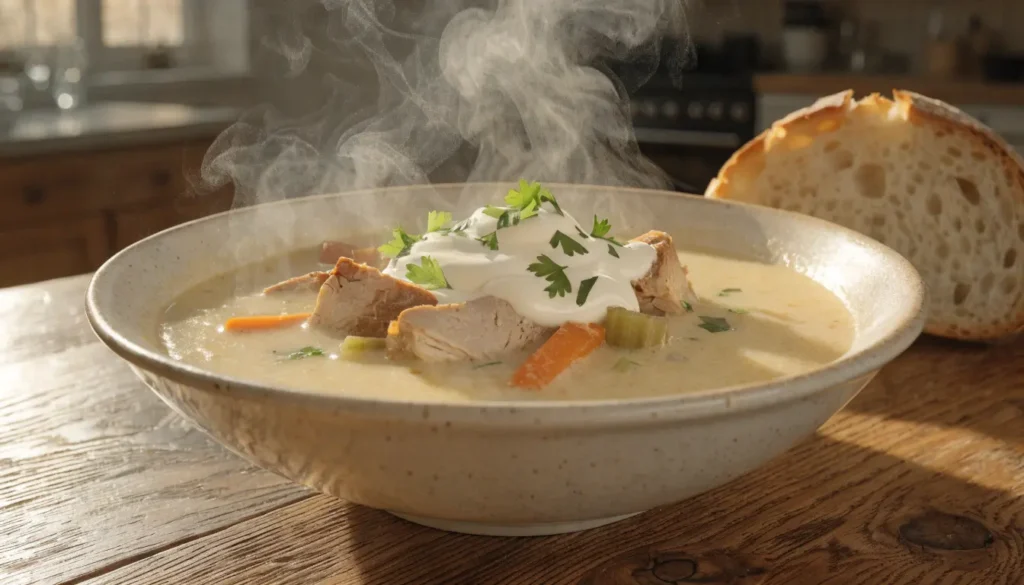
There is a specific kind of heartbreak that happens when you open the fridge, excited for the leftovers of that incredible soup you spent all Sunday making—only to be met with a waft of sour air or a questionable film on top.
We’ve all been there. That pot of chicken noodle was more than just food; it was comfort. It was the remedy for a bad week, a hug in a bowl, or a proud culinary achievement. Throwing it away feels like throwing away time, money, and a little piece of that cozy feeling.
But let’s be honest: the anxiety of not knowing whether it’s safe to eat can ruin the anticipation. You stand there, spoon hovering, asking yourself the same question: how long is soup good in the fridge?
I’m here to put that anxiety to rest. This isn’t just about following arbitrary rules; it’s about protecting your health, honoring your hard work, and ensuring that every spoonful is as delicious—and safe—as the first. Let’s break down the science and the art of soup storage so you can eat with confidence.
The Golden Rule: How Long Is Soup Good in the Fridge?
When it comes to cooked soups, stews, and chilis, food safety experts are nearly unanimous. The window for safety is narrower than you might think.
The Short Answer:
Most homemade soups are safe to eat for 3 to 4 days when stored properly in a refrigerator set at 40°F (4°C) or below.
While some hardy stews might look fine on day 5, the risk of bacterial growth increases exponentially after the 4-day mark. According to the USDA (United States Department of Agriculture), the 3-to-4-day rule is the standard for all cooked leftovers to prevent the risk of foodborne illnesses like Bacillus cereus or Staphylococcus aureus.
This isn’t a suggestion meant to make you waste food. It’s a guideline built on decades of food science. Once you understand why this timeframe exists, it becomes much easier to respect it.
The Science of Safety: Why Time and Temperature Matter
To understand how long is soup good in the fridge, you must understand the enemy: the “Danger Zone.”
The Temperature Danger Zone (40°F – 140°F)
Bacteria are like tiny party crashers. They multiply most rapidly between 40°F and 140°F. If your soup sits on the counter too long before going into the fridge, you are effectively rolling out the red carpet for them.
Think of it this way: every minute your soup spends cooling down from a boil to a safe temperature is a minute where bacteria have the chance to double. Some strains can double in number every 20 minutes. By the time you wake up the next morning, what started as a harmless few microbes can turn into a colony large enough to make you sick.
The “2-Hour Rule”
- Key Point: Soups must be refrigerated within 2 hours of cooking.
- Exception: If the ambient temperature is above 90°F (like a summer picnic or a hot kitchen without air conditioning), that window shrinks to just 1 hour.
This is non-negotiable. If you fall asleep on the couch and leave that pot of soup out overnight, you have to let it go. No amount of reheating will eliminate the toxins some bacteria produce. The risk simply isn’t worth the few dollars of ingredients.
Factors That Determine Your Soup’s Lifespan
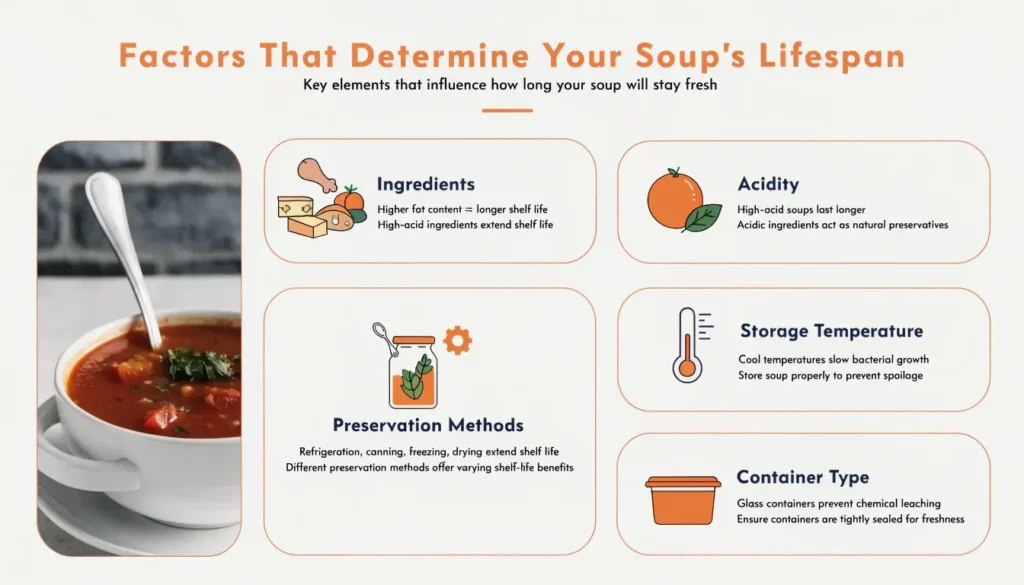
Not all soups are created equal. The answer to how long is soup good in the fridge varies slightly depending on what is swimming in the broth. You can’t treat a delicate seafood chowder the same way you treat a robust, acidic tomato stew.
1. Ingredient Density (Acidity & Preservatives)
- High-Acid Soups (Tomato-Based): Soups like tomato basil, minestrone, or anything with a heavy vinegar base have a slightly longer lifespan (up to 5 days) due to the natural acidity inhibiting bacterial growth. The low pH creates an environment where spoilage organisms struggle to thrive.
- Low-Acid Soups (Meat & Dairy): Seafood chowders, creamy mushroom, or chicken noodle are more delicate. These should be consumed within 3 days. Dairy and seafood spoil faster and are common culprits for food poisoning. If you see a cream soup starting to separate or smell sour before day 3, trust your gut—literally.
2. Salt Content
High-sodium soups act as a natural preservative. A heavily salted broth, like a classic French onion or a miso-based soup, will generally outlast a low-sodium stock. Salt draws out moisture from bacterial cells, inhibiting their growth. However, don’t rely on this as a safety mechanism; it’s merely a slight buffer.
3. Storage Method
How you store the soup is arguably more important than what’s in it.
- Shallow Containers: A deep pot takes hours to cool down in the center. Bacteria thrive in this lukewarm environment. If you keep your soup in a giant stockpot in the fridge, the core might stay warm for six hours, drastically shortening its lifespan.
- Airtight Seals: Oxygen degrades quality and introduces contaminants. Loose lids or plastic wrap with holes allow airborne bacteria and mold spores to settle on the surface.
How to Store Soup Correctly to Maximize Freshness
If you want to push your soup to that 4-day limit safely, how you store it is just as important as how long it sits. Follow this checklist to ensure quality and safety.
The Cooling Process (Don’t put a hot pot in the fridge!)
Putting a massive, piping hot pot into your refrigerator is a triple threat. First, it raises the internal temperature of your fridge, potentially endangering other foods. Second, it traps heat in the center of the pot. Third, it creates condensation that can lead to soggy textures.
Here is how to cool it like a pro:
- The Ice Bath: Place the pot in a sink filled with ice water. Stir the soup gently. This process, known as “shock cooling,” brings the temperature down in minutes rather than hours.
- The Shallow Container Method: Divide large batches into smaller, shallow (2-inch deep) containers. This allows the core temperature to drop below 40°F rapidly.
Storage Best Practices:
- Use Airtight Containers: Glass containers (like Pyrex) are preferable to plastic. They don’t absorb odors, they are easier to sanitize, and they don’t stain from tomato-based soups.
- Label and Date: Use masking tape and a marker. Write the date cooked and the discard by date. This removes the guesswork. When you have three containers that look identical, a date system prevents you from gambling with your stomach.
- Keep the Lid On: Do not crack the lid to “let it breathe.” This introduces contaminants and dries out the soup.
Signs Your Soup Has Gone Bad (The Sensory Test)
Even if you are within the 3-to-4-day window, your senses are the final line of defense. Never rely solely on the calendar. You are the most sophisticated testing equipment in your kitchen.
If you notice any of the following, throw it out immediately:
- Sight:
- Visible mold (fuzzy spots—green, white, or black). If you see mold on the surface, know that the roots have likely spread throughout the liquid, even if you can’t see them.
- A cloudy broth that was originally clear. Fresh stock has a certain clarity. Cloudiness usually indicates a high bacterial load.
- Unusual discoloration or darkening.
- Smell:
- A sour, rancid, or “yeasty” odor. If it smells “off” even slightly, trust your nose. Your olfactory senses are wired to detect spoilage for a reason.
- Texture:
- Excessive sliminess or a thick, syrupy consistency.
- Separation that doesn’t mix back together (though some fat separation is normal and can be remedied by stirring).
- Taste:
- Note: Do not taste if you see mold or smell sourness. If it passes the sight and smell test but you are still unsure, a tiny sip will taste flat or acidic if it is turning. If it tastes “dead” or overly sour, discard immediately.
The Freezer Loophole: Extending Soup Life Beyond the Fridge
If you know you won’t finish your soup within how long is soup good in the fridge (3-4 days), the freezer is your best friend. Freezing stops the clock on bacteria.
Freezing Guidelines
- Shelf Life: Soups can be frozen for 4 to 6 months for best quality, though they remain safe indefinitely if kept at 0°F. However, after 6 months, you may notice freezer burn or a degradation in flavor.
- What to Avoid Freezing:
- Dairy-Based Soups: Cream of mushroom, chowders, and cheese soups often separate and become grainy upon thawing. The emulsion breaks.
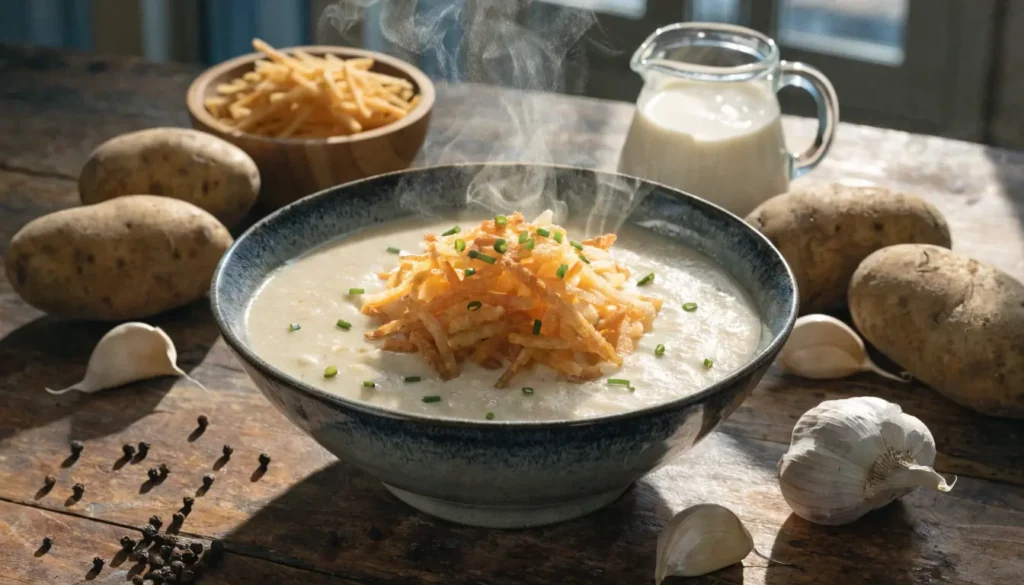
- Potato Soups: Potatoes tend to absorb liquid and turn mushy or gritty.
- Tip: For these, freeze the base (stock and veggies) and add dairy or potatoes after reheating. This ensures you get that fresh creamy texture on the day you actually eat it.
The Best Method: Flash Freezing
- Portion soup into individual serving sizes in freezer-safe bags. Removing as much air as possible prevents ice crystals from forming.
- Lay the bags flat on a baking sheet to freeze.
- Once solid, stack the “soup bricks” upright. This saves space and speeds up thawing time because the surface area is maximized.
Thawing and Reheating: The Final Steps
How you reheat affects both safety and flavor. A soup that was stored perfectly can be ruined by improper reheating. More importantly, improper thawing can reintroduce the very bacteria you were trying to avoid.
Safe Thawing Methods
- Refrigerator (Best): Move frozen soup to the fridge 24 hours before you plan to eat it. This keeps it at a consistent, safe temperature.
- Cold Water Bath: Seal the bag and submerge in cold water, changing the water every 30 minutes. Do not use warm water, as this puts the outer layer of the soup back into the danger zone.
- Microwave (Quick): Use the defrost setting if in a rush. This is best if you plan to eat it immediately.
- Warning: Never thaw soup on the counter at room temperature. The outside will thaw and enter the danger zone while the inside remains frozen.
Reheating Rules
- Bring to a Boil: To ensure safety, reheat soups until they reach a rolling boil (165°F internal temperature). This isn’t just about making it hot; it’s about pasteurizing it.
- Single Use Only: Once you reheat soup, you must eat it all. Do not return leftover reheated soup to the fridge. Repeated cooling and heating cycles drastically increase bacterial risk. If you thaw a quart of soup, only reheat the portion you plan to eat that night.
Frequently Asked Questions (FAQ)
How long is soup good in the fridge if it has meat in it?
If the soup contains poultry, beef, or pork, it is safest within 3 to 4 days. Meat stocks spoil faster than vegetarian stocks due to the higher protein content, which bacteria love. Poultry-based soups, like chicken noodle, are particularly susceptible because chicken is porous and often carries naturally occurring bacteria like Salmonella, which can multiply rapidly if not kept cold.
Can I eat soup after 7 days in the fridge if it smells fine?
No. How long is soup good in the fridge is a hard limit for safety, not just smell. Pathogenic bacteria (the kind that cause food poisoning) often do not change the taste, smell, or appearance of food. By day 7, even if it looks okay, the risk of foodborne illness is dangerously high. When in doubt, throw it out. It is better to waste a container of leftovers than to spend two days dealing with food poisoning.
How long is soup good in the fridge after opening a can?
Canned soup has a different timeline than homemade. Once you open a can, transfer the contents to a container. It is good for 3 to 4 days. Do not store soup in the opened metal can, as the metal can leach into the food and affect flavor, and the exposed rim is a breeding ground for bacteria.
Does rice or pasta make soup spoil faster?
Yes. Rice and pasta act like sponges. They absorb the broth and become mushy, but more importantly, they create pockets of density that can harbor bacteria. If you are planning to store soup for multiple days, it is better to store the broth and the grains/noodles separately and combine them when reheating. This keeps the broth clear and extends the life of the leftovers by an extra day or two.
Conclusion: Trust Your Tools, But Trust Your Instincts
Understanding how long is soup good in the fridge isn’t just about following a number on a calendar; it’s about building a healthy relationship with your food. The 3-to-4-day window provided by the USDA is your safety net, but your actions—cooling it quickly, storing it in airtight containers, and labeling it—are what allow you to maximize that time safely.
Food is meant to nourish us, not worry us. Next time you open that fridge door and see that container of soup, you won’t have to hesitate. You’ll know exactly when you made it, exactly how long it has, and exactly how to tell if it’s ready to warm your soul again.
So, cook with passion, store with purpose, and eat with confidence. Your future self—the one craving that cozy bowl on a busy weeknight—will thank you.
Have a soup storage tip or a disaster story you’d like to share? Drop it in the comments below. Let’s help each other waste less food and enjoy more great meals safely.