There’s something almost magical about the moment a steaming bowl of wonton soup lands on your table. For me, that memory is tied to a tiny, crowded spot in San Francisco’s Chinatown, where the rain streaked the windows and the clatter of spoons against ceramic bowls felt like music. I ordered it without thinking—just like I always did. It was my safe choice. My “I’m being good” choice. The broth was clear, the dumplings were delicate, and surely something that tasted this clean couldn’t possibly be a problem, right?
Then I became a nutritionist, and I had to sit with the uncomfortable question: was I nourishing my body, or was I just soothing my soul? If you’ve ever found yourself staring at a takeout menu, wondering if your favorite comfort food is secretly sabotaging your goals, you’re not alone. Let’s pull back the wrapper and see what’s really floating in that bowl.
What Exactly is Wonton Soup? A Brief Overview
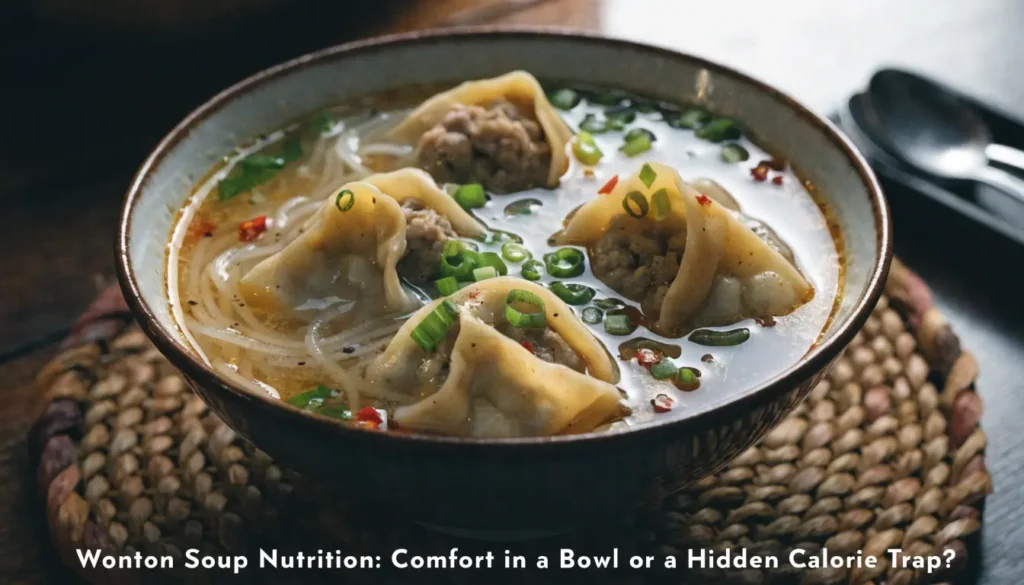
Before we can talk numbers, you need to know what you’re actually eating. Wonton soup is deceptively simple, but each component plays a role in the final nutritional profile. And depending on who makes it, that profile can shift dramatically.
At its core, wonton soup is a combination of three main elements:
- The Broth: Typically a clear stock made from chicken, pork, or shrimp. It’s seasoned with ingredients like soy sauce, ginger, garlic, and sometimes a touch of sesame oil. In restaurants, this broth often simmers for hours, concentrating flavor—and sodium.
- The Wontons: Small dumplings made from thin wheat flour wrappers. The filling is usually a blend of ground meat (pork is the most common, but shrimp and chicken are popular alternatives), green onions, garlic, and sometimes a dash of Shaoxing wine for depth.
- The Add-ins: Most versions come with some type of green vegetable. Bok choy is the classic choice, but you’ll also see spinach, napa cabbage, or even broccoli in some variations. Scallions and a drizzle of chili oil are often offered on the side.
What makes this dish so appealing is its versatility. A bowl from a fast-food takeout joint bears little resemblance to a slow-simmered, vegetable-heavy version you’d make on a Sunday afternoon. And that flexibility means wonton soup nutrition is something you can actually control—once you know what to look for.
The Core Components of Wonton Soup Nutrition (Macros & Calories)
Let’s get specific. If you’re tracking your intake or just trying to make more mindful choices, understanding the baseline numbers is essential. Keep in mind that these figures are averages based on a standard restaurant serving—roughly two cups, or about six to eight wontons.
Caloric Density: Friend or Foe?
You might be surprised to learn that a standard bowl of wonton soup isn’t usually a calorie bomb. Most servings fall somewhere between 250 and 400 calories. That’s a perfectly reasonable range for a meal.
However, there’s a catch. Those numbers can creep up quickly depending on two factors:
- The number of wontons. Some restaurants load up the bowl with ten or twelve dumplings, which essentially doubles the calories.
- The fat content of the filling. Pork belly or fatty cuts of meat will increase the calorie count significantly compared to shrimp or lean chicken.
The Macro Breakdown
To give you a clearer picture, here’s how a typical bowl breaks down in terms of protein, carbohydrates, fat, and sodium.
| Nutrient | Average Amount | Why It Matters |
|---|---|---|
| Carbohydrates | 30–45 g | Comes mostly from the wonton wrappers. Refined flour, so it digests quickly. |
| Protein | 15–25 g | A solid amount for a single meal. Helps with satiety and muscle maintenance. |
| Fat | 8–15 g | Varies widely based on meat choice. Pork adds more saturated fat; shrimp keeps it lean. |
| Fiber | 1–3 g | Depends entirely on vegetable content. Minimal unless you load up on greens. |
| Sodium | 800–1,500 mg | This is the big one. A single bowl can account for 35–65% of your daily recommended limit. |
That sodium figure is where most people get tripped up. You might leave the table feeling satisfied and light, but your body is holding onto a significant salt load. If you’re prone to bloating or managing blood pressure, this is the part of wonton soup nutrition you’ll want to pay closest attention to.
The Hidden Ingredients: What Impacts Wonton Soup Nutrition the Most
Here’s the thing about restaurant food: what you don’t see can hurt you. Or at least, it can derail your nutritional goals. When it comes to wonton soup, the variables aren’t always obvious.
The Filling Factor
The meat inside those delicate wrappers is the main driver of fat and protein content. You have options, even if you don’t always realize it.
- Pork: This is the traditional choice. It’s juicy, flavorful, and often the highest in saturated fat. If the filling tastes exceptionally rich, there’s a good chance it includes pork belly or added fat for moisture.
- Shrimp: The leanest option by far. Shrimp wontons are lower in calories and offer a nice boost of selenium and vitamin D. They also tend to be slightly lower in sodium because the filling requires less seasoning to taste good.
- Chicken: A solid middle ground. Chicken wontons provide high-quality protein without as much saturated fat as pork. They’re a reliable choice if you’re unsure what the restaurant uses.
The Sodium Dilemma
If you have high blood pressure, kidney concerns, or simply hate waking up feeling puffy, sodium is your main antagonist here. But where does it all come from?
- The broth base: Many restaurants use pre-made concentrates or bouillons that are loaded with salt and MSG to create a rich flavor quickly.
- The soy sauce: It’s often added generously during cooking and again at the table.
- The wrappers: Wonton skins are made with salt to preserve the dough and give it structure.
A single bowl can easily exceed 1,500 milligrams of sodium. For context, the American Heart Association recommends capping daily intake at 2,300 milligrams—and ideally aiming for 1,500 if you have heart concerns. That means one meal could blow your entire daily budget.
Health Benefits: Why Wonton Soup Can Be a Nutritional Powerhouse
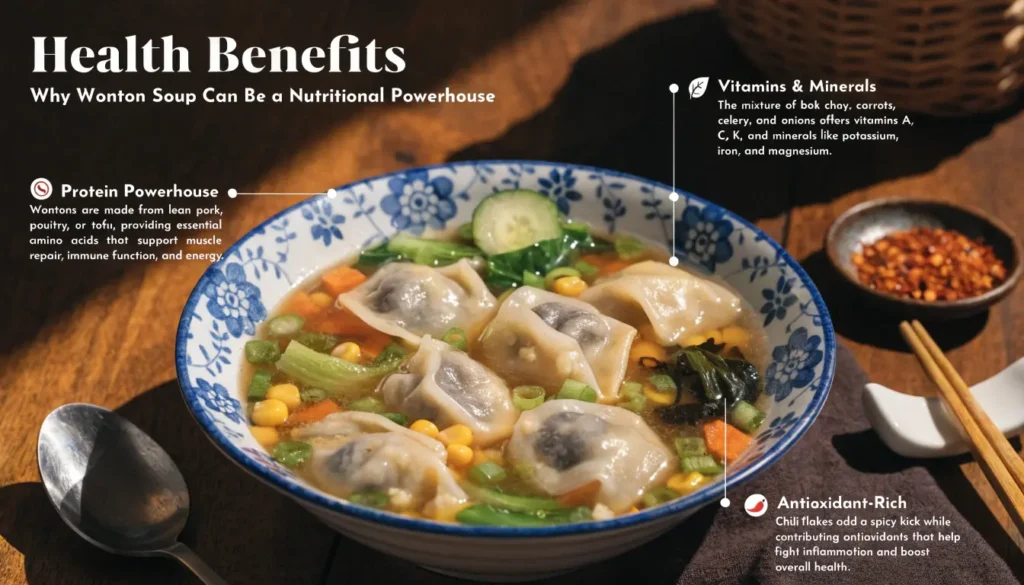
Despite the sodium caveat, I don’t want you walking away thinking wonton soup is something to fear. When done right, it offers real nutritional value. There’s a reason it’s often recommended when you’re sick or recovering from a stomach bug.
- Hydration support: This seems obvious, but a broth-based soup is genuinely helpful for maintaining fluid balance. The water content helps you feel full without adding significant calories.
- Lean protein source: With 15 to 25 grams of protein per serving, you’re getting a solid dose of the building blocks your body needs for muscle repair, immune function, and steady energy levels.
- Vegetable intake: If your bowl is loaded with bok choy, spinach, or napa cabbage, you’re picking up vitamins A, C, and K, plus a little fiber. The key phrase here is “if.” You may need to specifically ask for extra vegetables.
- Gut comfort: Warm liquids are soothing to the digestive tract. For anyone dealing with inflammation, a mild, non-creamy soup can be one of the most tolerable meals.
So wonton soup nutrition isn’t a black-and-white issue. It can swing heavily in one direction or the other depending on how it’s assembled.
Navigating the Menu: Restaurant vs. Store-Bought vs. Homemade
Where you get your soup matters just as much as what’s in it. Each source comes with its own set of trade-offs.
Restaurant Style (The Takeout Trap)
Let’s be honest: restaurant wonton soup tastes the best. That’s because restaurants aren’t optimizing for your cholesterol levels. They’re optimizing for flavor.
- The upside: Convenience and depth of flavor. You can’t replicate a twelve-hour simmered broth in your kitchen on a Tuesday night.
- The downside: Usually the highest in sodium and fat. Many places add a slick of oil to the broth before serving to give it that glossy, appealing look.
- Your move: When ordering, ask for “light soy” or “low-sodium broth” if they offer it. Request any sauces—chili oil, soy sauce, vinegar—on the side so you control the pour.
Frozen or Instant (The Grocery Aisle)
Frozen wonton soups and shelf-stable instant versions have exploded in popularity. They’re convenient, cheap, and come with a nutrition label, which takes the guesswork out.
- The upside: Portion control and transparency. You know exactly how many calories and how much sodium you’re getting.
- The downside: Preservatives and processing. Many frozen options use modified food starches and fillers to keep costs low.
- What to look for: Flip the package over. Aim for options with less than 600 milligrams of sodium per serving. Check the ingredient list to ensure “chicken” or “shrimp” appears before “enriched flour.”
Homemade (The Gold Standard)
If you really want to master wonton soup nutrition, the kitchen is your best ally. I know it sounds intimidating, but you don’t need to fold fifty perfect dumplings to make this work.
- The upside: Total control. You decide the salt level, the type of meat, the amount of vegetables, and whether to use whole wheat wrappers.
- The strategy: Make a large batch of low-sodium chicken broth on the weekend. Use ground chicken or shrimp for the filling. Buy pre-made wonton wrappers to save time. You can freeze the assembled wontons and cook them in small batches whenever the craving hits.
Wonton Soup Nutrition for Specific Dietary Goals
You might be wondering how this dish fits into your specific lifestyle. Whether you’re trying to drop a few pounds, cut carbs, or protect your heart, here’s how to approach it.
For Weight Loss
Wonton soup can actually be a fantastic tool for weight management if you use it strategically. The high water content and protein help trigger satiety signals without a massive calorie load.
- Strategy: Stick to broth-based versions. Skip the “wonton noodle soup” options, which add a second source of refined carbohydrates.
- Pro tip: Eat the broth and vegetables first. This fills your stomach with low-calorie volume. Then move on to the wontons. You’ll likely feel satisfied with fewer of them.
- Calorie hack: A bowl of broth with three wontons and double vegetables can come in under 200 calories while still feeling like a real meal.
For Low-Carb or Keto Diets
Here’s where things get tricky. Traditional wonton wrappers are made from refined wheat flour, which means they’re packed with carbohydrates. A single wrapper contains about 4 to 5 grams of carbs. Six wontons can easily put you at 30 grams of carbs before you’ve accounted for anything else.
- The workaround: Order the soup and eat the filling only. Pop open those wrappers and enjoy the seasoned meatball inside. It’s not the full experience, but it satisfies the flavor craving without the carb load.
- Homemade solution: Make “skinless” wonton soup at home by forming small meatballs seasoned with ginger, garlic, and scallions, then poaching them directly in broth.
For Heart Health
If you’re managing blood pressure or cholesterol, sodium is your primary concern. A restaurant bowl can deliver over half your daily limit in one sitting.
- Action step: If you order out, dilute the broth when you get home. Add an equal amount of hot water or unsalted stock to cut the sodium concentration in half.
- Homemade advantage: Make your own broth and season it lightly. You can always add a splash of low-sodium soy sauce at the table, but you can’t take salt out once it’s in.
How to Order the Healthiest Wonton Soup (Without Losing the Flavor)
You don’t have to give up takeout entirely. You just need to know how to order. Next time you’re staring at a menu, run through this checklist.
- Ask for broth on the side. If you’re getting delivery, this prevents the wontons from soaking in salty liquid for thirty minutes before you even open the container. It also lets you control how much broth you actually consume.
- Double the vegetables. Most places will happily add extra bok choy or spinach for a small upcharge. It adds fiber, vitamins, and bulk without adding significant calories.
- Skip the fried extras. Those crispy wonton strips or chow mein noodles that come on the side? They’re empty calories. Let them go.
- Choose shrimp over pork. This single swap can reduce saturated fat in your meal by as much as 50 percent. It also tends to result in a lighter, less greasy bowl.
Frequently Asked Questions (FAQ)
Is wonton soup healthy for weight loss?
Yes, wonton soup nutrition can absolutely support weight loss goals. The key is to treat it as a vegetable-forward, protein-rich meal rather than a carb-heavy one. Stick to four to six wontons, load up on greens, and drink the broth to help fill you up. Avoid versions with added noodles or fried toppings, which drive up the calorie count without adding nutritional value.
How many calories are in a bowl of wonton soup?
A typical bowl—about two cups with six to eight wontons—falls between 250 and 400 calories. Larger restaurant portions with ten or more wontons can push that number closer to 500 or 600. If you’re tracking calories, assume the higher end for takeout unless you know the restaurant uses a light hand.
Is wonton soup high in carbs?
It can be. Traditional wonton wrappers are made from refined wheat flour, so a standard bowl contains roughly 30 to 45 grams of carbohydrates. Most of those carbs come from the wrappers themselves. If you’re watching your carb intake, you can reduce the number of wontons you eat or skip the wrappers altogether and just eat the filling.
Why is wonton soup so high in sodium?
Wonton soup nutrition tends to be high in sodium because of three contributing factors: the wrappers contain salt, the filling is seasoned, and the broth is often made from concentrated bases or stocks that include soy sauce and added salt. Restaurant versions are the most sodium-dense because they rely on heavy seasoning to maintain consistency across large batches.
Can I eat wonton soup if I have high blood pressure?
You can, but you need to be intentional about it. If you’re dining out, ask if they offer a low-sodium broth option. If not, don’t drink all the broth—focus on the wontons and vegetables. The best approach is to make it at home using low-sodium chicken stock and limiting added salt. This gives you the comfort of the dish without the cardiovascular stress.
Conclusion: Embracing Balance in Every Bowl
That rainy evening in Chinatown feels like a lifetime ago now. Back then, I was eating based on instinct and comfort, without really understanding what I was putting into my body. Now, I know that wonton soup nutrition isn’t a fixed thing. It’s a spectrum. It can be a salty indulgence that leaves you bloated, or it can be a balanced, protein-rich meal that fuels your day. The difference comes down to awareness.
You don’t have to banish this dish from your life. That’s not the goal here. The goal is to help you see it clearly so you can make choices that align with your body and your goals. Whether that means asking for extra greens on your next takeout order, swapping pork for shrimp, or setting aside a Sunday afternoon to make a big batch of homemade broth, the power is in your hands.
So the next time you crave that warm, savory hug in a bowl, you can enjoy it—fully, without guilt, and with the confidence that you’re the one in control.
Have your own wonton soup strategy? I’d love to hear how you make this classic dish work for your lifestyle. Drop your favorite tip or homemade twist in the comments below—your go-to move might be exactly what someone else needs to hear.