You know that feeling when you eat something so fast you barely taste it? Coffee gulped. Toast scarfed. Then you’re out the door, stomach half-full and brain still foggy.
Now imagine the opposite.
Picture a lacquered tray arriving at your table just as dawn cracks over a quiet inn in Kyoto. Steam curls off a bowl of miso soup. A piece of grilled salmon sits next to a mound of white rice so perfect it looks fake. Little dishes hold pickles, seaweed, and something fermented that you don’t quite recognize. You pick up your chopsticks. For the next fifteen minutes, you don’t check your phone. You don’t think about emails. You just eat.
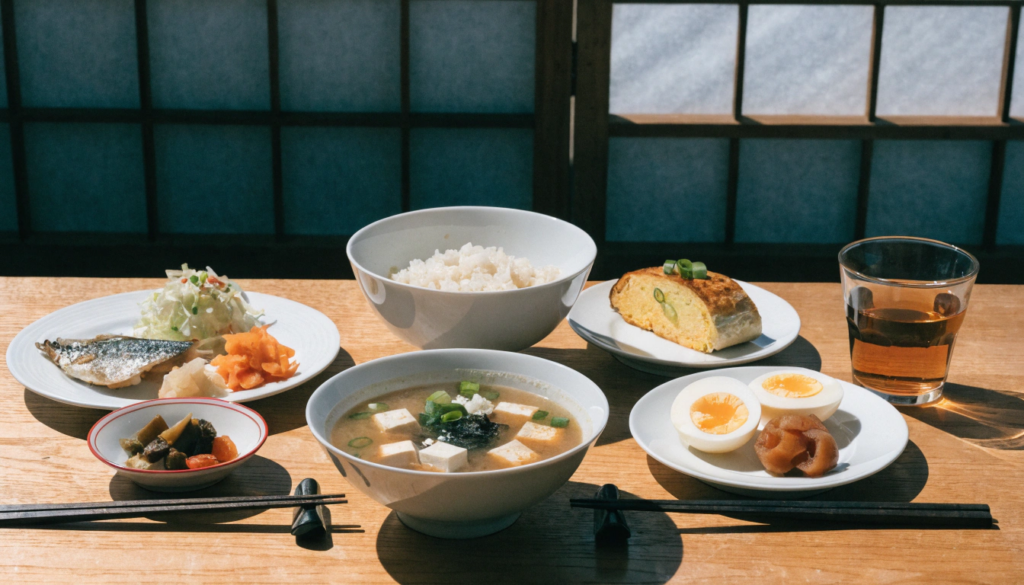
That is the typical Japanese breakfast. And once you understand it, you might never look at your morning meal the same way again.
This guide walks you through every bowl, every bite, and every reason why this savory morning ritual deserves a spot in your kitchen. You will learn what goes into it, why it keeps an entire nation healthy, and how to build your own version without flying to Tokyo.
Let us start with the blueprint.
What is a Typical Japanese Breakfast? Defining the Ichijū-Sansai
If you try to compare a typical Japanese breakfast to a Western one, you will get confused fast. There are no pancakes. No cereal boxes. No maple syrup. Instead, you get balance.
The Japanese call the traditional structure Ichijū-Sansai. That translates to “one soup, three sides.” Every component plays a role. Nothing sits on the tray by accident.
The Core Components (The Golden Ratio)
Here is what lands on the tray:
- Shushoku (The Staple): Steamed short-grain Japanese rice. Not fluffy like basmati. Sticky enough to pick up with chopsticks. You eat it plain, though some folks sprinkle furikake (rice seasoning) on top.
- Shiru (The Soup): Miso soup. Usually made with dashi broth, miso paste, and small additions like tofu cubes, wakame seaweed, or tiny clams.
- Okazu (The Three Sides):
- Protein piece: Grilled fish (salmon or mackerel are the most common) or tamagoyaki—that layered rolled omelet you see in bento boxes.
- Vegetable dish: Simmered greens such as komatsuna or spinach, often dressed with soy sauce and bonito flakes.
- Fermented element: Natto—sticky fermented soybeans. You either love it or you run from it. There is no middle ground.
A typical Japanese breakfast also nearly always includes tsukemono (pickled vegetables) and a sheet of nori seaweed for wrapping bites of rice.
Key Data to Include: A 2019 study in the Journal of Nutritional Science found that people who ate an Ichijū-Sansai breakfast had significantly lower blood sugar spikes after their meal compared to those who ate refined-carb-heavy Western breakfasts. The reason? Protein, fiber, and fermentation slow down digestion.
Now that you know what sits on the tray, let us talk about why your body will thank you.
Nutritional Benefits: Why Japan’s Breakfast Fuels Longevity
Japan holds one of the highest life expectancy rates on the planet. Okinawa gets most of the press, but the everyday typical Japanese breakfast deserves serious credit.
You see, this meal flips the Western sugar-addiction script. No donuts. No sugary yogurt with fruit syrup. Just real food.
Key Nutritional Breakdown
Let me break down what is actually happening inside your body when you eat this way:
- Almost zero added sugar. The only sugar comes naturally from rice and vegetables. Your pancreas gets a morning vacation.
- Massive probiotic load. Between miso soup and natto, you ingest live fermentation cultures before 8 AM. Your gut microbiome basically throws a party.
- Balanced energy release. Rice gives you steady carbohydrates. Fish provides slow-burning protein and fat. No crash at 10 AM.
- Omega-3 fatty acids. Grilled fatty fish like salmon or mackerel delivers anti-inflammatory fats that support brain function. Goodbye morning brain fog.
- Low sodium consideration. Yes, miso soup contains salt. But the high potassium from vegetables and seaweed helps offset the effects on blood pressure.
Callout Statistic: A 2020 cohort study published in The BMJ tracked 90,000 Japanese adults over fifteen years. Those who ate a traditional breakfast five or more times per week showed a 33 percent lower obesity rate than those who ate Western-style morning meals.
You do not need to become a nutrition scientist. Just know this: swapping your sugary cereal for rice, fish, and soup changes your entire metabolic morning.
But how do you actually make this work in a normal kitchen?
Step-by-Step: How to Assemble a Typical Japanese Breakfast at Home
Here is the truth. You probably do not have a Japanese grandmother hovering over your stove. That is fine. You need twenty minutes and one trip to an Asian grocery store.
The Efficient Workflow (Order of Operations)
Do not try to make everything at once. You will burn out. Follow this sequence instead:
- Start your rice cooker the night before. Most modern rice cookers have a timer. Set it to finish right when you wake up. If you cook rice on the stove, soak it for thirty minutes before heating.
- Turn on your broiler. Pat your salmon dry. Season lightly with salt. Broil it for eight minutes at 400°F (204°C). No flipping needed.
- Boil water for miso soup. While the fish cooks, heat two cups of water. Stir in one teaspoon of dashi powder. Turn off the heat. Dissolve two tablespoons of miso paste in a small bowl with some broth, then stir it back into the pot. Add cubed tofu and a pinch of wakame.
- Make or open your egg. Tamagoyaki takes practice. For your first few tries, scramble an egg with a teaspoon of sugar and a splash of soy sauce, then roll it in the pan. Or just buy frozen tamagoyaki and reheat it.
- Open your pickles and natto from jars. Nobody makes pickles from scratch on a Tuesday morning. Store-bought takuan (yellow radish pickle) or umeboshi (sour pickled plum) are authentic shortcuts.
- Steam your greens. Throw a handful of spinach into a microwave-safe bowl with one tablespoon of water. Microwave for one minute. Drain. Top with a dash of soy sauce and bonito flakes.
That is it. Six steps. Twenty minutes. A complete typical Japanese breakfast.
The Essential Pantry Checklist
Before you start cooking, make sure your kitchen holds these items. Tick them off one by one.
- [ ] Short-grain Japanese rice (Koshihikari or Calrose work well)
- [ ] White or red miso paste (start with white—it is milder)
- [ ] Dashi powder (look for hondashi in the Japanese aisle)
- [ ] Frozen or fresh salmon fillets
- [ ] Natto (freezer section—three small styrofoam packs)
- [ ] Nori seaweed sheets (toasted, not raw)
- [ ] Pickled vegetables (fukujinzuke or beni shoga)
Once you stock these, you can build a typical Japanese breakfast any morning you want.
But here is where things get interesting. Travel across Japan, and that breakfast changes completely.
Regional Variations: Beyond Miso and Salmon
The typical Japanese breakfast in Tokyo looks different from the one in Okinawa. Local ingredients and history shape every region.
List of Unique Regional Twists:
- Hokkaido (northern island): Dairy country. You might find a small patty of Hokkaido butter melting into your rice. Plus, salmon roe (ikura) replaces regular grilled fish. Some locals even add a bowl of corn soup.
- Okinawa (southern islands): Bitter melon stir-fry with spam or pork belly appears on the tray. Rice often gets mixed with mugwort for a green tint. And because of US military influence, a slice of canned Spam feels completely normal here.
- Nagoya (central Japan): The famous “Morning Service” culture. Buy a coffee at a local kissaten (old-school cafe), and you get free toast topped with anko (sweet red bean paste) plus a boiled egg. Not traditional, but wildly popular.
- Kyoto (ancient capital): Delicate flavors rule. Instead of heavy grilled fish, you might get yudofu (tofu hot pot) or yuba (tofu skin). Pickles come from local turnips. The soup uses lighter, almost clear dashi.
Source Note: The Japanese Ministry of Agriculture publishes a “Regional Breakfast Census” every five years. Their 2020 report showed that 62 percent of Hokkaido households include dairy in breakfast, compared to only 18 percent in Okinawa.
So which version is the “real” typical Japanese breakfast? All of them. The meal adapts to where you stand.
Typical Japanese Breakfast vs. Western Breakfast: A Comparison Table
Let us lay this out side by side. You will see the differences immediately.
| Feature | Typical Japanese Breakfast | Typical Western Breakfast |
|---|---|---|
| Flavor profile | Savory, umami, slightly salty | Sweet, buttery, saccharine |
| Cooking time | 15–25 minutes active | 5–10 minutes (or zero) |
| Protein level | High (15-25g) | Low (3-8g unless eggs) |
| Sugar content | Less than 2g | 15-35g (sometimes more) |
| Utensils | Chopsticks + small bowls | Fork/knife + one large plate |
| Mindset | Slow, meditative | Scrambled, efficient |
| Fullness duration | 4–5 hours | 2–3 hours (sugar crash) |
The table does not lie. A typical Japanese breakfast keeps you fuller for longer because of the protein and fiber. That granola bar you ate yesterday? You were hungry again by 10 AM.
Frequently Asked Questions (FAQ) About the Typical Japanese Breakfast
People ask the same things over and over when they first discover this meal. Here are the real answers.
Is a typical Japanese breakfast eaten cold?
No. That is a common myth. While some pickles and natto sit at room temperature, the rice comes out steaming hot. The miso soup simmers. The fish comes straight from the broiler. Cold rice would be considered unpleasant. Temperature contrast—hot soup next to cool pickles—is actually part of the experience.
Can a typical Japanese breakfast be vegan?
Absolutely. You just need three swaps. First, replace fish with grilled tofu or yuba (tofu skin). Second, use vegetable dashi instead of bonito-based dashi. Kombu seaweed and shiitake mushrooms make a fine broth. Third, skip the tamagoyaki. Natto and tsukemono are already plant-based. You end up with a fully vegan tray.
Do Japanese people eat this every single day?
Not anymore. Modern weekday mornings for busy Tokyo workers often mean toast with butter, a coffee, or a convenience store onigiri. The full typical Japanese breakfast shows up on weekends, holidays, and in traditional inns (ryokan). Think of it like a full English breakfast. People love it. But they do not make it every Tuesday morning.
How long does it take to prepare a typical Japanese breakfast?
Once you master the workflow, about twenty minutes. Use a rice cooker with a timer, and your active time drops to twelve minutes—just enough time to broil fish and stir miso soup. The myth that it takes an hour comes from people who try to make everything from scratch, including homemade pickles and dashi from dried fish. You do not need to do that.
Is it weird to eat fish for breakfast?
Only if you grew up in a place where fish means dinner. Nutritionally, fish for breakfast makes more sense than cereal. The omega-3 fatty acids literally reduce morning inflammation and brain fog. If you feel nervous, start with grilled salmon. It is milder than mackerel and tastes closer to what Western palates expect. After a week, you will stop thinking it is weird.
Conclusion: Embracing the Rhythm of a Mindful Morning
Here is what I want you to take away.
The typical Japanese breakfast is not a rigid recipe. It is a philosophy written in steam and soy sauce. It tells you that your morning deserves more than a cardboard bar eaten over the sink. It proves that savory, fermented, and slow can beat sweet, processed, and fast every single time.
You do not have to go full traditional tomorrow. Start small. Make a bowl of miso soup alongside your usual toast. Swap your coffee pastry for a piece of grilled salmon. Buy a bag of short-grain rice and a jar of pickles. Eat with chopsticks just to slow yourself down.
That one change will ripple through your entire day. You will chew more. You will breathe more. You might even enjoy the silence before the chaos begins.
Your Turn: This Sunday morning, set your alarm thirty minutes earlier. Make one element from this guide. Maybe the miso soup. Maybe the tamagoyaki. Then come back here and tell me—what did you try? What worked? What made you raise an eyebrow?
Drop your experience in the comments below. Or better yet, take a photo of your tray and share it. Let us build a community of people who believe that breakfast should nourish, not just refuel.
Call to Action: If this guide helped you see breakfast differently, pass it to one friend who needs a slower morning. And if you are feeling brave, answer this question in the comments: Which would you try first—natto or tamagoyaki? No wrong answers. Just hungry people learning together.