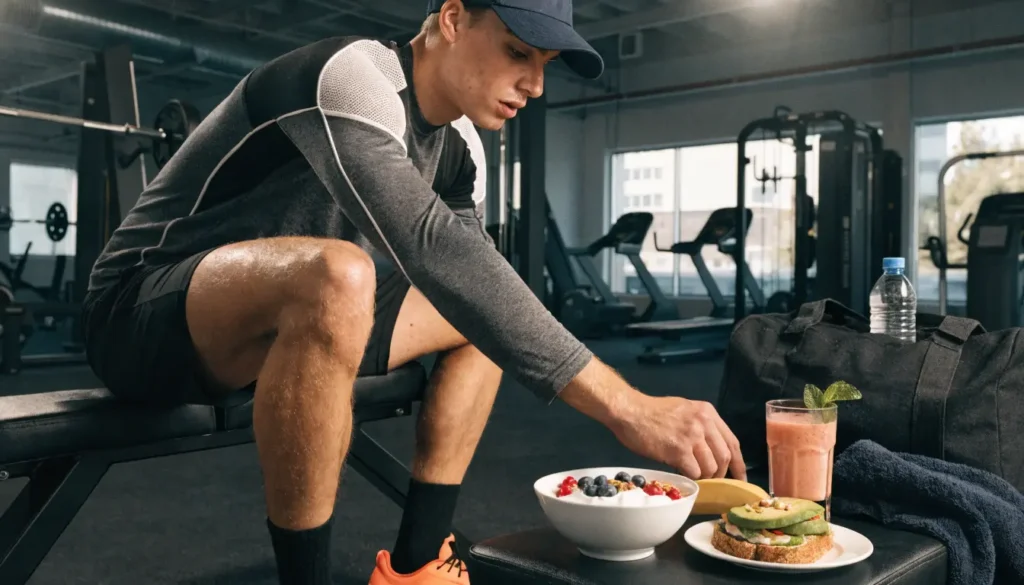
You just finished a brutal session. Your legs feel like concrete, your shirt is soaked through, and your stomach is letting out a growl that could wake the neighbors. You drag yourself home, open the fridge, and… nothing. A half-empty jar of pickles. Some sad-looking cheese. The protein shake you swore you’d drink yesterday but didn’t.
That feeling? The one where your body is screaming for fuel but your brain is too fried to cook? I’ve been there more times than I care to admit. And for a long time, I told myself it was fine. I’d just “eat later.” But later turned into two hours later, then three. And my recovery stalled. My next workout felt heavier. The soreness lasted twice as long.
Here’s the truth nobody warns you about: what you do after you leave the gym matters just as much as what you did inside it. And if you’re relying on willpower alone to feed yourself post-workout, you’re fighting a losing battle.
That’s where smart planning changes everything. Not fancy cooking skills. Not hours in the kitchen. Just a handful of post workout meal prep ideas that turn the hardest part of your fitness routine into the easiest. By the time you finish this guide, you’ll know exactly how to build meals that support your goals, save your sanity, and keep you out of that defeated fridge-staring loop for good.
Let’s get to work.
Why Post Workout Nutrition Matters (Science-Backed Benefits)
You might think a workout ends when you stop moving. But inside your muscles, the real work is just beginning.
Every rep you performed caused microscopic tears in your muscle fibers. Your body’s glycogen stores—basically its reserve fuel tank—got drained. Inflammation kicked in as a natural response to stress. Now your system needs three specific things to turn that damage into growth: protein for repair, carbohydrates for refueling, and time.
The old “anabolic window” myth said you had thirty minutes or you missed your chance. Newer research, including a well-cited 2013 review by Schoenfeld and colleagues, suggests that window is actually closer to two hours. That’s good news. It means you don’t need to chug a shake in the locker room. But it also means you can’t push dinner off until nine o’clock and call it fine.
Here’s what happens when you get it right:
- Muscle protein synthesis ramps up, repairing tears and building new tissue
- Glycogen stores refill so your next workout doesn’t feel twice as hard
- Soreness decreases—some studies show up to 30% less DOMS with proper post-exercise nutrition
- Your immune system gets support instead of getting suppressed
And when you get it wrong? You stay sore longer. Your energy dips. You feel like you’re spinning your wheels even though you’re showing up consistently.
The International Society of Sports Nutrition recommends 20 to 40 grams of protein after training, plus carbs at roughly one gram per kilogram of body weight. Those numbers matter, but they don’t have to be intimidating. Meal prep turns those targets into habits instead of math problems.
The Core Components of an Effective Post Workout Meal
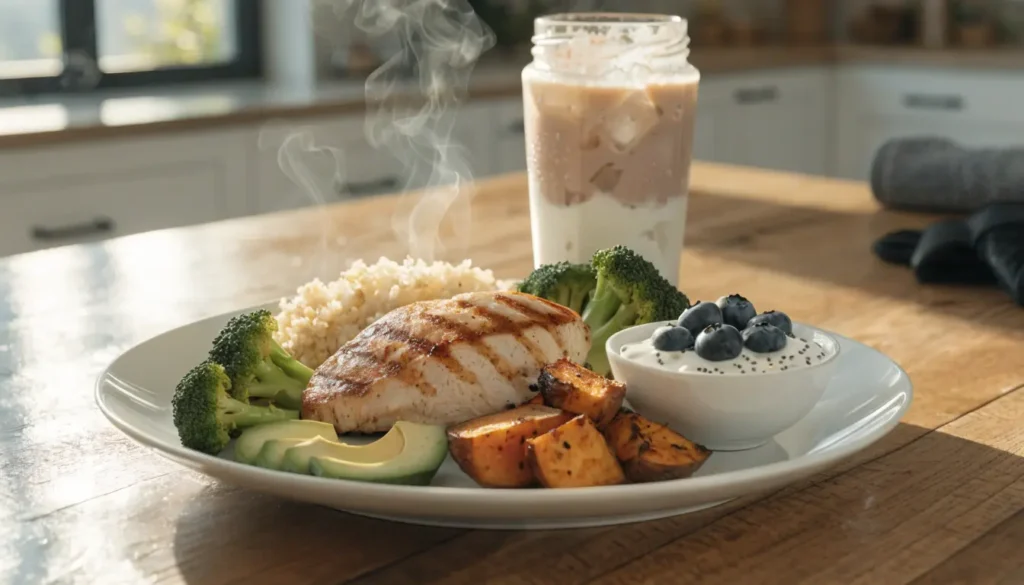
Think of this as your recovery formula. Every container in your fridge should hit these three notes.
Protein – The Building Block of Recovery
Protein gives your muscles the amino acids they need to repair. Leucine is the star here—it directly triggers muscle protein synthesis. Animal sources tend to be complete proteins, meaning they carry all essential amino acids. Plant-based eaters can combine foods like rice and beans or use soy products to get the same effect.
Best protein sources for meal prep:
- Grilled chicken breast (stays juicy for days if you don’t overcook it)
- Lean ground beef or bison (drain the fat after browning)
- Eggs or liquid egg whites (hard-boiled eggs last all week)
- Plain Greek yogurt (skip the flavored kinds—too much sugar)
- Cottage cheese (surprisingly high in casein protein, which digests slowly)
- Firm tofu or tempeh (press tofu first so it absorbs marinades)
- Canned tuna or salmon (wild-caught if your budget allows)
Aim for at least 20 grams per meal. If you’re bigger than average or training very hard, push toward 40.
Carbohydrates – Replenishing Energy Stores
Carbs got demonized for a few years. But post-workout is not the time to fear them. You just emptied your gas tank. You need to fill it back up.
The ideal carb-to-protein ratio depends on what you did. Endurance athletes—runners, cyclists, swimmers—may need three or even four grams of carbs for every gram of protein. Strength athletes can get away with closer to one-to-one.
Carb sources that meal prep well:
- Sweet potatoes (roast a whole batch on Sunday)
- Quinoa (stays fluffy, not mushy, for four days)
- Brown rice or wild rice (freezes beautifully)
- Rolled oats (for overnight or baked oatmeal)
- Beans and lentils (double as a protein source)
- Berries (fresh or frozen—frozen thaw in your lunch bag by midday)
Healthy Fats – Timing is Everything
Here’s where people mess up. Fats slow down digestion. That’s great for keeping you full between meals. But right after a workout, you don’t want slow digestion—you want fast absorption to get nutrients into muscle tissue quickly.
So keep fats low in the meal you eat within the first hour post-workout. Save the avocado, nuts, and olive oil for your next meal.
Example macronutrient breakdowns by goal:
For muscle gain: 40g protein, 60g carbs, 15g fat
For fat loss: 35g protein, 35g carbs, 10g fat
For endurance sports: 25g protein, 90g carbs, 10g fat
These aren’t rigid rules. They’re starting points. Adjust based on how you feel and what your body tells you.
Essential Tools for Post Workout Meal Prep (No Fancy Gadgets Required)
You don’t need a kitchen that looks like a cooking show set. You need six basic things, most of which you probably already own.
- Glass meal prep containers with three compartments – The dividers keep your sweet potatoes from soaking into your chicken. Glass also reheats better than plastic and doesn’t hold onto smells.
- Two large sheet pans – Buy a second one if you only have one. You’ll roast vegetables on one and protein on the other at the same temperature.
- Instant Pot or slow cooker – Shredded chicken, pulled pork, beef stew, beans—set it and forget it while you do something else.
- Rice cooker – Even a cheap fifteen-dollar model makes perfect grains without you watching it.
- Mason jars – Not just for hipsters. Wide-mouth pint jars hold overnight oats, smoothie packs, or layered salads that stay crisp.
- Digital kitchen scale – Eyeballing portions doesn’t work. Twenty dollars buys you accuracy that actually moves the needle on your progress.
That’s it. No spiralizer. No air fryer (though they’re nice). No blender unless you’re doing smoothies. Start with these and add only when you feel limited.
10 Post Workout Meal Prep Ideas for Muscle Gain
Each of these recipes makes four to six servings. Store them in the fridge for up to four days, or freeze half for later in the week.
- Buffalo Chicken Sweet Potato Bowls – Shredded chicken (use a stand mixer to shred in thirty seconds), roasted sweet potato chunks, steamed broccoli florets. Drizzle with Frank’s RedHot mixed with a little Greek yogurt after reheating.
- Lean Beef & Quinoa Power Bowls – Brown 93/7 ground beef with garlic and onion. Cook quinoa in beef broth instead of water for extra flavor. Roast bell peppers and onions on a sheet pan. Assemble and top with fresh salsa (prep the salsa separately so it doesn’t make everything soggy).
- Greek Yogurt Chicken Salad – Mix shredded chicken, plain Greek yogurt (not mayo), diced apple, chopped walnuts, and celery. Serve with whole grain crackers or in butter lettuce wraps. This one actually gets better on day two.
- Teriyaki Tofu & Brown Rice – Press firm tofu for thirty minutes, cube it, toss with low-sodium teriyaki sauce, and bake at 400°F until edges are crispy. Serve with brown rice and frozen edamame that you thaw under hot water.
- Turkey & Egg Scramble Muffins – Cook ground turkey with diced bell peppers. Whisk egg whites with salt and pepper. Grease a muffin tin, divide the turkey among the cups, pour egg whites over the top, and bake at 350°F for twenty minutes. Grab two or three on your way out the door.
- Salmon & Asparagus Sheet Pan Meal – Place four salmon fillets on one end of a sheet pan, asparagus on the other. Drizzle with olive oil, salt, pepper, and lemon slices. Roast at 400°F for exactly twelve minutes. Do not overbake.
- Cottage Cheese Protein Pasta – Cook chickpea pasta according to package directions. Brown lean ground turkey in a pan, add your favorite marinara, then stir in half a cup of cottage cheese. The cottage cheese melts into a creamy, high-protein sauce that you won’t believe isn’t heavy cream.
- Tuna & White Bean Salad – Mix canned tuna (packed in water, drained), cannellini beans, finely diced red onion, fresh parsley, and a light vinaigrette of lemon juice, olive oil, and Dijon mustard. No reheating needed. Eat with crackers or on a bed of spinach.
- Pork Tenderloin & Roasted Root Vegetables – Pork tenderloin is leaner than you think. Rub it with garlic, rosemary, salt, and pepper. On the same sheet pan, toss chopped carrots, parsnips, and sweet potatoes with a little oil. Roast at 425°F for twenty minutes, rest the pork for ten, then slice.
- Egg White & Turkey Sausage Breakfast Bowls – For those early morning workouts when you need food but don’t want a full lunch. Scramble liquid egg whites with sliced turkey sausage, roasted potatoes, and fresh spinach. Portion into bowls and reheat for ninety seconds.
7 Post Workout Meal Prep Ideas for Weight Loss
When fat loss is your goal, you want lower calorie density, higher food volume, and enough protein to preserve muscle. Each of these comes in around 300 to 400 calories with at least 30 grams of protein.
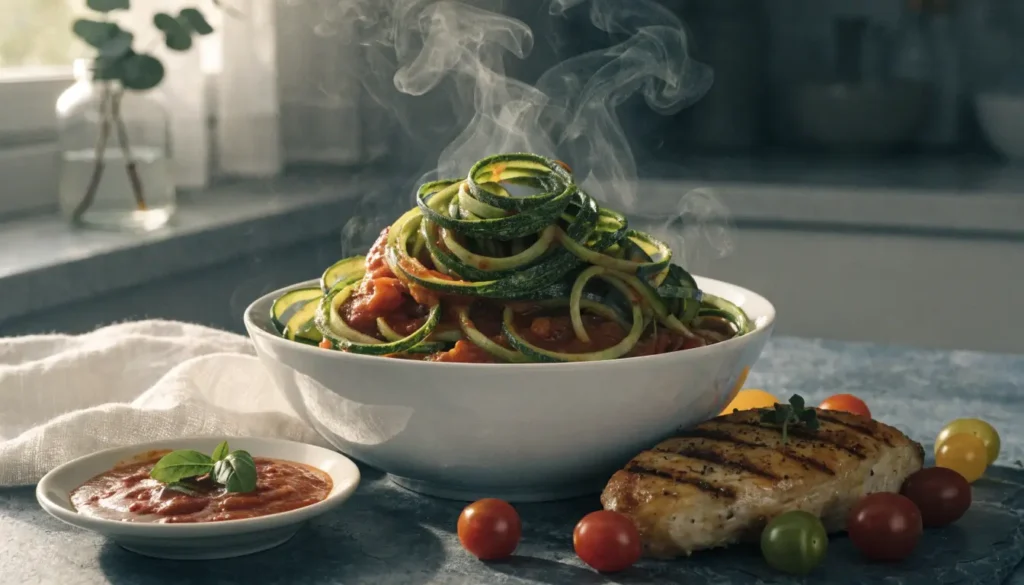
- Zucchini Noodle Chicken Alfredo – Spiralize four zucchinis (or buy pre-spiraled to save time). Shred cooked chicken breast. For the sauce, blend low-fat cottage cheese with a little Parmesan and garlic. Store sauce separately so the zoodles don’t get watery. Combine when you reheat.
- Shrimp & Cauliflower Rice Stir-fry – Frozen shrimp thaw in minutes under running water. Sauté them with cauliflower rice, bell peppers, and coconut aminos (lower sodium than soy sauce). One pan, fifteen minutes, four servings.
- Lean Turkey Taco Lettuce Cups – Season ground turkey with chili powder, cumin, and smoked paprika. Prep separate containers of black beans, pico de gallo, and washed butter lettuce leaves. Assemble at eating time so the lettuce stays crunchy.
- Egg Roll in a Bowl – Brown ground chicken or turkey. Add a bag of coleslaw mix (shredded cabbage and carrots), minced garlic, fresh ginger, and coconut aminos. Cook until cabbage wilts. This one is stupid simple and tastes exactly like the inside of an egg roll.
- Mediterranean Chickpea Tuna Salad – Tuna, chickpeas, diced cucumber, cherry tomatoes, crumbled feta, and a lemon-oregano dressing. No cooking required. No reheating required. Just open cans and chop vegetables.
- Hearty Lentil & Vegetable Soup – Red lentils cook in twenty minutes without soaking. Sauté carrots, celery, and onion. Add lentils, vegetable broth, and a bunch of chopped kale. Simmer until lentils break down into a thick, satisfying soup. Protein comes from the lentils themselves.
- Baked Cod & Green Beans – Frozen cod fillets work fine here. Place each fillet on a square of foil with fresh green beans, lemon pepper, and a thin slice of lemon. Seal the foil into packets. Bake at 375°F for fifteen minutes. The packets steam the fish so it stays moist, and cleanup is throwing away the foil.
5 Quick Post Workout Snacks You Can Prep in 10 Minutes
Some days you don’t want a full meal. You want to shove something in your face and go about your life. These snacks take almost zero effort to prepare in advance.
- Protein Smoothie Packs – In a freezer bag, combine one scoop of your favorite protein powder, half a banana (peel it first), a handful of spinach, and one tablespoon of chia seeds. Freeze flat. When you need it, dump the bag into a blender with water or unsweetened almond milk. Thirty seconds.
- Hard-Boiled Eggs + Everything Bagel Seasoning – Boil a dozen eggs on Sunday. Keep them in their shells until you eat them. Peel, sprinkle with everything bagel seasoning, and grab two with a small apple.
- Greek Yogurt Parfait Jars – Layer plain Greek yogurt, mixed berries, and a tablespoon of crushed almonds in a small mason jar. Keep granola separate if you want crunch—it gets soft if you add it ahead of time.
- Rice Cake “Sandwiches” – Spread a rice cake with peanut butter, top with banana slices and a sprinkle of cinnamon. Prep the rice cakes and toppings in snack bags, then assemble in ten seconds when hunger hits.
- Chocolate Peanut Butter Protein Balls – Mix one cup rolled oats, one scoop chocolate protein powder, half a cup peanut butter, a quarter cup honey, and a quarter cup dark chocolate chips. Roll into bite-sized balls. Freeze on a sheet pan, then transfer to a bag. Eat straight from the freezer—they thaw in your mouth.
How to Plan Your Post Workout Meal Prep Weekly (Step-by-Step)
You don’t need to spend four hours in the kitchen every Sunday. Here’s a ninety-minute routine that covers your entire week.
Step 1 – Look at your workout schedule
Write down what you’re doing each day. Leg day and HIIT sessions need more carbs. Yoga or active recovery days need fewer. Plan your biggest post-workout meals for your hardest training days.
Step 2 – Pick three or four recipes from the lists above
Choose different protein sources so you don’t get bored. Pick one grab-and-go snack option for those days when you’re running late.
Step 3 – Make a grocery list
Write everything down by section: produce, protein, pantry, frozen. Check what you already have before you go.
Step 4 – Batch cook in this order to save time
- Set your rice cooker or Instant Pot for quinoa or brown rice first. It takes the longest but needs no attention.
- Load sheet pan one with vegetables that roast well: broccoli, sweet potatoes, bell peppers.
- Load sheet pan two with proteins: chicken thighs, tofu cubes, salmon fillets.
- While everything roasts, assemble no-cook items: yogurt parfaits, tuna salad, protein balls.
- When the sheet pans come out, let proteins rest for five minutes, then shred, slice, or portion.
Step 5 – Store with a system
Fridge goes to meals for days one through four. Freezer gets meals for days five through seven. Before you go to bed on day four, move tomorrow’s frozen meal to the fridge to thaw overnight.
Step 6 – Label everything
A sticky note that says “Post leg day – eat within two hours” removes the mental load of deciding. You open the fridge, you see the note, you eat the food.
Common Mistakes to Avoid When Prepping Post Workout Meals
Even with a good plan, small errors add up. Watch out for these.
Mistake #1 – Guessing your protein portion
Four ounces of cooked chicken looks smaller than you think. Use a scale. Four ounces equals about 35 grams of protein. Eyeballing usually gives you two or three ounces, which means you’re shortchanging your recovery.
Mistake #2 – Forgetting to hydrate
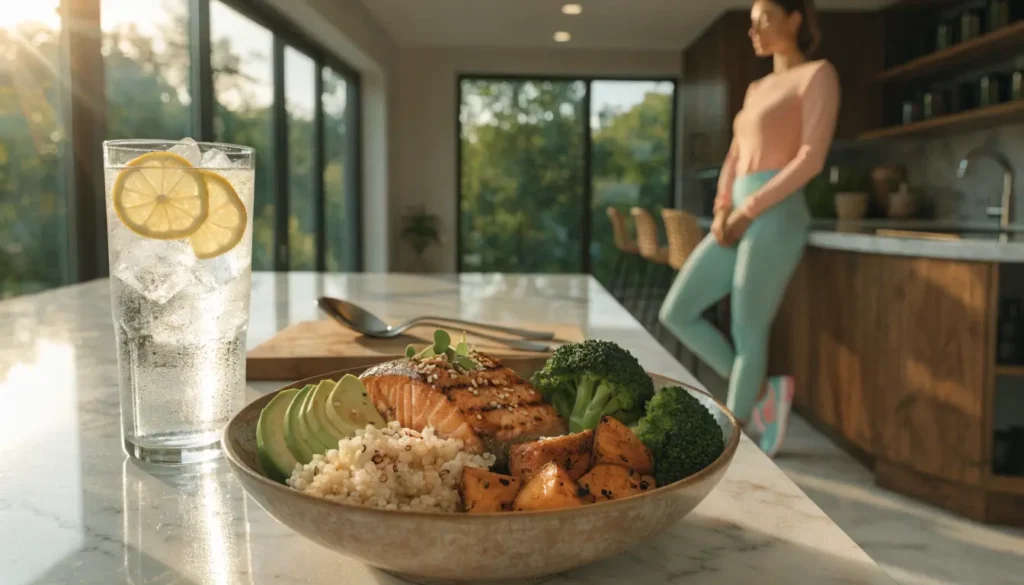
Your meal prep should include a water bottle or electrolyte drink. Set it next to your gym bag the night before. Post-workout thirst is a sign you’re already dehydrated.
Mistake #3 – Eating the same thing for seven straight days
By Thursday, you’ll hate that chicken and broccoli. Freeze half your batch on Sunday, then rotate in a different frozen meal midweek.
Mistake #4 – Letting meals sit too long in the fridge
Cooked food lasts three to four days at 40°F or below. Day five? Freeze it or toss it. Food poisoning will wreck your training more than skipping one meal.
Mistake #5 – Sealing containers while food is still hot
Trapped steam creates condensation, which makes vegetables mushy and promotes bacterial growth. Let everything cool to room temperature before you put lids on.
Frequently Asked Questions (FAQ)
What are the best post workout meal prep ideas for vegetarians?
Focus on complete protein combinations. Tofu with quinoa, Greek yogurt with berries, cottage cheese with peaches, lentil pasta with ricotta cheese, or tempeh stir-fry with brown rice all work beautifully. These hold up for three to four days in the fridge, same as meat-based meals.
How long can I store post workout meal prep containers in the fridge?
Three to four days maximum at 40°F or below. If you prep on Sunday, eat those meals Monday through Thursday. Friday’s meal should go straight into the freezer, then thaw overnight on Thursday.
Can I eat the same post workout meal prep ideas every day?
You can, but you probably shouldn’t. Different protein sources provide different amino acid profiles. Different colored vegetables give you different micronutrients. Plus, eating the same thing daily leads to boredom, and boredom leads to ordering pizza.
Should I eat immediately after every workout, even if I’m not hungry?
Yes, aim for within two hours. Intense cardio often suppresses appetite temporarily. If you’re not hungry, start with a liquid option like a protein shake or smoothie pack. Your muscles don’t care about your appetite—they need fuel.
How do I reheat prepped meals without drying them out?
Add one tablespoon of water or broth before microwaving. Cover with a damp paper towel. Use 70% power instead of full blast. For oven reheating, cover the container with foil and warm at 325°F for ten to fifteen minutes.
Are these post workout meal prep ideas suitable for endurance athletes like runners or cyclists?
Yes, with one adjustment. Endurance athletes need a higher carb-to-protein ratio—three or four grams of carbs for every gram of protein. Double the grains in any bowl recipe. Add an extra piece of fruit. Or include a side of dried mango or apricots.
Conclusion
You’re already doing the hard part. You’re showing up. You’re putting in the work. You’re pushing through sets when your body wants to quit. That effort deserves to turn into results.
And the truth is, post workout meal prep ideas aren’t about being a better cook or having more free time. They’re about respecting the work you just did. They’re about walking past the drive-through because you already have something better waiting at home. They’re about waking up less sore, performing better next time, and finally feeling like all that effort is going somewhere.
Start small. Pick two recipes from this guide. Prep them this weekend. Notice how different your recovery feels when you’re not scrambling.
Your future self—the one with more energy, less soreness, and visible progress—is already thanking you.
Now here’s your call to action: Open your notes app right now. Write down two recipes you want to try. Then comment below with the one you’re most excited about. I read every reply, and I’ll answer any question that’s still on your mind.