You know that feeling. You’ve just crushed a workout—maybe it was heavy squats, maybe a sweat-dripping HIIT session, or a long run that left your legs feeling like wet cement. You stumble through your front door, proud but completely drained. Your brain is foggy. Your muscles feel like they’re filled with sand. And you’re staring into your fridge, absolutely clueless about what to eat.
I’ve been there. Thousands of times.
For the longest time, I actually avoided eating a post workout meal high carb because I bought into that old lie that “carbs make you soft.” I’d choke down a plain protein shake and call it a day. The result? I stayed tired, skinny in all the wrong ways, and my next workout always felt like climbing a mountain with a backpack full of bricks.
Then I learned the truth.
That carb-fear was literally robbing me of my gains. Once I flipped the script and started respecting the post workout meal high carb, everything changed. My energy came back. My muscles filled out. Recovery time got cut in half.
Today, you’re going to learn exactly how to do the same. No bro-science. No guilt trips about food. Just the real, practical blueprint that turns your post-gym meal into your secret weapon.
Let’s dive in.
Why Your Muscles Are Desperately Crying for a Post Workout Meal High Carb
Let me paint you a picture of what’s happening inside your body right after that last rep.
When you push hard during exercise—especially weight training, sprints, or anything intense—your muscles run on something called glycogen. Think of glycogen as the gasoline in your muscle tank. A tough workout can drain anywhere from 30% to 80% of that tank, depending on how long and how hard you went.
Now here’s the part most people miss.
If you don’t refill that tank soon after training, your body starts running on fumes. That leads to a nasty cascade: worse performance tomorrow, longer soreness, and a higher chance of getting sick or injured.
But there’s another hidden villain here: cortisol.
That’s your body’s main stress hormone. Hard exercise spikes it like crazy. A little cortisol is fine—it helps you push through tough sets. But when cortisol stays high because you skipped your post workout meal high carb, you’re essentially bathing your muscles in a hormone that tells them to break down, not build up.
Carbs are the off switch for that cortisol alarm.
Here are the clearest signs you’re not eating enough carbs after training:
- You feel absolutely wrecked for hours after leaving the gym
- Your brain stays foggy even after you’ve showered and changed
- You haven’t added weight to the bar in weeks or months
- You wake up the next morning sore in places that never used to hurt
- You crave sugar or caffeine constantly just to function
According to research published in the Journal of Applied Physiology, consuming carbohydrates within that first hour after exercise can boost glycogen resynthesis by up to 300% compared to waiting just a few hours. That’s not a small difference—that’s the gap between spinning your wheels and actually progressing.
You wouldn’t drive your car on empty. Don’t do it to your body either.
The Golden Window: Timing Your Post Workout Meal High Carb for Maximum Gains

Here’s where a lot of people get anxious. They hear about “the anabolic window” and think they have exactly seven minutes to eat or everything is ruined.
Relax. It’s not that dramatic, but timing still matters.
The 45-Minute Magic Zone
Right after you finish your last set, your muscle cells are like thirsty sponges. Their cell membranes are more permeable than usual, thanks to all that mechanical stress and increased blood flow. Insulin sensitivity is through the roof, which means any carbohydrate you eat gets shuttled directly into muscle tissue rather than hanging around as body fat.
This super-responsive state lasts roughly 45 to 90 minutes. The sweet spot? Aim to get your post workout meal high carb in within that first hour.
Does that mean you need to chug a shake while still on the leg press machine? No. But you should have something waiting for you at home or in your gym bag.
What Happens When You Drag Your Feet
If you push that meal out to two, three, or four hours later, the magic fades.
Your muscles become less receptive to insulin. Glycogen synthesis rates drop by about 50% after that two-hour mark. Meanwhile, cortisol keeps doing its dirty work, and you start dipping into muscle protein for energy—a process called catabolism.
In plain English: you’re literally burning your hard-earned muscle tissue because you didn’t eat soon enough.
Here’s a simple rule to live by: Pack your post workout meal before you leave for the gym. A banana and a protein shake in your bag. A container of rice and chicken in the fridge waiting for you. Don’t leave it to chance or willpower when you’re exhausted.
Simple vs. Complex Carbs: Which Belongs in a Post Workout Meal High Carb?
Not all carbs are created equal, especially when it comes to recovery. Let me break this down in a way that actually makes sense for your real life.
Fast Carbs – Your Immediate Rescue Team
These are high glycemic index carbs. They hit your bloodstream quickly and spike insulin fast. That’s actually good right after training because insulin is one of the most anabolic hormones you’ve got.
Best for: The first 30 minutes post-workout. Especially important if you train twice a day or you’re an athlete with back-to-back sessions.
Examples you’ll actually enjoy eating:
- White rice (jasmine or basmati)
- Baked or boiled white potato
- Ripe bananas (the spotty ones)
- White bread or sourdough
- Honey or maple syrup
- Sports drinks (yes, they have a place here)
- Rice cakes
Slow Carbs – The Sustained Release Option
These are lower glycemic carbs with more fiber or complex structures. They won’t spike insulin as hard, but they’ll keep you feeling full and energized for hours.
Best for: Your second meal after training, or if you’re an endurance athlete who needs steady energy over time. Also great if you train in the morning and have a full day ahead.
Examples:
- Rolled or steel-cut oats
- Sweet potato (keep the skin on)
- Quinoa
- Beans and lentils
- Brown rice (save this for later, not immediately post)
A quick cheat sheet for your fridge:
| Type of workout you just finished | Start with this fast carb | Add this slow carb for your next meal |
|---|---|---|
| Heavy weights (about an hour) | Two bananas with a drizzle of honey | One cup of jasmine rice |
| Running or cycling (90 minutes plus) | A sports drink or fruit juice | Sweet potato and oatmeal |
| HIIT or CrossFit style | White rice cakes with jam | Quinoa |
Don’t Forget Protein: The Critical Partner to a Post Workout Meal High Carb
Carbs alone will refill your gas tank. But if you want to build or even just keep your muscle, you need to bring protein to the party.
Here’s the beautiful synergy: when you eat carbs and protein together after training, the carbs spike insulin, and insulin acts like a key that opens your muscle cells. That key lets both glucose (from the carbs) and amino acids (from the protein) rush inside for repair and growth.
The International Society of Sports Nutrition put out a position stand that showed adding protein to a carb-based post workout meal increases glycogen storage by an additional 20% to 30% compared to carbs alone. That’s free progress you’re leaving on the table.
The ideal ratio most studies point to: 3 or 4 grams of carbs for every 1 gram of protein.
Great protein sources to pair with your carbs:
- Whey isolate (digests fastest)
- Lean chicken breast or turkey
- Egg whites or whole eggs
- Greek yogurt (plain, not the sugary stuff)
- Canned tuna or salmon
- Plant-based protein powder if you avoid dairy
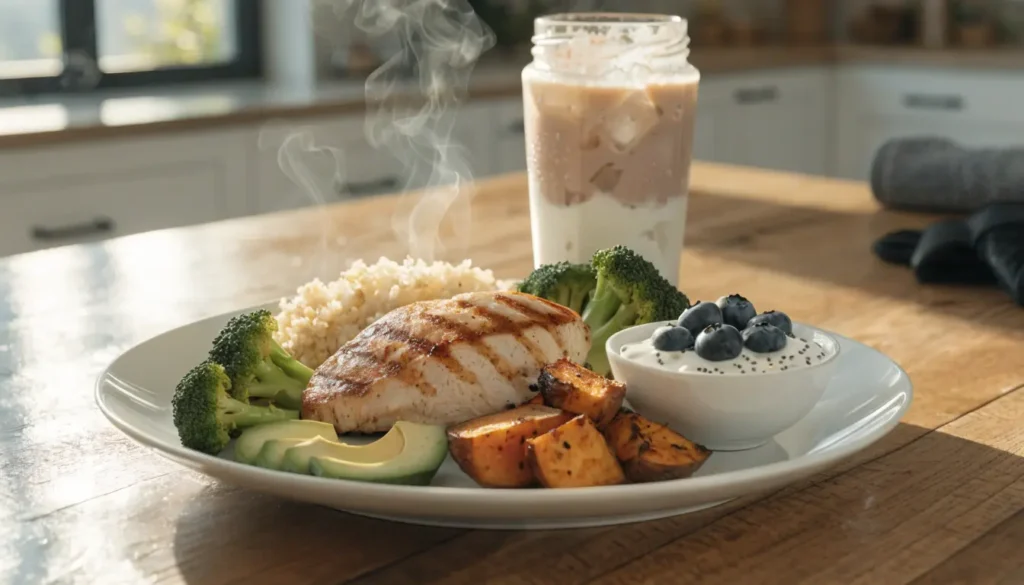
Don’t overcomplicate this. A simple shake with whey and a banana covers both bases. Or a bowl of rice with grilled chicken. Or three scrambled eggs with two slices of sourdough toast and jam.
7 Ready-to-Use Post Workout Meal High Carb Examples (With Exact Numbers)
Let’s get practical. Here are seven real meals you can make right now, complete with carb and protein counts so you know exactly what you’re putting in your body.
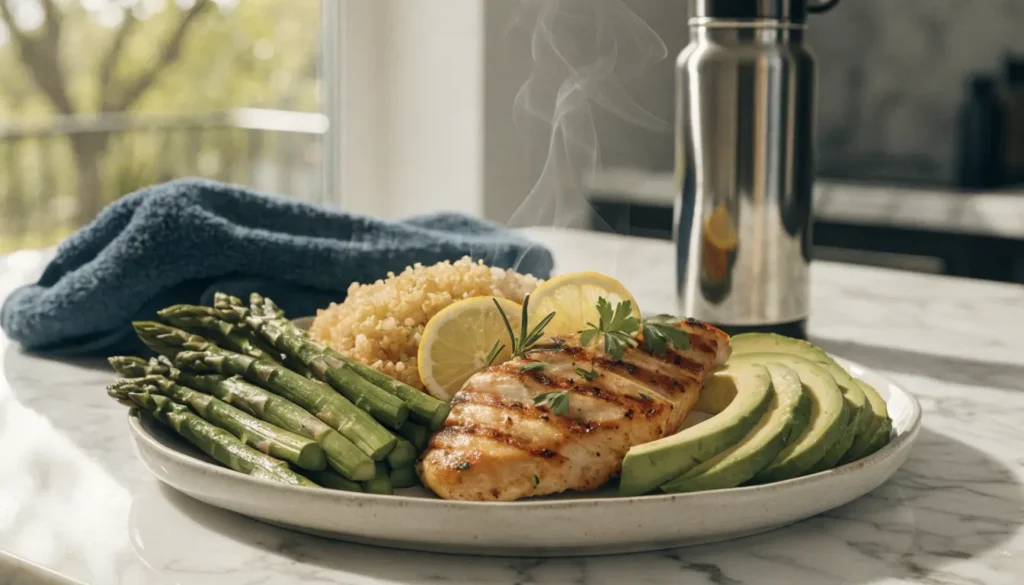
- The Bodybuilder’s Classic – Two cups of cooked jasmine rice, five ounces of grilled chicken breast, and one cup of fresh pineapple chunks. (90g carbs, 40g protein)
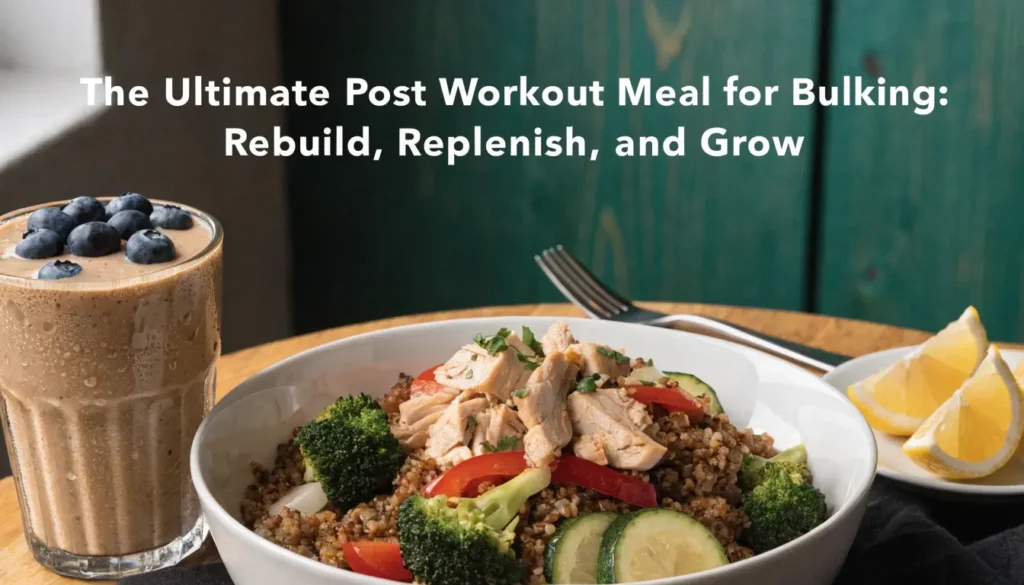
- The Vegan Power Bowl – One and a half cups of cooked quinoa, one cup of black beans, one medium roasted sweet potato, and a quarter of an avocado for healthy fat. (110g carbs, 25g protein)
- Fast & Easy Shake (under three minutes) – Two scoops of whey or plant protein, two ripe bananas, two tablespoons of honey, and one cup of oat milk. Blend and go. (85g carbs, 50g protein)
- The Runner’s Refeed – Three slices of white sourdough bread, two tablespoons of strawberry jam, and three scrambled eggs cooked with a tiny bit of butter. (75g carbs, 30g protein)
- Budget-Friendly Option (under $4) – Two large baked potatoes, one can of tuna in water (drained), and a half cup of plain Greek yogurt on the side. (80g carbs, 45g protein)
- Sweet Recovery Bowl – One cup of cooked oatmeal, one scoop of vanilla protein powder stirred in, two tablespoons of maple syrup, and a handful of mixed berries. (70g carbs, 35g protein)
- On-the-Go (no fridge needed) – Four rice cakes spread with peanut butter, one large banana, and one standard sports drink. (65g carbs, 15g protein)
Pick two or three of these that fit your lifestyle and rotate them. You don’t need forty different options. You need consistency.
Common Fears About a Post Workout Meal High Carb – Let’s Kill Them Now
I hear these worries constantly. Let me put them to rest one by one.
“Won’t eating carbs after a workout just turn into body fat?”
No. And I want you to really hear this.
In the hours immediately after exercise, your body is biochemically wired to prioritize glycogen replenishment over fat storage. The enzymes that build fat are suppressed. The transporters that pull glucose into muscle are upregulated. You’d have to eat an absurd, force-feeding amount of carbs to spill over into fat storage during this window.
The real fat gain happens when you eat high-carb meals while sitting on the couch all day. Context matters.
“But I’m trying to lose weight. Shouldn’t I skip post-workout carbs?”
This is one of the most self-sabotaging mistakes I see.
When you skip that post workout meal high carb, your next workout suffers. You lift lighter weights. You run slower. You cut your session short because you feel like garbage. Over weeks and months, that lower training intensity burns far fewer total calories than if you had just eaten the carbs and trained hard.
Plus, low glycogen leaves you feeling miserable, which makes you more likely to binge on junk later. A strategic carb refeed actually supports fat loss by keeping your engine running smoothly.
“What if my workout ends at 9 PM?”
Shift the portions, but don’t skip entirely.
Instead of 80 or 90 grams of carbs, aim for 30 to 40 grams. Stick to faster-digesting sources like white rice, a banana, or a small portion of cereal with protein powder. This will replenish glycogen without flooding your system with energy right before bed. You’ll sleep better, and you’ll wake up ready to go.
A Real Weekly Schedule for Your Post Workout Meal High Carb
Here’s exactly how this could look for a real person training five days a week.
- Monday (Upper body strength) – 80g carbs (white rice and mango) with 35g protein
- Tuesday (Lower body – the tough one) – 100g carbs (baked potato and oatmeal) with 40g protein
- Wednesday (Rest or light walking) – No special post-workout meal needed. Just eat normally.
- Thursday (HIIT or sprints) – 60g carbs (banana and honey) with 30g protein
- Friday (Full body power) – 90g carbs (quinoa and berries) with 45g protein
- Saturday (Long cardio or sports) – 120g carbs (sweet potato and rice cakes) with 35g protein
- Sunday (Active recovery – yoga or mobility) – 40g carbs (apple with yogurt) and 20g protein
Adjust the numbers up or down based on your body weight. A 120-pound person doesn’t need as much as a 200-pound person. Use your hunger and your performance as your guide.
Frequently Asked Questions About the Post Workout Meal High Carb
Q1: Exactly how many grams of carbs should I eat after training if I weigh 170 pounds?
A: A solid starting range is 0.5 to 0.7 grams per pound of body weight. For a 170-pound person, that’s 85 to 120 grams of carbs. Start at the lower end if your goal is fat loss, the higher end if you’re trying to build mass or training twice daily.
Q2: Can I follow a keto diet and still have a post workout meal high carb?
A: Not in the traditional high-carb sense. Some people on targeted keto protocols eat 25 to 50 grams of fast carbs right after training. But a full “high carb” meal (80+ grams) will absolutely kick you out of ketosis. You have to pick your path.
Q3: Do beginners or casual exercisers need a post workout meal high carb?
A: If your workout is under 45 minutes and low intensity—think a gentle walk, easy yoga, or light stretching—your regular meals will cover you. But once you’re sweating hard, lifting challenging weights, or breathing heavy, you need that refeed.
Q4: What’s the single worst food choice for a post workout meal high carb?
A: Deep-fried carbs. Donuts, french fries, fried plantains. The high fat content slows down digestion dramatically, which means those carbs take forever to reach your hungry muscles. Also avoid huge piles of raw broccoli or cauliflower—the fiber will bloat you when your digestive system is already sluggish from exercise.
Q5: Can I include alcohol in my post workout meal high carb?
A: Please don’t. Alcohol impairs muscle protein synthesis and reduces glycogen resynthesis by roughly 30% based on multiple studies. If you want to have a drink, save it for a rest day, well after you’ve already eaten your recovery meal.
Conclusion – Your Next Workout Starts With Your Post Workout Meal High Carb
That shaky, drained, foggy feeling you’ve been tolerating after exercise? That’s not a badge of honor. That’s not proof you worked hard. That’s a signal—a clear, loud signal—that you’ve been leaving your recovery to chance.
By making a post workout meal high carb a non-negotiable part of your routine, you’re doing something most people never figure out. You’re telling your body exactly what it needs to hear: “Grow back stronger. Refill the tank. Get ready to do this again tomorrow.”
You don’t need fancy supplements. You don’t need a nutrition degree. You just need a plan and a little bit of preparation.
Here’s your action plan for the very next workout:
- [ ] Before you leave home, pack or prep your post workout meal
- [ ] Prioritize fast-digesting carbs first (banana, white rice, potato, or honey)
- [ ] Pair those carbs with 20 to 40 grams of lean protein
- [ ] Eat everything within 45 minutes of your last rep
- [ ] Drink at least 16 to 24 ounces of water alongside your meal
Your muscles earned those carbs. They’re literally begging you for them right now.
So here’s my challenge to you: tomorrow after you train, eat that post workout meal high carb like you mean it. Pay attention to how you feel two hours later. Pay attention to how you feel the next morning. I promise you—you’re not going to want to go back to the old way.
Now I want to hear from you. What’s your biggest struggle with post-workout nutrition? Do you forget to eat? Are you scared of carbs? Drop a comment below, and I’ll personally answer every single question. Let’s get you recovering better starting today.