You know that feeling when you walk in from the cold, and something on the stove is promising warmth before you even lift the lid? That is what mushroom bisque soup means to me. Not just food—more like a memory you can taste. Rainy Sundays at my grandmother’s table, where the steam fogged up the windows and nobody rushed to leave. That soup never shouted for attention. It just sat there, quiet and velvety, waiting to wrap itself around you.
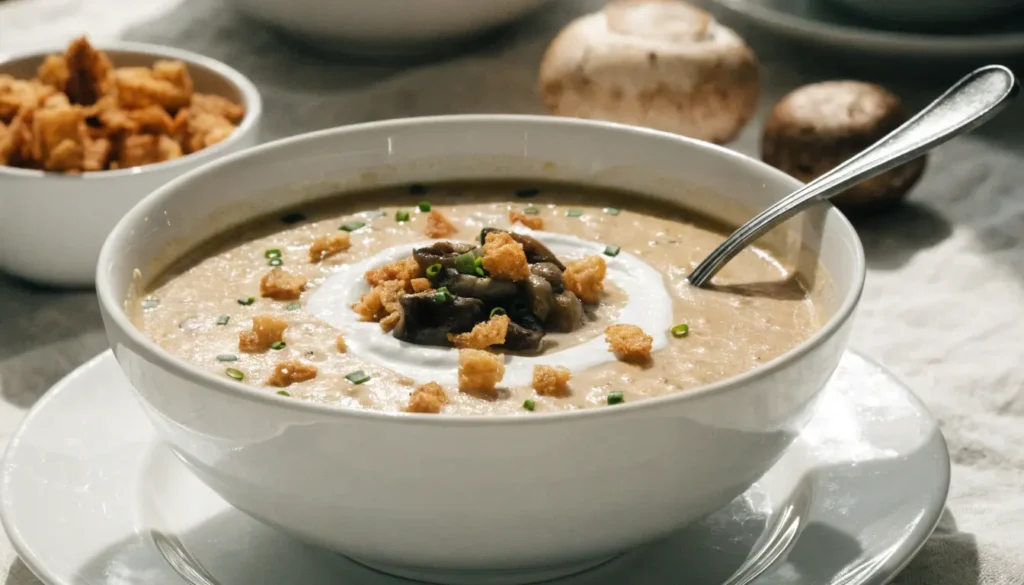
Unlike a thin broth that slides right through you or a heavy chowder that sits like a brick, a proper bisque lives in that sweet spot. Luxurious but not excessive. Deeply savory but never harsh. Whether you have been cooking for years or you are just trying to get a decent dinner on the table after work, this guide walks you through every corner of mushroom bisque soup—from what makes it tick to how to fix it when things go sideways.
Let us get your pot ready.
What Exactly is Mushroom Bisque Soup? (And Why It’s Not Just “Cream of Mushroom”)
You might look at a bowl of mushroom bisque soup and think, “This looks like cream of mushroom.” Fair guess. But the difference is not just in the name—it lives in the texture and the technique.
The French Origin of Bisque
Way back in French culinary history, bisques were always about shellfish. Think lobster or crab. Chefs would grind up the shells, simmer them forever, then strain everything until the liquid felt like liquid velvet. So why does that matter for mushrooms? Because mushrooms do something rare—they bring the same deep, savory punch that shellfish does, without any ocean involved.
Here is a fun fact you can hold onto: mushrooms naturally carry high levels of glutamates. That is the same compound responsible for umami, the so-called “fifth taste.” According to research from the Japanese Society of Taste Technology, mushrooms contain up to 150 milligrams of glutamates per hundred grams. That is naturally occurring MSG, no jar required. So when you turn mushrooms into a bisque, you are not imitating seafood—you are using nature’s own flavor booster.
Bisque vs. Cream Soup: The Texture Difference
Let me break this down so you never confuse the two again.
A standard cream of mushroom soup is chunky. It has bits of mushroom floating around. That is fine. But a bisque? A bisque gets strained or blended within an inch of its life. No chunks allowed. You want a liquid that coats the back of your spoon like satin.
Here is what makes a soup a true bisque:
- It uses a thickener like rice or a well-cooked roux.
- It finishes with cream or butter—sometimes both.
- You will never bite into a solid piece of mushroom. Everything gets smoothed out.
- The mouthfeel should be silky, not gluey.
So when you sit down to mushroom bisque soup, you are getting something closer to a warm pudding than a traditional bowl of soup. And that is exactly the point.
Health Benefits of Homemade Mushroom Bisque Soup

You probably came for the taste. But what if I told you this soup also does good things for your body?
Nutritional Powerhouse in a Bowl
Let us talk numbers for a second. According to the USDA FoodData Central database, a standard serving of cremini mushrooms delivers:
- 32% of your daily B vitamins (riboflavin and niacin), which help turn food into fuel.
- 18% of your daily selenium, a mineral your thyroid needs to keep your metabolism humming.
- Only about 15 calories per cup of raw mushrooms.
Now, add the fact that you are using broth and cream in moderation. Homemade mushroom bisque soup lets you control the fat and salt. Store-bought cans? They often pack 800+ milligrams of sodium per serving. Your version? You call the shots.
Gut-Friendly & Immune Boosting
Here is something most people miss. Mushrooms contain beta-glucans. That is a type of soluble fiber that feeds the good bacteria in your gut. A 2021 study published in the Journal of Nutrition found that regular mushroom consumption correlated with lower markers of systemic inflammation.
Also, if you leave your sliced mushrooms in direct sunlight for fifteen minutes before cooking, they generate vitamin D. Not a ton, but enough to matter—especially in winter when sunlight is scarce.
So your bowl of mushroom bisque soup is not just comfort food. It is quietly working on your immune system while you enjoy every spoonful.
The Essential Ingredients List for Perfect Mushroom Bisque Soup
You cannot build a house with bad wood. Same goes here. Let me walk you through exactly what you need.
Choosing Your Mushrooms (The Flavor Trinity)
Do not just grab one type of mushroom. That would be like painting a portrait with only one color. You want layers.
Here is your shopping list:
- Cremini (Baby Bellas): These are your workhorses. Earthy, mild, and cheap. They make up the base.
- Shiitake: Smoky and almost meaty. You will notice the difference immediately.
- Dried Porcini: This is your secret weapon. They cost more, but you only need a small handful. Rehydrate them in hot water, and do not throw that water away—it is liquid gold.
Aromatics, Liquids & Cream
Do not skip any of these. Each one pulls weight.
- Yellow onion or leek (leek gives a sweeter, more delicate note)
- Fresh thyme (dried works, but fresh is worth it)
- Garlic (two or three cloves, not more)
- Dry sherry or white wine (the acid cuts through the richness)
- Vegetable or chicken stock (low sodium, so you control the salt)
- Heavy cream (or coconut milk if you are avoiding dairy)
The “Secret Weapon” Thickener
Flour works. But it can make your mushroom bisque soup taste pasty. Instead, try mashed rice. Cook a quarter cup of white rice right in the broth. When you blend everything, that rice disappears and leaves behind a silkiness that flour just cannot match. Arrowroot powder is another excellent choice—it does not curdle when mixed with cream.
Step-by-Step Method: How to Make Restaurant-Quality Mushroom Bisque Soup
You are ready. Let me guide you through the actual cooking. Read this once, then head to your kitchen.
Step 1 – The Dry Sauté (Crucial for Umami)
Most people add oil first. Do not do that.
Heat your heaviest pot over medium heat. Throw in your sliced mushrooms—no oil, no butter, nothing. Just mushrooms and heat. At first, they will squeak and stick. That is fine. Then they release their water. Keep cooking until that water evaporates. Only then do you get the browning.
That brown color? That is the Maillard reaction. Food scientists will tell you it creates over a hundred new flavor compounds. It turns a bland mushroom into something deep and almost meaty. This single step separates good mushroom bisque soup from unforgettable soup.
Step 2 – Build the Aromatic Base
Once your mushrooms are deeply browned, add your butter or oil. Then toss in your onions, garlic, and thyme. Cook for two minutes until your kitchen smells like a French farmhouse.
Now pour in your sherry or wine. Scrape the bottom of the pot with a wooden spoon. Those brown bits stuck to the pan? That is pure flavor. Do not leave it behind.
Step 3 – Simmer & Soften
Add your stock and that reserved porcini soaking liquid. Bring it to a gentle boil, then lower the heat. Let it simmer for twenty minutes. This is not active cooking—go chop your garnishes or wash your dishes.
Step 4 – Blend to Velvet
Here is where mushroom bisque soup becomes bisque. Use an immersion blender directly in the pot. It is safer and less messy than a countertop blender. Blend for a full two minutes—not thirty seconds. You want no texture left. Absolutely smooth.
If you only have a stand blender, work in batches and never fill it more than halfway with hot liquid. The steam will blow the lid off otherwise. Trust me on that one.
Step 5 – Finish with Cream & Season
Turn off the heat. Now stir in your cream. Doing this off the heat prevents the cream from splitting into ugly little curds. Season with salt, white pepper (black pepper leaves specks), and a tiny grating of nutmeg. Nutmeg sounds weird, but it wakes up the entire soup.
3 Delicious Variations of Mushroom Bisque Soup
You have the master recipe. Now let me show you three ways to twist it.
1. Vegan Mushroom Bisque Soup
Replace heavy cream with cashew cream. Soak one cup of raw cashews in water for four hours, then blend them with one cup of fresh water until perfectly smooth. Use coconut aminos instead of Worcestershire sauce. The result is shockingly creamy—no one will guess it is vegan.
2. Truffle & Wild Mushroom Bisque
Add one teaspoon of truffle oil at the very end, right before serving. Too much heat destroys truffle oil’s perfume. Also, swap out half the cremini for chanterelles or morels if your budget allows. Garnish with a few sautéed wild mushrooms on top so people see what they are eating.
3. Low-Carb/Keto Bisque
Skip the rice thickener. Use a quarter teaspoon of xanthan gum instead—but add it slowly while blending, or it clumps. Double the heavy cream and stir in two tablespoons of cream cheese for extra body. This version stays thick and luscious without a single carb from flour or rice.
Pro Chef Secrets for Perfect Mushroom Bisque Soup (Avoid These Mistakes)
You will mess up at least once. That is fine. Here is how to fix the most common problems before they ruin your pot.
Mistake #1 – Overcrowding the Pan
If you dump three pounds of mushrooms into a small pot, they will steam instead of brown. Steamed mushrooms taste like wet cardboard. Browned mushrooms taste like dinner. Fix: Cook in two or three batches. It takes longer but pays off.
Mistake #2 – Curdled Cream
You added cream while the soup was boiling, and now it looks like cottage cheese floating in brown water. Fix: Temper your cream. Scoop one ladle of hot soup into your cream bowl and stir. Then pour that mixture back into the pot. No more curdling.
Mistake #3 – Bland Flavor
You followed every step, but the soup tastes flat. Fix: Add a teaspoon of soy sauce or white miso paste. These are not traditional French ingredients, but they pack glutamates that wake up the whole pot. Nobody will taste the soy sauce—they will just wonder why your soup tastes better than theirs.
Best Ways to Serve & Store Mushroom Bisque Soup
You made a big batch. Good. Here is how to handle leftovers and make your bowl look like a restaurant plate.
Garnishes that Impress
Do not just ladle and serve. Take two extra minutes:
- Crispy fried shallots (buy them in a jar or make your own)
- Microgreens (pea shoots are mild and pretty)
- Toasted pumpkin seeds (crunch contrast against the smooth soup)
- A swirl of truffle oil (just a few drops)
- Fresh chives cut into tiny rings
Storage & Freezing Tips
In the fridge: Your mushroom bisque soup will last four days in an airtight jar. Funny thing—day two often tastes better than day one. Flavors need time to get comfortable with each other.
In the freezer: Do not freeze the soup with cream already in it. Freeze the pureed mushroom base only. Cream breaks when frozen and turns grainy. So freeze the base for up to three months. When you want soup again, thaw the base, heat it, then stir in fresh cream. You will never tell the difference.
Frequently Asked Questions (FAQ) About Mushroom Bisque Soup
Can I freeze mushroom bisque soup?
Yes, but freeze it before adding the cream. The cream will separate upon thawing. Freeze the pureed mushroom base for up to three months, then stir in fresh cream when reheating. This one trick saves your batch from turning into a grainy mess.
What is the best mushroom for a creamy bisque?
Cremini mushrooms offer the best balance of flavor and price. For a deeper mushroom bisque soup, mix fresh cremini with dried porcini. The dried mushrooms provide a concentrated umami punch that fresh mushrooms cannot achieve alone. Keep porcini in your pantry—they last forever and rescue any bland soup.
Is mushroom bisque soup gluten-free?
It can be. Instead of flour, thicken your mushroom bisque soup with a quarter cup of uncooked white rice (simmered with the stock and then blended) or use cornstarch slurry. Both methods avoid gluten completely while keeping that velvety texture.
Why is my mushroom bisque soup bitter?
Two likely culprits. First, burnt garlic. Garlic turns bitter faster than you think—add it later in the process, not at the same time as onions. Second, too much wine. Always deglaze with wine and let it cook off for two to three minutes before adding your stock. If you skip that step, the alcohol concentrates and tastes sharp and bitter.
How do I make mushroom bisque soup without heavy cream?
Use full-fat coconut milk for a dairy-free version. Or blend one cup of soaked cashews with one cup of water into a “cashew cream.” Both maintain the velvety texture of classic mushroom bisque soup. Cashew cream actually tastes closer to dairy cream than coconut milk does, so that is my personal recommendation.
Conclusion – Your Bowl of Comfort Awaits
You now have everything you need. Not just a recipe—a full understanding of how mushroom bisque soup works. You know why you dry sauté. You know how to fix a curdled cream disaster. You know which mushrooms to mix and how to freeze your batch without ruining it.
This soup rewards patience. It rewards good ingredients. But most of all, it rewards you—the person standing over the pot, stirring slowly, watching steam fog up your own kitchen windows.
So here is your call to action. Do not just save this article to a folder called “Recipes I’ll Try Someday.” Get up. Grab your heaviest pot. Hit the store for cremini, shiitake, and a small bag of dried porcini. Give yourself forty-five minutes of cooking therapy.
Then ladle yourself a bowl. Sit down. Take that first spoonful. And text me—well, text someone you love—to tell them you finally made mushroom bisque soup from scratch.
You will never buy the canned stuff again. I promise you that.