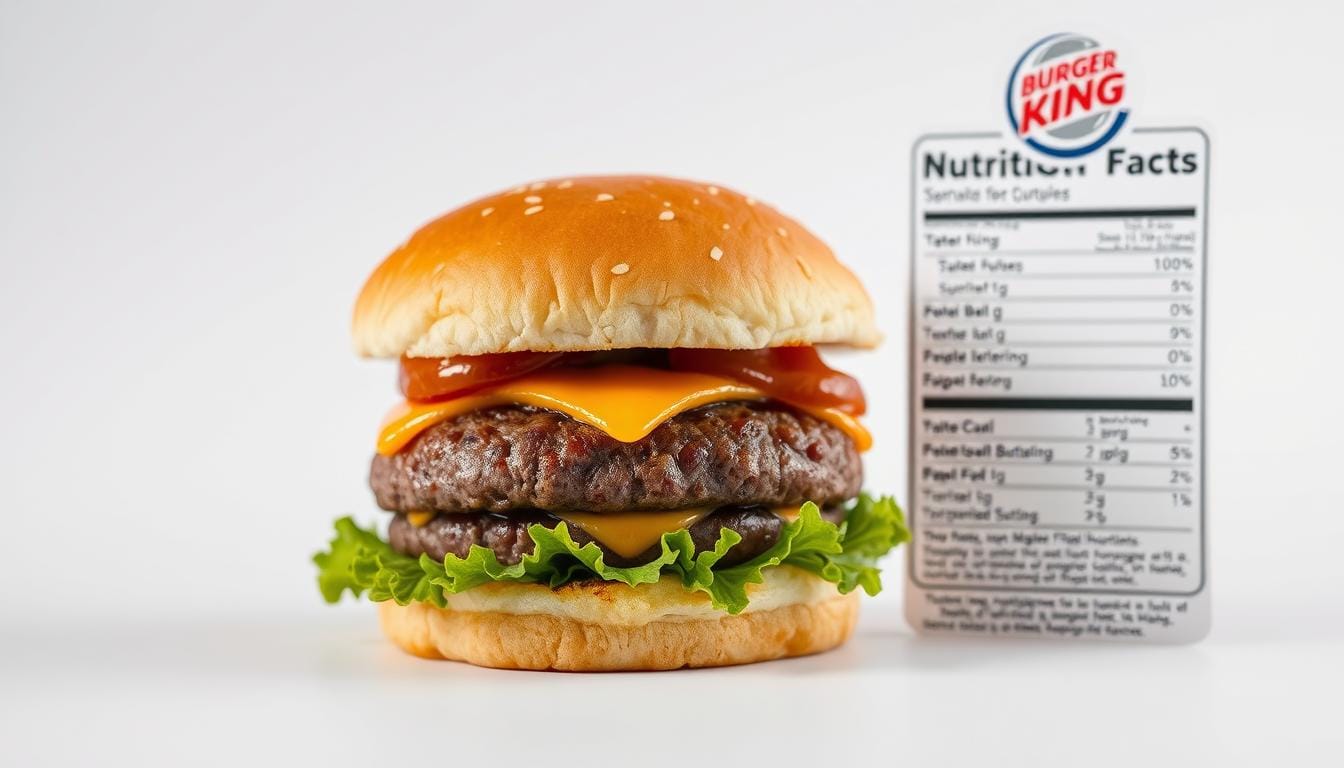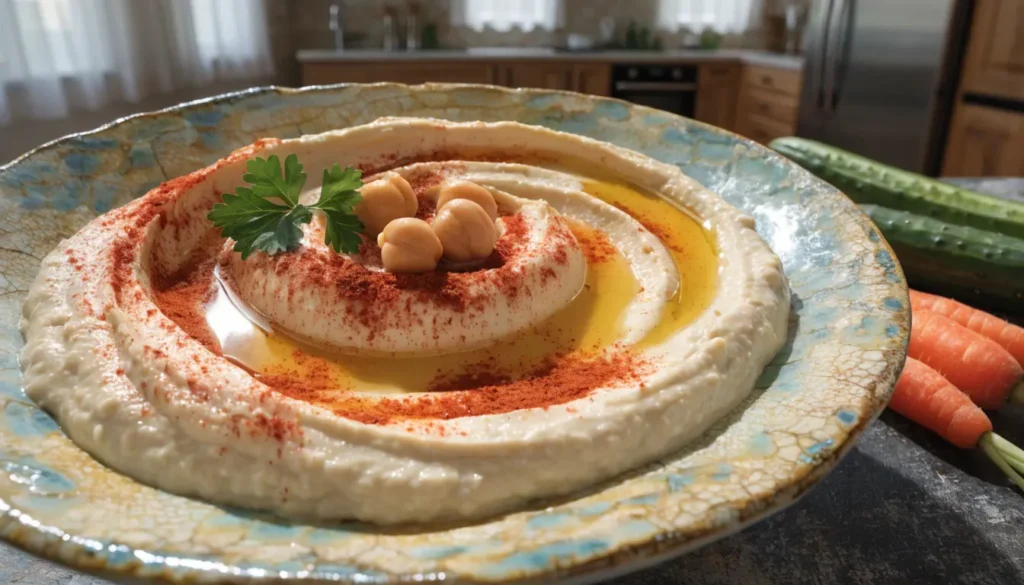
You know that sinking feeling. You’ve just returned from a lovely dinner out, feeling proud of yourself for ordering the Greek plate instead of the cheesy pasta. Then you log your meal. Two tablespoons of that innocent-looking tzatziki sauce you happily sopped up with your pita? One hundred eighty calories. Sometimes more.
I nearly gave up on Greek food entirely because of that reality check. Standing in my kitchen, staring at my half-eaten gyro bowl, I thought, “Why does everything delicious have to cost me?” The answer, as it turns out, is that it doesn’t.
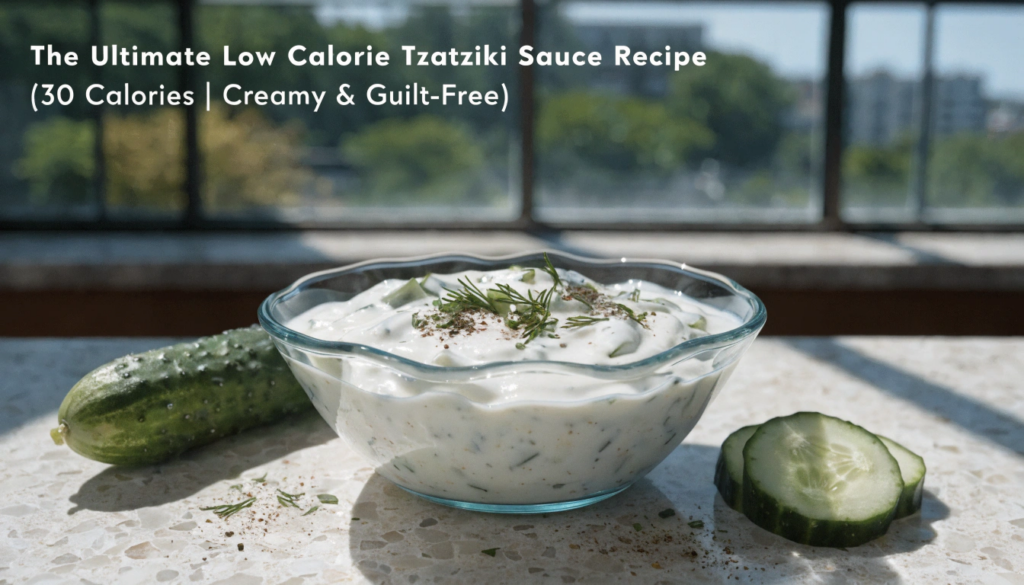
After dozens of experiments—some too sour, some too thin, a few downright gross—I finally cracked the code. This low calorie tzatziki sauce recipe delivers the same creamy, garlicky punch you crave. But instead of nearly 100 calories per spoonful, you get just 30. That is not a typo.
You keep your flavor. You lose the guilt. Let me walk you through exactly how this works, why traditional versions trick your waistline, and the simple ten-minute method that will change your dipping game forever.
Why Traditional Tzatziki Packs Hidden Calories (And How We Fix It)
You might assume tzatziki is automatically healthy. After all, it starts with yogurt and cucumbers. What could go wrong? Plenty, as it turns out.
Traditional recipes call for three major calorie traps. First, full-fat Greek yogurt. A single half-cup serving of that rich, creamy base can hit you with 150 to 220 calories before you add anything else. Second, olive oil. Yes, it is a healthy fat. But one tablespoon adds 120 calories, and most restaurant versions drizzle in two or three. Third, some store-bought brands sneak in heavy cream or extra whey to create that “premium” texture, which only drives calories higher.
Here is a quick comparison based on USDA data. Standard store-bought tzatziki averages 80 to 100 calories for just two tablespoons. The low calorie version you are about to make? Thirty. That means you could eat three full servings of mine for the same calorie cost as one serving of theirs.
How we fix it without losing flavor:
- Swap full-fat yogurt for non-fat Greek yogurt (same protein, zero fat)
- Eliminate olive oil from the sauce entirely (save it for finishing a dish, not drowning your dip)
- Remove all heavy cream and thickeners (you do not need them)
- Use fresh herbs and acid to build flavor depth instead of fat
The result tastes cleaner, brighter, and honestly more authentic than the heavy, oily versions you find in chain restaurants.
The 5 Essential Ingredients for a Low Calorie Tzatziki Sauce Recipe
You do not need a dozen fancy ingredients. You do not need specialty stores. Everything here is available at any basic grocery store, and most of it probably sits in your fridge right now.
- Non-fat plain Greek yogurt – Look for brands like Fage 0% or Chobani Non-Fat. These have the thickest consistency out of the tub. Stay away from “Greek style” yogurts that use pectin or cornstarch to fake thickness. Real Greek yogurt has naturally strained whey, giving you more protein per bite.
- English cucumber – Also called hothouse or seedless cucumbers. These have thinner skins and far fewer seeds than regular garden cucumbers. Less seeds means less water. Less water means you skip the half-hour draining step that most recipes demand.
- Fresh garlic – Do not reach for the jarred minced stuff. Do not use garlic powder. Fresh cloves give you a sharp, clean heat that tricks your tongue into thinking the sauce is richer than it really is. Two small cloves go a long way.
- Fresh dill or mint – Dill gives you that classic Greek taverna flavor. Mint adds a cooler, more refreshing angle. You can use either, or go half and half. Dried herbs will not work here. You need the volatile oils in fresh leaves to carry flavor without fat.
- Lemon juice and white wine vinegar – Together, these two acids do something magical. They cut through the yogurt’s thickness, brighten every other flavor, and completely erase any “diet” aftertaste. Use both. Do not skip either.
One quick note about olive oil: you will not find it in the ingredients list. That is intentional. If you absolutely miss the mouthfeel, mist a single spray over the finished sauce right before serving. But try it without first. You probably will not miss it.
Step-by-Step Low Calorie Tzatziki Sauce Recipe (Ready in 10 Minutes)
This moves fast. Read through once before you start, then gather everything within arm’s reach. You will go from dry ingredients to a bowl of creamy sauce in less time than it takes to watch one episode of your favorite show.
Prep Phase – The “No Soggy Sauce” Trick
Most homemade tzatziki fails because of water. Cucumbers are basically crunchy water balloons. If you grate one directly into your yogurt, you will create a thin, weepy mess within an hour. Here is how to prevent that disaster.
- Grate one half of an English cucumber using the large holes of a box grater. Keep the skin on. That dark green ring adds fiber, texture, and a pop of color against the white yogurt.
- Sprinkle a quarter-teaspoon of salt over the shredded cucumber. Stir it once and walk away for exactly five minutes. The salt pulls moisture out of the cucumber cells through osmosis. You will see a small puddle form at the bottom of the bowl.
- Squeeze aggressively. Dump the salted shreds onto a clean kitchen towel (not paper towels—they will tear). Gather the corners, twist tight, and wring like you are punishing the cucumber. Keep squeezing until no liquid drips out. This step is non-negotiable. If you skip it, your sauce will be soup by dinner time.
Mixing Phase – Creamy & Thick Without Full-Fat
Now the easy part. Your cucumber is dry. Your yogurt is cold. Your herbs are chopped. Let us bring this together.
- Combine everything in a medium bowl:
- One cup non-fat plain Greek yogurt
- The squeezed, salted cucumber shreds
- Two cloves of garlic, minced as finely as you can manage
- One tablespoon fresh dill, chopped (stems removed)
- One tablespoon fresh lemon juice (about half a lemon)
- One teaspoon white wine vinegar
- A pinch of salt and a pinch of white pepper (black pepper works, but white pepper disappears visually)
- Stir gently. Use a rubber spatula or a wooden spoon. Fold the ingredients together just until combined. Overmixing aerates the yogurt and breaks down its protein structure, which makes the sauce thinner. Ten slow folds. Stop there.
- Let it rest. Cover the bowl and refrigerate for at least twenty minutes. This waiting period matters more than you think. During this time, the garlic mellows out, the herbs release their essential oils into the yogurt, and the texture firms back up after the stirring.
Final nutritional truth per two-tablespoon serving: Approximately 30 calories, zero grams of fat, four grams of protein, and two grams of carbohydrates. Compare that to your typical hummus (70 calories) or ranch dressing (140 calories). You could eat an entire half-cup of this sauce for fewer calories than two tablespoons of ranch.
7 Genius Ways to Use This Low Calorie Tzatziki Sauce Recipe (Without Boredom)
You will make a batch. You will love it on your first gyro. Then you will have half a container left and no idea what to do next. Here are seven unexpected uses that keep things interesting all week.
- As a salad dressing – Thin the sauce with a teaspoon of water and another squeeze of lemon. Drizzle over chopped cucumbers, tomatoes, red onion, and olives. This beats any bottled ranch by nearly 150 calories per serving.
- On baked potato wedges – Swap sour cream for tzatziki. The garlic and herbs turn plain potatoes into something crave-worthy. Add a sprinkle of smoked paprika on top for extra depth.
- In a low carb wrap – Spread two tablespoons on a low-carb tortilla. Layer with sliced turkey, fresh spinach, roasted red peppers, and a few kalamata olives. Roll tight. Eat cold or pressed in a panini maker.
- As a veggie dip – Cut carrots, cucumber rounds, bell pepper strips, and cherry tomatoes into dipping sizes. Arrange on a plate with a small bowl of tzatziki in the center. This makes an excellent afternoon snack that keeps you full until dinner.
- On grilled chicken or fish – Spoon a generous amount over hot-off-the-grill protein. The cold sauce cools down spicy rubs and adds moisture without adding oil. Salmon with tzatziki and a squeeze of lemon is a weeknight winner.
- Over roasted zucchini noodles – Spiralize two zucchinis, roast at 400°F for eight minutes, then toss with warm tzatziki. You get a creamy pasta-like experience for under 100 calories total.
- As a sandwich spread – Replace mayo on any sandwich. Turkey and Swiss. Roast beef and arugula. Even a basic ham and cheese tastes bolder with tzatziki instead of yellow mustard. You save roughly 90 calories per sandwich.
Expert Storage & Meal Prep Tips (Keep It Fresh for 7 Days)
You can absolutely make this ahead. In fact, the sauce tastes better on day two than it does on day one. But only if you store it correctly.
How to Store
Choose an airtight glass container. Plastic tends to absorb garlic odors, and that smell will transfer to everything else in your refrigerator. Press a piece of plastic wrap directly onto the surface of the sauce before you snap on the lid. This prevents a watery layer from forming on top overnight.
Shelf Life Timeline
Data from the University of Nebraska-Lincoln Food Safety program indicates that homemade yogurt-based sauces remain safe in a properly working refrigerator (35 to 40 degrees Fahrenheit) for five to seven days. However, quality starts to decline around day four. The garlic becomes harsh. The herbs lose their brightness. The texture may separate slightly.
| Storage Method | Safe Duration | Best Quality Window |
|---|---|---|
| Refrigerator (35-40°F) | 5 to 7 days | Days 1 through 4 |
| Freezer | Not recommended | N/A |
Practical tip for meal preppers: Make a double batch on Sunday. Use it freely Monday through Thursday. On Friday, take whatever remains and use it as a marinade for chicken thighs. The lactic acid in the yogurt tenderizes meat beautifully. Let it sit for twenty minutes, then grill or bake as usual. Nothing goes to waste.
Customization Station – 3 Low Calorie Variations
Maybe you want heat. Maybe you want something cheesier. Maybe you just want to use up that bunch of spinach wilting in your crisper drawer. These three variations keep calories low while shifting flavors dramatically.
- Spicy Feta Tzatziki – Add ten grams of reduced-fat feta cheese (crumbled) and a pinch of cayenne pepper. The feta adds twenty calories total, or about four calories per serving. The cayenne adds zero calories but wakes up your entire mouth. This version works beautifully on black bean burgers.
- Roasted Garlic & Chive – Replace the two raw garlic cloves with five cloves of roasted garlic. To roast garlic, cut the top off a head, drizzle with a tiny spray of oil, wrap in foil, and bake at 400°F for thirty minutes. The resulting garlic becomes sweet, nutty, and completely mellow. Add one tablespoon of fresh chopped chives along with the roasted cloves. Zero extra calories. Entirely different flavor profile.
- Lemony Dill “Supergreen” – Toss a handful of fresh spinach leaves into a food processor with the lemon juice and vinegar. Blitz until smooth. Then mix that green liquid into your yogurt along with the other ingredients. The sauce turns a beautiful pale green, picks up extra iron from the spinach, and tastes even brighter than the original. No calorie increase.
Frequently Asked Questions (FAQ)
Can I make this low calorie tzatziki sauce recipe dairy-free?
Yes, but with one tradeoff. Use unsweetened plain coconut yogurt from brands like Kite Hill or Culina. The flavor remains pleasant, and the texture stays creamy. However, coconut yogurt naturally contains more fat than non-fat dairy yogurt. Expect your final calorie count to rise to roughly 45 or 50 per serving. To mimic the savory tang of dairy, stir in one teaspoon of nutritional yeast. That ingredient sounds weird but works surprisingly well.
Why did my low calorie tzatziki sauce turn out watery?
You already know the answer. You skipped the salting and squeezing step. Maybe you were in a hurry. Maybe you thought it would not matter. It matters. Go back, re-grate your cucumber, salt it properly, and wring that towel until your forearms burn. A dry cucumber is the only path to a thick sauce.
How many Weight Watchers points is this low calorie tzatziki sauce recipe?
Zero points on the Blue, Purple, and Green plans. The Weight Watchers app confirmed this in their 2025 recipe builder update. When you use non-fat Greek yogurt as written, the sauce contains no sugar, no added fat, and minimal carbs. You can eat freely without tracking.
Can I use Greek yogurt that is low fat instead of non-fat?
You can. But each two-tablespoon serving will climb to about 55 calories. That is still far lower than store-bought options, but it is not ultra low anymore. If you have low-fat yogurt on hand and want to use it up, go ahead. Just know the numbers shift. For maximum results, buy non-fat.
Is this low calorie tzatziki sauce recipe keto-friendly?
Yes. With non-fat yogurt, you get roughly two grams of net carbohydrates per serving. Some strict keto followers insist on full-fat dairy for macro reasons. If that describes you, this recipe is not your best fit. But for anyone following a standard keto diet focused on keeping carbs under twenty grams daily, this sauce works perfectly alongside fatty meats and low-carb vegetables.
Conclusion – Your Guilt-Free Greek Journey Starts Now
You came here because you wanted permission. Permission to enjoy creamy, garlicky tzatziki without undoing your progress. Permission to dip, drizzle, and dollop freely. Permission to stop treating food like a math problem and start treating it like pleasure again.
This low calorie tzatziki sauce recipe gives you all of that. Thirty calories per serving. Four grams of protein. Zero grams of fat. And enough bright, herby, garlic-forward flavor to make you forget it came from a non-fat yogurt tub.
You have the method. You have the science. You have seven different ways to use it and three variations to keep things fresh. The only thing missing is your action.
So here is your call to action: Get off this page and into your kitchen before you talk yourself out of it. Grate that cucumber. Squeeze it dry. Mix it up. Taste it. Then come back and tell me what you think.
Pin this recipe to your meal prep board. Save it for your Sunday cooking session. Forward it to that friend who keeps complaining that healthy food tastes boring. Let us prove them wrong together, one creamy spoonful at a time.