I used to think you needed a bamboo whisk and a meditative state to make matcha, but I was just tired of paying six bucks at the cafe. This matcha latte recipe easy hack uses a simple mason jar to achieve professional-level froth without expensive equipment. You’ll get a drink that rivals your favorite coffee shop in under five minutes. The steam rises from the mug, carrying a fresh, earthy scent that wakes up my kitchen every morning.
Quick Answer: An easy matcha latte is made by sifting one teaspoon of matcha powder into a mug, adding two tablespoons of hot water, and whisking until smooth. Top with steamed, frothed milk and your choice of sweetener for a café-quality drink.
You don’t need fancy tools to get that signature texture. By shaking the ingredients, you create a vibrant, bright green liquid with a thick, velvety layer of micro-foam on top. It’s completely free of those stubborn, chalky clumps that ruin a good cup. If you want to pair this with a snack, check out my favorite morning pastry recipes for inspiration.
Ingredients
I always grab Ippodo or Kettl for my matcha because the cheaper stuff tastes like bitter lawn clippings, and honestly, you don’t want that in your mug.
- 1 teaspoon ceremonial grade matcha powder
- 2 tablespoons hot water (175°F)
- 1 cup unsweetened almond milk or whole milk
- 1 teaspoon maple syrup or honey (optional)
Before You Start
This matcha latte recipe easy approach relies on the quality of your tea. If you use culinary grade, the color will look dull and the flavor will be harsh; stick to ceremonial grade if you want that bright, grassy sweetness. You can swap the almond milk for oat milk if you prefer a creamier texture, though oat milk tends to overpower the delicate tea notes. If you’re looking for better ways to froth milk without a fancy machine, a simple mason jar works wonders. Don’t skip the tiny pinch of sea salt I mentioned earlier, as it cuts through the bitterness of the tea better than any sweetener. Just remember that if you use honey, it might settle at the bottom, so give it a good stir before your first sip.
How to Whisk Your Way to a Smooth Matcha Latte
Prep: 2 mins · Cook: 3 mins · Total: 5 mins · Serves: 1 serving
Step 1: Prepare your workspace
Start by setting out your mug and tools. Using a fine-mesh sieve is the secret to avoiding those stubborn, chalky lumps that ruin the texture. I’ve learned the hard way that skipping this step makes for a gritty drink, so don’t be tempted to rush this part. You’ll want to make sure your mug is clean and dry before you begin.
Step 2: Sift the matcha
Gently tap the side of the sieve as you push the powder through with a spoon. You should see a fine, vibrant green dust settling at the bottom of the mug. If you see any larger bits remaining in the mesh, just crush them through with the back of your spoon until only the empty sieve remains.
Step 3: Create the matcha base
Pour the hot water directly onto the sifted powder. Use your whisk to move in a quick, zig-zag motion across the bottom of the mug. You’ll see the liquid transform into a deep, dark jade color as the powder fully integrates. Keep whisking until the surface is covered in a thin, delicate layer of tiny bubbles, which indicates the powder has fully dissolved.
Step 4: Sweeten the mixture
If you prefer a little sweetness, add your syrup now while the base is still warm. A quick stir with your whisk will incorporate the sweetener without deflating the bubbles you just created. This is the best time to adjust the flavor profile to your liking before adding the milk.
Step 5: Froth the milk
Whether you use a handheld frother or a simple French press method, make sure the milk is hot but not boiling. You will notice the texture change from thin liquid to a thick, cloud-like foam that clings to the sides of your frothing pitcher. It should look glossy and smooth, not bubbly or stiff.
Step 6: Assemble the latte
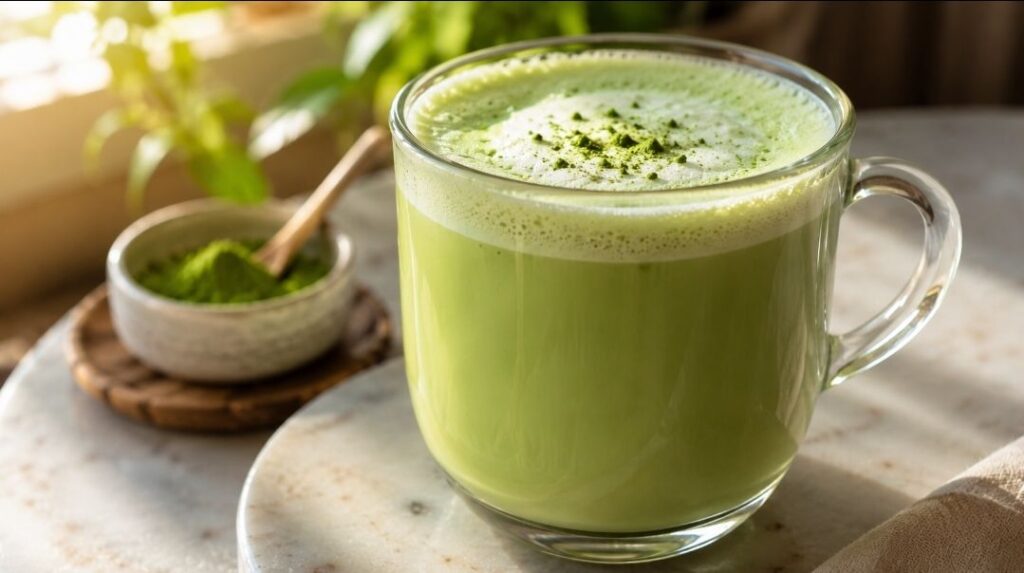
Pour the milk in a steady stream, aiming for the center of the mug. As the milk hits the matcha, you’ll see the colors swirl into a beautiful, creamy light green. The foam should sit perfectly on top, creating a professional look that makes this matcha latte recipe easy to enjoy right away. Take a moment to appreciate the contrast between the dark base and the bright, frothy top.
Troubleshooting
| Problem | Cause | Solution |
|---|---|---|
| Bitter, grassy taste | Water was too hot | Use water at 175°F; boiling water scorches the leaves. |
| Powder stuck to sides | Incomplete whisking | Use a zig-zag motion to reach the corners of the mug. |
| Thin, watery texture | Too much water | Stick to the 2 tablespoon ratio for a concentrated base. |
Tips for Getting It Right
If you find your foam is disappearing too quickly, check the temperature of your milk. It should be hot, but if it gets anywhere near boiling, the proteins break down and won’t hold that velvety structure you want. I usually pull mine off the heat the second I see small bubbles forming around the edges of the pot.
Don’t skip the sifting step even if you’re in a rush. It takes ten extra seconds, but it’s the only way to ensure the powder integrates into the water without leaving those annoying, chalky bits at the bottom of your mug. If you’re struggling with the texture, learn how to froth milk at home to get that café-style finish.
Variations Worth Trying
For a slightly richer drink, swap the almond milk for whole milk. The extra fat content makes the foam much more stable and gives the drink a creamy mouthfeel that really balances the earthy notes of the tea.
If you want a little more depth, add the honey or maple syrup while the matcha base is still hot. This helps the sweetener dissolve completely so you don’t end up with a sugary sludge at the bottom of the mug. You can also try a tiny drop of vanilla extract if you have it on hand, as it pairs beautifully with the floral notes of the powder.
Frequently Asked Questions
How do you make a matcha latte without a whisk?
If you don’t have a bamboo whisk, you can use a small handheld milk frother. Just put the powder and water in the mug and use the frother to mix them until the liquid is smooth and bubbly. It works surprisingly well and saves you from having to clean extra tools.
What is the best milk for a matcha latte?
Whole milk is generally the best for creating a thick, glossy foam because of the higher fat and protein content. If you prefer plant-based options, look for a barista-style almond milk, as it’s formulated to froth better than standard cartons.
Does a matcha latte have more caffeine than coffee?
Generally, a standard serving of this drink has less caffeine than a cup of brewed coffee. You get a more sustained energy boost because of the L-theanine, which helps you avoid that jittery feeling you might get from a strong espresso.
How do you keep matcha from getting clumpy?
The secret is always sifting the powder before it touches any liquid. If you dump it straight in, the moisture traps the powder in little dry pockets that are almost impossible to break up later. Sifting creates a light, airy dust that dissolves instantly when you add the hot water.
This version focuses on a ‘no-whisk’ hack using a simple mason jar to achieve professional-level froth without expensive equipment.
- 1 teaspoon ceremonial grade matcha powder
- 2 tablespoons hot water (175°F)
- 1 cup unsweetened almond milk or whole milk
- 1 teaspoon maple syrup or honey (optional)
- Step 1: Gather a small mug, a fine-mesh sieve, and a handheld whisk to ensure you have everything within reach.
- Step 2: Place the sieve over your mug and push the matcha powder through it to break up any clumps.
- Step 3: Pour the 175°F water into the mug and whisk vigorously until the mixture is completely smooth and uniform.
- Step 4: Add your maple syrup or honey to the matcha base and stir briefly to combine.
- Step 5: Heat your milk until steaming, then froth it until it doubles in volume and looks velvety.
- Step 6: Pour the frothed milk slowly into the mug over the matcha base to complete your matcha latte recipe easy.