You know that feeling when you peel off a damp coat, kick off your shoes, and someone hands you a warm mug of something red and steaming? The kind where the steam fogs up your glasses and the first sip burns your tongue just a little, but you don’t even care because everything suddenly feels okay?
That’s what tomato soup has always been for you. Not just food. A reset button.
Maybe your version came from a red-and-white can. Maybe you still have one rattling around in your pantry right now. And look—no judgment. That can has saved more sick days and rainy afternoons than any homemade recipe ever could.

But somewhere along the way, you started noticing things. The ingredient list that reads like a chemistry exam. The way it never quite tastes the way you remember from Grandma’s kitchen. The faint metallic echo that lingers after the bowl is empty.
You deserve better than that. And honestly? You have twenty-five minutes.
After testing this for over a decade—burning batches, crying over thin soups, and finally landing on something that makes you close your eyes on the first spoonful—I can promise you this: a homemade condensed tomato soup recipe is not harder than opening a can. It’s just more honest. And once you make it your way, you’ll never look at that little red can the same way again.
Let’s walk through it together.
Why Make Homemade Condensed Tomato Soup? Three Reasons You’ll Feel Immediately
Before we get our hands dirty, let’s talk about why you’d bother. Because “because it’s better” is true, but it’s also vague. Here’s what’s actually happening inside that can versus inside your pot.
You cut the sugar by more than half. Most shelf-stable tomato soups pack around twenty grams of sugar per serving. That’s nearly five teaspoons. Where does it come from? It’s not from the tomatoes. It’s added to mask the acidity of cheap tomato paste and to extend shelf life. Your homemade version lets the natural sweetness of slow-cooked onions and ripe tomatoes do the talking. You add sugar only if you want to—and even then, a pinch goes a very long way.
You control the thickness. Have you ever opened a can of condensed soup and thought, “This looks like tomato jelly”? That’s because it’s designed to be diluted. But what if you don’t want to dilute it? What if you’re making a casserole that needs a sturdy base, or a rice bake that would turn to mush with too much liquid? Your homemade batch puts you in the driver’s seat. Simmer it longer for a paste-like concentrate. Stop earlier for a thinner base. The choice is yours every single time.
You can batch cook like a pro. One batch of this recipe gives you the equivalent of four standard cans. Four. That means one hour of cooking on a Sunday afternoon buys you an entire month of Tuesday-night soups, Friday-night pasta sauces, and emergency comfort-food fixes. Freeze it in portions, and you’ve effectively hacked your own convenience food system—without the preservatives.
Here’s a quick reality check. Compare the label of a leading canned brand to what you’re about to make:
| Feature | Canned (Leading Brand) | Homemade |
|---|---|---|
| Sodium per serving | 890 mg | ~300 mg (adjustable) |
| Added sugar | 12g | 0-2g |
| Ingredients list | 15+ items | 7 items |
| Recognizable words | 60% | 100% |
You don’t need a nutrition degree to see which one wins.
Essential Ingredients for the Perfect Condensed Tomato Soup Recipe
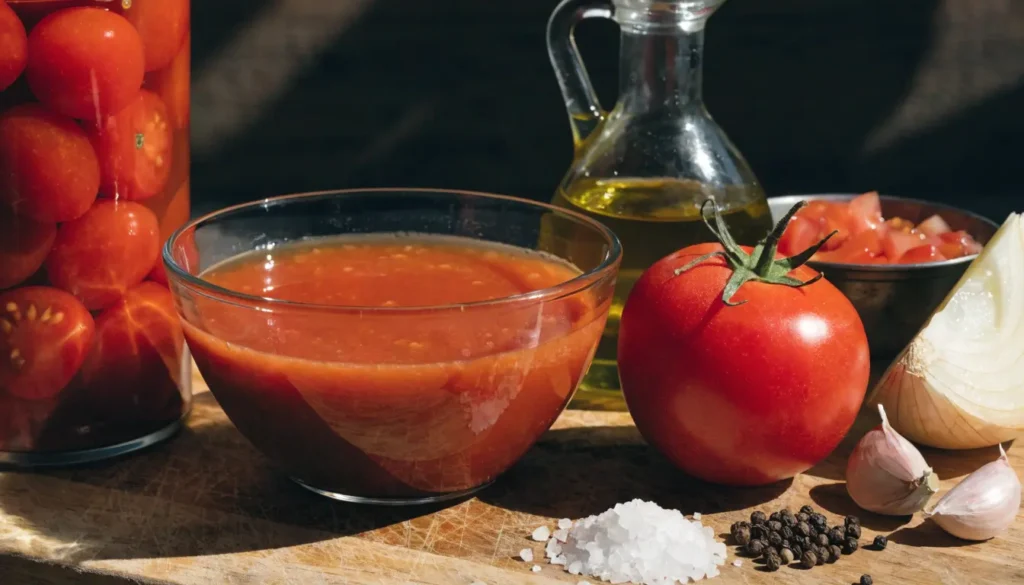
Let’s talk about what goes into your pot. You probably have most of these already. If you don’t, none of them are weird or expensive.
The Non-Negotiable Core
These seven ingredients are your foundation. Skip any of them, and you’re making something else—maybe tasty, but not this.
- Canned whole peeled tomatoes (San Marzano style). This matters more than you think. Whole tomatoes have a higher ratio of solid pulp to watery juice than crushed or diced varieties. That pulp is what gives your condensed soup its body. San Marzano tomatoes are naturally less acidic and sweeter, but if your grocery store doesn’t stock them, any good-quality whole peeled tomato will work. Just avoid the budget cans that are mostly liquid.
- Yellow onion and garlic. These are your aromatic anchors. The onion brings sweetness after it cooks down. The garlic brings that savory punch that makes you go “mmm” before you even add the cream. Don’t skip either one.
- Unsalted butter. Butter does two things here. First, it sautés your onions and garlic without burning them. Second, it binds to the natural acids in tomatoes and softens their sharp edge. If you go dairy-free, coconut oil is your best swap—it has a similar fat structure.
- Vegetable or chicken broth. Low-sodium is the move here. You want to control the salt yourself. Chicken broth adds a deeper savory note. Vegetable broth keeps it plant-based. Both work beautifully.
- Heavy cream or cashew cream. This is what gives condensed soup that signature velvety texture that clings to your spoon. Heavy cream makes it richer. Cashew cream (soaked cashews blended with water) makes it vegan and surprisingly luscious.
Secret Umami Boosters (Optional but Game-Changing)
These three additions are not required, but they’re the difference between “good homemade soup” and “I can’t believe I made this.”
- One teaspoon of tomato paste. Yes, you’re already using whole tomatoes. Adding tomato paste doubles down on the tomato concentration and deepens the color to that gorgeous rusty red you see in restaurant soups.
- Half a teaspoon of smoked paprika. This does not make your soup spicy. It adds a subtle, smoky warmth that tricks your brain into thinking the soup has been simmering for hours. It’s a shortcut to depth.
- A Parmesan rind. If you have one sitting in your cheese drawer, toss it into the pot while the soup simmers. Fish it out before blending. It leaves behind a savory, nutty complexity that nobody will be able to name but everyone will notice is missing when you don’t use it.
A quick word on fresh tomatoes. You might be tempted. You see those beautiful heirlooms at the farmers market, and you think, “Surely fresh is better.” Here’s the truth: fresh tomatoes are up to ninety-five percent water. To get them to condensed-soup consistency, you’d need to simmer them for over an hour just to evaporate all that liquid. By then, you’ve cooked out most of their bright, fresh flavor. Canned tomatoes are picked at peak ripeness and processed within hours. For this specific recipe, they are not a compromise. They are the right tool for the job.
Step-by-Step Method – From Stovetop to “Can” Thickness
Grab your largest pot—a Dutch oven is ideal, but any heavy-bottomed pot works. Clear your counter. Let’s cook.
Step 1: The Aromatic Sweat (5 minutes)
Set your heat to medium. Drop in your butter and let it melt until it shimmers but doesn’t brown. Add your diced onion and a small pinch of salt. That salt isn’t just for flavor—it helps the onion release its water without burning.
Stir occasionally. You’re not looking for color here. You want the onion to turn translucent and soft, like it’s giving up its structure willingly. This takes about four to five minutes. If you hear aggressive sizzling, your heat is too high. Turn it down.
Step 2: Tomato Building (10 minutes)
Add your minced garlic and stir for thirty seconds—just until you smell it. Garlic burns fast, and burnt garlic tastes bitter. Don’t walk away.
Now add your canned tomatoes with all their juices. Use a wooden spoon to crush each tomato against the side of the pot. Don’t overthink this. Chunky is fine. You’re going to blend everything later.
Pour in your broth, tomato paste (if using), and smoked paprika (if using). Stir to combine. The color should shift from pale orange to a deeper, rustier red.
Step 3: Simmer & Reduce (15 minutes)
Bring the whole mixture to a gentle bubble. Not a rolling boil—just a lazy, occasional pop on the surface. Reduce your heat to low and let it sit uncovered.
Here’s where the magic happens. As the water evaporates, the tomato flavor concentrates. The soup thickens. The kitchen starts to smell like a diner on a perfect rainy day. You’re looking for the liquid level to drop by about one-third. This usually takes around fifteen minutes, but trust your eyes more than the clock.
Step 4: Blend for Silkiness
Turn off the heat. Let the soup cool for just three to four minutes—long enough that it won’t explode when you blend it, but not so long that it cools down completely.
If you have an immersion blender, this is its moment. Submerge the head, turn it on, and move it slowly through the pot until every chunk is gone. If you’re using a standard blender, work in batches. Fill the blender jar no more than halfway, hold the lid down with a folded kitchen towel, and start on low. Hot liquids expand, so going slow prevents a tomato volcano on your ceiling.
The result should be completely smooth. No flecks. No fibers. Just silk.
Step 5: Finish & Adjust
Return the blended soup to low heat if it’s cooled down. Stir in your cream (or cashew cream). Watch the color lighten from deep red to a soft, rosy orange.
Now taste. And be honest with yourself.
Does it need salt? Probably yes, but add a little at a time. Does it need a pinch of sugar? If the tomatoes were particularly acidic, a tiny pinch will round things out without making it sweet. Does it need black pepper? Always.
The texture test: Dip the back of a spoon into the soup. Pull it out. Run your finger across the coated spoon. If the soup leaves a clean line that holds its shape for a second, you’ve nailed it. If it runs immediately, it’s too thin—simmer five more minutes. If it doesn’t move at all, it’s too thick—stir in a tablespoon of broth.
One final reminder: unlike a regular tomato soup, this condensed tomato soup recipe is not meant to be eaten straight from the pot. It’s a base. It’s concentrated. It’s waiting for you to turn it into something else.
How to Use Your Homemade Condensed Tomato Soup (Three Genius Ways)
You’ve made a batch. Now what? Here are your best options.
1. Classic Bowl (1:1 Liquid Ratio)
This is the one you already know. Mix one part condensed soup with one part milk, water, or broth. Warm gently on the stove. Do not boil after adding dairy—it’ll separate and turn grainy. Serve with a grilled cheese cut diagonally (the diagonal cut is scientifically proven to taste better).
2. Casserole Shortcut
Use your condensed soup undiluted as a sauce base. Try it in:
- Tomato rice bake: Mix two cups of cooked rice with one cup of condensed soup and a handful of shredded cheese. Bake at 375°F for twenty minutes.
- Sloppy Joe filling: Brown one pound of ground beef with diced onion. Stir in one cup of condensed soup and a tablespoon of brown sugar. Simmer for ten minutes. Spoon onto buns.
- Shepherd’s pie twist: Layer seasoned ground lamb or beef in a baking dish. Top with a mixture of condensed soup and a splash of broth. Cover with mashed potatoes. Bake until bubbly.
3. Pasta Sauce Booster
Stir half a cup of condensed soup into your regular jarred marinara. The tomato soup adds creaminess and a subtle sweetness that balances the acidity of most store-bought sauces. Your pasta will taste richer without tasting like soup.
Storage & Canning Guidelines – Safety First
You’ve made a big batch. Good. Now let’s keep it safe.
In the refrigerator: Transfer cooled soup to an airtight container. It will stay fresh for up to five days. After that, the texture starts to degrade even if it’s still safe to eat.
In the freezer: This is where batch cooking shines. Pour your cooled condensed soup into ice cube trays for small portions, or into wide-mouth mason jars for larger ones. Leave one inch of headspace—liquids expand when frozen, and a cracked jar is a sad discovery. Frozen soup lasts six months without losing quality.
A critical note on canning: Do not attempt water-bath canning with this recipe. Unlike pickles or fruit jams, this soup contains dairy and does not have a low enough pH (below 4.6) to safely preserve on a shelf. The combination of cream and tomatoes creates a botulism risk if canned improperly. If you want shelf-stable soup, you need a pressure canner and a tested recipe from a reputable source like the USDA or Ball. Otherwise, stick to the freezer.
Expert Troubleshooting – Fixes for Common Issues
Something went wrong. Don’t panic. Here’s what happened and how to fix it.
| Problem | Cause | Fix |
|---|---|---|
| Too thin | You didn’t simmer long enough | Return to heat. Simmer uncovered for 5-10 more minutes. |
| Metallic taste | Cream was added to boiling soup | Cream curdles above 180°F. Next time, remove from heat first. For now, blend in a teaspoon of honey to mask it. |
| Grainy texture | Blended while too hot | Hot liquids expand and can cause emulsions to break. Cool for 5 minutes before blending next time. |
| Bland | Missing umami | Stir in half a teaspoon of fish sauce or soy sauce. You won’t taste fish. You’ll just taste “more.” |
Frequently Asked Questions
Can I use this condensed tomato soup recipe in any recipe that calls for a can of Campbell’s?
Yes, directly. One full batch of this recipe equals exactly one 10.75-ounce can’s worth of condensed soup. Swap it in measure for measure. No adjustments needed.
Why is my homemade condensed tomato soup darker than store-bought?
Because you didn’t add food coloring. Most canned soups contain caramel color or red dye to make them look more appetizing. Your soup’s darker, earthier color comes from real tomato concentrate. That’s a feature, not a bug.
Can I make this dairy-free?
Absolutely. Swap the butter for coconut oil. Swap the heavy cream for full-fat oat milk or cashew cream. The texture will be slightly less rich but still properly condensed.
How do I thin it for drinking soup?
For every one cup of condensed base, whisk in one cup of broth or milk. Heat gently over medium-low. Do not let it boil after you’ve added any dairy. Boiling = curdling.
Is this recipe gluten-free?
Yes. There’s no flour, no thickener, and no hidden gluten. Just tomatoes, vegetables, fat, and cream.
Conclusion – Your Pantry’s New Secret Weapon
That can in your cabinet has never held a memory. It has held modified food starch, sodium bisulfite, and a whole lot of marketing budget. But it has never held a rainy Tuesday afternoon with a friend who showed up unannounced. It has never held the quiet pride of pulling something from your freezer that you made with your own two hands.
This condensed tomato soup recipe holds all of that.
You can make it in the time it takes to watch one episode of a sitcom. You can freeze it in puck-shaped portions using a muffin tin. You can pull one out on a night when you have nothing left to give, thin it with a little milk, and feel like you cheated the system.
Because you did. You cheated the system that told you convenience had to come from a factory.
So here’s your call to action: Make a double batch this weekend. Freeze half. And next Tuesday—because it’s always Tuesday when you need soup—pull out a portion, heat it gently, and cut yourself a grilled cheese with the crusts still on.
Then look at your bowl and know: you made that. And it tastes exactly like you cared.
Now go light a fire under that butter. Your soup is waiting.