You know those mornings where you wish time would just stretch out a little longer? Where you could sit, breathe, and actually taste what’s in front of you without checking your phone or rushing out the door?
I had one of those mornings years ago in a small village tucked into Lebanon’s Mount Lebanon range. My host, a woman named Sitt Amal, didn’t speak much English. But she kept placing plate after plate on a worn wooden table—olives she’d cured herself, labneh so tangy it made my eyes water, and flatbreads pulled straight from a clay oven. She pointed at the food, then at me, then made an eating motion with her hand. Eat. Stay. This is how we start the day here.
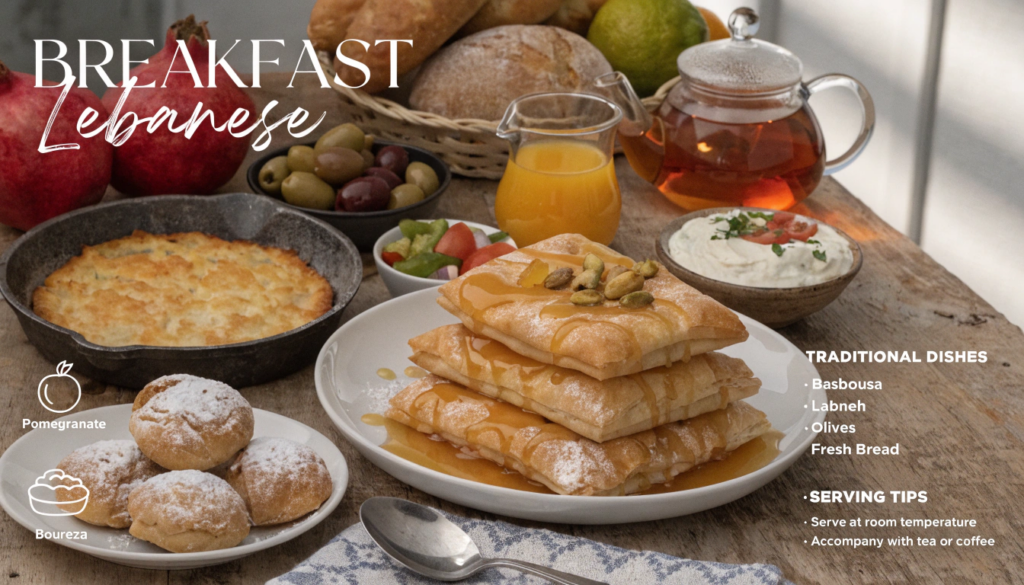
That’s the thing about a Lebanese breakfast. It isn’t about speed or convenience. It’s about slowness. Generosity. And a quiet understanding that how you break your fast sets the tone for everything that follows. Whether you’re homesick for Beirut, curious about new flavors, or just tired of the same old cereal routine, you’re about to learn how to bring that same warmth into your own kitchen.
What Makes a Lebanese Breakfast Unique? Key Characteristics
Before you start chopping cucumbers or warming pita bread, you need to understand what you’re aiming for. A Lebanese breakfast isn’t built like a Western one. There’s no pile of pancakes. No sugary cereal. No lone egg on a white plate looking sad and lonely.
Instead, think of a small parade of dishes—each one doing its own job, none of them trying to steal the spotlight.
What you’ll notice right away:
- Savory rules the table. Sweet items are rare. You might see a spoonful of fig jam or a drizzle of honey over cheese, but sugar isn’t the star.
- Fresh vegetables show up raw. Not as a garnish. As a main player. Radishes, mint sprigs, cucumber wedges, and scallions sit right next to the eggs.
- Olive oil touches almost everything. It gets poured over labneh, mixed into zaatar, and used to finish almost every warm dish.
- Meals last longer than 15 minutes. This isn’t breakfast-on-the-go. You sit. You talk. You dip, tear, and scoop until you’re genuinely satisfied.
According to research from the Harvard T.H. Chan School of Public Health (2021), the heavy reliance on olive oil, fresh herbs, and fermented dairy in Mediterranean-style breakfasts like this one supports cardiovascular health and reduces inflammatory markers. So you’re not just eating well—you’re eating smart.
Essential Components of a Lebanese Breakfast (The “Mezze” Style)
If you’ve ever eaten Lebanese food for dinner, you already know the mezze concept: lots of little dishes, meant for sharing. Breakfast follows the same rule. Your table should look crowded in the best possible way.
1. The Breads (Khubz & Markouk)
You cannot have a Lebanese breakfast without bread. It’s your utensil. Your scoop. Your everything.
- Fresh pita bread (khubz arabi): Soft, slightly chewy, with a pocket you can tear open. Buy it fresh from a bakery if you can. Day-old pita changes the entire experience.
- Markouk: This one’s thinner than paper. Almost translucent. You’ll find it folded or rolled, and it’s fantastic for wrapping around labneh or fresh mint.
- Ka’ak: A sesame-crusted ring bread, denser than pita. Some families eat it plain. Others dip it into olive oil and zaatar.
Pro tip from actual Lebanese households: Never refrigerate your bread. It dries out and turns stiff. Keep it in a cloth-lined basket at room temperature for up to two days.
2. The Dips & Spreads
This is where the flavor lives. Two or three small bowls on your table, each one doing something different.
- Labneh: Strained yogurt so thick you can spread it like cream cheese. It’s tangy, cooling, and acts as a base for olive oil, dried mint, or crushed walnuts.
- Zaatar mix: Not a dip on its own, but mix it with good olive oil, and it becomes a paste you’ll want to smear on everything. Thyme, sumac, sesame seeds, and salt.
- Baba ghanoush: Smoky eggplant dip. Not every family serves it at breakfast, but it’s becoming more common, especially in urban areas like Beirut.
3. The Proteins & Egg Dishes
You’ll notice eggs here don’t get scrambled into oblivion. They’re treated with more care.
- Eggs with sujuk: Sujuk is a spicy, dry-cured beef sausage. Slice it thin, fry it until it releases its red-tinted oil, then crack eggs right into the pan.
- Ijee: A Lebanese herb omelet packed with fresh parsley, sometimes mint or scallions. Thin, almost like a frittata but softer.
- Foul (fava beans): Slow-cooked overnight in a massive pot if you’re traditional. Mashed slightly with garlic, lemon juice, cumin, and a heavy hand of olive oil.
4. Fresh Vegetables & Olives
Don’t skip this section. Seriously. The vegetables here aren’t decoration.
- Cucumber spears (leave the skin on)
- Fresh mint leaves (whole, not chopped)
- Radishes (sometimes with the stems still attached)
- Green onions (trimmed but whole)
- Olives: Oil-cured black ones and brine-cured green ones. Both belong on the table.
10 Must-Try Lebanese Breakfast Dishes (+ Quick Recipes)
You don’t need to make all ten at once. Pick two or three to start. Build from there.
- Labneh Bowl – Scoop ½ cup labneh onto a small plate. Use the back of a spoon to create a shallow well. Drizzle generously with extra virgin olive oil. Sprinkle dried mint and crushed walnuts. Eat with warm pita.
- Zaatar Man’oushe – Mix ¼ cup zaatar with ⅓ cup olive oil. Spread over rolled-out pizza dough or flatbread. Bake at 400°F for 8–10 minutes until edges are golden. That’s it.
- Foul Medammas – Drain one can of fava beans. Warm them in a small pot with 2 crushed garlic cloves, juice of one lemon, ½ tsp cumin, and salt. Mash lightly with a fork. Top with chopped parsley and more olive oil.
- Eggs with Sujuk – Fry 5–6 thin sujuk slices in a non-stick pan until they release oil. Crack 2 eggs directly over them. Cook until whites are set but yolks are still runny. Serve in the same pan.
- Knefeh (for heavy mornings) – This one’s a project. Save it for a lazy Sunday. Shredded kataifi dough, sweet cheese, orange-blossom water, and a sugar syrup drizzle. Think of it as Lebanese cheese pastry that tastes like a celebration.
- Balila – Warm canned chickpeas in water with 2 garlic cloves. Drain. Toss with lemon juice, cumin, salt, and a splash of tahini. Top with pine nuts if you’re feeling fancy.
- Fatteh – Layer toasted pita pieces in a bowl. Add warm chickpeas. Pour garlicky yogurt over the top. Finish with browned pine nuts and a sprinkle of paprika.
- Akkawi Cheese – Rinse the cheese to remove excess brine. Slice into thick pieces. Serve plain or drizzled with honey alongside watermelon slices.
- Fresh Fava Beans (Foul Akhdar) – If you find fresh fava beans in spring, boil them for 2 minutes. Toss with olive oil, lemon, and salt. Eat them by squeezing each bean out of its skin.
- Jallab (Drink) – Mix 2 tablespoons Jallab syrup (carob, dates, rose water) with cold water. Pour over crushed ice. Top with pine nuts and raisins. Not breakfast without a drink.
How to Serve a Traditional Lebanese Breakfast – Step by Step
Presentation matters more than you think. Here’s how to set up your table the way they do from Beirut to Byblos.
Step 1: Clear everything off your table. You want space. Lots of it.
Step 2: Place your dip bowls (labneh, zaatar oil, maybe baba ghanoush) in the center. They’re the anchor.
Step 3: Surround the dips with small plates of vegetables and olives. Don’t chop everything into tiny pieces. Leave cucumber spears long. Keep mint leaves whole.
Step 4: Warm your bread. Oven is best. Microwave works in a pinch but wrap it in a damp paper towel first.
Step 5: Set out labneh and cheese at room temperature. Cold labneh loses its creamy texture. Give it 20 minutes before serving.
Step 6: Cook your hot dishes last. Eggs with sujuk and foul should come straight from the stove to the table. No waiting around.
One more thing: Don’t hand everyone their own plate. In Lebanese breakfast, you don’t portion food out individually. You reach. You share. You tear off a piece of bread and scoop from the center bowl. That’s the whole point.
Lebanese Breakfast vs. Other Mediterranean Breakfasts
You might wonder how all this compares to breakfast in Greece or Turkey. Fair question. Here’s a quick breakdown.
| Feature | Lebanese | Greek | Turkish |
|---|---|---|---|
| Main dairy | Labneh (strained yogurt) | Feta cheese | Kaymak (clotted cream) + white cheese |
| Herbs & spices | Zaatar (thyme, sumac, sesame) | Oregano | Red pepper flakes (pul biber) |
| Bread style | Pita or markouk (thin flatbread) | Rustic village bread | Simit (sesame bagel) |
| Signature hot dish | Foul or eggs with sujuk | Fried eggs | Menemen (eggs with tomatoes & peppers) |
Each one is worth trying. But only Lebanon gives you that tangy labneh paired with sumac’s lemony bite. It’s a specific flavor profile you won’t find replicated exactly elsewhere.
Regional Variations of Lebanese Breakfast (Mountains vs. Coast vs. Bekaa Valley)
Here’s where things get interesting. Breakfast changes depending on where you are in Lebanon.
Mountain villages (like Bcharreh or Tannourine): More dairy. Goat labneh is common because goats thrive in the rocky terrain. You’ll also find aged cheeses and wild thyme honey drizzled over fresh bread.
Coastal cities (Beirut, Tripoli, Byblos): Lighter plates. More raw vegetables. Sometimes you’ll see seafood sneaking in—foul with small shrimp is a rare but real thing in Tripoli’s old souk.
Bekaa Valley: Hearty and heavy. Farmers need fuel for a day of work. Expect thicker foul, fattah with extra yogurt, and flatbreads brushed with grape molasses instead of honey.
Chef Kamal Mouzawak, founder of Souk el Tayeb (Beirut’s first farmers’ market), wrote in Flavours of Lebanon (2017) that these differences aren’t accidents. They’re direct responses to climate, local agriculture, and daily labor demands. You eat what grows near you. And in Lebanon, that changes every few miles.
Health Benefits of a Lebanese Breakfast (Backed by Nutrition Data)
You’re not just eating delicious food. You’re making a genuinely good choice for your body.
- High fiber from beans and whole grains – Foul, chickpeas, and whole wheat pita keep you full for hours and support steady digestion.
- Healthy fats from olives and olive oil – Monounsaturated fats reduce inflammation and support brain health. A 2020 study in Nutrients Journal found that the Eastern Mediterranean diet pattern lowers metabolic syndrome risk by nearly 30%.
- Probiotics from labneh – Live bacteria cultures support gut health and immune function.
- Low added sugar – Most Lebanese breakfasts have zero added sugar. No blood sugar spikes. No mid-morning crash.
The World Health Organization noted in a 2019 regional report that Lebanon has maintained lower rates of processed breakfast cereal consumption compared to Western countries. That’s not an accident. Tradition here outranks convenience marketing.
Is a Lebanese Breakfast Gluten-Free or Vegan Friendly?
Gluten-free options: Foul, balila, labneh (yes, it’s naturally gluten-free), eggs, fresh vegetables, olives. Just skip the bread or bring your own gluten-free pita.
Vegan options: Foul medammas, balila, hummus if you add it, baba ghanoush, falafel (morning falafel is real in some regions), olives, and all the fresh vegetables. Skip labneh, cheese, and eggs.
Frequently Asked Questions (FAQ)
Q1: What is the most popular Lebanese breakfast?
A: Without question, zaatar man’oushe. Street vendors sell it from early morning until noon. It’s cheap, portable, and deeply satisfying. You’ll smell the toasted thyme and sesame before you see the cart.
Q2: Is a Lebanese breakfast healthy for everyday eating?
A: Yes. A traditional Lebanese breakfast relies on whole foods, plant protein, fermented dairy, and healthy oils. No weird additives. No artificial anything. Many Lebanese families eat this way six or seven days a week.
Q3: Can I prepare Lebanese breakfast ahead of time?
A: You absolutely can. Labneh stays fresh in the fridge for a week. Foul and balila reheat beautifully. Vegetable platters can be chopped the night before—just keep them covered and cold. Heat your bread and fry your eggs right before serving. That’s the only part that needs last-minute attention.
Q4: What do you drink with a Lebanese breakfast?
A: Mint tea (unsweetened or barely sweetened) is the classic choice. Strong black coffee (Turkish style, unfiltered) is second. Fresh orange juice shows up, especially in summer. And Jallab—that sweet carob-date drink—appears when the weather warms up.
Q5: Do people really eat Knefeh for breakfast?
A: Yes, but not daily. Knefeh is weekend breakfast or holiday breakfast. It’s rich, sweet, and heavy. Think of it as the Lebanese equivalent of cinnamon rolls—special occasion only, not your Tuesday morning routine.
Conclusion – Bring the Lebanese Morning to Your Table
You don’t need a clay oven or a hillside village to eat like this. You need olive oil, good bread, a few fresh vegetables, and the willingness to slow down. That’s it.
Start small tomorrow morning. Spread labneh on warm pita. Slice a cucumber. Pour mint tea into your favorite mug. Eat without rushing. Notice how different it feels when you’re not standing over the kitchen counter or scrolling through emails.
Then, once you’ve tried that, add foul. Or eggs with sujuk. Or a zaatar man’oushe fresh from your own oven. Build your own version of a Lebanese breakfast—one plate at a time.
Here’s what I want you to do next: Pick one dish from the list above. Just one. Make it this week. Take a photo of your table. And if you’re on social media, tag it with something honest—#MyLebaneseMorning or #SlowBreakfast. I’d genuinely love to see what you create.
Your mornings will thank you. Your stomach will too. And somewhere, in a small kitchen in Lebanon, Sitt Amal would probably nod in approval and say, “See? You were paying attention after all.”