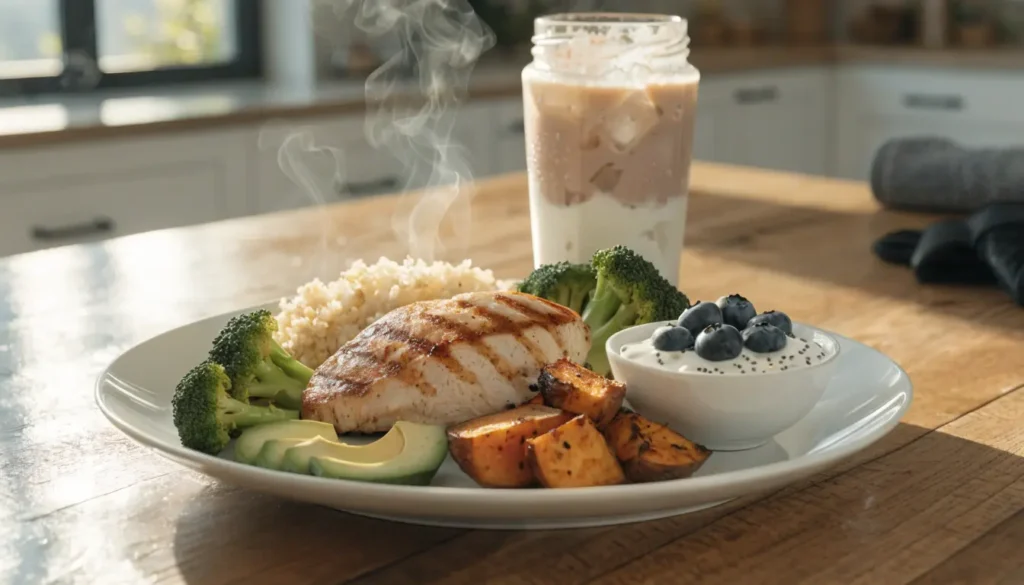
There is a specific silence that falls after a long run. The sound of your pounding heart slowly fades, the rhythm of your feet on the pavement ceases, and suddenly, it’s just you and your exhausted muscles. I remember finishing my first half marathon; I was euphoric, but as I walked back to my car, my legs felt like concrete pillars. I grabbed a bagel—any bagel—and drove home. The next day, I could barely walk down the stairs. I thought the soreness was just the price of entry. But it wasn’t.

I learned the hard way that the race isn’t over when you stop running. The most critical part of your training happens in the 30 to 60 minutes after you cross the finish line (or your front door). Your post workout meal for runners isn’t just about satisfying hunger; it is a conversation with your muscles. It is the moment you tell your body, “Thank you. Now, let’s rebuild.” Let’s make sure you never have to struggle down the stairs again.
Why the “Golden Hour” Matters: The Science of Recovery
To understand what to eat, you first need to grasp why timing matters so much. When you run, especially over long distances or during intense intervals, you put your body through a significant amount of stress. Two specific things happen: you deplete your glycogen stores—which are essentially your muscles’ stored energy—and you create micro-tears in your muscle fibers. These tiny tears are actually a good thing; they are how you get stronger. But if you ignore nutrition during the recovery window, you prolong soreness, lower your immunity, and increase your risk of injury during your next run.
Think of your body like a construction site after a long day of work. The workers are tired, the materials are scattered, and if you don’t bring in new supplies overnight, nothing gets rebuilt. The “golden hour” is your chance to deliver those supplies.
The Three Pillars of Recovery
A successful post workout meal for runners rests on three non-negotiable pillars. If you miss any one of them, your recovery will suffer.
- Refuel: This is about replenishing glycogen stores. During a run, your body burns through carbohydrates stored in your muscles and liver. If you don’t refuel, your next run will feel flat from the very first mile.
- Repair: This is where protein comes in. Protein provides the amino acids necessary to rebuild the muscle tissue that broke down during your run. Without it, you don’t adapt to the training, and you stay sore longer.
- Rehydrate: You lose a significant amount of fluid and electrolytes through sweat. Rehydration isn’t just about drinking water; it’s about restoring the balance of sodium, potassium, and magnesium so your muscles can function properly.
Research published in the Journal of the International Society of Sports Nutrition highlights that consuming nutrition within 30 to 45 minutes post-exercise optimizes glycogen synthesis. The sweet spot is often cited as 1.0 to 1.5 grams of carbohydrates per kilogram of body weight during that window. That means if you weigh 70 kilograms (about 154 pounds), you are looking at roughly 70 to 105 grams of carbs in your immediate recovery meal.
The Perfect Ratio: Balancing Carbs, Protein, and Fats

You might hear different opinions on what the ideal ratio looks like. The truth is, there isn’t a one-size-fits-all magic number because everyone’s gut tolerances and training loads differ. However, sports dietitians generally agree on a framework that maximizes absorption without leaving you feeling bloated or nauseous.
Carbohydrates: The King of Glycogen Replenishment
Running is an endurance sport, and endurance sports demand carbohydrates. If you neglect carbs in your post workout meal for runners, you are essentially leaving the gas tank empty for tomorrow. Your body is most efficient at storing glycogen immediately after exercise, so this is the time to prioritize quick-digesting carbohydrate sources.
- Target: Aim for a 3:1 or 4:1 ratio of carbohydrates to protein, depending on how intense your run was. A 3:1 ratio works well for moderate runs, while a 4:1 ratio is better suited for long runs exceeding 90 minutes.
- Sources: You want sources that are easy on the stomach but effective. Sweet potatoes, oats, whole-grain rice, quinoa, and fruits like bananas and berries are all excellent choices. Bananas, in particular, offer the added benefit of potassium, which helps ward off muscle cramps.
Protein: The Construction Crew
While carbohydrates refuel the tank, protein rebuilds the engine. Immediately after a run, your body is in a state of catabolism, meaning it is breaking down muscle tissue. Protein intake reverses that process, shifting your body into an anabolic, or building, state.
- Target: Aim for 15 to 25 grams of high-quality protein post-run. This is enough to stimulate muscle protein synthesis without overwhelming your digestive system.
- Sources: Whey protein isolate is a popular choice because it absorbs quickly. If you prefer whole foods, grilled chicken breast, eggs, tofu, or plain Greek yogurt work beautifully. Greek yogurt has the added benefit of containing both fast- and slow-digesting proteins, giving you an immediate boost and sustained repair.
The Fat Debate
Healthy fats are essential for hormone production and overall health. However, when it comes to the immediate recovery window, fat can be a bit of a double-edged sword. Fat slows down gastric emptying, meaning food sits in your stomach longer. If you are trying to get nutrients into your bloodstream quickly to kickstart recovery, you want to limit fats in that first meal.
This doesn’t mean you should avoid fat altogether. It simply means that your immediate post workout meal for runners should be low in fat. Save the avocado toast, nut butter, or salmon for your next meal, an hour or two later, after the initial recovery window has passed.
Liquid vs. Solid: Choosing the Right Post Workout Meal for Runners
One of the biggest questions runners face is whether to reach for a drink or sit down to a plate of food. The answer largely depends on two factors: how hard you ran and how sensitive your stomach is.
After a high-intensity interval session or a long run that lasted more than 90 minutes, your digestive system takes a hit. Blood flow is diverted away from your stomach and toward your legs and heart. In this state, trying to digest a heavy, solid meal can lead to nausea, cramping, or that uncomfortable feeling of food just sitting in your gut.
In these scenarios, liquid nutrition is often your best bet. Smoothies, shakes, and even good old-fashioned chocolate milk are absorbed more quickly and require less work from your digestive system. They also double as hydration, which is a huge bonus when you are depleted.
If you finished an easy 5k or a recovery run, your stomach is likely ready to handle solid food right away. The key is to listen to your body. There’s no rule that says you must drink something just because everyone else does.
Quick Recovery Snacks (Ideal for the “Golden Hour”)
Here are a few go-to options that hit the mark without requiring a lot of preparation. Keep these in mind for those days when you walk through the door and feel like you have no energy left to cook.
- Chocolate Milk: It’s not just nostalgia. Chocolate milk has been studied extensively and consistently shows up as one of the most effective recovery drinks. It contains a near-perfect 3:1 or 4:1 carb-to-protein ratio, plus fluids and sodium.
- Greek Yogurt with Honey: The tang of the yogurt combined with the simple sugars in honey provides a quick energy boost. This combination is easy to eat even when your appetite is suppressed after a hot run.
- Bagel with Peanut Butter: This is a classic for a reason. A plain bagel offers quick-digesting carbohydrates, and a thin spread of peanut butter adds a little protein. Just go easy on the peanut butter if you are in the immediate recovery window to keep digestion fast.
- Tart Cherry Juice: This one is worth mentioning for its anti-inflammatory properties. Several studies have shown that tart cherry juice can reduce muscle soreness and speed up recovery. You can drink it alone or blend it into a protein shake.
Sample Meal Ideas for Every Type of Run
Not every run requires the same nutritional approach. A three-mile jog around the neighborhood doesn’t demand the same refueling strategy as a 15-mile long run. Here’s how to tailor your post workout meal for runners based on the effort you just put in.
The Long Run (90+ minutes)
When you have been out on the roads or trails for an hour and a half or more, your glycogen stores are significantly depleted, and your muscles have endured substantial breakdown. Your goal here is massive replenishment combined with inflammation control.
- Meal: Sweet potato hash with two poached eggs and a generous handful of sautéed spinach.
- Why it works: Sweet potatoes provide complex carbohydrates and a hefty dose of vitamin A. Eggs offer complete, high-quality protein that contains all the essential amino acids. Spinach provides iron, which is crucial for runners because iron helps transport oxygen to your working muscles. The combination covers all three pillars of recovery without being overly heavy.
The Speed Workout (Intervals/Tempo)
Speed work puts a different kind of stress on your body. While it might not last as long as a long run, the intensity is much higher. This creates more muscle damage in a shorter period. Your digestive system might also be more sensitive because of the high heart rate and adrenaline.
- Meal: Smoothie made with one scoop of vanilla protein powder, one cup of frozen mixed berries, half a banana, a handful of kale, and water or unsweetened almond milk.
- Why it works: The liquid form allows for rapid absorption when your gut is feeling sensitive after high-intensity efforts. The berries provide antioxidants to help combat the oxidative stress caused by speed work. The banana adds potassium to prevent cramping, and the kale sneaks in some greens without adding bulk.
The Recovery Run (Easy 3–5 miles)
Recovery runs are meant to be gentle. They don’t typically deplete your glycogen stores to the same degree as longer or harder efforts. Your goal here is to refuel without overcompensating with extra calories you don’t need.
- Meal: A bowl of oatmeal topped with sliced banana and a drizzle of almond butter.
- Why it works: This is a lighter meal that satisfies hunger without piling on excessive calories. Oatmeal provides steady, slow-burning carbs, while the banana and almond butter offer a touch of natural sugar and healthy fats. It’s comforting, easy to digest, and keeps you full until your next meal.
Hydration: The Overlooked Component of Nutrition
You can eat the perfect ratio of carbohydrates and protein, but if you are dehydrated, your body cannot transport those nutrients to your muscles effectively. Think of hydration as the delivery system for everything you eat. Without enough fluid, blood volume drops, circulation slows, and the essential nutrients you just consumed sit in your stomach rather than reaching the muscles that need them.
Dehydration also increases perceived soreness. Studies have shown that even mild dehydration can make muscle soreness feel more intense and prolong the recovery period.
How to Rehydrate Correctly
- Weigh yourself before and after a run: This is the most accurate way to gauge your fluid loss. For every pound lost during your run, aim to drink 16 to 24 ounces of fluid. This doesn’t have to be plain water; it can include smoothies, chocolate milk, or electrolyte drinks.
- Pay attention to sodium: If you often notice white residue on your hat, face, or running clothes after a workout, you are what’s known as a “salty sweater.” This means you lose a significant amount of sodium through sweat. For you, a post workout meal for runners must include sodium to restore electrolyte balance. Pickles, broth-based soups, or adding electrolyte tablets to your water can make a noticeable difference in how you feel the next day.
Common Mistakes That Sabotage Your Recovery
Even experienced runners who have been at this for years sometimes fall into traps that undermine their recovery. Avoiding these mistakes can transform how you feel the day after a run.
- Waiting too long to eat. The “I’ll eat when I shower” delay is one of the most common pitfalls. If you wait longer than two hours to eat, the efficiency of muscle glycogen synthesis drops significantly. Your muscles are most receptive to nutrients in that first hour. If you can’t sit down to a full meal, at least have a small snack within that window.
- Running a calorie deficit. There is a mindset among some runners that if they skip a meal after a run, they’ll lose weight faster. This approach backfires. Skipping your recovery meal leads to chronic fatigue, hormonal imbalances (particularly in female runners), and a higher risk of injury. You cannot out-train poor nutrition.
- Over-relying on protein bars. Many protein bars on the market are essentially glorified candy bars. They often lack the potassium, magnesium, and other micronutrients your body needs to prevent muscle cramps and support recovery. If you use bars, read the ingredient list and look for whole-food ingredients with minimal added sugar.
- Ignoring iron levels. Runners are notoriously prone to iron deficiency, also known as anemia. Iron is essential for delivering oxygen to your muscles. Without it, you feel fatigued no matter how well you eat or rest. When planning your post workout meal for runners, try to pair iron-rich foods (like spinach, lean beef, or lentils) with a source of vitamin C (like lemon juice or bell peppers) to enhance absorption.
Frequently Asked Questions (FAQ)
What is the best post workout meal for runners if I’m trying to lose weight?
If weight loss is your goal, skipping your post-run meal is the worst thing you can do. When you skip it, you risk losing muscle mass, which actually lowers your resting metabolic rate. Instead, focus on a higher protein ratio, such as 2:1 protein to carbohydrates. Protein is more satiating than carbohydrates, so it will keep you full longer. Avoid liquid calories like sugary sports drinks or high-calorie smoothies. A grilled chicken breast over a bed of quinoa with roasted vegetables is a great option—it provides the nutrients you need without excess calories.
How soon after a run should I eat a post workout meal for runners?
You should aim to eat within 30 to 60 minutes after finishing your run. This window is often referred to as the “metabolic window” because your muscles are primed to absorb nutrients. If you cannot eat a full meal within that timeframe, have a small snack like a banana, a glass of chocolate milk, or a rice cake with a little honey. This stops the breakdown process and buys you time to prepare a proper meal later.
Can I have coffee as part of my post workout meal for runners?
You can, but timing and order matter. Caffeine is a vasoconstrictor, meaning it narrows blood vessels slightly. If you drink coffee on an empty stomach before eating, it might slow the delivery of nutrients to your muscles. If you want your coffee, have it with or after your recovery meal, not before. Also, remember that coffee is a diuretic. Do not use it as a substitute for water or electrolyte replacement. If you enjoy coffee with your post-run breakfast, just make sure you are also drinking plenty of water to rehydrate.
Is a smoothie considered a valid post workout meal for runners?
Absolutely. Smoothies are one of the most effective recovery tools available. They are easy to digest, they hydrate you, and they allow you to pack a wide variety of nutrients into one glass. The key is to make sure your smoothie is balanced. If it’s just fruit and juice, you are getting a lot of sugar but no protein. A proper recovery smoothie should include a protein source (whey, pea protein, or Greek yogurt), a carbohydrate source (fruit or oats), and a liquid base (water, coconut water, or milk) to aid hydration.
Conclusion: Listen to Your Body, Fuel Your Passion
Running is a beautiful conversation between your willpower and your physical limits. There are days when your legs feel light and the miles fly by, and there are days when every step feels like a negotiation. But recovery is where the real transformation happens. It’s where you get stronger, faster, and more resilient. It’s where the work you put in translates into actual progress.
The right post workout meal for runners is the bridge between the effort you just gave and the performance you want to achieve tomorrow. Don’t treat post-run nutrition as an afterthought or something you squeeze in if you have time. Treat it as the final mile of your workout. It deserves the same attention you give to your warm-up, your pace, and your form.
Whether it’s a simple glass of chocolate milk sitting on the curb while you catch your breath, or a carefully crafted grain bowl at your kitchen table, honor the work you just did. Your future self—the one lining up at the next start line, the one chasing a new personal best, the one who wants to keep running injury-free for decades—will thank you.
Now, go refuel. Your next run is already waiting.
What does your go-to recovery meal look like after a tough run? Share your favorite post-run combo in the comments below—we might feature it in our next article!