You step off the plane in Rome, your body humming with jet lag and a hunger that feels like it could rival the Colosseum in size. You have this image in your head—a sprawling buffet with scrambled eggs, crispy bacon, golden hash browns, and stacks of pancakes dripping with syrup. You find a café near the Pantheon, the morning sun bouncing off the cobblestones, and you walk up to the counter with confidence.
The barista looks at you, waiting. You ask for breakfast.
He doesn’t point to a buffet. He doesn’ hand you a menu with twelve pages of egg-based options. Instead, he gives you that small, knowing smile that Italians seem to have perfected over centuries. He places a warm, golden pastry on a plate—a cornetto—and slides a tiny ceramic cup of dark, intense espresso next to it. That’s it.
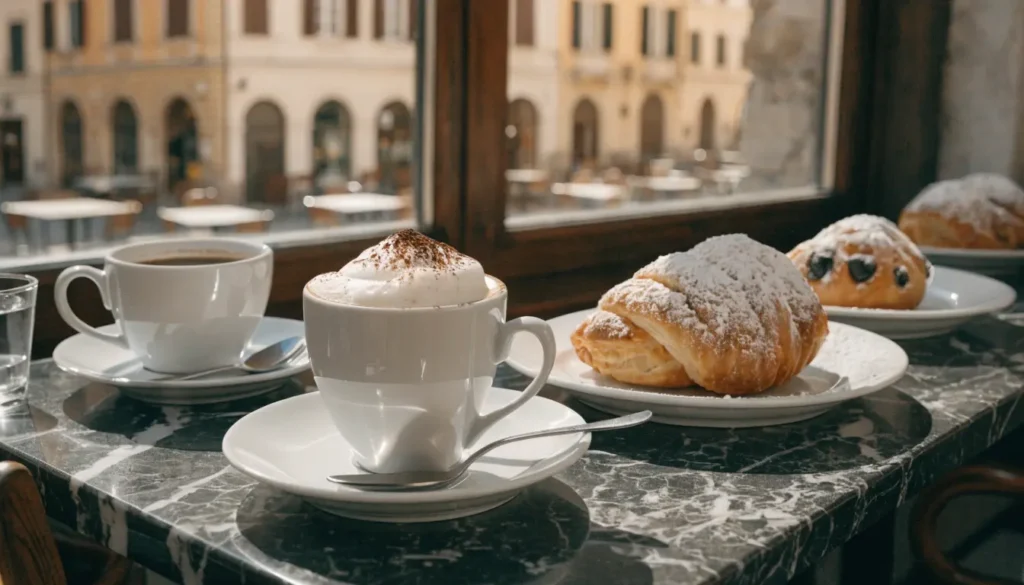
For a moment, you wonder if there’s been a mistake. You look around. The locals are standing at the bar, shoes tapping on the marble floor, sipping their coffee in two or three swift movements, biting into their pastries, and heading out into the day. No one is sitting. No one is lingering over a newspaper for an hour. No one looks hungry.
That was my first morning in Italy, and I’ll be honest with you—I didn’t get it at first. I thought breakfast was supposed to be a production. A feast. A reason to stay in your pajamas until noon. But standing there in that Roman café, I realized I had been looking for the wrong thing entirely.
I was searching for a meal. What I found was a ritual.
And that ritual—what the Italians call la colazione—has completely changed how I think about mornings. So let me walk you through it. Let me show you why the traditional Italian breakfast is one of the most understated, intentional, and quietly brilliant ways to start a day. By the time we’re done, you might find yourself rethinking your own morning routine.
What Exactly Is a Traditional Italian Breakfast? Defining La Colazione
If you want to understand a culture, look at how they wake up.
In Italy, the morning doesn’t start with a protein shake gulped down in the car or a bowl of sugary cereal eaten over the kitchen sink. It starts with something simpler. Something lighter. Something that feels less like fuel and more like a pause before the chaos begins.
A traditional Italian breakfast is built on two things: coffee and a pastry. That’s it. No eggs. No bacon. No sausage. No toast with avocado. Just a well-made coffee and something sweet to go alongside it.
The Core Components: A Sweet Start
Let’s break down what actually lands on the table—or more commonly, the marble counter.
- The coffee. This isn’t negotiable. A caffè in Italy means espresso. A single shot, pulled fresh, with that thin layer of golden-brown crema sitting on top. It’s not meant to be nursed. It’s meant to be drunk in two or three sips, while standing, before the heat fades and the magic dissipates. If you want milk, you order a cappuccino—but only in the morning. We’ll get to that rule in a bit.
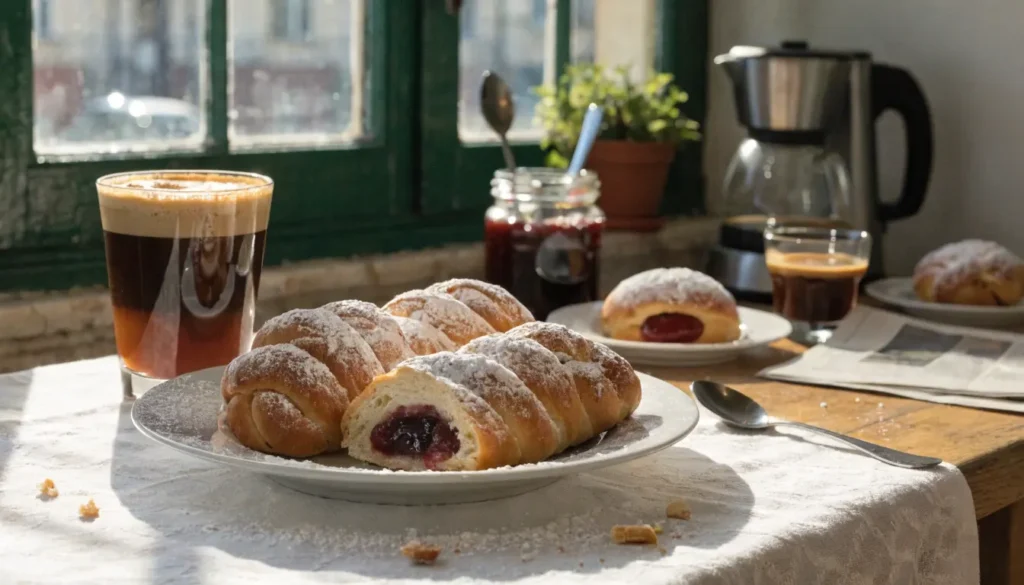
- The pastry. The most common choice is the cornetto. Think of it as the Italian cousin to the French croissant, but softer, sweeter, and often filled with something good. You’ll find them stuffed with crema pasticciera (a thick, velvety vanilla custard), marmellata (jam, usually apricot or berry), Nutella, or miele (honey). A plain cornetto is often dusted with sugar or brushed with a simple glaze.
- The setting. Here’s where things get interesting. Most Italians take their breakfast standing at the bar—al banco. It’s faster, cheaper, and there’s a kind of unspoken social rhythm to it. You pay at the register first, hand over your receipt to the barista, and they make your drink while you stand there. You sip, you eat, you leave. If you decide to sit at a table, expect to pay more. Sometimes double. That’s just how it works.
Regional Variations: How Breakfast Changes from North to South
Now, before you think every Italian breakfast is identical from the Alps to Sicily, let me stop you. There are nuances. The core idea stays the same—light, sweet, coffee-driven—but the details shift depending on where you are.
- In the North, around Milan and Turin, you’ll notice a slight Austrian and French influence. The pastries here might be more buttery, more layered. You’ll find krapfen (jam-filled doughnuts) alongside the cornetti. In some households, breakfast is a simple affair of biscotti—dry, twice-baked cookies—dipped into milk or coffee.
- In Central Italy, particularly Rome and Florence, the cornetto is king. But even within Rome, you’ll find variation. Some cornetti are rustic, with a rough golden crust and a slightly less buttery interior. Others are softer, almost brioche-like. It’s a subtle difference, but one that locals will argue about with surprising passion.
- In the South, things get a little more adventurous. Naples is famous for the sfogliatella—a crisp, layered pastry shaped like a clam shell, filled with sweet ricotta, semolina, and candied orange peel. It’s not your everyday breakfast pastry; it’s a commitment. And in Sicily, during the summer, breakfast can transform entirely. When the heat becomes unbearable, locals reach for granita con brioche—a semi-frozen slush of almond, coffee, or fruit flavors, served with a soft, sweet bun that you use to dip and scoop.
According to a 2023 survey from Lavazza, one of Italy’s biggest coffee companies, more than 80 percent of Italians have their breakfast within the first hour of waking up, and for 65 percent of them, that breakfast consists of coffee and a pastry. The numbers don’t lie. This isn’t a trend. It’s a way of life.
The Anatomy of Colazione: A Detailed Look at the Stars of a Traditional Italian Breakfast
Let’s go deeper. Because if you’re going to understand why this simple meal matters, you need to know the players involved.
The Coffee Culture: More Than Just a Drink
In Italy, coffee isn’t just a beverage. It’s a language. A set of unspoken rules that everyone understands. Walk into any bar in any city, and the way you order tells the barista everything about who you are.
- Caffè (Espresso): This is the default. If you walk in and say “un caffè, per favore,” you will get a single shot of espresso. It’s small. It’s strong. It’s 25 to 30 milliliters of dark, intense liquid meant to be consumed in two or three swallows. No sugar? Fine. One sugar? Fine. Just don’t ask for it to go. Italians don’t really do coffee to go. The experience is part of the ritual.
- Cappuccino: This is strictly a morning drink. I mean it. If you order a cappuccino after lunch, the barista might still make it for you, but there will be a subtle shift in their demeanor. A quiet judgment. Italians believe that the milk and foam in a cappuccino are too heavy for digestion after a meal. So they keep it for breakfast, where it belongs.
- Caffè Latte: If you want something with more milk than coffee, this is your order. It comes in a glass, not a cup, and it’s often what kids drink in the morning before school.
- Latte Macchiato: The reverse of a caffè latte. It’s a glass of steamed milk “stained” with a shot of espresso. More milk than coffee, served warm.
- The Ritual: Here’s how it works. You walk into the bar. You go to the register (la cassa), tell the cashier what you want, and pay. They give you a receipt (lo scontrino). Then you take that receipt to the bar, hand it to the barista, and they make your drink. It’s efficient. It’s orderly. And it keeps the line moving even when the place is packed with people grabbing their morning coffee before work.
The Pastry Pantheon: Beyond the Cornetto
The cornetto might get all the attention, but it’s not the only game in town. Depending on where you are and what you’re in the mood for, you’ve got options.
- Cornetto Semplice: Plain, often dusted with sugar. The baseline. The standard.
- Cornetto con Crema: Filled with rich vanilla custard. Probably the most popular option.
- Cornetto con Marmellata: Filled with jam—apricot, strawberry, or sometimes a dark berry mix.
- Cornetto al Miele: Glazed with honey. Sticky, sweet, and deeply satisfying.
- Sfogliatella: The Neapolitan showstopper. Layers so thin they crackle when you bite into them, filled with sweet ricotta, semolina, and candied fruit. It’s more substantial than a cornetto and usually reserved for when you want something a little special.
- Biscotti: Dry cookies like cantucci from Tuscany—almond-studded, twice-baked, perfect for dipping. Or amaretti, soft little almond macaroons that crumble beautifully in your mouth. These are more common for breakfast at home, where you might have a plate of biscotti next to your moka pot.
Why Is Traditional Italian Breakfast So Different? Cultural Insights
Now we get to the heart of it. Because the real question isn’t what Italians eat for breakfast. It’s why.
The Sacred Rule: No Cappuccino After 11 AM
You’ve probably heard this one. And you might have thought it was an exaggeration. It’s not.
Walk into any Italian bar at 10:45 AM, and the place is still humming with cappuccino orders. Walk in at 12:15 PM, and suddenly everyone is drinking espresso. What changed?
Italians believe that milk is a morning food. It helps wake up the digestive system. But later in the day, especially after a heavy meal, they see it as too much. Too heavy. The logic goes like this: a cappuccino after lunch will sit in your stomach like a stone, interfering with digestion and making you feel sluggish.
There’s also a social component here. Following this rule is one of the easiest ways to signal that you understand the culture. When you order an espresso after lunch instead of a cappuccino, you’re not just choosing a different drink. You’re showing respect.
Al Banco vs. Al Tavolo: The Price of Sitting Down
Here’s something that catches a lot of visitors off guard.
If you stand at the bar, your coffee costs one price. If you sit at a table, it costs another. Sometimes the difference is small—maybe 50 cents. Sometimes it’s significant. A cappuccino that costs €1.20 at the bar can jump to €3.00 if you take a seat.
This isn’t a scam. It’s a reflection of how Italian cafés operate. The lower price at the bar is for quick, efficient service. When you sit down, you’re occupying a table, often for a longer period, and the price reflects that extra service.
Most Italians choose the bar. It’s faster. It’s cheaper. And there’s something about standing shoulder to shoulder with a group of strangers, all of you starting your day in the same unspoken ritual, that feels oddly communal.
A Light Start for a Grand Mid-Day
The lightness of a traditional Italian breakfast isn’t an accident. It’s intentional.
In Italy, the main meal of the day is lunch—pranzo. It’s not a quick sandwich eaten at your desk. It’s a multi-course affair that often stretches across two hours, involving pasta, meat, vegetables, bread, wine, and often dessert. It’s a social event. A family gathering. A pause in the middle of the day that resets everything.
If you started that day with eggs, bacon, toast, and pancakes, you wouldn’t be hungry for lunch. And missing out on lunch in Italy is like going to a concert and skipping the headliner. So breakfast stays light. It wakes you up without weighing you down. It clears the stage for what comes next.
How to Recreate a Traditional Italian Breakfast at Home
You don’t need to be in Italy to experience this. With a few simple shifts in your morning routine, you can bring the spirit of colazione into your own kitchen.
Essential Pantry Items
Start with the right tools and ingredients.
- A moka pot. This is non-negotiable. The stovetop coffee maker—the Bialetti with the little mustachioed man on the side—is the heart of the Italian home kitchen. You can find them in any kitchen supply store or online. Use finely ground espresso coffee. Not coarse. Not medium. Fine.
- Quality coffee. Look for a brand like Lavazza or Illy. They’re widely available and designed specifically for moka pots.
- Pastries from a local bakery. If you have an Italian bakery or pasticceria near you, make it your weekend stop. Grab a few cornetti or sfogliatelle. If not, keep a box of high-quality biscotti on hand. They last longer and still give you that authentic experience.
- Jam and Nutella. Italians love marmellata (jam) on toast or alongside their pastries. And Nutella—or better yet, a high-quality crema di nocciola—is a staple. A plain cornetto becomes something special when you slice it open and add a smear of hazelnut cream.
Step-by-Step Guide to the Perfect Colazione at Home
Here’s how to do it right.
- Give yourself time. The biggest mistake you can make is trying to rush this. Set your alarm fifteen minutes earlier. This isn’t a meal you eat while checking emails.
- Prepare the moka pot. Fill the bottom chamber with cold water up to the safety valve. Add your finely ground coffee to the filter basket. Don’t press it down. Just level it off. Screw the top on firmly—but not so tight that you’ll need a wrench to get it off later.
- Brew. Place the moka pot on medium heat. Leave the lid open. Watch it. When you hear that distinctive gurgling sound—a low, sputtering noise—the coffee is done. Turn off the heat immediately to avoid burning the coffee.
- Set up your pastry. Warm your cornetto in the oven for a few minutes if you want it fresh. Or arrange your biscotti on a small plate.
- Pour and savor. Pour the fresh espresso into your favorite small cup. If you’re making a cappuccino, froth some warm milk. The ratio should be roughly one-third espresso, two-thirds foamed milk.
- Sit down. No phone. This is the most important step. Take a bite of the pastry. Let the coffee hit your tongue. Breathe. Don’t rush. This isn’t about efficiency. It’s about intention.
Frequently Asked Questions (FAQ) About Traditional Italian Breakfast
What is a traditional Italian breakfast?
A traditional Italian breakfast, known as la colazione, is typically a light, sweet morning meal consisting of a coffee—usually a cappuccino or espresso—and a pastry, most commonly a cornetto, which is like a sweeter, softer version of a croissant. It’s often consumed quickly while standing at a café bar.
What do Italians eat for breakfast besides pastries?
While pastries are the most common choice, Italians also enjoy fette biscottate (toasted rusks) with butter and jam, biscotti (dry cookies) dipped in milk or coffee, or simple yogurt with fruit. These options are more typical for breakfast at home rather than at a bar.
Is it true you can’t order a cappuccino after 11 AM in Italy?
It’s not a law, but it’s a deeply held cultural convention. Italians believe milk-based coffee is too heavy after a meal. Ordering a cappuccino in the afternoon will mark you as a tourist, though most baristas will still serve it with a polite smile and perhaps a quiet internal sigh.
Why is Italian breakfast so light?
The lightness is intentional. The main meal of the day in Italy is lunch, which is often large and multi-course. A light breakfast ensures you have a good appetite for that central meal. It also reflects a cultural preference for quality over quantity when it comes to starting the day.
Conclusion: Embracing the Art of Simplicity
When I finally stopped searching for the breakfast I thought I wanted and embraced the one Italy was offering, something shifted. I stopped treating mornings as a transaction—fuel in, energy out—and started treating them as a practice.
The traditional Italian breakfast taught me that a satisfying start to the day isn’t measured by the volume of food on a plate. It’s measured by the quality of the coffee, the texture of the pastry, and the presence of mind you bring to those first few minutes of the morning. It’s a reminder that you don’t need more. You need better.
So here’s my challenge to you. Tomorrow morning, skip the blender. Ignore the complicated recipe you saw on Instagram. Don’t eat standing over the sink with one hand scrolling through your phone.
Instead, brew a strong coffee. Find a simple, sweet pastry. Sit down. Give yourself ten minutes of uninterrupted calm.
And see what happens.
You might just find that less, truly, is more.
Have you tried making a traditional Italian breakfast at home? Or do you have a favorite memory of sipping a cappuccino at a café in Rome or Florence? Drop your story in the comments below. I’d love to hear how la colazione has shown up in your life.