You know that feeling when a meal stops being just fuel and turns into a memory you carry with you? That’s what happened to me the first time I sat down for kahvaltı in a sleepy village just outside Izmir. The sun was barely up, but the table was already a riot of color and aroma. Clay pots bubbled with eggs and tomatoes, honey dripped lazily from the comb onto white cheese, and the sesame-crusted bread was so fresh it practically melted in my hands. I wasn’t just eating breakfast. I was stepping into a ritual centuries old—one where the Turkish philosophy of hospitality declares that a table without abundance is a house without a soul.
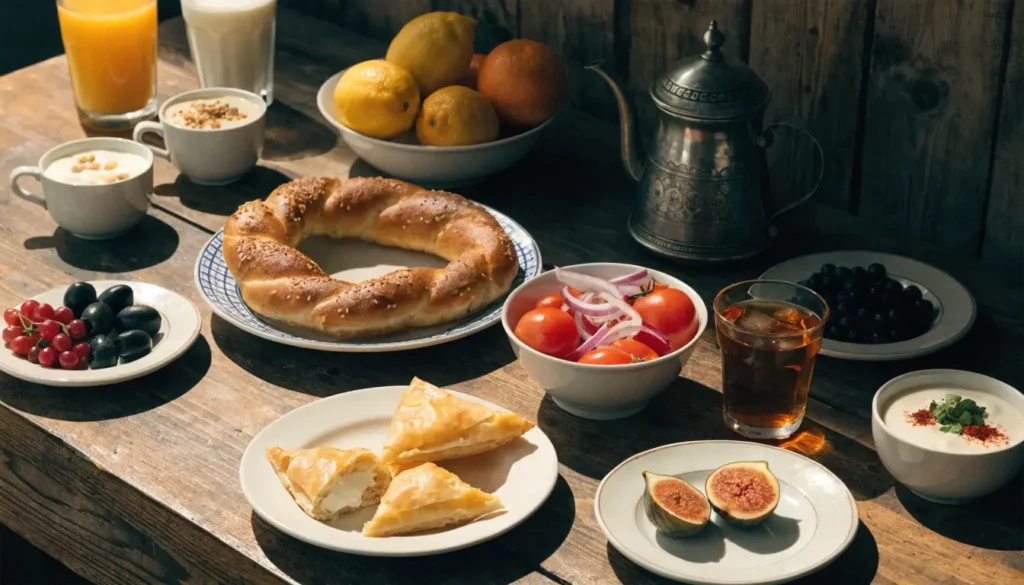
If you’ve ever wondered what makes turkish breakfast dishes so special, or if you’re hoping to recreate that magic in your own kitchen, you’re in the right place. Let’s pull up a chair, pour some tea, and explore the savory, sweet, and utterly unforgettable world of Türk kahvaltısı.
The Philosophy of Kahvaltı: More Than Just a Meal
Before we dive into the plates themselves, it’s worth understanding what you’re really sitting down to. In Turkey, breakfast isn’t a rushed bite before work. It’s a deliberate, unhurried affair—one that often stretches well into the afternoon, fueled by conversation, laughter, and cup after cup of tea.
The Etymology: What’s in a Name?
The word kahvaltı offers a clue to the rhythm of the meal. It breaks down into kahve (coffee) and altı (before or under). So, literally, it means “before coffee.” This tells you something important: coffee isn’t the opener; it’s the closing act. The meal itself is the main event, and the coffee signals that you’re finally winding down.
The Art of Soğuk ve Sıcak
A well-constructed Turkish breakfast hinges on balance. You’ll notice the spread is typically divided into two worlds: soğuk (cold) and sıcak (hot).
- The Cold Side: This is where you’ll find the cheeses, olives, jams, and fresh vegetables. It’s the foundation—bright, briny, and refreshing.
- The Hot Side: This is the soul of the meal. Eggs, sausages, and pastries arrive later, adding warmth, richness, and that irresistible sizzle.
When these two sides come together on your plate, you get a harmony of textures and temperatures that keeps every bite interesting.
The Essential Ensemble: Core Components of Traditional Turkish Breakfast Dishes
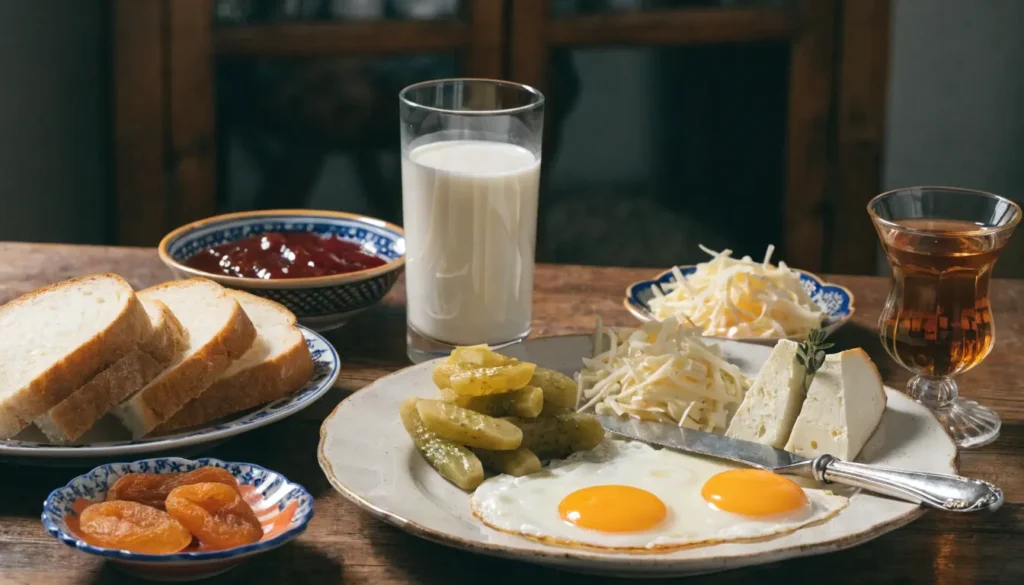
Let’s start with the non-negotiables. These are the staples you’ll find on almost every breakfast table, whether you’re in a modest home in Ankara or a sprawling café by the Bosphorus.
The Dairy Trinity: Cheese & Olives
You can’t have a Turkish breakfast without cheese. In fact, you’ll usually find at least two or three varieties staring back at you.
- Beyaz Peynir: Think of this as Turkey’s answer to feta, though it’s typically less tangy and creamier. It’s a brined white cheese that pairs beautifully with cucumbers and tomatoes.
- Kaşar Peyniri: This is a yellow sheep’s milk cheese with a mild, nutty flavor. You’ll often see it served two ways: fresh and sliced, or grilled until it’s golden and slightly stringy. The grilled version is a textural delight.
- Olives (Zeytin): Olives are never an afterthought. You’ll typically find both green and black varieties, but keep an eye out for Gemlik olives—small, black, and buttery—which are considered the gold standard.
The Bread Basket: Ekmek & Simit
Bread is sacred here. You’ll rarely see stale bread served; freshness is non-negotiable.
- Simit: This is the quintessential Turkish street food that doubles as a breakfast hero. It’s a ring of bread, dense yet airy, coated generously in sesame seeds. The best way to enjoy it? Tear off a piece, dip it in jam or clotted cream, and let the crunch give way to softness.
- Bazlama: Imagine a traditional flatbread, cooked on a dome-shaped griddle until it puffs up and develops a slight char. It’s rustic, chewy, and perfect for wrapping around cheese or dipping into egg dishes.
Sweet & Savory Spreads
The cold side of the table also houses some of the most memorable flavors.
- Pekmez & Tahini: Often called the “poor man’s Nutella,” this combination is anything but humble. Pekmez is a grape molasses with deep, fruity notes, and when you swirl it together with tahini (sesame paste), you get a nutty, sweet, and slightly smoky spread that’s utterly addictive.
- Reçel (Jams): Turkish jams are an art form. Rose petal jam is floral and fragrant, sour cherry (vişne) offers a tart bite, and apricot provides pure, unadulterated sweetness. The best ones are often homemade, with visible fruit pieces.
- Kaymak: This is the luxury item. Kaymak is clotted cream—a thick, velvety layer of pure milkfat that you spread over bread and drizzle with honey. It’s decadent, indulgent, and worth every calorie.
The Heart of the Table: Iconic Hot Turkish Breakfast Dishes
While the cold appetizers set the stage, the hot dishes are the main performance. This is where the kitchen truly shines.
Menemen: The Scrambled Egg Masterpiece
If there’s one dish that defines Turkish breakfast, this is it. Menemen is deceptively simple: eggs scrambled with tomatoes, green peppers, and a touch of salt. But the execution is everything.
Unlike a Western omelet that’s folded and firm, menemen is cooked slowly. The tomatoes and peppers soften into a stew-like base, and the eggs are added at the very end, stirred gently until they’re just set. The result is creamy, almost saucy, and best scooped up with fresh bread.
- The Great Debate: Ask any Turk about menemen, and you’ll ignite a debate: onion or no onion? In the Aegean region, where tomatoes reign supreme, purists insist that onion masks the natural sweetness of the tomato. Elsewhere, finely diced onions are welcomed for the depth they add. Try it both ways and decide for yourself.
- Pro Tip: Use ripe, flavorful tomatoes. If you’re making this out of season, a splash of tomato paste can help deepen the flavor without overwhelming it.
Sucuklu Yumurta: Spicy Sausage & Eggs
For mornings when you need a little kick, sucuklu yumurta is your answer. Sucuk is a dry, spicy sausage packed with garlic and cumin, and it’s typically fried in a small copper pan called a sahan. Once the fat renders and the edges crisp up, you crack eggs directly over the top.
- Flavor Profile: This dish is bold, unapologetic, and deeply savory. The spicy oil from the sausage mingles with the runny yolks, creating a sauce that demands to be sopped up with bread. It’s the Turkish equivalent of a hearty, stick-to-your-ribs breakfast.
Börek: The Layered Pastry
No breakfast spread is complete without börek. This family of pastries uses thin phyllo dough layered with fillings and baked or fried to golden perfection.
- Su Böreği: Considered the most sophisticated version, su böreği involves boiling the phyllo sheets briefly before layering them with cheese and parsley. The result is a soft, almost lasagna-like texture that’s rich and satisfying.
- Kol Böreği: These are rolled spirals filled with spinach, cheese, or minced meat. They’re visually impressive and perfect for sharing.
- Sigara Böreği: Named for their cigarette-like shape, these are small, rolled pastries filled with feta and parsley, then fried until crispy. They’re the ultimate finger food.
Regional Treasures: Unique Turkish Breakfast Dishes Across Anatolia
Turkey’s culinary landscape is vast, and breakfast traditions vary dramatically from one region to the next. Exploring these differences adds depth to your understanding of Turkish food culture.
Van Kahvaltısı (The Grand Daddy)
In the eastern city of Van, breakfast is an event. Known as the most elaborate breakfast culture in the country, a Van breakfast can feature over twenty different dishes. It’s not a meal; it’s a marathon.
- Otlu Peynir: This is Van’s signature cheese, studded with wild herbs that grow in the region’s mountains. Each bite offers a different burst of flavor—savory, slightly bitter, and utterly unique.
- Murtuğa: A lesser-known but beloved dish, murtuğa is a thick, spiced egg and flour mixture cooked in butter. It’s rustic, filling, and unlike anything you’ll find elsewhere.
Black Sea Flavors: Mısır Ekmeği & Kuymak
Up along the misty Black Sea coast, breakfast takes a hearty turn. The star here is kuymak (also called mıhlama), a gooey, indulgent fondue made from cornmeal, butter, and a local aged cheese.
- What to Expect: Think of it as a savory, cheesy porridge. It’s eaten hot, often with a spoon, and paired with cornbread (mısır ekmeği). It’s the ultimate comfort food for chilly mornings.
The Aegean: Zeytinyağlılar (Olive Oil Dishes)
In the Aegean region, where olive groves stretch for miles, breakfast leans heavily into greens and olive oil. You’ll find ot kavurma—sautéed wild greens—served alongside dishes like zeytinyağlı taze fasulye (green beans cooked in olive oil). These vegetable dishes, often served at room temperature, blur the line between breakfast and a light lunch.
The Drinks: From Çay to Türk Kahvesi
What’s a feast without something to wash it down? The beverages in a Turkish breakfast are just as ritualized as the food.
Turkish Tea (Çay)
Tea is the lifeblood of breakfast. It’s served in small, tulip-shaped glasses that allow you to see the rich, ruby-red color. It’s brewed using a double teapot (çaydanlık)—one pot for strong, concentrated tea and another for boiling water, so each person can adjust the strength to their liking.
You’ll never see just one cup. Tea flows throughout the meal, a constant companion to conversation. It’s the thread that ties the entire experience together.
Turkish Coffee
Once the plates are cleared and the conversation is winding down, the coffee arrives. Turkish coffee is thick, unfiltered, and potent. It’s served with a glass of water and often a small piece of Turkish delight.
- The Ritual: After you finish, tradition invites you to flip your cup over onto the saucer and let the grounds settle. A skilled reader can interpret the patterns left behind—a practice called fal. It’s a playful, communal way to extend the gathering just a little longer.
How to Build Your Own Turkish Breakfast Feast (A Practical Guide)
Ready to bring this experience into your own home? Hosting a Turkish breakfast is easier than you might think. The key is variety over complexity. You don’t need to cook everything from scratch; focus on sourcing quality ingredients and arranging them beautifully.
The Perfect Turkish Breakfast Shopping List:
The Cold Corner:
- 1 block of Beyaz Peynir (white cheese)
- 1 block of Kaşar (yellow cheese)
- 1 bowl of mixed olives (aim for a dark Gemlik variety and a bright green option)
- 1 jar of Kaymak (clotted cream) and 1 jar of honey
- 1 jar of Pekmez (grape molasses) and Tahini (sesame paste)
- 2–3 seasonal jams (rose, sour cherry, and apricot are classics)
- Fresh cucumbers and tomatoes, sliced
- Fresh parsley for garnish
The Hot Kitchen:
- 4–6 eggs
- 2 large, ripe tomatoes (or canned diced tomatoes for winter)
- 3 green peppers (pointed Turkish peppers if you can find them)
- 200g Sucuk (spicy sausage)
- Pre-made börek from a local Turkish bakery or frozen section
- Butter and olive oil
The Pantry:
- Fresh Simit from a local bakery (or bazlama if available)
- Good quality bread for toasting
Assembly Tip: Presentation matters. Arrange everything on small plates and bowls rather than piling it onto one large platter. The visual abundance is part of the experience. Serve the cold items first, letting guests settle in, then bring out the hot dishes one by one.
Frequently Asked Questions (FAQ) About Turkish Breakfast Dishes
What is a typical Turkish breakfast dish?
When people ask about a typical turkish breakfast dish, the answer is often Menemen—eggs gently scrambled with tomatoes and peppers. However, a true Turkish breakfast is a spread, not a single dish. It typically includes a variety of cheeses, olives, simit (sesame bread), jams, clotted cream with honey, and endless black tea, with hot items like eggs or sausage arriving later.
Are Turkish breakfast dishes healthy?
Generally, yes. Thanks to the Mediterranean influence, turkish breakfast dishes emphasize healthy fats from olives and olive oil, protein from eggs and cheese, and plenty of fresh vegetables. The variety ensures you get a broad range of nutrients. Of course, moderation is key with the pastries and sucuk, but overall, it’s a balanced way to start the day.
What is the difference between Menemen and Shakshuka?
This is a common question. While they look similar in a photo, Menemen—a beloved turkish breakfast dish—is defined by its creamy texture. The eggs are scrambled into the tomato-pepper mixture, resulting in a soft, almost custard-like consistency. Shakshuka, which has North African roots, features eggs poached in a thicker, spicier tomato sauce, with the yolks left intact.
How do you say “breakfast” in Turkish?
Breakfast is Kahvaltı. If you want to say “Turkish breakfast,” you’d ask for Türk kahvaltısı. And if you’re sitting down to enjoy it, you’ll hear the phrase Afiyet olsun—meaning “may it bring health”—which is the Turkish equivalent of “bon appétit.”
Conclusion
To truly understand Turkish culture, you have to sit down to breakfast. It’s a philosophy as much as a meal—a rejection of the rushed, solitary eating habits so common in modern life. It’s an invitation to slow down, to share, and to savor. From the humble simit sold on bustling street corners to the sprawling, twenty-plate feasts of Van, turkish breakfast dishes offer something for everyone. They’re savory, sweet, spicy, creamy, and crisp, often all on the same plate.
Whether you start tomorrow by dipping fresh bread into kaymak and honey, or by mastering the gentle art of the menemen scramble, you’re doing more than cooking a meal. You’re setting a table that welcomes conversation, warmth, and the rich, layered heritage of Anatolia. So go ahead—gather your ingredients, invite a few friends, and let the morning stretch out before you.
Afiyet olsun.
What’s your favorite Turkish breakfast dish? Have you ever tried making menemen or sucuklu yumurta at home? Drop a comment below and let us know—or share a photo of your own breakfast spread. We’d love to see how you bring these flavors to life in your kitchen!
“`