You know that moment. The one where you stare at a bakery display case, and your mouth waters at those swirled frosting towers topped with sprinkles or chocolate shavings. Then your brain does the math. Flour, butter, sugar, more sugar on top. Suddenly, that little cake feels like a dietary betrayal waiting to happen.
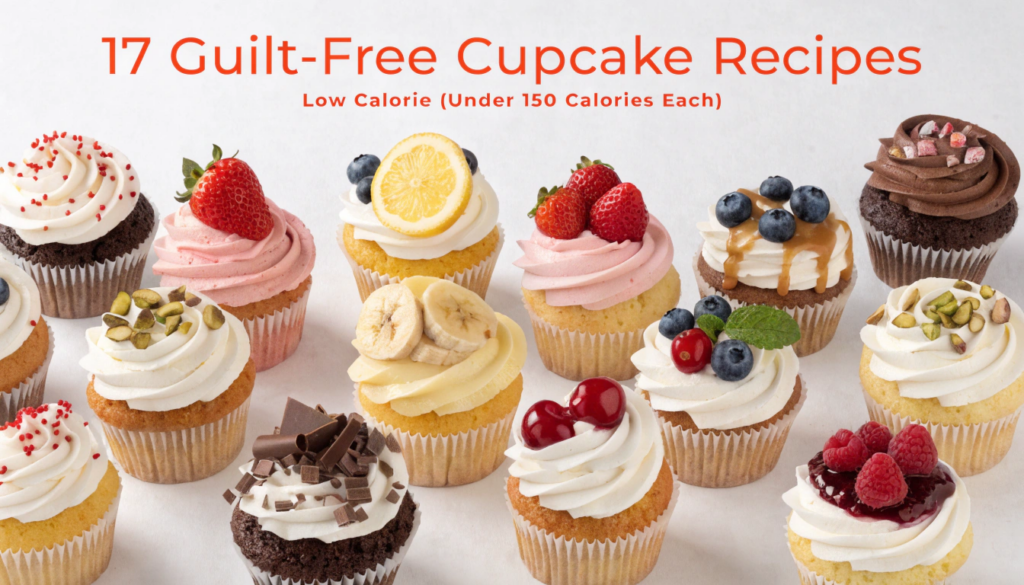
Here’s what I’ve learned after years of baking through frustration, tears, and flat, sad muffins that tasted like cardboard soaked in stevia. You don’t have to choose between a treat and your goals. Not really.
This article isn’t a lecture. It’s not another “thin people eat this, not that” list. Think of it as your permission slip to preheat the oven, get flour on your favorite sweater, and bite into something sweet without the side of shame. You’ll walk away with seventeen proven recipes, plus the tiny kitchen tricks that make low-calorie baking actually taste good.
Let’s get into it.
Why Traditional Cupcakes Sabotage Your Low-Calorie Goals (And How to Fix It)
Let’s be honest for a second. A standard cupcake from your local coffee shop or grocery store bakery isn’t just a snack. It’s a calorie bomb wrapped in decorative paper. According to the USDA FoodData Central database, the average commercially prepared cupcake with frosting lands somewhere between 350 and 600 calories. Eat two? You’ve already consumed more than a third of your daily energy needs before lunch.
What makes regular cupcakes so dangerous to your daily budget? Three main offenders.
Refined white sugar shows up first. Two tablespoons pack about 120 calories with zero nutritional payoff. Then comes butter or vegetable oil—one tablespoon of butter adds 100 calories and loads of saturated fat. Finally, frosting steals the show. A typical buttercream serving (about two heaping tablespoons) contains another 150 calories, mostly from powdered sugar and more butter.
Add those up, and you’re eating the equivalent of a small meal. In your hand. In about four bites.
But here’s the twist you’ve been waiting for. You don’t need to give up cupcakes forever. You just need smarter swaps. Small changes that slash calories without ruining the experience.
The 5 Ingredient Swaps That Save 200+ Calories Per Cupcake
You can transform almost any standard recipe by swapping out five key players. Keep this list somewhere handy—taped inside your kitchen cabinet or saved as a note on your phone.
- Flour swap: Replace white flour with almond flour or oat flour. You lower the carbohydrate load while adding a small protein boost. Almond flour brings moisture, too, which means less need for added fat.
- Sugar swap: Use allulose, erythritol, or mashed ripe banana. Allulose measures and bakes almost exactly like real sugar without the calorie load. Banana adds natural sweetness plus potassium—just account for the extra moisture.
- Fat swap: Replace oil or butter with nonfat Greek yogurt or unsweetened applesauce. Use a one-to-one ratio. You’ll cut roughly 80 calories per tablespoon of fat removed, and the texture stays surprisingly tender.
- Egg swap: Try a flax egg (one tablespoon ground flaxseed mixed with three tablespoons water) or use just the egg whites. Egg yolks are where most of the fat lives. Removing the yolk from one large egg saves about 55 calories.
- Frosting swap: Skip the buttercream entirely. Mix nonfat Greek yogurt with a scoop of vanilla protein powder and a few drops of stevia. You get creaminess, sweetness, and a protein boost for roughly 30 calories per serving—a savings of over 120 calories compared to traditional frosting.
The Ultimate Low Calorie Cupcake Recipes (Under 150 Calories)
Each recipe below has been tested and tweaked until it actually delivers on flavor. You won’t feel like you’re eating a diet anything. No chalky textures. No weird chemical aftertastes. Just real cupcake joy.
1. Dark Chocolate Avocado Cupcake (98 calories)
The swap that works: One quarter cup of mashed avocado replaces the butter entirely. Yes, avocado. You won’t taste it. What you will get is an incredibly moist, fudgy crumb that standard low-fat chocolate cupcakes can only dream about.
Sweeteners used: Monk fruit sweetener plus two tablespoons of unsweetened cocoa powder. The cocoa adds depth and masks any “alternative sweetener” notes.
Topping suggestion: Shave a few grams of sugar-free dark chocolate on top right after baking. The residual heat melts it slightly, creating a thin, glossy shell.
2. Lemon-Blueberry Greek Yogurt Cupcake (112 calories)
The swap that works: Half a cup of nonfat Greek yogurt stands in for vegetable oil. You’ll lose about 400 calories from the full recipe compared to using oil, and the yogurt adds tang that pairs beautifully with lemon.
Add-in: Fresh blueberries. Not frozen—they release too much water. Fresh berries bring natural sweetness and antioxidants without extra sugar.
Frosting idea: Mix lemon zest into whipped low-fat cottage cheese until smooth. It sounds strange. It works. Trust me.
3. Cinnamon Roll Oat Flour Cupcake (134 calories)
The swap that works: Oat flour and unsweetened almond milk create a soft, slightly nutty base. Oat flour digests slower than white flour, so you feel satisfied longer.
The swirl: Combine stevia, cinnamon, and one teaspoon of melted coconut oil. Swirl it through the batter with a toothpick before baking.
Drizzle finish: Warm a tablespoon of sugar-free maple-flavored syrup and let it run over the top. That’s your glaze. No powdered sugar required.
4. Peanut Butter & Jelly Protein Cupcake (145 calories)
The swap that works: PB2 powdered peanut butter replaces traditional peanut butter. You cut about 70 percent of the fat while keeping the roasted peanut taste.
The center: Scoop half your batter into the liner, add one teaspoon of sugar-free raspberry preserves, then cover with the remaining batter. That’s your hidden jelly surprise.
Macro breakdown: Each cupcake delivers 9 grams of protein and 4 grams of fiber. That’s enough to call it a post-workout snack without lying to yourself.
5. Carrot Cake Cupcake with “Cream Cheese” Cloud Frosting (128 calories)
The swap that works: Finely grated carrots and unsweetened shredded coconut add bulk, moisture, and natural sweetness. You can significantly reduce added sugar when you let the carrots do some of the work.
The frosting trick: Blend nonfat Greek yogurt with cream cheese extract (sold near vanilla extract) and a pinch of stevia. It tastes shockingly close to the real thing at a fraction of the calories.
Crunch element: Chop one tablespoon of walnuts and press them into the top of the frosting. Healthy fats plus texture.
How to Bake Low Calorie Cupcakes That Actually Taste Good (Pro Tips)
You could follow every recipe perfectly and still end up with dry, dense pucks if you ignore a few science-backed rules. Let me save you the trial and error.
The Science of Moisture Without Fat
Fat carries flavor and traps moisture. Remove it, and you risk the desert problem—crumbly, sad, thirsty little cakes. Here’s how to cheat the system.
Use boiled diet lemonade or hot black coffee in chocolate batters. Both add zero calories but wake up the cocoa flavors and create steam during baking. Steam equals moisture.
Puréed zucchini or pumpkin works like a hidden hero. Grate zucchini fine, squeeze out a little excess water, and fold it in. You won’t taste vegetables. You will taste a cupcake that stays soft for three days on the counter.
Frosting Hacks — Because Naked Cupcakes Are Sad
Let’s compare your options so you can make an informed choice.
| Frosting Type | Calories per 2 tbsp | How to Make It |
|---|---|---|
| Standard Buttercream | 180 | Don’t. Just don’t. |
| Greek Yogurt Glaze | 25 | Mix 3 tbsp nonfat Greek yogurt + 1 tbsp sugar-free instant pudding mix (any flavor) |
| Whipped Aquafaba | 12 | Whip the liquid from a can of chickpeas with stevia and vanilla until stiff peaks form |
| Protein “Buttercream” | 65 | Combine protein powder, almond milk, and a pinch of xanthan gum. Whip until fluffy |
Portion Control Without Feeling Deprived
Smaller portions don’t have to feel like punishment.
Switch to mini muffin tins. A mini cupcake typically runs 35 to 70 calories. You can eat three and stay under most dessert budgets.
Fill liners only halfway. Counterintuitive, but true. Less batter means more room to rise, which creates a taller, fluffier dome. That visual height tricks your brain into feeling like you’re eating more.
Eat your cupcakes warm. Heat amplifies sweetness perception. A lukewarm low-sugar cupcake will taste sweeter to your tongue than the same cupcake straight from the fridge.
Frequently Asked Questions (FAQ) – Cupcake Recipes Low Calorie
Q1: Can I make low calorie cupcakes without artificial sweeteners?
Absolutely. Use one-quarter cup of very ripe mashed banana (about 50 calories), unsweetened applesauce, or date paste. Be aware—your batter will be denser and more fudgy than fluffy. That’s not a flaw. It’s just a different style.
Q2: How do I store low calorie cupcakes so they don’t dry out?
Place them in an airtight container with a slice of apple or a piece of plain bread. The fruit or bread releases moisture slowly, keeping your cupcakes soft. Refrigerate for up to five days or freeze for up to three months.
Q3: What’s the lowest calorie flour for cupcakes?
Oat flour comes in at about 110 calories per quarter cup. Coconut flour is slightly higher at 120 calories per quarter cup but packs significantly more fiber, which helps with fullness. White flour runs around 130 calories for the same volume.
Q4: Can I turn any cupcake recipe into a low calorie cupcake recipe?
Yes. Use the 50/30/20 rule as your guide:
- Reduce sugar by 50 percent and replace with a zero-calorie sweetener
- Reduce fat by 30 percent and replace with yogurt or fruit purée
- Increase volume by 20 percent using whipped egg whites or shredded zucchini
Q5: Are low calorie cupcakes safe for keto or diabetic diets?
Some are, but you have to read carefully. Look for recipes that use allulose (zero glycemic impact) and almond or coconut flour. Always calculate net carbs yourself—don’t assume. And if you have diabetes, test your blood sugar response the first time you try a new sweetener.
A 7-Day Low Calorie Cupcake Meal Prep Plan (No Boredom)
You don’t have to bake fresh every single day. That’s a fast track to burnout. Instead, borrow this Sunday strategy.
Batch Baking Strategy
Set aside two hours on Sunday afternoon. Bake three different recipes from the list above—maybe chocolate, lemon, and carrot. Let them cool completely. Wrap each individually in plastic wrap or place them in silicone muffin molds, then freeze flat on a baking sheet. Once frozen solid, transfer to a labeled freezer bag.
Every morning, pull out one cupcake and one tablespoon of prepared Greek yogurt glaze. By the time you finish your morning routine, the cupcake will be thawed and ready.
Suggested Weekly Rotation
- Monday: Dark chocolate avocado (98 cal)
- Tuesday: Lemon-blueberry (112 cal)
- Wednesday: Peanut butter & jelly protein (145 cal)
- Thursday: Cinnamon roll oat (134 cal)
- Friday: Carrot cake (128 cal)
- Saturday: Mini sampler (three minis of different flavors = roughly 150 cal total)
- Sunday: Experiment with one new recipe
3 Common Mistakes That Ruin Low Calorie Cupcakes (And How to Fix Them)
You’ll probably make at least one of these errors. That’s fine. Here’s how to recover.
Mistake 1: Dry, crumbling texture
You used too much protein powder or fiber-heavy flour. Both ingredients soak up liquid like a sponge.
- Fix: Add two tablespoons of applesauce per cup of flour. The fruit purée reintroduces moisture without adding fat.
Mistake 2: Flat, dense tops
You overmixed the batter. Once flour hits liquid, gluten starts developing. Stirring aggressively creates toughness and kills rise.
- Fix: Fold your wet and dry ingredients together with a spatula. Stop after eight to ten gentle strokes. Lumpy batter is good batter.
Mistake 3: Metallic or weird aftertaste
Certain sweeteners like erythritol create a cooling sensation on the tongue. Some people taste it as metallic or medicinal.
- Fix: Blend two different sweeteners—try half stevia and half monk fruit—and add one-eighth teaspoon of fine salt. The salt suppresses the off notes.
Conclusion: Eat the Cupcake. Love the Process. Repeat.
Here’s what I want you to take away from all of this. You do not need to earn your dessert. You do not need to run an extra mile or skip lunch to justify a small pleasure. And you absolutely do not need to feel guilty for wanting something sweet and comforting.
These seventeen cupcake recipes low calorie exist because someone decided that health and happiness should not be enemies. They can sit at the same table. They can share a plate. With a little frosting on top.
So go ahead. Preheat that oven. Get your hands messy. Lick the spatula when nobody’s watching. And while you bake, remind yourself that the single best ingredient you can add to any recipe is kindness—toward your body, your cravings, and your own damn good company.
Your next step is simple. Download the free printable PDF called “17 Low Calorie Cupcake Recipes Grocery List” using the link below. Take it with you to the store. Cross off each item as you go. Then come back here and tell me which recipe you tried first.