cherry preserves recipe
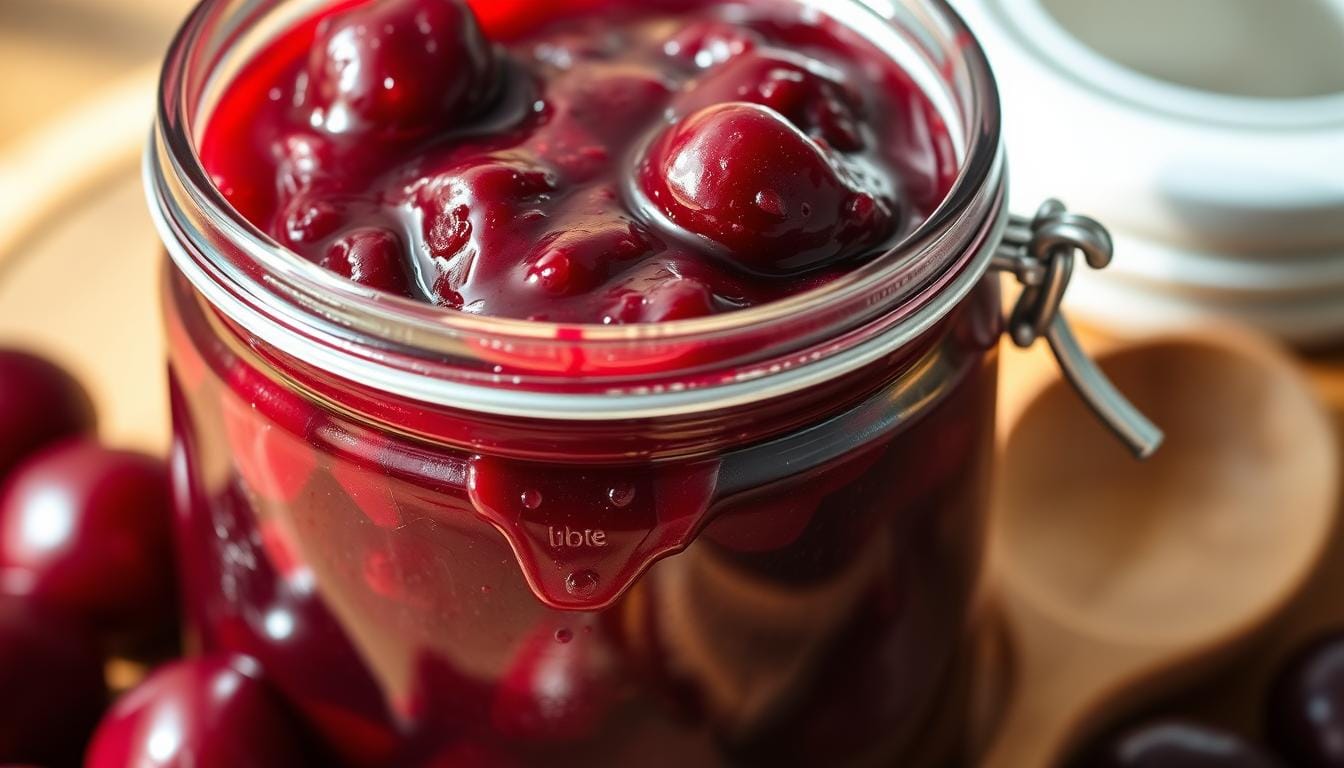
There’s something magical about transforming fresh, seasonal fruit into a delicious spread that captures the essence of summer. Imagine opening a jar of homemade preserves, the sweet aroma filling your kitchen, & knowing you created it with just a few simple ingredients. This method is not only easy but also allows you to enjoy the natural flavors of the fruit without relying on artificial additives.
Using fresh cherries, a touch of sugar, & a splash of lemon juice, you can create a luxurious spread that’s perfect for breakfast toast, dessert toppings, or even as a gift for loved ones. The process is straightforward, & the result is a vibrant, flavorful preserve that’s as versatile as it is delicious. Whether you’re a seasoned cook or a beginner, this approach is designed to be accessible & rewarding.
One of the best parts? You don’t need commercial pectin. The natural pectin in the fruit, combined with the right technique, ensures a perfect consistency. Plus, storing your preserves in the refrigerator or freezer keeps them fresh for weeks or even months. It’s a simple way to enjoy the taste of summer all year round.
Table of Contents
Introduction to Homemade Cherry Preserves
Crafting your own fruit spread at home brings a sense of pride & connection to the ingredients. Using fresh, seasonal produce ensures a vibrant taste that’s hard to beat. Whether you’re a beginner or an experienced cook, the process is simple & rewarding.
cherry preserves recipe
Embracing Fresh, Seasonal Flavors
When you use fresh fruit, you capture the essence of the season. High-quality ingredients make all the difference in the final product. A splash of lemon juice not only balances the sweetness but also helps activate the natural pectin in the fruit.
This ensures a perfect consistency without the need for commercial additives. The result is a spread that’s both flavorful & natural.
Why You’ll Love Making Your Own Preserves
Homemade jam lets you enjoy the natural flavors of the fruit without artificial additives. You can customize the sweetness & texture to suit your preferences. Plus, it’s incredibly versatile—perfect for toast, desserts, or even as a gift.
Store your spread in the freezer for long-lasting freshness. This method keeps the delicate flavors intact for months, allowing you to savor the taste of summer all year round.
The “cherry preserves recipe” Explained
Discover the timeless process of turning fresh fruit into a flavorful spread that’s both simple & rewarding. This method has been perfected over generations, blending tradition with modern kitchen practices. By underst&ing the role of natural pectin & precise techniques, you can create a spread that’s rich in flavor & texture.
The Story Behind the Recipe
Historically, cooks relied on the natural pectin found in fruit & lemon juice to set their spreads. This approach ensures a clean, natural flavor without artificial additives. The process involves carefully reducing the fruit & sugar mixture to achieve the right liquid thickness. Precise heat & timing are critical to success.
Using a non-reactive pot & a c&y thermometer helps maintain control over the cooking process. A simple gel test on a chilled plate ensures the perfect consistency. Whether you use chopped or whole fruit, the final texture can vary, offering a unique experience with every batch.
This recipe ties into the seasonal cycle, emphasizing the importance of fresh summer harvests. Key elements like cup measurements & temperature control are essential for achieving the desired results. Once prepared, storing your spread in the refrigerator keeps it fresh & ready to enjoy.
| Step | Tool | Purpose |
|---|---|---|
| Reduce fruit mixture | Non-reactive pot | Prevent flavor alteration |
| Monitor temperature | C&y thermometer | Ensure precise heat |
| Test consistency | Chilled plate | Check gel formation |
| Store | Refrigerator | Maintain freshness |
Preparing Ingredients & Essential Equipment
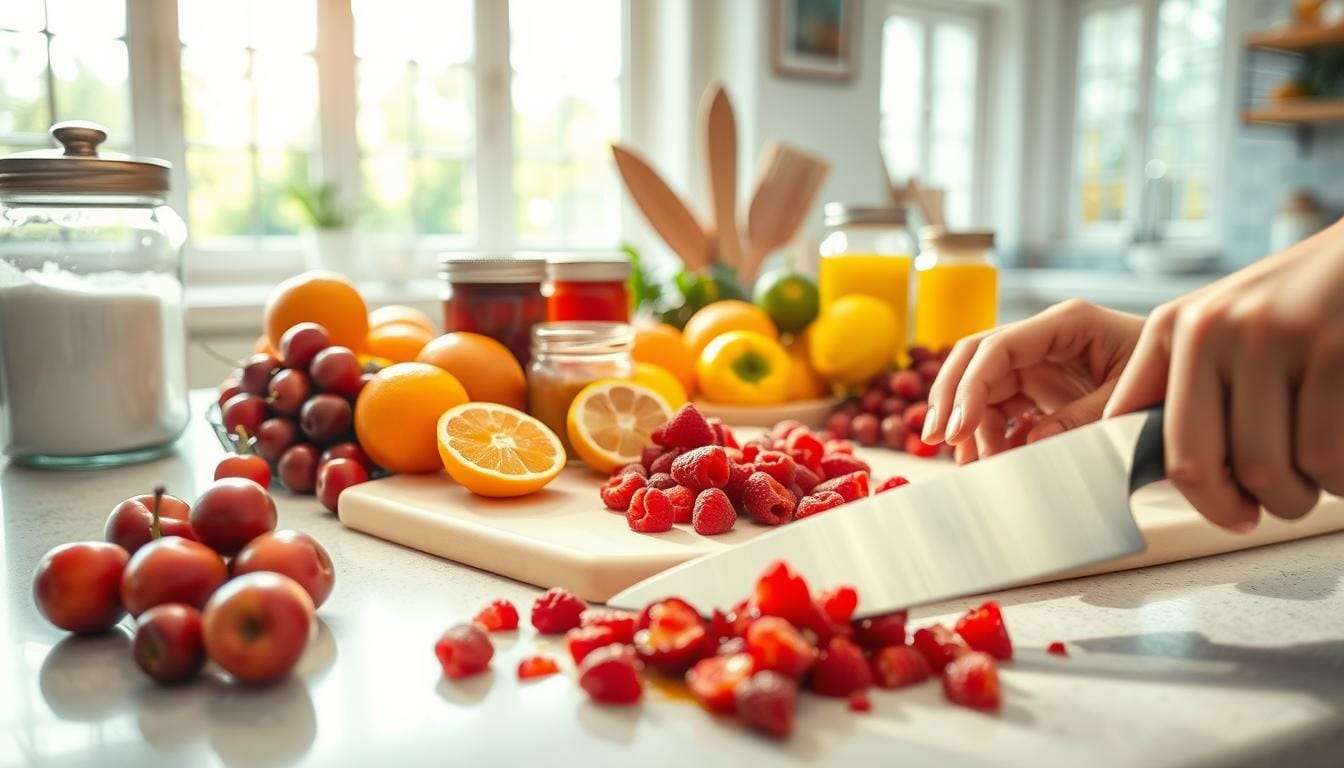
Starting with the right ingredients & tools ensures your fruit spread turns out perfectly every time. Fresh, ripe fruit is the star of the show, so choose the best quality available. A bit of preparation goes a long way in creating a balanced & flavorful mixture.
cherry preserves recipe
Gathering Fresh Fruit & Key Ingredients
Begin by selecting fresh, high-quality fruit. If you’re using cherries, you’ll need to pit them. This step is crucial for achieving the right texture. You can roughly chop most of the fruit while leaving some whole for variety.
Key ingredients include granulated sugar & lemon juice. Sugar enhances the sweetness, while lemon juice activates the natural pectin in the fruit. This combination ensures a perfect consistency without the need for additives.
Tools & Equipment You Need
Having the right tools makes the process smoother. A large, deep non-reactive pot is essential for cooking the mixture evenly. A c&y thermometer helps you monitor the temperature accurately, ensuring the spread reaches the desired thickness.
Other useful tools include a ladle for transferring the mixture & a chilled plate for the gel test. This simple test confirms when your spread is ready. Proper preparation sets the foundation for a successful batch.
- Use fresh, ripe fruit for the best flavor.
- Pit & chop the fruit to achieve a balanced texture.
- Combine sugar & lemon juice to activate natural pectin.
- Invest in essential tools like a non-reactive pot & c&y thermometer.
- Perform a gel test to ensure the perfect consistency.
Step-by-Step Process for Perfect Preserves
Mastering the art of homemade spreads involves a few key steps that ensure perfect consistency & taste. Whether you’re a beginner or an experienced cook, this guide will walk you through the process, from maceration to testing for doneness.
Maceration & Cooking Techniques
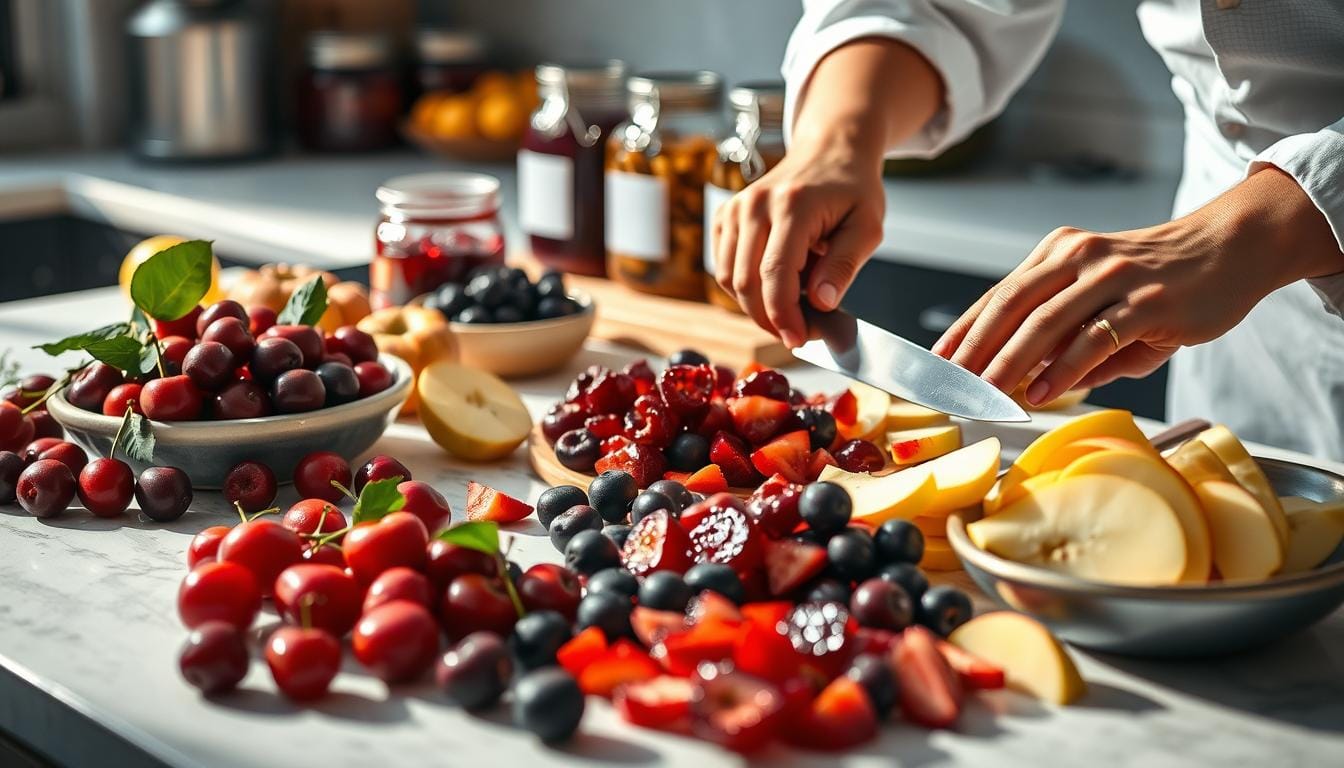
Start by combining your fruit with sugar & lemon juice. Let the mixture sit for at least an hour. This process, called maceration, allows the fruit to release its natural juices & flavors. It’s a crucial step for achieving a rich, balanced taste.
Once macerated, transfer the mixture to a large, non-reactive pot. Bring it to a boil over medium heat, stirring frequently to prevent scorching. Use a c&y thermometer to monitor the temperature. The mixture should reach 220°F to activate the natural pectin & achieve the right thickness.
cherry preserves recipe
Testing for Doneness with the Gel Test
To ensure your spread is ready, perform the gel test. Place a small plate in the freezer for a few minutes. Drop a spoonful of the mixture onto the chilled plate. Let it cool for a moment, then gently nudge it with your finger. If it wrinkles, it’s done. If not, continue cooking & test again in a few minutes.
Timing is critical here. Overcooking can break down the pectin, while undercooking may result in a runny consistency. By the end of the process, your mixture should resemble a thick sauce, perfect for spreading or storing.
“The gel test is a simple yet effective way to ensure your spread has the right consistency.”
For a unique twist, consider adding a pinch of black pepper during cooking. This unexpected addition enhances the flavor, making your spread st& out. Capture the essence of summer in every jar, & enjoy the fruits of your labor all year round.
Tips, Variations, & Customizations
Customizing your fruit spread allows you to create a unique flavor profile that suits your taste. Whether you prefer a hint of spice or a touch of sweetness, small adjustments can make a big difference. Below, we’ll explore ways to enhance flavor, adjust texture, & store your spread for long-lasting freshness.
Enhancing Flavor with Spices & Add-Ins
Adding spices or other ingredients can elevate your spread. A splash of vanilla extract adds warmth, while a cinnamon stick introduces a subtle spice. For a tangy twist, consider a sour cherry or a tablespoon of citrus zest. These add-ins complement the natural sweetness of the fruit without overpowering it.
When experimenting, measure carefully. Too much of an ingredient can alter the balance. Start with a small amount, like a tablespoon, & adjust as needed. This ensures the fruit remains the star of the show.
Adjustments for Different Textures & Sweetness
Texture & sweetness are key to a great spread. For a thicker consistency, let the mixture boil longer, stirring frequently to prevent burning at the bottom of the pot. If you prefer a smoother texture, blend the mixture before cooking.
To control sweetness, reduce the sugar slightly or add a pinch of salt to balance the flavors. This method allows you to tailor the spread to your preferences. Remember, taste-testing as you go ensures the perfect result.
Storage: Refrigerator, Freezer, or Canning
Proper storage keeps your spread fresh & flavorful. For short-term use, store it in the refrigerator for up to a month. For longer storage, the freezer is an excellent option. Use the plate freezer method to test consistency before freezing.
Canning is ideal for shelf-stable storage. Process jars in a water bath for about an hour to seal them properly. This method ensures your spread stays fresh for months. Whichever option you choose, label jars with the date for easy tracking.
Conclusion
Creating your own fruit spread at home is a rewarding experience that combines simplicity with delicious results. By using fresh, high-quality ingredients, you ensure a rich flavor without unwanted fat or additives. This method allows you to enjoy a natural, versatile spread that’s perfect for breakfast, desserts, or gifting.
Remember to pair your creation with your favorite foods to fully appreciate its taste. Small tweaks, like adjusting sweetness or adding spices, can make each batch unique. Always prioritize safety & proper storage to maintain freshness & flavor.
Finally, share the joy of homemade spreads with family & friends. Each jar represents care & creativity, making it a thoughtful gift or a delightful treat. Enjoy the process & savor the results of your efforts.
FAQ
Can I use frozen fruit for this recipe?
Yes, you can use frozen fruit if fresh isn’t available. Just thaw & drain it before starting to ensure the right consistency.
How long do homemade preserves last?
When stored in the refrigerator, they last up to 3 weeks. For longer storage, freeze them for up to a year or use proper canning methods.
What’s the best way to test if the mixture is ready?
Use the gel test. Place a small amount on a cold plate. If it wrinkles when pushed, it’s done. A c&y thermometer can also help reach the ideal temperature.
Can I reduce the sugar in the recipe?
Yes, but sugar helps with preservation & texture. If you reduce it, consider adding pectin to maintain thickness.
What can I add to enhance the flavor?
Try lemon juice for brightness, vanilla for depth, or spices like black pepper for a unique twist. Experiment to find your favorite combination.
Can I double the batch size?
Yes, but avoid overcrowding the pot. Cook in smaller batches to ensure even heat distribution & proper cooking.
What’s the difference between sour & sweet varieties?
Sour types have a tangier flavor, while sweet ones are naturally sweeter. Adjust sugar levels based on the fruit you choose.
How do I store jars properly?
Store sealed jars in a cool, dark place. If unsealed, keep them in the refrigerator or freezer to maintain freshness.