You’re standing in your kitchen. The clock reads 6:30 PM. You’re hungry, tired, and craving something that actually tastes like dinner—not a sad plate of steamed vegetables and grilled chicken that you’ve eaten three times this week already.
You glance at the pork chop in your fridge. Then you hesitate. Because in the back of your mind, pork equals heavy. Pork equals greasy. Pork equals that uncomfortable, overstuffed feeling you promised yourself you’d avoid this month.
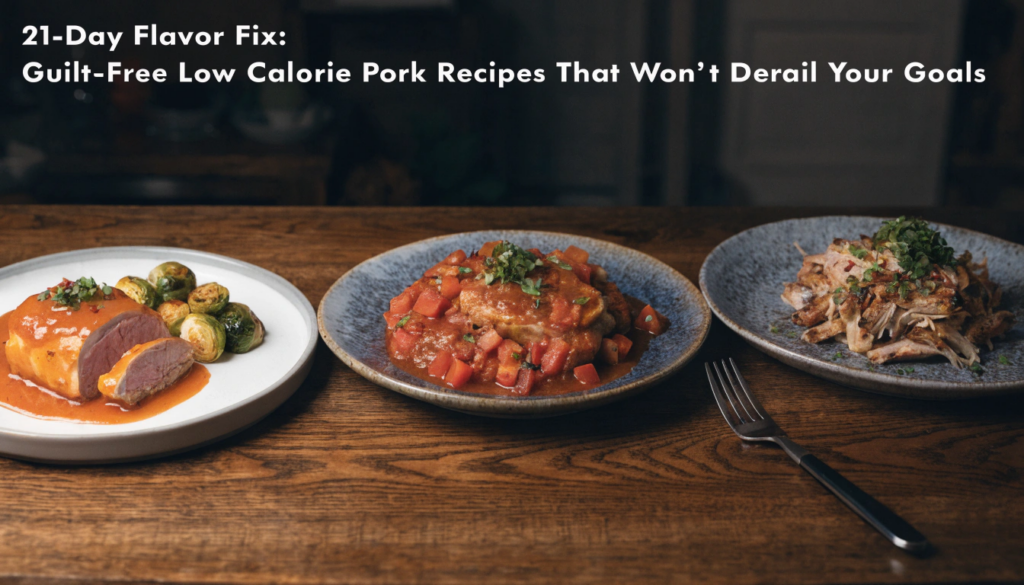
I used to feel exactly the same way. For years, pork was banned from my meal prep rotation. Until one evening, I accidentally picked up a pork tenderloin instead of chicken thighs at the grocery store. Too tired to go back, I decided to give it a shot—but this time, no oil, no heavy marinades, no frying.
What came out of my air fryer twenty minutes later changed my mind completely. Juicy, flavorful, and surprisingly light. I checked the numbers afterward: fewer calories per ounce than the chicken I’d been forcing myself to eat all along.
You don’t have to choose between comfort and a calorie deficit. You really don’t. Let me show you how to bring pork back to your dinner table—without bringing back the bloating, the guilt, or the scale regret.
Why Pork Belongs in Your Low-Calorie Meal Plan (Science + Stats)
Let’s clear up the biggest misunderstanding first. Not all pork is created equal. The pork that shows up on restaurant menus—think crispy bacon, fatty ribs, and breaded chops—bears almost no resemblance to the lean cuts you should be cooking at home.
Here’s what the data actually says. A 3-ounce serving of pork tenderloin contains roughly 120 calories and 22 grams of protein. Compare that to the same size serving of chicken thighs with skin: 230 calories and only 20 grams of protein. Even boneless, skinless chicken breast comes in at 140 calories for the same amount. So yes, properly selected pork can actually be leaner than chicken.
But calories aren’t the whole story. You also want food that keeps you full. Protein does that better than anything else. Your body takes longer to break down protein compared to carbohydrates, which means you won’t feel hungry again an hour after eating. Pork delivers about 25 grams of protein per 4-ounce serving. That’s enough to keep hunger signals quiet for three hours or more.
Then there’s the nutrient piece. Low-calorie diets often accidentally cut out important vitamins because people restrict food variety too much. Pork brings thiamin to the table—a B vitamin that helps your body convert food into energy. It also packs selenium, which supports your thyroid (the gland that controls your metabolism), and B6, which helps regulate mood and sleep.
You aren’t just eating fewer calories. You’re eating better calories.
Best vs. Worst Cuts of Pork for Weight Loss
Before you head to the store, memorize this quick comparison. It’ll save you hundreds of calories per meal.
| Best Cuts (Low Cal) | Worst Cuts (Avoid) |
|---|---|
| Pork Tenderloin (120 cal/4oz) | Pork Belly (500+ cal/4oz) |
| Center-cut Loin Chops (140 cal/4oz) | Spare Ribs |
| Boneless Sirloin Roast (150 cal/4oz) | Sausage links |
Source to cite: USDA FoodData Central or National Pork Board statistics.
The rule is simple. Look for the word “loin” or “tenderloin.” Avoid anything that comes from the belly or shoulder unless you’re willing to trim aggressively. And never buy pre-seasoned pork from the meat counter—those spice packets often hide sugar, corn syrup, and maltodextrin, which add calories without adding real flavor.
5 High-Volume Low Calorie Pork Recipes (Under 400 Calories Per Serving)
These five recipes saved my weeknight dinners. Each one stays under 400 calories per serving, uses simple ingredients, and comes together in thirty minutes or less.
1. Air Fryer Lemon-Garlic Pork Tenderloin (312 cal)
This is your weeknight hero. The air fryer eliminates the need for oil while keeping the outside slightly crisp and the inside tender.
Key techniques: Brine the tenderloin in salt water for fifteen minutes before cooking. Don’t skip this step. The salt changes the protein structure so the meat holds onto moisture even when exposed to high heat. No brine means drier pork, which means you’ll be tempted to add butter or sauce later.
Pro-tips (bullet points):
- Slice against the grain when serving. This shortens the muscle fibers so each bite feels tender, not chewy.
- Use olive oil cooking spray instead of pouring oil directly on the meat. You’ll use roughly 90% less fat.
- Cook at 380°F for eighteen to twenty minutes, flipping halfway through.
Serving suggestion: Plate this over zucchini noodles tossed with cherry tomatoes and a squeeze of fresh lemon. The whole meal comes in under 350 calories.
2. Korean Gochujang Pork Lettuce Wraps (285 cal)
You might think spicy Korean food requires sugar and oil. It doesn’t. Gochujang—that thick, red, fermented chili paste—delivers massive umami flavor with only fifteen calories per tablespoon.
Why it works: The fermentation process creates natural glutamates, which your brain registers as “savory” and “satisfying.” You won’t miss the sugar because the chili heat distracts your palate.
Key swap: Most recipes call for brown sugar to balance the spice. Replace it with allulose or monk fruit sweetener. Both caramelize similarly but add zero net calories.
Data point: Using lettuce leaves instead of rice or flour tortillas reduces calorie density by about forty percent for the same volume of food. You can eat twice as many wraps for the same calories.
3. Instant Pot Salsa Verde Pork (355 cal)
This is the “set it and forget it” recipe for busy weeks. You dump everything into the pot, walk away, and come back to shredded pork that tastes like you spent hours on it.
The no-oil method: Salsa verde acts as your cooking liquid. The tomatillos and peppers in the salsa break down during pressure cooking, creating a sauce that coats every shred of meat. No added oil necessary.
Macros (per serving): 38g protein / 9g fat / 6g carbs.
Meal prep hack: Make a double batch on Sunday. Shred the pork and store it in the fridge for up to four days. Use it over riced cauliflower, scrambled into morning eggs, or cold on top of a salad with black beans and corn.
4. Smoked Paprika Pork & Cabbage Skillet (278 cal)
If you’ve never cooked with cabbage as a volume extender, you’re missing out. One cup of shredded cabbage contains only twenty-two calories. That means you can add two full cups to this dish and barely move the calorie needle.
Why cabbage works here: It soaks up the smoky paprika flavor while staying slightly crunchy. The texture contrast keeps the dish interesting.
Cooking trick: Brown the pork first in a non-stick pan over medium-high heat. Remove it, then add two tablespoons of broth to the same pan. Toss in your shredded cabbage and cover for three minutes. The steam softens the cabbage without oil. Add the pork back in and finish with smoked paprika, garlic powder, and a pinch of salt.
5. Balsamic Glazed Pork Chops (340 cal)
Most glazes are sugar bombs. This one uses a simple kitchen trick to get thickness and sweetness from nothing but vinegar.
The glaze hack: Pour one cup of balsamic vinegar into a small saucepan. Turn the heat to low and let it simmer uncovered for twelve to fifteen minutes, stirring occasionally. The liquid will reduce by half and turn syrupy. No sugar added. No corn syrup. Just concentrated vinegar that tastes sweet because the reduction process caramelizes the natural grape sugars.
Pairing: Roasted Brussels sprouts. Halve them, toss with a pinch of salt and pepper, and air fry at 375°F for ten minutes. The slight bitterness of the sprouts balances the sweet-tangy glaze perfectly.
The 3-Step Formula to Convert Any Pork Recipe to Low Calorie
You don’t need a new recipe for every craving. Learn this formula, and you can transform almost any pork dish you already love.
Bulleted List for Skimmability:
- Step 1 – Trim the Fat: Remove the visible fat cap before you start cooking. Waiting until after means the fat renders into the pan and gets reabsorbed. Trimming first saves roughly forty-five calories per ounce.
- Step 2 – Change the Vessel: Swap frying for air frying, grilling, or sous vide. These methods retain moisture without requiring oil as a heat conductor. Sous vide, in particular, gives you restaurant-quality texture with zero added fat.
- Step 3 – Reinvent the Sauce: Replace cream with Greek yogurt, butter with bone broth, and sugar with balsamic reduction or citrus juice. The flavor profile shifts slightly, but you’ll save hundreds of calories per serving.
The “Calorie Math” Cheat Sheet
Keep this on your fridge for quick reference.
- 1 tbsp butter → sub 1 tbsp unsweetened applesauce (saves 90 cal)
- ½ cup heavy cream → sub ½ cup fat-free evaporated milk + 1 tsp cornstarch (saves 300 cal)
- Frying in ¼ cup oil → sub air fryer (saves roughly 480 cal)
Common Mistakes That Sabotage Low Calorie Pork Recipes (And How to Fix Them)
Even with the right ingredients, small errors can wreck your results. Here are the biggest pitfalls I see—and how to avoid them.
Numbered List of Pain Points:
- Mistake: Overcooking until dry (then drowning in high-cal sauce to compensate).
- Fix: Buy a meat thermometer. Pork is safe to eat at 145°F internal temperature. Pull it off the heat right then and let it rest for three minutes. The temperature will rise another five degrees during rest, and the juices will redistribute throughout the meat.
- Mistake: Buying “family pack” chops that are uneven thickness.
- Fix: Either butterfly the thick ones or pound the entire pack to a uniform half-inch thickness. Uneven chops mean the thin end overcooks while the thick end is still raw. You end up with dry edges and a disappointed appetite.
- Mistake: Skipping the marinade.
- Fix: Twenty minutes in lemon juice, garlic, and fresh herbs reduces your need for oil by about ninety percent. The acid tenderizes the surface so the meat feels juicier even with less fat.
FAQ: Your Burning Questions About Low Calorie Pork Recipes Answered
Q1: Can I eat pork every day and still lose weight?
Yes, as long as you stick to lean cuts like tenderloin or loin chops and watch your portion sizes (four to six ounces per meal). A 2021 study published in Nutrients followed two groups of people on calorie-matched diets—one eating lean pork four times per week, the other eating chicken. Both groups lost similar amounts of weight. The pork group actually reported higher meal satisfaction.
Q2: What is the absolute lowest calorie way to cook pork?
Sous vide or poaching. Neither method uses added fats. Sous vide seals the pork in a bag with seasonings and cooks it in a water bath at a precise temperature. The meat never dries out because none of its natural moisture evaporates. Poaching works similarly but uses simmering broth instead of a plastic bag. Season generously after cooking since poaching can wash away surface spices.
Q3: Are low calorie pork recipes actually filling?
Yes, and there’s science behind it. Protein has a high “thermic effect of food”—your body burns between twenty and twenty-five percent of the calories from protein just through digestion and absorption. That means a 300-calorie pork meal leaves you with a net calorie intake closer to 225. Pair your pork with non-starchy vegetables like broccoli, asparagus, or spinach, and the volume of food on your plate increases without increasing calories.
Q4: Can I use these recipes for meal prep?
Absolutely. Cook a batch of the Instant Pot salsa verde pork or grill several loin chops on Sunday. They hold well in the fridge for four days. One warning: avoid freezing cooked pork that’s been sitting in a cream-based sauce. The freezing process breaks the emulsion, and you’ll end up with grainy, separated liquid when you reheat it. Stick to freezing plain cooked pork or pork in broth-based sauces.
Q5: Is pork sausage ever allowed on a low-calorie plan?
Only if you make it yourself using ninety-three percent lean ground pork. Pre-made breakfast sausage from the store typically packs three hundred to four hundred calories per patty because manufacturers add fat, sugar, and preservatives. Make your own by mixing lean ground pork with sage, thyme, black pepper, and a pinch of red pepper flakes. Form into small patties and pan-sear without oil. You’ll save roughly two hundred calories per serving.
Conclusion: Your Next Week of Delicious, Low Calorie Dinners Starts Now
You don’t need to eat sad, dry chicken breast to reach your goals. You never did. That story you’ve been telling yourself—that pork is heavy, that flavor requires fat, that low-calorie cooking means suffering—it’s just not true.
Pork tenderloin is waiting for you. It’s lean, it’s fast, and it’s endlessly adaptable. The five recipes above have gotten me through three separate fat-loss phases without a single moment of feeling deprived. They can do the same for you.
Your 3-Step Takeaway (do this tonight):
- Print this guide or save it to your phone. Circle the two recipes that look easiest to you. Don’t overthink it.
- Go to the store. Buy one lean cut (tenderloin or loin chops) plus the aromatics on your chosen recipe—garlic, fresh herbs, citrus, or spices. Skip the pre-made sauces and spice blends.
- Cook one recipe tonight. Not Monday. Not “when you have time.” Tonight. Even if you’re tired. Even if the kitchen is messy. The hardest step is always the first one.
The kitchen isn’t a battleground. It’s where you reclaim your health without sacrificing joy. These recipes proved that to me on a random weeknight when I was too tired to argue with myself. Let them prove it to you.
Your turn: Which recipe are you trying first? Hit reply or drop a comment below. I read every single one.