You know that feeling when you peel a muffin liner and half the precious breakfast sticks to the paper? Or when you slice into a loaf pan and the first piece crumbles into a sad pile of what-ifs?
Let me paint a different picture.
It’s 7:15 on a Tuesday. Your coffee is going cold. Someone can’t find their left shoe. And yet—you pull a golden, cinnamon-swirled ring from the oven. It releases in one perfect piece. No drama. No crumbs. Just twelve uniform slices of something that looks like you tried way harder than you actually did.
That is the quiet superpower of the breakfast bundt cake.
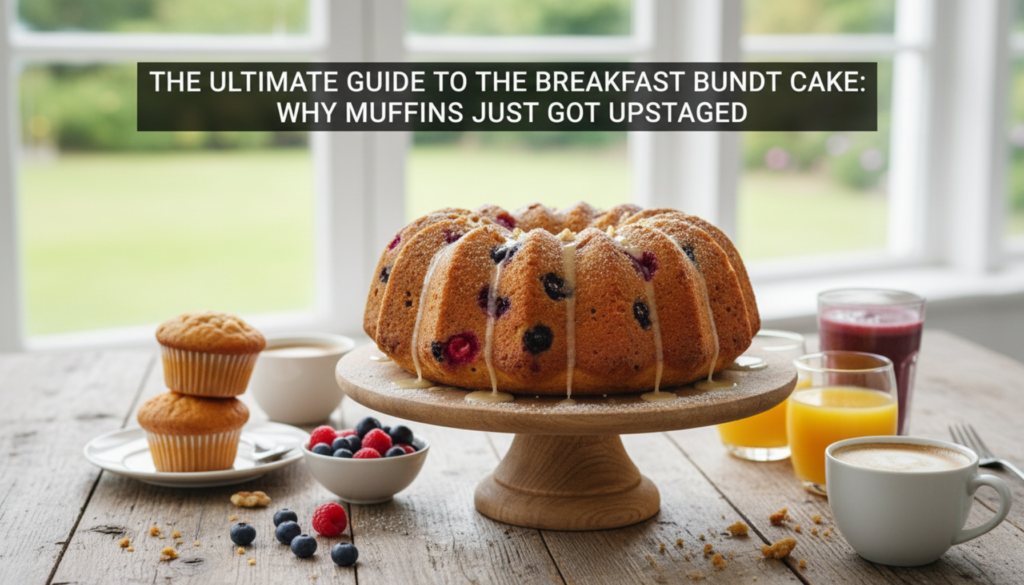
I stumbled into this by accident during a particularly chaotic school morning. Pancake batter was already mixed. The griddle was taking forever to heat. My eyes landed on a dusty Bundt pan shoved behind the muffin tins. Why not? Twenty-five minutes later, my kids were eating warm, sliceable “pancake cake” with their fingers while walking out the door. Nobody complained. Nobody asked for syrup. And I drank my coffee while it was still hot.
That morning changed how I think about breakfast forever.
Today, you’re going to learn exactly why this humble ring-shaped pan deserves a permanent spot on your counter—and how to use it without the terror of a stuck cake.
Why Choose a Breakfast Bundt Cake Over Traditional Muffins or Loaves?
Let’s be honest with each other. Muffins are liars. They pretend to be single-serving perfection, but they dry out by 10 AM. Loaf pans give you those sad, uneven end pieces that nobody wants. And don’t get me started on cleaning a twelve-cup muffin tin.
The Bundt pan solves problems you didn’t even know you had.
The Efficiency Factor
You wash exactly one pan. You grease exactly one pan. You fill exactly one pan.
- Time to fill a muffin tin: Roughly five minutes of spooning, leveling, and praying you don’t drip on the rim.
- Time to fill a Bundt pan: About forty-five seconds. Pour. Shake. Bake.
That extra four minutes won’t change your life. But the lack of frustration? That will.
The ‘Wow’ Factor Without the Work
Here’s something most recipe blogs won’t tell you. A Bundt pan does your decorating for you. Those ridges and curves create shadows and highlights that make any cake look professionally baked. You don’t need a piping bag. You don’t need a spatula. You just need a simple glaze drizzled over the top, and suddenly you’re the hero of the brunch table.
Texture Advantages
Because a Bundt pan has that hollow center tube, heat reaches the middle of your batter evenly. No more raw centers or burnt edges. Plus, the increased surface area means more of that golden, slightly crisp crust per bite. A loaf gives you two crusty ends. A breakfast bundt cake gives you crusty edges in every single slice.
Portability
Try wrapping a muffin in parchment paper without squishing its dome. Go ahead. I’ll wait. A slice of Bundt cake, on the other hand, sits flat. It stacks. It travels in a lunchbox without turning into rubble. You can pre-slice the whole thing on Sunday, wrap each piece in wax paper, and grab one on your way out the door for five straight mornings.
Behind the scenes: King Arthur Baking has tested this extensively. Their research shows that aluminum Bundt pans (not dark non-stick) produce the most even browning because they heat and cool at a predictable rate. Darker pans absorb more heat and can burn the thin edges of your batter before the center finishes.
The Anatomy of a Perfect Breakfast Bundt Cake (Sweet vs. Savory)
Before you start throwing ingredients into a bowl, let’s break down what actually works inside a Bundt pan. The shape changes things. You can’t just pour any batter in there and hope for the best.
The Base (Three Reliable Options)
Traditional: Buttermilk and eggs. This gives you a fluffy, slightly tangy crumb that holds up well to mix-ins like berries or chocolate chips. The acid in the buttermilk also keeps the cake moist for days.
Healthier: Greek yogurt and oat flour. This is denser, but in a satisfying way. The yogurt adds protein and moisture without extra fat. Oat flour absorbs liquid differently than white flour, so you’ll notice a tighter crumb. That’s a good thing for a breakfast cake—it won’t fall apart in your hand.
Grain-Free: Almond flour and banana. This leans into breakfast territory naturally. Almond flour is heavier, so your cake won’t rise as high. That’s fine. You’re looking for a tender, almost fudge-like texture here. Just don’t overmix, or you’ll activate the almond flour’s oils and end up with something greasy.
The Sweeteners
White sugar gives you the crunchiest, most caramelized crust. Brown sugar adds moisture and a subtle molasses flavor. Maple syrup or coconut sugar will work, but they change the chemistry—expect a softer, darker crust that doesn’t have that satisfying snap.
The Flavor Spiral
Here’s a pro move. Pour half your batter into the pan. Sprinkle a cinnamon-sugar mixture or dollop spoonfuls of jam around the ring. Use a butter knife to gently swirl it into the batter. Pour the remaining batter on top. You’ll get a hidden ribbon of flavor in every slice.
The Savory Breakfast Bundt Cake (Yes, it exists!)
Don’t click away. I know savory cake sounds strange. But think of it as a giant, sliceable egg bite.
- Idea: Cheddar, bacon, and chive Bundt. Use a cornbread or biscuit-style batter. Fold in cooked bacon crumbles, sharp cheddar, and fresh chives. Serve warm with a side of scrambled eggs or a drizzle of honey if you want sweet-savory chaos.
- Critical tip: Reduce the liquid in your recipe by about 15 percent. Savory add-ins release moisture as they bake. If you don’t adjust, the center of your breakfast bundt cake will turn out gummy and underdone. Nobody wants that.
5 Genius Flavor Combinations for Your Next Breakfast Bundt Cake
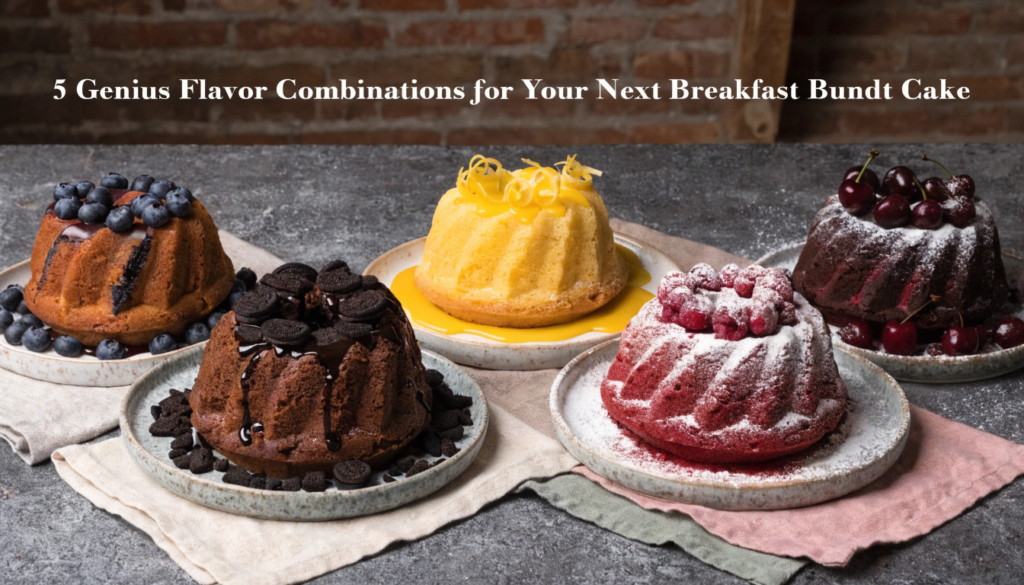
You can stop searching Pinterest now. These five combinations have been tested, tasted, and approved by people who actually wake up hungry.
- The Classic Coffee Crumb
Vanilla base plus two tablespoons of espresso powder dissolved in a little warm water. Top with a brown sugar streusel before baking. The coffee doesn’t make it taste like caffeine—it just deepens the vanilla and makes everything taste more like itself. - Lemon Blueberry Bliss
Zest two whole lemons directly into your sugar and rub it together with your fingers before adding wet ingredients. This releases the oils. Toss fresh or frozen blueberries in a little flour so they don’t sink to the bottom. Finish with a lemon-ginger glaze (lemon juice, powdered sugar, and a teaspoon of fresh grated ginger). - Apple Cider Donut Cake
Reduce two cups of apple cider down to half a cup over medium heat. Use that in place of some of your liquid. After baking, brush the warm cake with melted butter and roll the whole thing in cinnamon sugar. It tastes exactly like a cider mill donut, except you didn’t stand in line for forty minutes. - Pumpkin Chocolate Chip (Fall)
One can of pumpkin puree (not pumpkin pie filling) replaces most of the fat in your recipe. Add dark chocolate chunks, not chips—chunks melt into pools rather than holding their shape. Sprinkle pepitas on top before baking for a little crunch. - Maple Bacon Cornbread
Use a cornbread recipe as your base. Fold in half a pound of cooked, crumbled bacon. Replace the sugar with maple syrup. After baking, drizzle with a maple glaze (powdered sugar, maple syrup, and a splash of milk). This one disappears fastest at every gathering.
The Secret to Getting Your Breakfast Bundt Cake Out of the Pan (Every. Single. Time.)
Let me save you from the nightmare. You’ve baked something beautiful. You’ve let it rest. You flip the pan. And… half the cake stays inside while the other half splats onto your cooling rack.
I’ve been there. It’s heartbreaking. But it’s also completely preventable.
The Pan Prep Trinity (Do not skip even one)
- Method A: Vegan “Baking Goop”
Mix together one part flour, one part vegetable shortening, and one part neutral oil. Whip it into a paste. Paint it into every single crevice of your pan with a pastry brush. This stuff never fails. - Method B: Butter and breadcrumbs
Melted butter brushed on, followed by a dusting of fine breadcrumbs or even crushed cornflakes. This adds a crunchy texture to the outside of your cake. It’s especially good for savory Bundts. - Method C: Commercial baking spray with flour
Not regular cooking spray. Look for the kind that specifically says “with flour.” Hold the can six inches away and spray evenly for about three seconds. Move the can as you spray to avoid puddles.
The 10-Minute Cooling Rule
Here is the exact timing you need to memorize.
- 0 to 5 minutes after baking: Leave the cake sitting in the pan on a wire rack. The structure is still setting. If you flip now, it will tear.
- At 5 minutes: Place your wire rack upside down over the pan. Flip confidently in one motion. Lift the pan slowly. If you see any resistance, stop. Let it sit for another two minutes.
- 10 minutes and beyond: Do not flip the cake back over to “fix” the cooling. That traps steam and makes the bottom soggy. Leave it right-side up on the rack.
The Rescue Method (When things go wrong)
If a chunk sticks despite your best efforts, don’t panic. Put the pan back in the warm oven for two minutes. The heat will soften the stuck bits. Flip again. Once the cake is out, use a small offset spatula to spread glaze over the damaged area. Nobody will ever notice.
How to Serve a Breakfast Bundt Cake (From Grab-and-Go to Gourmet Brunch)
This is where the breakfast bundt cake really shines. It bends to your schedule, not the other way around.
For the Weekday Warrior
- Slice the entire cake on Sunday night.
- Wrap each slice individually in parchment paper, then store them in a zip-top bag at room temperature.
- In the morning, microwave a slice for exactly twelve seconds. It tastes freshly baked. Any longer and the texture turns rubbery.
For the Weekend Brunch Host
- Make the cake the day before. Store it wrapped at room temperature.
- One hour before guests arrive, whisk together a cream cheese glaze. You want it thin enough to drip slowly down the ridges but thick enough to stay put.
- Drizzle the glaze over the cooled cake.
- Fill the center hole with fresh berries, or for a savory Bundt, fill it with warm scrambled eggs or roasted vegetables.
- Warm the whole cake in a 300°F oven for eight minutes before serving. The internal temperature should hit about 150°F. That’s the sweet spot where butter tastes like butter.
Dietary Swaps That Actually Work in Breakfast Bundt Cake Batter
Most gluten-free or vegan baked goods taste like cardboard. These swaps do not.
Gluten-Free
Use Cup4Cup or King Arthur’s Measure for Measure. Almond flour works if you add an extra egg for structure. Avoid coconut flour entirely unless you want a cake that drinks moisture like a sponge.
Dairy-Free
Oat milk has the closest texture to dairy milk. Replace butter with melted coconut oil, but add half a teaspoon of butter flavor extract. Your brain will never know the difference.
Egg-Free
A flax egg (one tablespoon ground flaxseed mixed with three tablespoons water) works in most recipes. Applesauce makes the cake too dense. Here’s the trick: replace each egg with two tablespoons of carbonated water. The bubbles create lift without adding flavor.
Lower Sugar
Allulose or Swerve brown sugar substitute. Just know that your crust won’t caramelize the same way. Add two extra minutes to your bake time and watch the edges carefully. When a toothpick comes out clean, it’s done—even if the color looks lighter than you expect.
Frequently Asked Questions (FAQ) About Breakfast Bundt Cake
Q1: Can I make a breakfast bundt cake the night before?
Absolutely. In fact, a breakfast bundt cake often tastes better on day two. The flavors settle and mellow overnight. Wrap the cooled cake tightly in plastic wrap and leave it at room temperature for up to two days. Do not put it in the refrigerator unless you live in a very humid climate. The fridge pulls moisture out of the crumb.
Q2: Why did my breakfast bundt cake stick to the pan?
You missed a spot when greasing, flipped too early, or your pan’s non-stick coating has worn out. Bundt pans have a lifespan. If you’ve had yours for more than five years and use it often, the coating might be failing. Replace it. Your sanity is worth fifteen dollars.
Q3: Can I freeze a breakfast bundt cake?
Yes, for up to three months. Do not glaze it first. Wrap the whole cake in two layers of aluminum foil, then place it inside a freezer bag. Squeeze out as much air as possible. Thaw overnight on your counter. Glaze it the next morning before serving.
Q4: Is a breakfast bundt cake just… cake for breakfast?
Semantically? Yes. Practically? No. Traditional cake is built around refined sugar, frosting, and zero nutritional intention. A breakfast bundt cake starts with whole grains, less sugar, and add-ins like fruit, nuts, eggs, or yogurt. Think of it as a portable baked oatmeal that happens to look gorgeous. You wouldn’t serve birthday cake for breakfast. You would absolutely serve this.
Conclusion
The breakfast bundt cake isn’t another recipe trend designed to sell you a special pan. It’s a legitimate time-saving tool that asks very little from you. One bowl. One pan. One quick grease. That’s the entire commitment.
In return, you get back something most breakfasts steal from you: a quiet moment. A warm slice. Coffee that actually stays hot. And the quiet satisfaction of serving something that looks like a pastry chef stopped by, even though you’re still in your bathrobe.
Tomorrow morning, skip the cereal box avalanche. Skip the drive-thru line. Pull out that Bundt pan you forgot you owned, and give this a try.
Your turn now. What flavor combination are you most excited to test first? Drop a comment below, or save this guide to Pinterest so you remember the 10-minute cooling rule when you need it most. And if you’ve got a horror story about a cake that stuck to the pan? I want to hear that too. Misery loves company, and so does baking.