You crawl out of your tent just as the sky shifts from black to deep blue. Your shoulders ache. Your sleeping bag still calls your name. But you’ve got fourteen miles ahead, a ridge to cross before noon, and a stomach that feels completely empty.
Reaching into your food bag should feel like relief, not dread.
Too many backpackers grab a sad granola bar, choke it down with cold water, and wonder why they’re dragging by nine in the morning. I’ve been there. On my third day of a week-long solo trek through the Wind River Range, I made the mistake of bringing “gourmet” steel-cut oats that needed fifteen minutes of simmering.
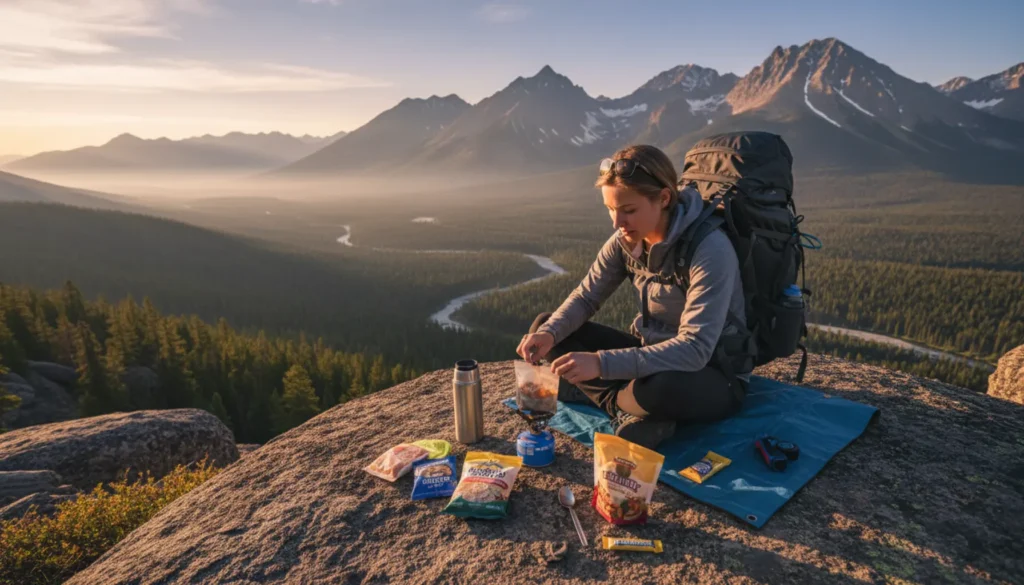
My stove sputtered. My fuel ran low. And by the time I scraped the burnt mess out of my pot, a chipmunk had already chewed a hole through my trash bag.
That morning taught me something important. You don’t need fancy cooking gear or complicated recipes to eat well on the trail. You just need smart backpacking breakfast ideas that work with your schedule, your energy levels, and your patience level before coffee.
Let me walk you through what actually works out there.
Why Your Morning Meal Matters More Than Dinner
Here’s something most casual hikers get backwards. They load up on a heavy dinner because it feels like a reward, then skimp on breakfast to save time packing camp.
That strategy backfires every single time.
When you sleep, your body keeps running. Your heart beats. Your lungs work. Your brain processes the day’s memories. All of that requires fuel, and by morning, your liver glycogen stores are running on fumes. Sports nutritionists who study endurance athletes have found that people burning 4,000 to 6,000 calories per day on the trail need a minimum of 500 calories at breakfast just to avoid hitting a wall before lunch.
Think about that for a second. Five hundred calories is the floor, not the ceiling.
So what makes a backpacking breakfast genuinely good for you out there? Three rules will save you every time.
- Calorie density matters more than volume. Shoot for 120 to 150 calories per ounce. Water weight is your enemy when you’re carrying everything on your back.
- Hydration helps you breathe easier. Cold mountain air and physical exertion dry you out overnight. Your breakfast should either contain some water or get paired with an electrolyte drink.
- Mess is non-negotiable. If your breakfast leaves sticky residue, greasy stains, or crumbs scattered around your campsite, you’re doing it wrong. Leave No Trace applies to every single meal.
The “No-Cook” Revolution: Instant Backpacking Breakfast Ideas for Lazy Mornings
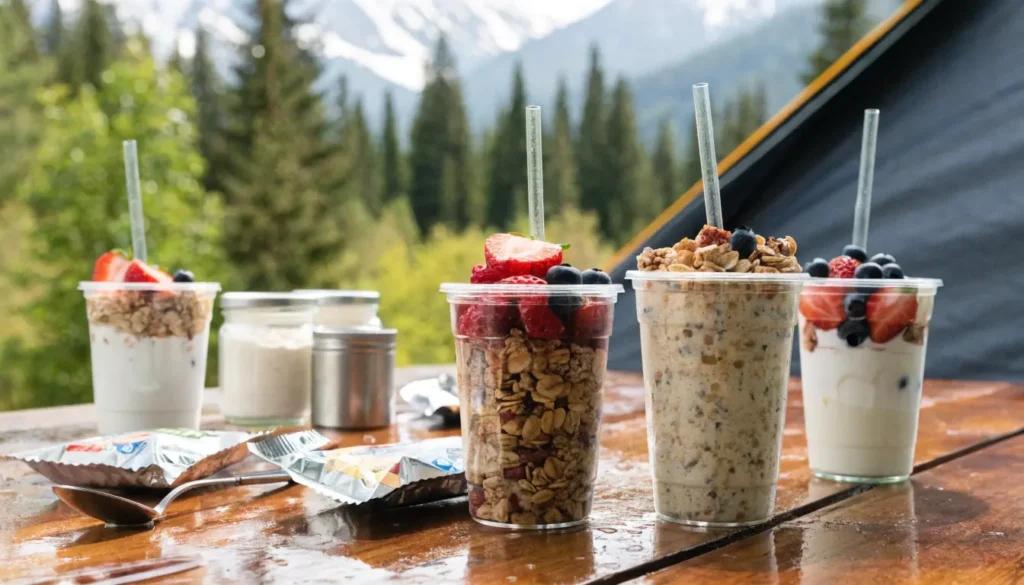
Some mornings, you just don’t want to pull out the stove. Maybe it’s summer and the thought of hot food sounds terrible. Maybe you’re racing an afternoon thunderstorm and need to break camp fast. Maybe your fuel canister ran out yesterday and the nearest town is still two days away.
Whatever the reason, no-cook breakfasts have saved more trail meals than you’d believe.
Cold Soak Overnight Oats
A repurposed peanut butter jar becomes your best friend here. Seriously. Those wide-mouth plastic jars weigh almost nothing and seal tight enough to throw in your pack without worrying about leaks.
Here’s what you need for a single serving that actually tastes good.
- Rolled oats. Not steel cut, not quick oats that turn to glue. Standard old-fashioned rolled oats soften perfectly in cold water over a few hours.
- Chia seeds. Two tablespoons add texture, healthy fats, and enough fiber to keep you full until lunch.
- Powdered peanut butter. Regular peanut butter goes rancid and weighs too much. The powdered kind mixes smoothly and packs twice the calorie density.
- Freeze-dried blueberries or banana slices. They rehydrate overnight and add real fruit flavor without the mush.
The night before, dump everything into your jar, add water until it covers the oats by half an inch, seal it up, and shove it at the bottom of your food bag. By morning, you’ve got a cold, creamy, satisfying breakfast that requires zero fuel and zero cleanup.
The Trail Smoothie
This one sounds weird until you try it. Then you’ll wonder why you ever carried a heavy blender at home.
Get yourself a shaker bottle with a tight lid. Add these powders before you leave home.
- Peanut butter powder for protein and richness.
- Whole milk powder. Not skim. You want the full fat version for calories and creaminess.
- Freeze-dried spinach or a greens powder. This isn’t just for health nuts. After three days of dehydrated meals, your body craves micronutrients.
- Instant coffee granules if you need caffeine but don’t want to boil water.
When morning comes, add cold water straight from the stream or your water bottle, shake violently for thirty seconds, and drink. It tastes like a peanut butter latte crossed with a green smoothie. Strange? Yes. Delicious after a night in the tent? Absolutely.
Hot Breakfast Ideas for Cold Weather Backpacking
When the temperatures drop below freezing, cold-soaked oats lose their appeal. You want something warm in your hands and hot in your belly. These recipes use minimal fuel and deliver maximum comfort.
The One-Pot Backcountry Quinoa Bowl
Oats get all the attention, but quinoa belongs in your bear canister.
Here’s why. Quinoa contains all nine essential amino acids, making it a complete protein all by itself. Oats can’t say that. And quinoa cooks in about ten minutes, which is only slightly longer than oatmeal but gives you twice the staying power.
To make it work on the trail, pack a small bag of quinoa mixed with dried coconut milk powder. That powder turns into a creamy, slightly sweet base when you add hot water. Throw in crushed walnuts for healthy fats and a pinch of cinnamon for flavor. If you’re feeling fancy, a handful of dried mango pieces makes it taste like breakfast dessert.
DIY Freeze-Dried Egg Scramble
Buying premade backpacking eggs from outdoor retailers will cost you about five dollars per serving. Making your own costs closer to one dollar.
According to “The Backpacker’s Field Manual,” powdered whole eggs from companies like Augason Farms store for years and rehydrate perfectly on the trail. Two tablespoons of powder mixed with two tablespoons of cold water gives you enough scrambled egg for one person.
Here’s the move that changes everything. Add shelf-stable bacon bits or pre-cooked dehydrated sausage crumbles to the mix before you add water. Stir it all together, pour it into a warm pot, and stir constantly for about three minutes. Wrap the finished scramble in a flour tortilla, and you’re eating a breakfast burrito at eight thousand feet.
Tell me that doesn’t beat a stale Clif bar.
Ultra-Light and High Calorie: No-Prep Breakfasts for Thru-Hikers
Some days you don’t even want to stop walking. You wake up, stuff your sleeping bag, shoulder your pack, and start moving. Breakfast happens on the trail, one handful at a time.
The Fat Bomb Combo
You need calories, and you need them fast. These three items live at the intersection of weight, nutrition, and convenience.
- Nut butter packets. Justin’s Maple Almond packs 210 calories into a 1.15 ounce squeeze packet. No spoon required.
- Coconut oil packets. Each tablespoon gives you 120 calories of pure fat energy. Fat burns slower than carbs, which means steady blood sugar for hours.
- Granola clusters. Look for bags with big chunks, not dusty flakes. Flakes turn into powder inside your pack. Clusters stay intact.
The pro move here is technique. Squeeze the nut butter directly into your mouth, then bite into a tortilla and chew them together. No sticky fingers. No mess. No stopping.
DIY Trail Mix Cereal
This works better than any store-bought backpacking cereal I’ve ever tried.
Build your own using a simple formula. One cup of base plus half a cup of crunch plus a quarter cup of sweet.
- Your base should be Bear Naked Granola or Grape-Nuts. Grape-Nuts sound boring at home, but they stay crunchy in a bag for a full week on the trail.
- Your crunch comes from pepitas, which are shelled pumpkin seeds, or sesame snaps if you want something brittle and sweet.
- Your sweet element is dark chocolate chunks or dried cherries. Not milk chocolate. It melts into a mess.
To eat it, pour the mix into a ziplock bag, add a tiny splash of water to soften the hardest bits, or eat it completely dry like cereal out of a bowl. Both work.
Common Backpacking Breakfast Mistakes You Need to Stop Making
I’ve made every mistake on this list. Learn from my suffering.
- Mistake one: Packing individual instant oatmeal packets. Each packet only gives you about 100 calories. That’s nothing. Fix it by adding two tablespoons of Nido powdered milk for 110 extra calories and a tablespoon of coconut oil for another 120. Suddenly your tiny oatmeal packet becomes a 330 calorie meal.
- Mistake two: Forgetting a spoon. You will try to eat with a tent stake or a stick whittled into a rough utensil. You will regret this. Fix it by packing a long-handled titanium spoon. It weighs nothing and saves you from eating with your fingers.
- Mistake three: Skipping the home test. New recipes fail on the trail because you didn’t try them in your kitchen first. Fix it by doing a “stoveless Saturday” at home. Make your breakfast exactly the way you would on the trail. If it tastes bad in your kitchen, it will taste worse at camp.
How to Meal Prep Five Days of Backpacking Breakfast Ideas
Meal prep sounds like something influencers do for Instagram, but on the trail, it’s just practical survival.
Follow these steps before you leave home.
- Choose either no-cook or hot meals for your entire trip. Mixing both doubles your packing complexity.
- Portion everything into individual ziplock bags. Label each bag with “Day 1 Breakfast,” “Day 2 Breakfast,” and so on.
- Add powdered milk to every single bag. You will never regret having creaminess available.
- Vacuum seal the bags if you own a sealer. This reduces pack volume by about half and keeps smells contained.
- Pack one emergency breakfast. A ProBar or even a Snickers bar that stays in the bottom of your pack for the morning you wake up too tired to prepare anything.
Frequently Asked Questions
What’s the best backpacking breakfast for weight loss?
Backpacking isn’t the ideal time for aggressive calorie restriction, but if you want to carry less weight, focus on high-volume, lower-calorie options. Instant grits give you about 140 calories per serving. Mix them with freeze-dried riced cauliflower to add bulk without many extra calories. That said, most long-distance hikers will tell you the same thing. Eat the calories. You need them.
Can you make backpacking breakfast ideas without a stove?
Absolutely. Most of the backpacking breakfast ideas I’ve shared here require zero cooking. Cold soak oats, trail mix cereal, and nut butter tortillas are the top three no-stove options. Appalachian Trail thru-hikers rely on these constantly, especially through the southern sections where water is plentiful but fire restrictions are common.
How do you keep breakfast from freezing overnight in winter?
Sleep with your food. Seriously. Put your water bottle and your breakfast bag inside your sleeping bag, down near the footbox where your legs won’t crush them. Your body heat keeps everything from freezing solid. For hot breakfasts, make a “cozy” out of a car windshield reflector. Cut it to size, tape the edges, and slip your pot inside while your meal rehydrates. It traps heat like a miniature oven.
Are dehydrated eggs actually safe to eat on the trail?
Commercially dehydrated or freeze-dried eggs are fully pasteurized and completely safe. If you dehydrate eggs at home using your own dehydrator, you need to cook them first as scrambled eggs, then dehydrate them, then store them in an airtight container with an oxygen absorber. Even then, eat them within a month. Don’t mess around with homemade raw egg products on a remote trail.
Your Next Move
You’ve got fifteen different ways to start your morning on the trail. Some take thirty seconds. Some take ten minutes with a stove. Some don’t require any gear at all except a plastic jar and some patience.
Pick two recipes from this list. Just two. Test them in your kitchen this week while you pack for your next trip. See which one makes you smile when you take that first bite.
Then hit the trail and enjoy a morning meal that actually fuels your adventure rather than dragging you down.
What’s your go-to breakfast when you’re miles from the nearest road? Drop your favorite recipe or trail hack in the comments below. I’m always looking for new ideas to test on my next trip.