There it is again. The sound of your alarm clock screaming at you before the sun has even bothered to show up. You hit snooze—just once, you swear—but now the morning is a blur of tangled hair, missing socks, and a child who insists on wearing their Halloween costume in March.
You stand in the kitchen, staring into the abyss of the refrigerator. Your stomach growls, but your hands are already reaching for the coffee maker. You know you need to eat. Your mother always told you breakfast is the most important meal of the day. But between the morning scramble and the guilt of reaching for another sugar-loaded pastry from the gas station, you feel stuck.

You glance at the tub of protein powder on the counter. Is this the answer? you wonder. Or am I just cheating my way through the most important meal of the day?
If you’ve ever felt that pang of guilt while trading a “real” meal for a shake, this article is for you. Let’s put that guilt to bed and figure out if blending your breakfast is the smartest move for your body, your schedule, and your sanity.
What Defines a “Good” Breakfast? (Beyond the Hype)
Before we can answer whether a protein shake qualifies as a good breakfast, we need to strip away the marketing noise and look at what your body actually requires after a night of fasting. Breakfast culture has sold us a lot of ideas over the years—cereal is convenient, pancakes are for weekends, and somehow a muffin from a coffee shop counts as a meal. But nutrition science has moved past those old narratives.
A truly solid breakfast does three things for you. First, it replenishes your liver’s glycogen stores, which get depleted while you sleep. That’s why you often wake up feeling a little foggy. Second, it stabilizes your blood sugar so you don’t experience that notorious 10:00 AM crash where you start eyeing the office donuts like they’re a lifeline. And third, it provides enough satiety to carry you through to lunch without your stomach staging a revolt.
What separates a decent breakfast from a genuinely good one comes down to three components:
- Protein: Aim for 20 to 30 grams. This is the anchor that slows digestion and keeps hunger hormones in check.
- Fiber: Five to ten grams helps regulate blood sugar and feeds your gut microbiome.
- Healthy Fat: Ten to fifteen grams supports hormone function and adds staying power.
When you look at breakfast through this lens, you realize that a bowl of sugary cereal fails on all three counts. But a thoughtfully constructed shake? It can hit every single mark.
Research published in the American Journal of Clinical Nutrition has shown that breakfasts delivering at least 20 grams of protein significantly improve appetite control throughout the morning compared to high-carb, low-protein alternatives. So the question isn’t whether a shake can work—it’s whether yours does.
The Anatomy of a Protein Shake: What’s Really Inside?
Let’s pull back the label and look at what you’re actually scooping into your blender. Protein powders are not created equal, and the difference between a well-formulated product and a cheap tub of flavored filler is enormous.
Here’s a breakdown of common protein sources you’ll encounter:
- Whey Protein: This is the old reliable. It digests quickly, which makes it excellent for post-workout recovery. However, because it moves through your system fast, a whey-only shake without added fat or fiber might leave you hungry sooner than you’d like.
- Plant-Based Blends (Pea, Brown Rice, Hemp): These tend to digest more slowly than whey. They also often come with trace amounts of fiber and micronutrients that isolated dairy proteins lack. The downside is that some blends have an earthy taste or grittier texture.
- Casein: This is the slowest-digesting protein out there. If you’re someone who wakes up starving and can’t make it to 10:00 AM without feeling shaky, a casein-based or casein-blend shake might be your best bet.
Beyond the protein source, you need to scan the ingredient list for what I call the “silent saboteurs.” Many mass-market powders add maltodextrin—a cheap carbohydrate that spikes blood sugar faster than table sugar—along with artificial sweeteners and hydrogenated oils that serve no nutritional purpose.
The Liquid Calories Debate
One of the most common arguments against protein shakes for breakfast is the idea that liquid calories don’t register the same way solid food does. There’s some truth to this. Your brain receives satiety signals partly through chewing and stomach expansion. But here’s where the nuance comes in.
A study in Nutrition Reviews found that liquid meals with high viscosity—meaning they’re thick and creamy rather than watery—and high protein content can be just as satiating as solid meals. This is why a thin, watery shake made with just powder and water will leave you searching for a snack by mid-morning, while a thick, blended shake with added fats and fiber will keep you satisfied for hours.
The texture matters. The ingredients matter. The execution matters.
Is a Protein Shake a Good Breakfast for Weight Loss?
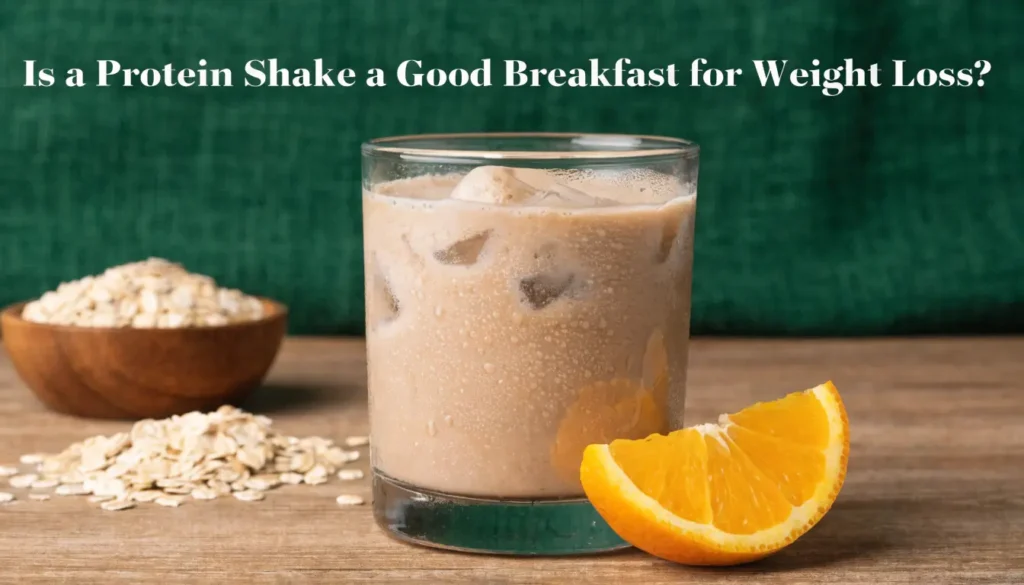
If weight management is part of your goal, you’ve likely wondered whether swapping your usual breakfast for a shake will help or hurt your progress. The answer depends entirely on how you approach it.
Why a protein shake can support weight loss:
- Calorie transparency: When you pour a bowl of granola or grab a bagel, it’s easy to underestimate portions. A shake, by contrast, gives you exact measurements. You know precisely what you’re consuming.
- Appetite regulation: The protein leverage hypothesis suggests that your body will continue seeking food until it meets its protein requirements. By front-loading protein at breakfast, you reduce cravings for processed carbohydrates later in the day.
- Muscle preservation: When you’re in a calorie deficit, your body is prone to burning muscle along with fat. Consistently hitting your protein targets helps ensure the weight you lose comes from fat stores, not lean tissue.
Where people go wrong:
- The water-only trap: Mixing protein powder with just water and ice creates a low-calorie drink, sure. But without fat and fiber, it digests too quickly. You’ll feel hungry again within an hour, and that hunger often leads to overeating at your next meal.
- The accidental calorie bomb: A “healthy” shake can quietly exceed 600 calories if you’re tossing in a whole banana, two tablespoons of peanut butter, a drizzle of honey, and full-fat milk without measuring. Those ingredients are nutritious, but portion control still matters.
The sweet spot for a weight-loss-friendly breakfast shake is between 300 and 400 calories, with at least 20 grams of protein and a solid mix of fiber and fat. Anything less than that, and you’re likely setting yourself up for a hunger crash.
The Missing Ingredients: Why Your Shake Might Be Failing You
I want to address the guilt you might be feeling right now. Maybe you’ve tried the shake-for-breakfast thing before, and by 10:30 AM you were staring at a vending machine, wondering why it didn’t work. You assumed protein shakes just weren’t for you.
But here’s what probably happened: you were missing the Trifecta of Fullness.
A scoop of protein powder alone is not a meal. It’s a supplement. To transform it into a balanced breakfast, you need to add two critical elements that most people overlook.
1. Fiber (The Sustainer)
Fiber slows gastric emptying, meaning food stays in your stomach longer. It also feeds your gut bacteria, which play a surprising role in hunger regulation. Without fiber, your shake digests rapidly, and your blood sugar rises and falls like a roller coaster.
What to add: A handful of spinach or kale (you genuinely cannot taste it), a tablespoon of chia or flaxseed, or half a cup of frozen berries.
2. Healthy Fat (The Hormone Balancer)
Fat triggers the release of cholecystokinin, a hormone that tells your brain you’re satisfied. It also slows the absorption of protein, extending its satiety effects. Many people avoid fat because they associate it with calories, but skipping it is precisely why they feel hungry an hour later.
What to add: A quarter of an avocado (makes the shake incredibly creamy), a tablespoon of almond butter, or a splash of full-fat coconut milk.
Registered dietitians often note that the absence of these two components is the primary reason people feel “hangry” after a liquid breakfast. Your body isn’t rejecting the shake concept. It’s rejecting the lack of staying power.
5 Signs a Protein Shake IS the Perfect Breakfast for You
Let’s validate your lifestyle for a moment. There’s a lot of noise out there about what you “should” eat, but your reality matters more than internet opinions. A protein shake isn’t a compromise for everyone. For some people, it’s genuinely the optimal choice.
1. You have morning nausea or low appetite
If the thought of chewing eggs, oatmeal, or toast makes your stomach turn first thing in the morning, you’re not alone. A cool, smooth shake is often much easier to tolerate than solid food. It gets nutrients into your system without triggering that queasy feeling.
2. You exercise first thing
When you train early, your muscles need fast-absorbing protein to kickstart recovery. A shake immediately post-workout delivers amino acids to damaged tissues far faster than a whole-food meal would. This is one scenario where liquid nutrition actually outperforms solid food.
3. You struggle with portion control
If you’re someone who pours cereal until the bowl overflows or eats toast until the loaf runs out, a pre-portioned shake takes the guesswork out of breakfast. You consume exactly what you intend to, no more, no less.
4. You need nutrient density you wouldn’t otherwise get
Be honest—when was the last time you ate a cup of spinach, a tablespoon of chia seeds, and half an avocado before 9:00 AM? A well-built shake allows you to pack multiple servings of nutrient-dense ingredients into one glass, giving you micronutrients you’d likely skip in a traditional breakfast.
5. Your schedule simply doesn’t allow for sitting down to eat
There’s no moral high ground in cooking eggs if you don’t have time to cook eggs. A thirty-second blend followed by a five-minute commute drink is better than skipping breakfast entirely. Full stop.
3 Red Flags: When a Protein Shake Is a Bad Breakfast
As much as I want to give you permission to blend with confidence, I also owe you the full picture. There are scenarios where a protein shake does more harm than good for your morning routine.
Flag 1: It’s just powder and water
This is the most common mistake. You’re consuming isolated protein with no fiber, no fat, and no micronutrients. Your body processes it quickly, leaving you hungry, and you miss out on the phytonutrients that come from whole foods. This isn’t a meal—it’s a supplement consumed in place of a meal.
Flag 2: You’re using it to avoid eating entirely
If you’re drinking shakes because the idea of preparing or chewing food feels overwhelming, or if you’re using them to restrict calories to an unhealthy degree, that’s a pattern worth examining. Reliance solely on liquid nutrition can interfere with the natural satiety signals your brain receives from chewing, and it can sometimes mask disordered eating habits.
Flag 3: You have underlying blood sugar instability
If you have diabetes, insulin resistance, or hypoglycemia, a fast-digesting whey shake paired with high-sugar fruits (like mango or pineapple) can cause a rapid blood sugar spike followed by a crash. In these cases, a balanced whole-food breakfast with protein, fat, and fiber in solid form may serve you better—or you need to be extremely intentional about what goes into your blender.
How to Build the Perfect Breakfast Protein Shake (The Formula)
Let’s move from theory to action. Instead of asking “is a protein shake a good breakfast,” ask “is my shake a good breakfast?” Here’s a formula you can use to ensure you’re covering all your nutritional bases without overcomplicating things.
The Balanced Breakfast Shake Formula:
- Base Liquid (8–12 ounces):
- Unsweetened almond milk for lower calories
- Full-fat coconut milk for creaminess and satiety
- Cold green tea for an antioxidant boost and subtle caffeine
- Protein (1 scoop):
- Collagen peptides if you want skin and joint support
- Whey if you need quick absorption post-workout
- A quality plant-based blend if you prefer a steadier energy release
- Fat (1 tablespoon):
- Almond butter for flavor and texture
- Quarter of an avocado for creaminess without nuttiness
- MCT oil for quick brain fuel
- Fiber (1–2 tablespoons or a handful):
- Frozen spinach or kale (you won’t taste it, I promise)
- Chia seeds or flaxseed meal
- Rolled oats for a thicker, more filling consistency
- Flavor and Extras:
- Frozen berries for antioxidants and sweetness
- Cacao powder for a chocolate flavor without the sugar
- Cinnamon for blood sugar regulation and warmth
Blend until smooth, and pour into a travel mug if you’re heading out the door. This formula gives you a shake that functions as a legitimate meal, not a placeholder.
Conclusion: Giving Yourself Permission to Blend
So, after all of this, let’s return to the question that brought you here. Is a protein shake a good breakfast?
Yes. Absolutely yes. But only when you treat it like a meal rather than a shortcut.
You don’t need to feel guilty for not sitting down to a plate of eggs and avocado toast. You don’t need to apologize for choosing efficiency over tradition. The world moves fast, and your mornings are often a delicate balancing act between your needs and everyone else’s demands.
By taking two extra minutes to add a handful of spinach and a spoonful of almond butter to your blender, you transform a simple supplement into a powerhouse breakfast. One that stabilizes your mood, fuels your brain for the morning’s challenges, and respects the limited time you have to give yourself.
Give yourself grace. The goal isn’t a picture-perfect breakfast spread. The goal is nourishment—consistent, sustainable nourishment that fits your actual life. Whether you sip it in the car, drink it while answering emails, or enjoy it on your porch before the house wakes up, a well-made protein shake isn’t you skipping breakfast.
It’s you winning it.
Frequently Asked Questions (FAQ)
Is a protein shake a good breakfast for weight loss?
Yes, when it replaces a higher-calorie, lower-protein option. For weight loss, aim for a shake with at least 20 grams of protein, 5 grams of fiber, and a total calorie count between 300 and 400. Skip the honey, syrups, and excessive nut butters if you’re strictly counting calories, but don’t skip the healthy fat entirely—it’s what keeps you full.
Is it OK to drink a protein shake for breakfast every day?
For most healthy adults, daily consumption is perfectly fine. However, variety benefits your gut microbiome and prevents palate fatigue. Rotating in whole-food breakfasts like Greek yogurt bowls, eggs, or savory oatmeal ensures you get a broader range of nutrients and the digestive benefits of chewing and varied textures.
Is a protein shake a good breakfast without fruit?
Absolutely. In fact, a savory shake can be an excellent option for blood sugar stability. Try blending unflavored or vanilla protein with spinach, a quarter of an avocado, a tablespoon of hemp seeds, and unsweetened almond milk. It sounds unusual, but it’s creamy, satisfying, and keeps you full for hours without the sugar spike.
Is a protein shake a good breakfast before a workout?
Timing matters here. If you’re drinking it immediately before exercising, stick to a lighter blend—whey protein with water and maybe half a banana for quick fuel. If you’re having it one to two hours before training, include healthy fat and fiber to sustain you through the workout. A heavy shake right before a run or intense lifting session can lead to digestive discomfort.
Have you found a shake combination that finally keeps you full until lunch? Or are you still experimenting? Drop your go-to recipe in the comments below—I’d love to hear what’s working for you. And if this article helped you give yourself permission to blend without guilt, share it with someone else who needs to hear the same.