You know that moment. The one where you’re standing in the grocery store aisle, hand hovering over a tub of creamy hummus, and that familiar knot forms in your stomach. Should you? Can you? What if?
I remember it like yesterday. A Tuesday evening, a casual dinner at a friend’s house, and there it sat—a beautiful bowl of hummus drizzled with olive oil, surrounded by warm pita bread. Everyone was reaching in, laughing, dipping. And me? I was doing the mental gymnastics we all know too well. Calculating risks. Wondering if I’d spend the next three days regretting that single bite.
If you’re living the gluten-free life—whether by choice for better health or by necessity because of celiac disease—you’ve been there too. That split second of hesitation before eating anything that didn’t come out of your own kitchen. The silent prayer that your meal won’t betray you.
Here’s the truth you deserve to hear: you can stop stressing over hummus. But you need to know exactly what you’re looking for. Let’s walk through this together, and by the time you finish reading, you’ll never have to wonder about hummus again.
The Short Answer: Is Hummus Naturally Gluten Free?
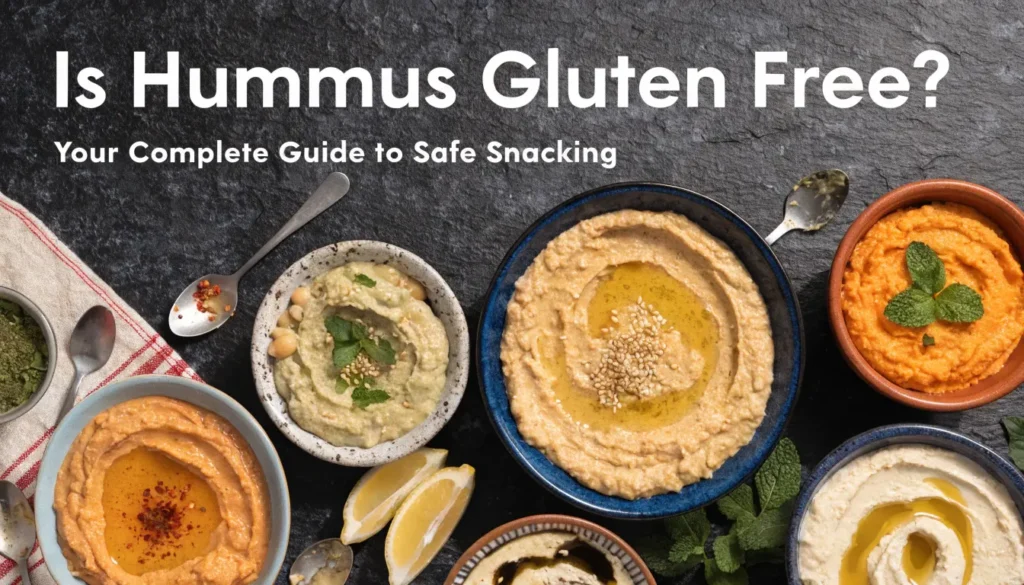
Let’s cut straight to it. Yes, in its purest form, hummus is naturally gluten free. Full stop.
Think about what goes into traditional hummus. It’s a recipe that’s been passed down through generations in the Middle East and Mediterranean, and not a single original ingredient contains a speck of gluten.
Here’s what you’ll find in authentic hummus:
- Chickpeas – Also called garbanzo beans, these little powerhouses are legumes, not grains. They’re naturally gluten free and packed with protein and fiber.
- Tahini – This smooth paste comes from ground sesame seeds. Sesame seeds? Also gluten free.
- Olive oil – Liquid gold pressed from olives. No gluten here.
- Lemon juice – Fresh squeezed from the fruit itself.
- Garlic and salt – Basic seasonings that have never seen a wheat field.
So why all the confusion? Why can’t you just grab any tub and dig in with confidence?
Because here’s the thing about modern food: it’s rarely as simple as it seems. Manufacturers add things. They process things in shared spaces. They create flavors that sound innocent but hide ingredients you’d never expect.
The short answer gets you started. But the real answer—the one that keeps you safe—takes a little more explaining.
When Hummus Turns Risky: The Hidden Sources of Gluten

This is where we get real. You’ve probably eaten hummus that was perfectly safe. But you might have also eaten hummus that made you sick without ever understanding why. Let’s pull back the curtain on where gluten actually hides.
Cross-Contamination in Manufacturing
Picture a factory. On Monday morning, they’re running production on pita crackers—thousands of pounds of them. Wheat flour is floating in the air. It’s settling on equipment. It’s everywhere.
On Tuesday, they switch over to hummus.
They clean the lines, sure. But “clean” means different things to different companies. For someone with celiac disease, “clean” needs to mean absolutely no detectable gluten. For a manufacturer trying to meet loose FDA guidelines? It might mean something else entirely.
This is why you need to watch for:
- “May contain wheat” warnings on the label
- “Manufactured in a facility that also processes wheat” statements
- Products made on shared equipment with gluten-containing foods
Here’s a number you should know: the FDA allows products labeled “gluten free” to contain up to 20 parts per million of gluten. For most people with celiac disease, that’s acceptable. But here’s the catch—that label is voluntary. Manufacturers don’t have to test. They don’t have to verify. They just have to formulate without gluten ingredients.
When you see a facility warning, you’re stepping into unknown territory. Maybe the cleaning protocols are excellent. Maybe they’re not. Do you really want to gamble your health on “maybe”?
Flavor Add-Ins and Ingredients
Plain hummus is your friend. Flavored hummus? That’s where things get tricky.
Manufacturers are competing for your attention. They want the most interesting flavors on the shelf. And to achieve those flavors, they sometimes reach for ingredients you’d never expect to find in a Mediterranean dip.
Watch out for these hidden gluten sources in flavored hummus:
- Soy sauce – Shows up in teriyaki or Asian-inspired varieties. Traditional soy sauce is made with wheat. Always.
- Malt vinegar – Added to give certain flavors a tangy kick. Malt vinegar comes from barley, which contains gluten.
- Brewer’s yeast – Sometimes used to create a cheesy, savory flavor. It’s a byproduct of beer manufacturing.
- Modified food starch – Can be derived from wheat unless the label specifically says “corn starch” or “potato starch.”
- Natural flavors – This catch-all term sometimes hides gluten-containing ingredients. Without certification, you just don’t know.
The roasted red pepper hummus you love? Probably fine. The spicy chipotle variety? Also likely safe. But that limited edition “balsamic fig” flavor? You’d better flip that tub over and read every word.
Restaurant and Food Service Risks
This is the danger zone. You walk into a Mediterranean restaurant. You order the hummus platter with vegetables instead of pita. You feel good about your choice.
But here’s what happened before your food arrived:
Someone in the kitchen scooped pita crumbs out of a container. They didn’t wash their hands. They reached for the hummus bin with the same gloves. Or worse—they used the same spoon for the pitas and the hummus, dunking it back and forth all day long.
The specific risks at restaurants include:
- Double-dipping nightmares – Even if you’re careful, other customers aren’t. That communal bowl of hummus on the table? It’s been touched by pita bread all night.
- The sidedown effect – Your plate arrives with hummus in the middle and vegetables around the edge. Looks safe, right? Except the kitchen staff placed the hummus first, then added the vegetables… using hands that just touched pita bread.
- Shared fryers – If you’re ordering fried foods with your hummus, know that falafel is often safe, but if they fry pita chips in the same oil? Cross-contamination city.
- Cutting boards and knives – The same board used to slice pita might be used to chop your cucumber.
You can’t see gluten. That’s what makes it so dangerous. A kitchen can look clean and still be covered in microscopic particles that will wreck your digestive system for days.
How to Identify Safe Hummus: A Shopper’s Checklist
Enough with the scary stuff. Let’s talk about solutions. Here’s exactly how to walk into any grocery store and leave with hummus you can actually eat.
The Gold Standard: Certified Gluten Free
This is your safest bet. When you see a certification seal, you’re not guessing anymore. Someone else did the hard work for you.
Look for these seals:
-
- GFCO (Gluten-Free Certification Organization) – Requires testing to show less than 10 parts per million of gluten. That’s half the FDA standard.
-
- NSF Gluten-Free Certified – Another rigorous testing program.
-
- CSA (Celiac Support Association) – Uses even stricter standards in some cases.
Brands that frequently offer certified options:
-
- Hope Hummus – Most of their products carry certification. They’re widely available and consistently safe.
-
- Cedar’s – Look specifically for their green “Certified Gluten Free” seal on certain varieties.
-
- Roots Hummus – Many of their offerings are certified.
A quick caveat: formulations change. Don’t assume that because a brand was safe last month, it’s safe today. Check every single time. Make it a habit.
Reading Between the Lines
No certification seal? You can still make an informed decision. Here’s your checklist:
-
- Find the allergen statement. It’s usually in bold at the bottom of the ingredient list. If it says “Contains: Wheat,” put it back immediately.
-
- Look for voluntary “gluten-free” labeling. If the package says “Gluten-Free” but isn’t certified, the FDA requires it to meet the <20 ppm standard. Most reputable brands comply.
-
- Check for facility statements. A voluntary statement like “Made in a dedicated gluten-free facility” is almost as good as certification. It means no gluten enters that building at all.
-
- Scan the ingredients for red flags. Even if the label says gluten-free, scan for barley, rye, malt, or ambiguous starches.
-
- When in doubt, contact the manufacturer. Most companies have customer service lines or websites with allergen information. A five-minute email can save you three days of suffering.
A Complete Guide to Popular Hummus Brands
Let’s get specific. Here’s what you need to know about the brands you’ll actually see on shelves.
Sabra
The giant of the hummus world. Their classic and most flavored varieties are made without gluten ingredients. But—and this is important—they are not certified. They share facilities. If you’re highly sensitive, proceed with caution. Their “Pita Craks!” products obviously contain gluten, and cross-contamination is possible.
Cedar’s
A solid choice with a split personality. Some of their products carry the green certification seal. Others don’t. Look specifically for the certified line, which includes several classic flavors. The non-certified varieties are likely safe ingredient-wise but share production space.
Hope Hummus
A favorite in the gluten-free community for good reason. The vast majority of their products are Certified Gluten-Free. They’re also kosher, non-GMO, and made with simple ingredients. If you want to grab and go without thinking, Hope is your best bet.
Tribe
Similar to Sabra in their approach. Ingredients are generally safe, but they don’t certify and they share facilities. Their classic Mediterranean flavors are less likely to contain hidden gluten than their more experimental offerings.
Trader Joe’s
The beloved store brand is a mixed bag. Trader Joe’s is excellent about labeling allergens clearly. Their hummus, however, is made in shared facilities. You’ll need to read the fine print on every container. The good news is they’re transparent about what’s in there.
Whole Foods Market (365 brand)
Generally safe ingredient-wise, but again, shared facilities apply. Their organic varieties tend to have shorter, cleaner ingredient lists, which reduces the chance of hidden gluten.
Local and Artisan Brands
Smaller producers are often more careful about quality but less likely to have dedicated facilities. Ask questions. Most small business owners are happy to talk about their processes.
How to Order Hummus Safely at Restaurants
Dining out requires strategy. You can’t control the kitchen, but you can control the questions you ask.
Before you order:
-
- Lead with seriousness. Say “I have a gluten allergy” even if you have celiac disease. Restaurants take “allergy” more seriously than “intolerance” or “sensitivity.”
-
- Ask about preparation. “Is your hummus made in-house or does it come pre-packaged?” If it’s pre-packaged, ask to see the actual container. If it’s made in-house, ask about ingredients.
-
- Address cross-contamination directly. “Can you use a fresh scoop from a new container? Can the person preparing it wash their hands and change gloves first?”
-
- Request specific plating. “Can you put my vegetables on the plate first, then add the hummus on top?” This prevents any crumbs on the plate from touching your food.
-
- Skip the shared appetizers. Even if you don’t eat the pita, someone at your table will. Their crumbs will end up in the communal bowl.
Watch for these red flags:
-
- A server who looks confused by your questions
-
- A kitchen that seems too busy to accommodate special requests
-
- Buffets or shared serving areas
-
- Pre-portioned hummus served directly next to pita bread on the same plate
When in doubt, trust your gut—both the intuitive one and the digestive one. If something feels off, skip it. There will always be another meal.
The Ultimate Solution: Easy 5-Minute Gluten-Free Homemade Hummus
Here’s the truth: the only way to guarantee your hummus is 100% gluten free is to make it yourself. And here’s the good news: it’s embarrassingly easy.
I’m talking five minutes. One food processor. Ingredients you can find anywhere. And the result tastes better than anything you’ll buy in a store.
What you’ll need:
-
- 1 can of chickpeas (15 ounces), drained and rinsed
-
- 1/4 cup fresh lemon juice (about one large lemon)
-
- 1/4 cup tahini (stir it well—it separates naturally)
-
- 1 small garlic clove, minced (or more if you’re a garlic lover)
-
- 2 tablespoons extra-virgin olive oil
-
- 1/2 teaspoon ground cumin
-
- 1/2 teaspoon salt (adjust to taste)
-
- 2-3 tablespoons ice-cold water
The method:
-
- Start with the tahini and lemon juice in your food processor. Blend them together for about a minute. You’ll notice it gets thicker and creamier. This step matters—don’t rush it.
-
- Add the olive oil, minced garlic, cumin, and salt. Blend again until combined.
-
- Add about half the chickpeas. Process for a minute, scrape down the sides, then add the rest.
-
- With the processor running, drizzle in the cold water slowly. Watch as the texture transforms from thick paste to silky smoothness. Add water until it reaches your ideal consistency.
-
- Taste it. Adjust salt or lemon if needed.
-
- Transfer to a bowl, make a swirl on top with the back of your spoon, and drizzle with a little olive oil.
Pro tips from someone who’s made this a hundred times:
-
- Peel your chickpeas for ulta-smooth hummus. It’s tedious but worth it for special occasions.
-
- Save the liquid from the chickpea can (aquafaba) and use it instead of water for even creamier results.
-
- Warm hummus is weird. Let it sit in the fridge for an hour before serving.
-
- Garlic gets stronger as it sits. If you’re making this a day ahead, use slightly less.
Serving ideas that keep it safe:
-
- Fresh vegetable sticks (carrots, cucumbers, bell peppers, celery)
-
- Gluten-free crackers (plenty of excellent options exist now)
-
- As a spread on gluten-free sandwiches
-
- With grilled meat or vegetables
Frequently Asked Questions
Is hummus gluten free at restaurants like Moe’s or Chipotle?
At fast-casual spots, the hummus itself is usually made without gluten ingredients. The risk comes from the serving area. Utensils get swapped. Pita crumbs fall into containers. Staff change tasks without changing gloves. Your best move? Ask them to grab a fresh container from the back, use a clean scoop, and change gloves before handling your order. Most places will accommodate this if you’re polite and clear about your needs.
Is store-bought hummus gluten free?
Many store-bought options are safe, but you can’t assume. Make it a habit to check every single container before buying. Look for certification seals first. If you don’t see one, read the allergen statement and ingredients carefully. Avoid bulk bins entirely—the scoop sharing is a cross-contamination nightmare.
Can I eat hummus with vegetables instead of pita?
Absolutely, and you should. Fresh vegetables are naturally gluten free, add crunch and nutrition, and let the hummus flavor shine. This is actually the traditional way to eat hummus in many parts of the world—as part of a meze platter with fresh produce, not as a dip for bread.
Is there gluten in roasted red pepper hummus?
The peppers themselves are fine. The issue is what else goes into the mix. Some brands add thickeners, natural flavors, or other ingredients that could introduce gluten. Stick to brands you trust or check the label carefully. Better yet, buy plain hummus and stir in your own roasted red peppers.
What about hummus from Middle Eastern restaurants?
This can be tricky. Traditional family recipes are usually safe, but commercial kitchens introduce cross-contamination risks. Ask questions. See how they respond. A restaurant that understands gluten issues will answer clearly and confidently. One that doesn’t? Maybe find another spot.
Can I freeze homemade hummus?
Yes, though texture changes slightly. Freeze in an airtight container, leaving a little room for expansion. Thaw in the refrigerator overnight, then stir well before serving. Add a fresh drizzle of olive oil to revive the flavor.
Conclusion
Here’s what I want you to take away from all of this: hummus can absolutely be part of your gluten-free life. It doesn’t have to be a source of anxiety or a food you avoid entirely.
You now know the three pillars of safe hummus consumption:
Read labels like your health depends on it – because it does. Look for certification. Check allergen statements. Make it a habit, not an afterthought.
Be vigilant about restaurants – ask the right questions, watch for red flags, and never assume the kitchen understands your needs without you speaking up.
Make your own when you want certainty – it takes five minutes, costs less than store-bought, and tastes better anyway.
You deserve to eat without fear. You deserve to enjoy food socially without spending the next day regretting it. And you absolutely deserve that creamy, garlicky, lemony goodness that makes hummus one of the best foods on the planet.
So go ahead. Pick up that tub. Make that batch. Dip those vegetables with confidence.
And if you’ve got a favorite brand or a killer homemade recipe that’s kept you safe and satisfied? Share it with someone else who’s navigating this journey. We’re all in this together, and the best discoveries are the ones we pass along.
Now get out there and enjoy your hummus. You’ve earned it.