I still remember standing in my kitchen roughly eighteen months ago, staring at the half-empty creamer bottle on the counter while holding my favorite mug. The numbers just wouldn’t leave my head. That morning, I finally decided to add up what my daily coffee habit actually cost me in terms of calories, and honestly, the result made me feel sick to my stomach.
Two tablespoons of creamer here, a generous swirl of flavored syrup there, maybe some whipped cream on weekends because “I deserved it.” The math worked out to somewhere between 250 and 400 calories every single day. Multiply that by three hundred sixty-five days, and we’re talking about enough calories to gain roughly thirty pounds per year from coffee alone. Coffee! The thing I drank supposedly to help me stay alert and focused.
For about two weeks after that realization, I tried drinking my coffee black. I really did try. But here’s the thing about pretending to enjoy something you genuinely dislike: it never sticks. Those two weeks felt like punishment. My morning ritual, which used to bring me genuine comfort and joy, became this miserable chore I had to endure.
Then one Tuesday morning, while watching the steam rise from another sad, bitter cup of black coffee, I asked myself a different question. Instead of asking “How do I eliminate everything I love about coffee?”, I started wondering “How do I rebuild my coffee ritual from the ground up using smarter choices?”
That question changed everything.
What followed were months of experiments, some truly awful combinations I’d rather forget, and eventually, the discovery that you absolutely can have rich, satisfying, creamy coffee for under fifty calories. Not the sad, watered-down version either. I’m talking about coffee that makes you close your eyes and go “mmmm” with that first sip.
This guide exists for one reason: to help you reclaim your morning ritual without watching your progress slip away one creamy sip at a time.
Why Your Morning Coffee Might Be Sabotaging Your Diet
Let’s talk honestly about what’s probably sitting in your mug right now. I’m not here to judge you, remember, I was the person dumping creamer like it was going out of style. But understanding the numbers gives you power you didn’t have before.
The Hidden Calories You Never Count
Here’s the tricky thing about coffee calories: they’re what nutritionists call “discretionary calories.” These are the ones you consume almost unconsciously, the ones that somehow don’t feel “real” compared to the sandwich or salad you ate for lunch.
Think about your typical coffee construction. Maybe you start with a solid base of coffee, zero calories, great. Then comes the cream. A single tablespoon of heavy cream lands at about fifty-two calories. But let’s be honest, are you really measuring one tablespoon? Most people pour until the color looks right, which typically lands somewhere between two and three tablespoons. We’re already at 100 to 150 calories.
Then come the flavors. Commercial syrups typically pack about forty calories per pump, and most cafe drinks use three to four pumps. Add another 120 to 160 calories. Whipped cream on top? That’s another sixty to ninety calories depending on how generous you feel.
Before you’ve taken your first sip, your coffee has become a 300 to 400 calorie beverage that offers approximately zero nutritional value. That’s the equivalent of eating a glazed donut before you’ve even brushed your teeth.
The Blood Sugar Rollercoaster You Didn’t Sign Up For
Beyond the calorie count, there’s another problem with sugary coffee concoctions that rarely gets discussed. When you flood your system with that much sugar first thing in the morning, especially on an empty stomach, your blood sugar spikes rapidly. Your pancreas responds by releasing insulin to bring that sugar down.
Here’s where it gets ugly. That insulin surge often overcorrects, dropping your blood sugar below baseline within a couple hours. You know that feeling around 10:30 or 11:00 AM where you suddenly feel shaky, irritable, and desperate for carbs? That’s not because you’re weak-willed. That’s your biology responding to the morning sugar bomb you dropped into your system.
Your body then starts screaming for more quick energy, which usually means reaching for another sugary coffee or a vending machine snack. The cycle repeats itself all day long.
According to research published by the National Center for Biotechnology Information, sugar-sweetened beverages, including specialty coffee drinks, represent one of the largest sources of empty calories in the typical adult diet. These aren’t occasional treats for most people; they’re daily habits that shape overall health outcomes over years and decades.
The Essential Pantry: Ingredients for Any Great Low Calorie Coffee Recipe
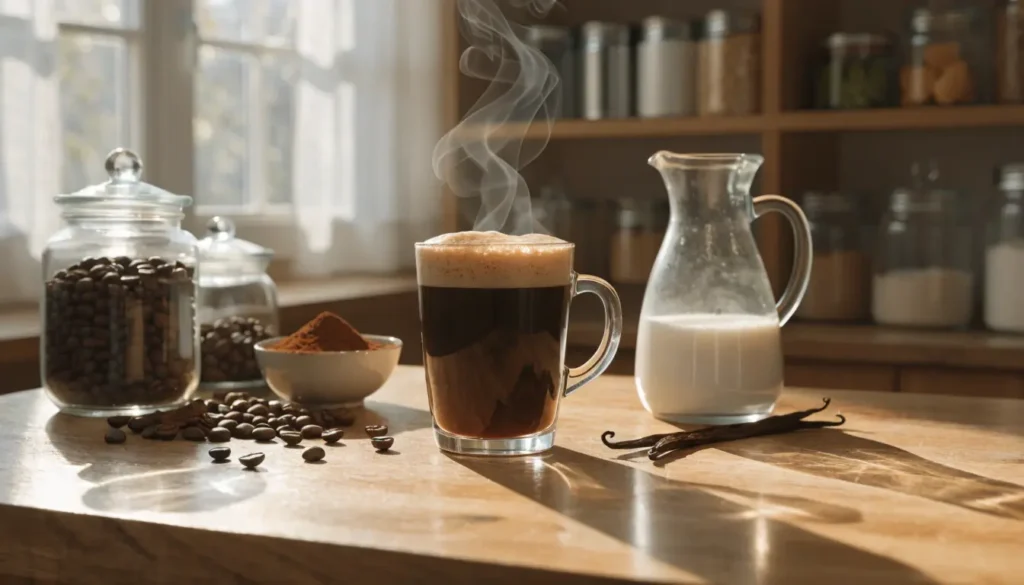
Building better coffee starts with having the right building blocks in your kitchen. Think of this as assembling your toolkit. Once you have these items on hand, you can create endless variations without ever feeling deprived.
The Best Low Calorie Milk Alternatives That Actually Taste Good
Not all milk alternatives perform equally in coffee. Some curdle when they hit hot liquid. Others taste watery and sad. After extensive testing, here are the ones worth your money.
- Unsweetened Almond Milk remains the workhorse of low calorie coffee for good reason. A full cup contains roughly thirty calories, though you’ll only use a splash. Look for brands that list almonds as the first ingredient and avoid those with added sugars hiding in the ingredient list. The texture works beautifully in both hot and cold coffee, and it froths reasonably well if you warm it first.
- Unsweetened Cashew Milk deserves special mention because it solves the texture problem that bothers some people about almond milk. Cashews naturally contain more fat and less water than almonds, which means the milk feels noticeably creamier on your tongue. We’re talking about forty calories per cup, still remarkably low, but with a mouthfeel that closely resembles real milk. If you’ve tried almond milk and found it lacking, cashew milk might be your answer.
- Fat-Free Milk remains an option if you prefer dairy or want the protein content. A quarter cup adds about twenty-two calories plus two grams of protein, which actually helps with satiety. The key word here is “splash.” You’re looking for enough to lighten the coffee, not turn it into a latte.
Natural Sweeteners That Won’t Spike Your Insulin
Sugar isn’t the only way to make coffee taste sweet. These alternatives have saved my morning ritual more times than I can count.
- Monk Fruit Sweetener comes from, you guessed it, monk fruit, and it contains zero calories while providing genuine sweetness. The best part? It doesn’t have that weird chemical aftertaste that bothers so many people about artificial sweeteners. It dissolves reasonably well in cold liquids, though it works best if you stir thoroughly. Some brands blend it with erythritol to improve texture and measuring properties.
- Stevia Drops offer something powdered sweeteners can’t: flavors. You can find vanilla stevia, caramel stevia, hazelnut stevia, even chocolate stevia. These drops add both sweetness and flavor complexity without a single calorie. Start with one or two drops because they’re concentrated, and remember that you can always add more but can’t take it out.
- Cinnamon deserves mention here even though it isn’t technically a sweetener. Here’s the trick: cinnamon contains compounds that trick your brain into perceiving sweetness. When you add cinnamon to coffee, your taste receptors register warmth and complexity that your brain interprets as partially sweet. Plus, cinnamon brings serious antioxidant benefits that plain sugar completely lacks.
Zero Calorie Flavor Boosters That Change Everything
These ingredients add depth and interest without adding calories. They’re the secret weapons that make low calorie coffee taste intentionally crafted rather than deprived.
- Unsweetened Cocoa Powder transforms ordinary coffee into something that feels like an indulgence. One teaspoon adds about ten calories, but it also adds antioxidants, depth, and that satisfying chocolate note that makes mochas so popular. Look for dutch-processed cocoa if you want smoother, less acidic chocolate flavor.
- Vanilla Extract or Almond Extract work wonders because our brains associate these aromas with baked goods and treats. A single drop of high-quality extract adds no calories but triggers the same pleasure centers that respond to actual dessert. Be careful though, a little goes a very long way, and too much can make your coffee taste like perfume.
- Salt. I know this sounds strange, but hear me out. A tiny pinch of salt in your coffee grounds before brewing reduces bitterness and actually enhances perceived sweetness. You won’t taste salt at all. You’ll just notice that your coffee tastes smoother and requires less sweetener to taste good.
Five Delicious Low Calorie Coffee Recipes You Can Make at Home
Now we get to the good stuff. These recipes have been tested, retested, and approved by people who swore they’d never give up their fancy coffee drinks. Each one stays under one hundred calories while delivering serious satisfaction.
Recipe One: The Skinny Vanilla Latte
This one started as my attempt to recreate the drive-thru experience at home, and honestly, I like my version better now.
What You’ll Need:
- One cup of strongly brewed coffee or two shots of espresso if you have an espresso machine
- Half cup of unsweetened almond milk
- Three to four drops of vanilla stevia, adjusted to your taste preferences
- A generous dash of ground cinnamon
- Optional: one teaspoon of sugar-free vanilla syrup for extra richness
Let’s Build It:
Start by brewing your coffee strong. Latte flavors depend on the coffee holding its own against the milk, so don’t use weak coffee here. While that’s brewing, warm your almond milk either in a small saucepan or for about thirty seconds in the microwave. Warm milk froths better than cold milk, and that froth matters more than you might think.
Pour your warm milk into a french press if you have one, or a tall jar with a tight-fitting lid. Pump the plunger rapidly for about thirty seconds, or shake the jar like you’re trying to win a cocktail competition. You’re looking for significant foam development here.
Pour your coffee into your favorite mug. Add the vanilla stevia drops. Slowly pour the frothed milk over the coffee, holding back the foam with a spoon until the end, then spoon that beautiful foam on top. Finish with cinnamon, and maybe take a photo because this coffee looks as good as it tastes.
The entire beverage costs you about forty-five calories, gives you genuine latte satisfaction, and leaves your kitchen smelling like a coffee shop.
Recipe Two: The Iced Brownie Batter Protein Coffee
This one started as a post-workout experiment and quickly became my weekend afternoon treat. It tastes like something you shouldn’t be allowed to drink while dieting.
What You’ll Need:
- One cup of cold brew coffee, the stronger the better
- One scoop of chocolate protein powder, look for one with minimal carbs and sugar
- One tablespoon of unsweetened cocoa powder
- Quarter cup of unsweetened oat milk or cashew milk
- Handful of ice cubes
- Optional: one tablespoon of sugar-free chocolate syrup for extreme situations
Let’s Build It:
Combine your cold brew, protein powder, cocoa powder, and milk in a blender. Add a generous handful of ice. Blend on high until everything combines into this thick, frosty, dangerously delicious concoction.
The key here is letting it blend long enough. You want the ice completely pulverized so the final texture feels like a frosty, not like coffee with ice chunks. Pour it into a tall glass, maybe add a straw, and try not to drink it so fast you give yourself brain freeze.
This recipe runs about eighty-five to ninety calories depending on your protein powder choice. It also packs around fifteen grams of protein, which makes it genuinely satisfying as a snack or post-workout refreshment.
Recipe Three: The Lightened Up Bulletproof Coffee
Traditional bulletproof coffee contains butter and MCT oil, which pushes it well past three hundred calories. This version gives you the sustained energy without the calorie bomb.
What You’ll Need:
- One cup of freshly brewed coffee, quality matters here
- One teaspoon of MCT oil, this provides the brain fuel without excessive calories
- One tablespoon of sugar-free vanilla syrup
- Optional: dash of cinnamon or pumpkin pie spice
Let’s Build It:
This recipe requires a blender. Pour your hot coffee into the blender, add the MCT oil and syrup, then blend on high for about twenty seconds. You’re looking for a frothy layer to develop on top, which indicates the oil has emulsified properly into the coffee.
Pour carefully because that foam can be unstable, and enjoy the sustained energy that comes from combining caffeine with healthy fats. The MCT oil provides quick energy for your brain and body without spiking insulin, which means you avoid the crash that follows sugary coffee drinks.
Total calories land around forty-five, all of them from the MCT oil, which actually supports your metabolism rather than working against it.
Recipe Four: The Mexican Hot Chocolate Coffee
This one warms you from the inside out and makes a cold morning feel cozier immediately.
What You’ll Need:
- One cup of strong brewed coffee
- One tablespoon of unsweetened cocoa powder
- Quarter teaspoon of cinnamon
- Tiny pinch of cayenne pepper, seriously tiny
- Two tablespoons of unsweetened cashew milk
- Sweetener of your choice to taste
Let’s Build It:
Brew your coffee as usual. In your mug, combine the cocoa powder, cinnamon, and cayenne with just enough hot coffee to make a paste. This prevents clumping. Add the remaining coffee and stir thoroughly.
Warm your cashew milk and add it slowly. Sweeten to taste with stevia or monk fruit. The cayenne doesn’t make the coffee spicy, it just adds warmth and complexity that makes the chocolate taste richer.
This recipe runs about twenty-five calories and provides serious antioxidant benefits from both the coffee and the spices.
Recipe Five: The Coconut Cream Dream
If you miss the richness of coconut milk coffee creamers, this one’s for you.
What You’ll Need:
- One cup of coffee
- Two tablespoons of unsweetened coconut milk from a carton, not the canned kind
- One teaspoon of sugar-free toasted coconut syrup
- One drop of vanilla extract
- Toasted coconut flakes for garnish, optional but pretty
Let’s Build It:
Brew your coffee. Warm the coconut milk gently. Combine everything in your mug and stir well. If you’re feeling fancy, toast a tiny pinch of unsweetened coconut flakes in a dry pan and sprinkle on top.
The coconut milk provides natural sweetness and richness without the calories of cream. Total cost: about thirty calories, plus maybe five more if you add the flakes.
Pro Tips to Slash Calories Without Noticing
You’ve got the recipes, but mastering low calorie coffee takes some technique. These tips come from months of trial and error.
- Froth everything you possibly can. Here’s something interesting about how taste works: texture dramatically influences how satisfied you feel. When you froth your milk, even skim or unsweetened almond milk, it creates volume and creaminess that tricks your brain into thinking you’re drinking something indulgent. A milk frother costs about fifteen dollars and might be the best investment you make for your coffee habit.
- Spice strategically. Before you reach for sweetener, try adding cinnamon, nutmeg, cardamom, or pumpkin pie spice. These add complexity that reduces your need for sweetness. Cardamom in particular pairs beautifully with coffee and creates that exotic coffee shop feeling without any calories at all.
- Buy better coffee. This sounds counterintuitive, but hear me out. Low quality coffee tastes bitter and harsh, which makes you want to mask it with cream and sugar. Higher quality coffee, especially medium roasts from single origins, tastes smooth and complex on its own. You’ll naturally need less sweetener when the coffee itself tastes good.
- Measure for one week. I’m not suggesting you measure forever, that would drive anyone crazy. But measure your cream and sweetener for seven days just to see what you’re actually using. The visual of seeing two tablespoons of cream sitting in a measuring spoon often creates more behavior change than any article could.
Frequently Asked Questions About Low Calorie Coffee
What is the absolute lowest calorie way to sweeten coffee?
If you’re looking for the rock bottom calorie option, black coffee with cinnamon or cardamom wins the competition. Zero calories, zero artificial ingredients, and the spices provide their own health benefits. If you need actual sweetness, stevia or monk fruit drops add zero calories and come from plant sources rather than chemical factories.
Can I still enjoy flavored coffee while keeping calories low?
Absolutely, and you have several good options here. You can buy coffee beans that are naturally flavored with oils during roasting, these add zero calories. You can use sugar-free syrups, just read labels because some contain artificial ingredients that bother sensitive stomachs. Or you can get creative with spices and extracts, which cost pennies and add no calories.
Is black coffee actually zero calories?
Technically, black coffee contains about two to five calories per cup from trace oils and compounds in the beans. For practical purposes, though, it functions as zero calories in your daily tracking. The FDA allows products under five calories to be labeled as zero, so you’re safe counting black coffee as free.
Does coffee actually help with weight loss or is that a myth?
Coffee can support weight loss efforts in several ways, but it won’t magically melt fat by itself. Caffeine temporarily boosts your metabolic rate by about three to eleven percent, which adds up over time. It also mobilizes fatty acids from fat tissue, making them available for energy. Perhaps most importantly for many people, coffee acts as an appetite suppressant that makes sticking to your eating plan easier. The key, as you now know, is keeping the coffee itself low calorie so you get these benefits without the drawbacks.
Conclusion: Savor Every Sip Without the Guilt
Standing in my kitchen that morning eighteen months ago, I genuinely believed I faced an impossible choice. I could either keep my comforting coffee ritual and watch my progress stall, or I could give up that daily joy and feel deprived forever.
Turns out, that was a false choice all along.
The recipes and strategies you’ve learned here aren’t about deprivation. They’re about working smarter, understanding your ingredients, and building coffee that genuinely satisfies you while supporting your goals rather than sabotaging them. The Skinny Vanilla Latte, the Iced Brownie Protein Coffee, the Mexican Hot Chocolate version, these aren’t compromise drinks. They’re genuinely delicious beverages that happen to align with your health objectives.
Your morning coffee should bring you joy. It should feel like a treat, a moment of calm before the day demands your attention. Nothing about achieving your health goals requires giving up those small pleasures. It just requires being intentional about how you create them.
Now I’m curious about your experience. Have you tried making low calorie coffee at home? Do you have a favorite combination I didn’t mention here? Head to the comments section and share your go-to recipe. The best ideas often come from readers who’ve experimented in their own kitchens, and I genuinely look forward to trying whatever you’ve discovered.
Here’s to coffee that fuels your body, comforts your soul, and leaves your progress completely intact. Cheers, my friend.
“`