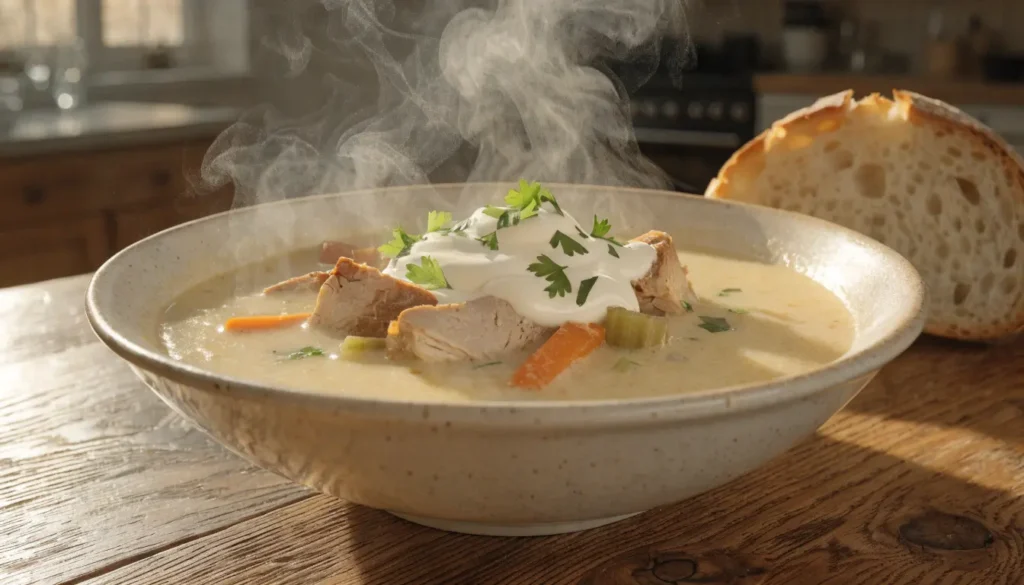
There are certain meals that transcend their ingredient lists—they become woven into the fabric of your memories, surfacing whenever you need comfort most. For me, that meal has always been a steaming bowl of winter melon short rib soup. I can still close my eyes and transport myself back to my grandmother’s tiny kitchen, where a massive pot would bubble away for hours on end, filling every corner with an aroma that promised warmth and belonging.
You know those days when the world outside feels impossibly cold and unwelcoming? When the wind seems to find every gap in your clothing and the gray skies press down just a little too heavily? That’s precisely when this soup works its magic.
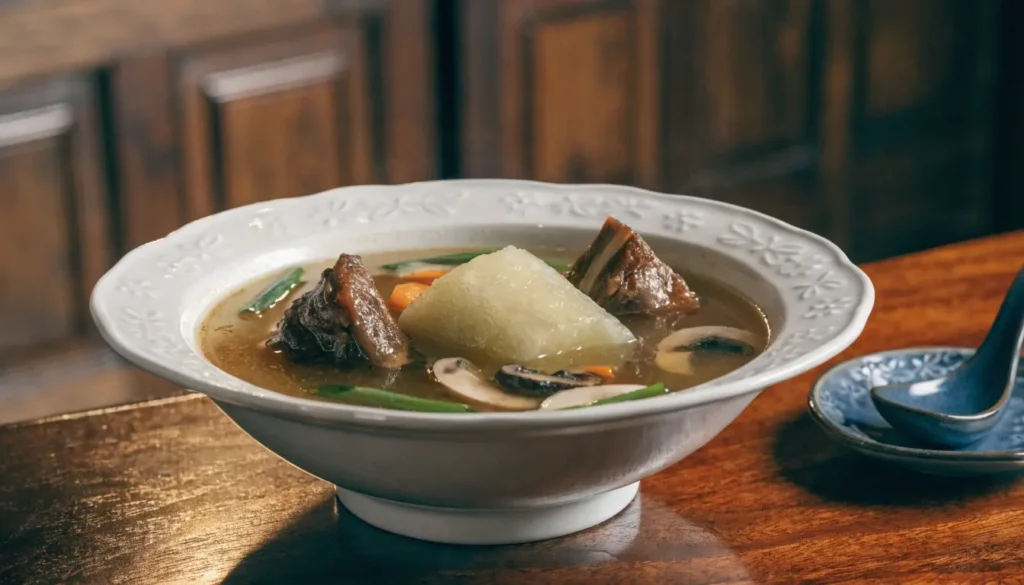
I’ve watched it transform weary faces, warm chilled hands wrapped around ceramic bowls, and create moments of quiet contentment around dinner tables.
What makes this particular soup so special isn’t complexity or exotic ingredients—it’s the remarkable way humble components transform through patience and gentle cooking. The beef slowly surrenders its richness to the broth while the winter melon, that unassuming green gourd, becomes translucent and tender, absorbing all that savory goodness while contributing its own delicate sweetness. By the time you’re ready to write your own winter melon short rib soup chapter, you’ll understand why this dish has earned its place in kitchens across generations.
What Exactly Is Winter Melon Short Rib Soup?
Before you dive into cooking, let’s understand what you’re about to create. Winter melon short rib soup represents everything beautiful about slow cooking traditions. It’s a clear, nourishing broth where two primary ingredients perform a delicious dance together.
The beef short ribs you’ll use aren’t your everyday stew meat. They arrive at the market with generous marbling and connective tissue running through them—precisely what you want for this recipe. When given enough time over low heat, those tough tissues break down into collagen, then gelatin, creating a broth that coats your tongue with satisfaction without feeling heavy.
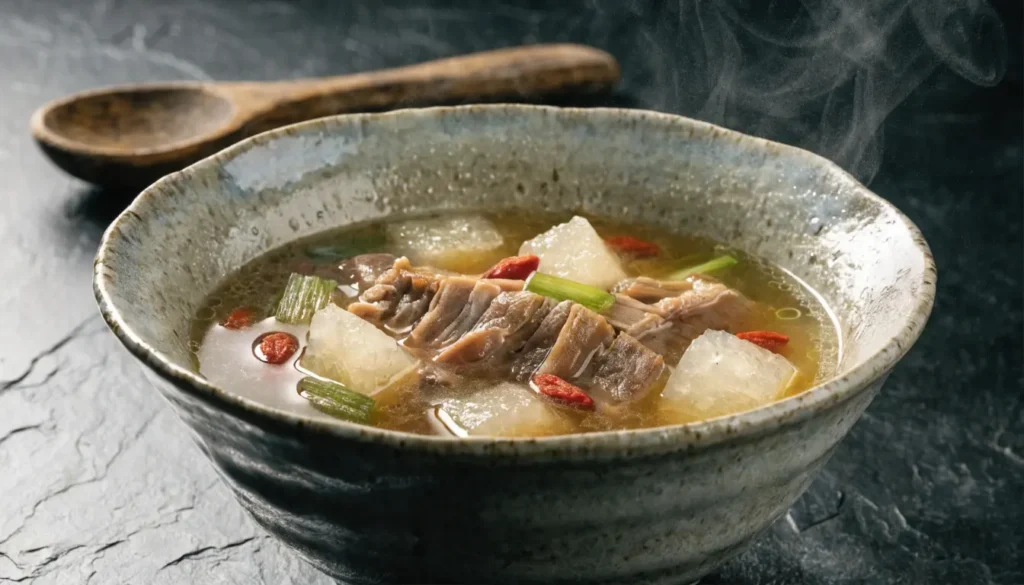
Then there’s winter melon, sometimes labeled as “wax gourd” or “ash gourd” in markets. This vegetable looks rather plain from the outside—large, green, often dusted with a fine white powder that gives it that “winter” name. But inside waits dense white flesh that performs a kitchen miracle. Raw winter melon tastes mild, almost neutral, with just a whisper of vegetal sweetness. Cook it properly in your beef broth, though, and it transforms into something ethereal—translucent cubes that yield gently under your spoon while having absorbed the beefy goodness surrounding them.
Here’s why these two work together so harmoniously:
- Richness meets refreshment – The hearty beef broth finds its perfect counterbalance in the light, watery nature of winter melon. You never feel like you’re drinking straight fat, yet the broth satisfies deeply.
- Texture creates interest – Each spoonful delivers something different. Tender beef that pulls apart easily. Melon cubes that practically dissolve on your tongue. Broth that carries all those merged flavors.
- Temperature regulation – In traditional thinking, this combination cools the body’s internal heat while providing warming substance—perfect for transitional weather or when you feel off-balance.
The beauty of winter melon short rib soup lies in this balance. Neither ingredient overwhelms the other. Instead, they lift each other up, creating something far greater than the sum of their parts.
Gathering Your Ingredients for Success
Quality ingredients matter tremendously when your recipe relies on simplicity. You’re not hiding behind heavy spices or complicated sauces here—everything depends on what you put in the pot. Let’s walk through exactly what you need and why each component matters.
For Your Broth Foundation
Beef short ribs – Look for pieces cut flanken-style (across the bone) or English-cut (between the bones), but bone-in remains non-negotiable. Those bones house marrow that will release into your broth over hours of simmering, adding depth no extract can replicate. Seek out ribs with good meat-to-bone ratio and visible marbling. About three pounds should serve four people generously.
Fresh ginger – Don’t even think about using the dried powder here. You need four or five thick slices of fresh ginger, skin-on is fine, gently smashed with the side of your knife to release its oils. Ginger warms the broth from within while cutting through the beef’s richness.
Onion – One large yellow or white onion, quartered with skin removed, adds subtle sweetness that builds as it simmers. Some cooks char the cut sides briefly in a dry pan first for smoky notes, but that’s optional.
Shaoxing wine – This Chinese rice wine deserves a spot in your pantry. Two tablespoons deglaze your pot after searing, lifting those caramelized bits and adding complex fermented notes. Quality dry sherry works as a substitute if needed.
Dried shiitake mushrooms – These aren’t mandatory, but they elevate your broth significantly. Two or three whole mushrooms rehydrate during cooking, releasing concentrated umami that makes people ask what your secret ingredient is. You’ll remove them before serving, so don’t worry about mushroom chunks in your soup.
Water – Start with twelve cups of cold water, preferably filtered. The temperature matters less than the quality—chlorinated tap water can impart off-flavors after hours of reduction.
For Your Signature Vegetable
Winter melon – Finding this might require a trip to an Asian grocery store, but the search rewards you generously. Most markets sell winter melon pre-cut into rings or large chunks since whole melons can weigh twenty pounds or more. Look for flesh that’s bright white, firm, and free from soft spots or yellowing. Two pounds gives you plenty for a generous pot.
Don’t discard the peel and seeds when you prepare your melon. Many experienced cooks add them to the broth during the initial simmer for extra vegetal complexity, fishing them out before adding the flesh. The peel contains concentrated flavor compounds that infuse beautifully.
For Finishing Touches
Salt – Simple sea salt or kosher salt works perfectly. You’ll add this at the end because broth reduces and concentrates during cooking.
White pepper – Reach for white pepper instead of black here. It provides gentle heat and earthy notes without leaving dark specks floating in your beautiful clear broth. A tiny pinch transforms the entire pot.
Green onions – Thinly sliced, these add fresh bite and color contrast right before serving.
Cilantro – Chopped roughly, cilantro brings bright, herbal notes that complement the rich broth beautifully. If you’re among those who perceive cilantro as soapy, simply omit it.
Goji berries – A small handful optional, these dried red berries plump up in hot broth, adding subtle sweetness and making your soup look festive. Traditional medicine praises their nourishing properties too.
Your Step-by-Step Journey to Perfect Soup
Now comes the hands-on portion. Clear your schedule for this project—not because you’ll be working constantly, but because you deserve to be present while your kitchen fills with incredible aromas. Put on music you love, pour yourself something warm to drink, and settle into the rhythm of cooking.
Step One: Prepare Your Beef Properly
This initial step separates good soup from unforgettable soup. Fill a large pot with cold water and place your short ribs inside. Bring everything to a boil over high heat and let it roll for five to seven minutes. You’ll watch gray foam rise to the surface—that’s impurities and excess blood rising out of the meat.
Drain the ribs into a colander and rinse them thoroughly under warm water. Use your fingers or a soft brush to remove any stubborn foam clinging to the bones and meat. Yes, this takes a few extra minutes. Yes, it matters tremendously. Skipping this step leaves you with murky broth carrying off-flavors you can’t fix later.
Step Two: Build Deep Flavor
Return your cleaned pot to the stove over medium-high heat with a tablespoon of oil. Working in batches if necessary, place the blanched ribs in the hot pot and let them develop a deep brown crust on all sides. Don’t rush this—those browned bits represent concentrated beef flavor that will dissolve into your broth.
Once your ribs wear beautiful color, pour in the Shaoxing wine and immediately scrape the bottom with a wooden spoon. That sizzling sound means you’re capturing every bit of caramelized goodness. Let the alcohol cook off for about thirty seconds before adding your quartered onion, ginger slices, and dried mushrooms if using.
Return all ribs to the pot and add your twelve cups of cold water. Bring everything to a boil, then immediately reduce heat to the lowest setting your stove offers. You want occasional lazy bubbles breaking the surface, not a vigorous boil. Cover and let time work its magic.
Step Three: The Long Wait That Rewards You
For the next two to three hours, your only job involves occasionally checking the pot and skimming any fat that accumulates on the surface. Some fat adds richness, but excessive amounts make soup greasy. Use a ladle to gently remove the visible yellow fat, leaving the precious broth behind.
Around the two-hour mark, test a rib with tongs. The meat should yield easily, nearly falling from the bone. If it still resists, give it another thirty minutes. Patience transforms tough connective tissue into gelatin that makes your broth velvety and your beef tender beyond belief.
Step Four: Introduce Winter Melon at the Right Moment
While your broth reaches perfection, prepare your winter melon. If you haven’t already added the peel and seeds to the pot for extra flavor, peel the melon completely and scoop out the soft seeded center. Cut the white flesh into generous one to one-and-a-half inch cubes. They should feel substantial in your hand.
If you did add peel and seeds earlier, now’s the time to fish them out with a slotted spoon and discard them. Their work is done.
Gently lower your winter melon cubes into the bubbling broth. Maintain that gentle simmer for another twenty to thirty minutes. Watch for the melon to transform from opaque white to translucent, like glass. Test a piece with a chopstick—it should pierce easily but the cube should still hold its shape. Overcooked winter melon dissolves into the broth, which isn’t disastrous but loses that pleasant texture contrast.
Step Five: Season and Serve With Intention
Remove your pot from heat. Now you season—never before, because reduced broth concentrates salt dramatically. Start with a teaspoon of salt, stir, taste, and add more gradually until the beefy flavors sing. Add your tiny pinch of white pepper, stirring to distribute.
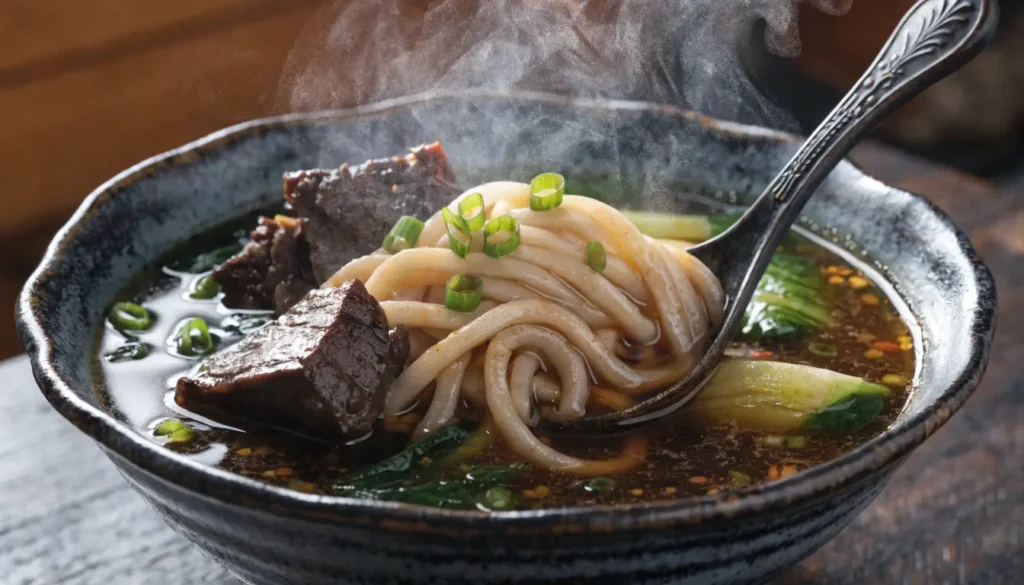
Ladle soup into deep bowls, ensuring each serving receives a generous short rib portion and several glistening winter melon cubes. Sprinkle with green onions and cilantro, add a few plumped goji berries if using, and set each bowl before waiting recipients.
Watch the first sip transform faces. That moment makes everything worthwhile.
Professional Secrets for Superior Results
After making this soup dozens of times, certain lessons emerge that transform good results into exceptional ones. Let me share what experience has taught me.
Achieving Crystal-Clear Broth
Cloudy broth happens when fat emulsifies into liquid through vigorous boiling. Your goals should include:
- Starting with cold water for initial blanching
- Rinsing ribs thoroughly after blanching
- Maintaining the gentlest possible simmer throughout
- Skimming fat before it incorporates
- Straining finished broth through cheesecloth if clarity matters tremendously
Flavor Variations Worth Exploring
The basic template welcomes interpretation. Consider these possibilities:
Add dried seafood – A small piece of dried tangerine peel plus a few dried scallops (conpoy) added with the ginger introduces oceanic complexity that deepens the broth remarkably.
Try pork instead – Pork neck bones or country-style ribs create an entirely different but equally delicious version. The lighter meat allows winter melon to shine even brighter.
Include jujubes – Several red dates (also called Chinese dates) added during simmering contribute natural sweetness and traditional medicinal properties.
Boost with mushrooms – Beyond shiitake, fresh king oyster or straw mushrooms added near the end provide earthy counterpoints.
Storage and Make-Ahead Wisdom
This soup genuinely improves overnight as flavors continue melding. Store cooled soup in airtight containers in your refrigerator for up to four days. You’ll notice the broth may solidify into a wobbly gel—celebrate this! That’s collagen from your patient cooking, proof you extracted every bit of goodness from those ribs. Gentle reheating returns it to liquid form without losing quality.
Freezing works beautifully too. Portion soup into freezer-safe containers, leaving headroom for expansion, and store for up to three months. Thaw overnight in your refrigerator before reheating slowly on the stovetop.
Frequently Asked Questions About Winter Melon Short Rib Soup
What does winter melon actually taste like in soup?
Think of winter melon as the quiet friend who makes everyone else look good. Its flavor stays mild and subtly sweet, never demanding attention. Instead, it absorbs the rich beef broth surrounding it while contributing a fresh, clean undertone that brightens the whole bowl. The texture matters as much as taste—those translucent cubes yield gently, almost melting against your tongue.
Can I prepare this soup in a slow cooker or pressure cooker?
Both appliances work beautifully with adjustments.
For slow cookers, sear your ribs and deglaze the pan on the stove first, then transfer everything except winter melon to your cooker. Cook on low for eight hours, adding melon cubes during the final hour.
For Instant Pot-style cookers, use sauté function to sear ribs and deglaze. Add remaining ingredients except melon, pressure cook on high for forty-five minutes, allow natural pressure release, then open and simmer with melon for ten to fifteen minutes using sauté mode.
What makes winter melon worth seeking out nutritionally?
Winter melon brings impressive credentials to your bowl. It’s extraordinarily low in calories while providing hydration through high water content. Traditional systems value it as a cooling food that reduces internal heat and supports digestion. Combined with collagen-rich beef broth and protein from meat, you’re eating genuine nourishment that satisfies on every level.
How do I know when winter melon reaches perfect doneness?
Watch for transformation. Raw winter melon appears opaque white. Perfectly cooked melon turns translucent, almost glass-like, and yields easily to chopstick pressure while maintaining its shape. Think of properly cooked potato—tender throughout but not falling apart. Undercooked melon remains crunchy and disappointing. Overcooked melon dissolves into the broth, losing texture contrast.
Can I freeze leftover soup successfully?
Absolutely, and you’ll thank yourself later. The high collagen content from those short ribs helps soup retain quality through freezing. Cool completely, transfer to freezer containers leaving headroom, and freeze up to three months. Thaw overnight in your refrigerator before reheating gently. The broth may appear separated—a quick stir while warming brings everything back together.
Beyond the Recipe: Creating Your Own Soup Memories
You now possess everything needed to create winter melon short rib soup that warms bodies and spirits. But recipes only provide maps—the journey belongs to you. Maybe you’ll add extra ginger for more warmth. Perhaps you’ll discover your family prefers more winter melon than beef. You might even develop traditions around serving this soup on particular days, as my grandmother did.
That’s the beautiful thing about cooking passed down through generations. Each person who makes a recipe adds something of themselves to it, adapting and adjusting until the dish reflects their hands and their table. Your version of this soup won’t taste exactly like mine, and that’s exactly as it should be.
What matters isn’t perfect adherence to instructions but the intention behind them. When you take time to select quality ingredients, when you patiently skim and simmer, when you serve steaming bowls to people you care about—that’s where the real nourishment lives. The soup becomes a vehicle for connection, for slowing down, for remembering what matters.
So light your stove, gather your ingredients, and begin. Let the aromas fill your space. Watch winter melon turn translucent as evening falls. And when you finally lift that first spoonful to your lips, know that you’re participating in something beautiful—a tradition of care expressed through cooking that spans generations and crosses cultures.