There are certain meals that stick with you not because of their complexity, but because of how they made you feel when you needed it most. For me, hot and sour soup holds that exact place in my memory. I had just moved to a new city, the kind of move where you don’t know a single soul, and the only familiar faces belong to characters on your laptop screen. It was freezing, the kind of damp cold that seeps into your bones, and I had spent the day unpacking boxes until my fingers were raw.
By evening, I was exhausted, lonely, and too tired to cook. I wandered into a small Chinese restaurant tucked between a laundromat and a closed-down bookstore. The woman behind the counter took one look at my tired eyes and recommended the hot and sour soup. “Warms you up,” she said with a knowing smile. She wasn’t wrong.
When that bowl arrived, steaming and fragrant, something shifted. The first sip was sharp and invigorating. The second sip was warm and grounding. By the time I reached the bottom, the chill in my bones had melted away, and the city outside didn’t feel quite so foreign anymore. That soup became my weekly ritual, a small moment of comfort in an otherwise overwhelming time.
Years later, I found myself wondering about that bowl. Was it actually good for me, or was I simply romanticizing takeout? If you have ever found solace in this tangy, peppery broth, you have probably asked yourself the same question. Let’s pull back the lid and explore exactly what hot and sour soup nutrition looks like, why it makes you feel the way it does, and how you can enjoy it without second-guessing your choices.
What Actually Goes Into Your Bowl
Before you can judge whether something fits into your lifestyle, you need to understand what you are working with. Hot and sour soup is not a rigid recipe passed down on stone tablets. It shifts and changes depending on who is making it, what region they come from, and what ingredients they have on hand. But despite these variations, the soul of the soup remains the same.
Think of it like a handshake agreement between a handful of key players, each bringing something essential to the table.
The Supporting Cast: Ingredients That Build the Base
- The broth: This is your canvas, the quiet foundation that carries everything else. Most restaurants use chicken stock, though vegetable stock makes an appearance in meatless versions. It provides depth without screaming for attention.
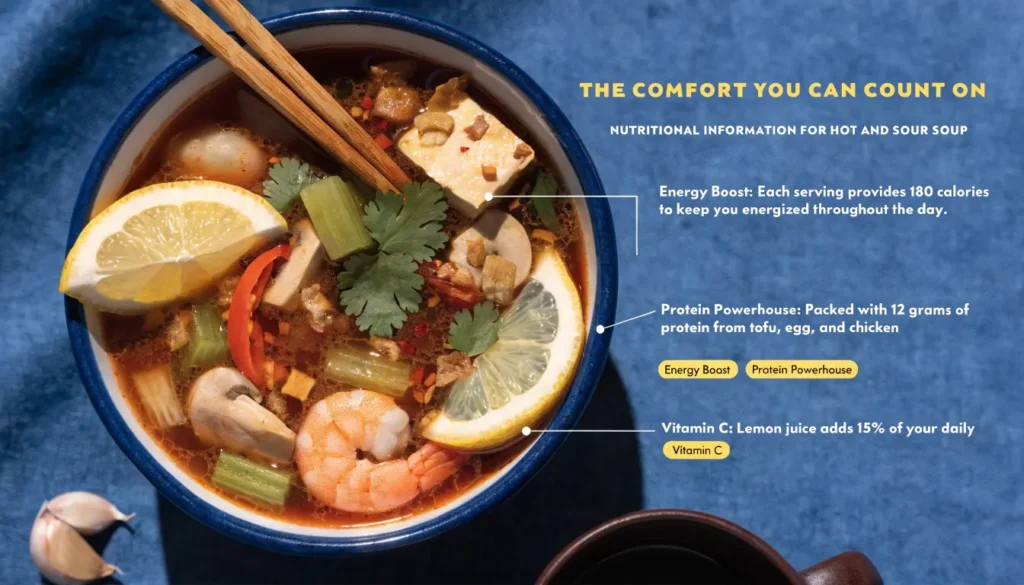
- The texture team: Tofu shows up in soft, silken cubes, absorbing the flavors around it while contributing protein and iron. Wood ear mushrooms add that pleasant chew, something for your teeth to actually work with. Bamboo shoots bring the crunch, breaking up the monotony of soft ingredients.
- The flavor architects: Vinegar, usually rice vinegar or the darker, more complex Chinkiang black vinegar, delivers the sour punch. White pepper provides the heat, and it is important to note that this is not the same heat you get from chili oil. It is warmer, earthier, and settles in your chest rather than burning your tongue.
- The finishers: A beaten egg drizzled in at the last moment creates those delicate ribbons that make the soup feel luxurious. A cornstarch slurry gives it that signature velvety thickness, the kind that clings to your spoon.
What the Numbers Actually Look Like
Now, let’s talk facts. You cannot discuss hot and sour soup nutrition without looking at the numbers. Keep in mind that these are estimates. A family-run restaurant making everything from scratch will produce something different from a chain working with pre-packaged bases. But for a standard one-cup serving, here is what you can generally expect:
| Nutrient | Typical Range |
|---|---|
| Calories | 70 to 120 |
| Total Fat | 2.5 to 6 grams |
| Sodium | 700 to 1,200 milligrams |
| Carbohydrates | 8 to 14 grams |
| Dietary Fiber | 1 to 2 grams |
| Protein | 4 to 8 grams |
Notice the wide gap in sodium. That is not a typo. Sodium is the wild card here, the one number that can swing dramatically depending on how heavy-handed the cook is with soy sauce and salted stocks. We will circle back to this later because it matters more than you might think.
Why Your Body Thanks You for That Bowl
If you have ever eaten hot and sour soup while fighting off a cold or recovering from a long day, you already know it does something beyond basic nutrition. There is a reason your grandmother told you to drink warm broth when you felt unwell. She may not have had the science to back it up, but she understood something important about how food interacts with your body.
It Treats Your Digestion Gently
The pairing of vinegar and white pepper is not accidental. Vinegar stimulates the production of stomach acid and digestive enzymes, essentially waking your digestive system up and preparing it for work. If you have ever eaten something heavy and felt sluggish afterward, you understand why this matters.
White pepper, meanwhile, has been used in traditional medicine systems for centuries to address bloating and gas. It encourages your digestive tract to keep things moving without being aggressive about it. The warm broth itself soothes the entire system, like a gentle nudge rather than a shove.
Your Immune System Gets a Helping Hand
When you feel that first tickle in your throat, your instincts might tell you to reach for something soothing. Hot and sour soup answers that call with actual functional benefits.
Mushrooms, particularly varieties like wood ear and shiitake, contain compounds that support immune function. They are not a cure, and no one is claiming they are, but they provide your body with additional tools to do its job. White pepper contains piperine, which has been studied for its anti-inflammatory properties. Inflammation is your body’s natural response to invaders, but too much of it leaves you feeling miserable. Keeping it in check helps you recover more comfortably.
And let us not overlook the simple act of hydration. When you are sick, you need fluids. A flavorful broth encourages you to drink more than plain water would, and that hydration supports every single system in your body.
It Keeps You Satisfied Without Weighing You Down
Protein is the nutrient most responsible for keeping hunger at bay. With tofu and egg in the mix, this soup delivers a respectable amount without requiring a heavy cream base or excessive fat. You get the satisfaction of a substantial meal component without the sluggishness that often follows richer foods.
If you are watching your weight or simply trying to make more mindful choices, starting a meal with this soup can change how much you eat afterward. It takes the edge off your hunger, allowing you to approach your main course with a clearer head and a calmer stomach.
The One Thing You Cannot Ignore
We have talked about the positives, and they are considerable. But honest conversations about hot and sour soup nutrition require addressing the elephant in the kitchen. That elephant is sodium.
Why Sodium Deserves Your Attention
Your body needs sodium to function. It helps maintain fluid balance, supports nerve transmission, and enables muscle contractions. The problem arises when you consistently consume more than your body can handle.
The American Heart Association suggests an ideal limit of 1,500 milligrams per day for most adults. Take another look at that sodium range in the table above. A single cup of soup can deliver nearly that entire amount in one sitting. If you have high blood pressure, kidney concerns, or a family history of heart disease, this matters.
Restaurant versions tend to run higher because they prioritize flavor shelf stability. Soy sauce is salty. Stock bases are often salted. A pinch here and a dash there adds up before anyone notices.
Who Should Exercise Extra Caution
If you fall into any of these categories, paying attention to your sodium intake becomes more than just good advice:
- You have been diagnosed with high blood pressure
- You retain water easily, noticing puffiness in your hands or feet
- You have a family history of heart disease or stroke
- You are over fifty, as sodium sensitivity tends to increase with age
- You have been advised by a doctor to watch your salt intake
None of this means you cannot enjoy hot and sour soup. It simply means you need a strategy.
How to Keep Enjoying the Soup Without the Guilt

You do not have to give up foods you love to eat well. That approach never works long term anyway. What works is learning to work with your favorite dishes, understanding where the pitfalls are, and making small adjustments that preserve the experience while protecting your health.
When You Are Eating Out
Restaurant dining means surrendering some control, but not all of it. You have more influence than you realize.
- Speak up before they cook. Most restaurants are happy to accommodate reasonable requests. Ask if they can prepare your soup with low-sodium soy sauce or reduce the salt overall. The worst they can say is no.
- Make it a starter, not the main event. Enjoy a small cup before your meal, then balance it with something steamed or lightly prepared. Avoid ordering another dish that relies heavily on soy sauce or salty marinades.
- Drink water alongside it. Staying hydrated helps your kidneys process sodium more effectively. It is not a magic eraser, but it helps.
- Pay attention to portion size. Those bowls are often larger than a standard cup. Consider sharing or taking half home for another day.
When You Make It Yourself
Cooking at home puts you in complete control, and hot and sour soup is far easier to make than most people assume. The ingredients are accessible, and the technique rewards practice.
- Start with low-sodium broth. This single change makes the biggest difference. Swapping regular stock for a low-sodium version cuts the salt content dramatically before you add anything else.
- Season thoughtfully with soy sauce alternatives. Coconut aminos offer a similar umami punch with significantly less sodium. Low-sodium tamari works beautifully as well.
- Load up on vegetables. Extra mushrooms, bamboo shoots, or even a handful of spinach at the end adds volume, nutrients, and fiber while diluting the sodium concentration per spoonful.
- Thicken strategically. If you are watching carbohydrates, you can reduce the cornstarch or experiment with alternatives like arrowroot powder. Some versions work perfectly fine with a slightly thinner broth.
Where This Soup Belongs in Your Weekly Rotation
Trying to categorize foods as strictly good or strictly bad leads to frustration. Very few things in life fit neatly into those boxes, and food is no exception. Hot and sour soup offers genuine nutritional benefits alongside one significant drawback. Where it lands on your personal scale depends on your health status, your goals, and how often you eat it.
If you are generally healthy and active, enjoying this soup once or twice a week as part of a varied diet poses no problem. The sodium becomes an issue only when it crowds out other options or appears in every meal.
If you have specific health concerns, the soup can still have a place at your table. It just requires more intention. A smaller portion, made with awareness, fits into almost any eating pattern.
Think of it this way: hot and sour soup is not a health food, and it was never meant to be. It is comfort food with functional benefits, a dish designed to warm you, wake you up, and leave you feeling cared for. Understanding its nutritional profile simply helps you enjoy it on your own terms rather than wondering afterward whether you made the right choice.
Common Questions People Ask
Can I eat hot and sour soup while following a low-carb diet?
Yes, with some attention to detail. The cornstarch adds carbohydrates, so a standard serving may use a portion of your daily allowance. If you make it at home, you can reduce the thickener or skip it entirely for a brothier version that fits your macros more comfortably.
Does this soup actually help with cold symptoms?
Many people find relief from congestion thanks to the white pepper, which acts as a natural expectorant. The warm broth soothes sore throats, and the hydration supports your immune system. It is not a replacement for medical care, but it makes the experience of being sick more bearable.
Why does restaurant soup taste so much richer than what I make at home?
Restaurants often use concentrated stock bases, generous amounts of sesame oil, and higher sodium levels. They also benefit from years of practice balancing the sour and hot elements. Your homemade versions will improve with time, and you gain the advantage of controlling exactly what goes into your bowl.
Is this soup suitable for vegetarians?
It depends on the broth. Many traditional versions use chicken stock, so you need to ask specifically. When made with vegetable stock and without any animal-based ingredients, it becomes a satisfying vegetarian option rich in plant protein from the tofu.
How can I tell if a restaurant version is high quality?
Look for balance. The sour and hot elements should complement each other without one overwhelming the other. The broth should have body without being gluey. Ingredients like tofu and mushrooms should taste fresh rather than tired. A good version leaves you feeling satisfied, not thirsty or weighed down.
Bringing It All Back to the Bowl
That night in the unfamiliar city, sitting alone in a small restaurant, I was not thinking about milligrams of sodium or grams of protein. I was thinking about warmth and comfort and the simple kindness of a stranger who saw that I needed something good to eat.
But understanding the nutrition behind the foods we love does not take away from those moments. It adds to them. When you know what you are eating, when you understand why it makes you feel the way it does, you can approach each meal with clarity rather than confusion. You can enjoy the comfort while also honoring your body’s needs.
Next time you find yourself craving that familiar tang and warmth, go ahead and order the soup. Savor every spoonful. Let it do what it has always done, warm you from the inside out. And now, armed with a clearer picture of what is actually in that bowl, you can enjoy it with both your heart and your head fully on board.
Have you had a memorable experience with hot and sour soup, or do you have a favorite way to make it at home? I would love to hear about it. Drop a comment below and share what this soup means to you.