You’ve just pushed through those last brutal reps. Your shirt is soaked, your muscles are screaming, and that burning sensation tells you today’s session was legitimate. Walking toward the locker room, you feel that strange combination of exhaustion and accomplishment—the kind only another guy who trains seriously understands.
But here’s where most men drop the ball entirely.
For years, you probably made the same mistake I did. You’d crush an incredible workout, feel like a beast, then grab whatever was convenient on the way home. Maybe a protein shake if you remembered. Maybe you’d rationalize that you “earned” that greasy drive-thru burger. Maybe—and this is the worst one—you’d skip eating altogether because you weren’t hungry.

Here’s the hard truth that took me a decade of mediocre results to figure out: that workout you just finished? It didn’t make you stronger. It actually made you weaker, temporarily. You created micro-tears in muscle tissue, drained your energy reserves, and spiked cortisol throughout your bloodstream. The strengthening happens later, during recovery, and it only happens if you give your body the specific raw materials it demands.
What you put in your mouth during those critical hours after training determines whether you wake up tomorrow flat and sore or whether you wake up fuller, tighter, and genuinely stronger than yesterday.
Why the Post-Workout Window Matters for Men
Let’s talk about what’s actually happening inside your body right now. Understanding the physiology transforms how you view that post-gym meal from optional chore to non-negotiable priority.
When you train with intensity—whether heavy compound lifts, metabolic conditioning, or sport-specific work—you’re essentially performing controlled destruction. Muscle fibers sustain microscopic damage. Your liver and muscles dump glycogen into your bloodstream to fuel performance. Stress hormones flood your system.

This is where male physiology gets interesting. Research published in the Journal of the International Society of Sports Nutrition demonstrates that men typically maintain higher baseline testosterone levels than women, obviously, but those levels are incredibly sensitive to nutrient availability. When you starve your body post-workout, you’re essentially slamming the brakes on your body’s natural anabolic environment.
The recovery process hinges on three distinct mechanisms:
Muscle Protein Synthesis
Think of this as your body’s repair crew showing up to work. Amino acids from dietary protein get shuttled into damaged muscle tissue, patching up tears and—if you’re lucky and consistent—adding a little extra thickness for next time. Without adequate protein intake, that repair crew never receives their materials.
Glycogen Resynthesis
Your muscles run on stored carbohydrates. When you depleted them during training, you created empty fuel tanks. Failing to refill those tanks means your next workout starts with zero reserves. You’ll feel flat, weak, and exhausted before you even warm up properly.
Cortisol Attenuation
Intense exercise spikes cortisol. It’s unavoidable. But prolonged elevated cortisol actively breaks down muscle tissue and encourages abdominal fat storage. Strategic nutrition—specifically carbohydrate intake—helps slam that cortisol back down to baseline levels.
The Core Components: What Your Body Actually Needs
Forget the complicated supplement protocols and exotic ingredients guys try to sell you. Your post-workout nutrition boils down to three fundamental elements. Master these before worrying about anything else.
High-Quality Protein
You need twenty to forty grams of complete protein. Not fifteen. Not ten. Research consistently shows this range optimally stimulates muscle protein synthesis in active men. Below twenty grams and you’re leaving gains on the table. Above forty grams and you’re just creating expensive urine.
Complete protein sources contain all nine essential amino acids your body cannot produce independently. Leucine deserves special attention here—it’s the primary trigger that activates muscle building pathways. Aim for roughly two to three grams of leucine in your post-workout meal.
Your best options include:
- Whey protein isolate (absorbs rapidly, complete amino profile)
- Chicken breast or turkey (lean, versatile, reliable)
- Fatty fish like salmon or tuna (adds anti-inflammatory omega-3s)
- Whole eggs (the yolks contain vital nutrients often missing from egg-white-only options)
- Quality plant blends if you avoid animal products (look for rice and pea protein combined for completeness)
Strategic Carbohydrates
Men have developed an irrational fear of carbohydrates over the past decade. Low-carb this, keto that. Listen: post-workout is precisely when carbohydrates become your most powerful ally.
When you consume carbohydrates after training, insulin rises. Insulin is wildly underrated in fitness discussions. Yes, it stores fat when you overeat constantly. But post-workout, insulin acts as the gatekeeper that escorts amino acids directly into hungry muscle tissue. Without that insulin spike, protein absorption suffers dramatically.
The ideal ratio sits around two or three grams of carbohydrates for every gram of protein. For a guy around one hundred eighty pounds with decent muscle mass, that means roughly fifty to seventy grams of carbs alongside that twenty-five to thirty-five grams of protein.
Your carbohydrate sources matter less than the timing here, but quality options include:
- White rice or potatoes (digest quickly, won’t bloat you)
- Oatmeal (provides sustained energy if your next meal is hours away)
- Fruit like bananas or berries (adds antioxidants and quick sugars)
- Whole grain bread or tortillas (convenient for portable meals)
Hydration and Electrolytes
You’re probably chronically dehydrated and don’t realize it. Most men are.
During an intense hour-long training session, you can lose one to two liters of fluid through sweat alone. That’s before counting the water required for digestion and nutrient transport post-workout. Even two percent dehydration measurably reduces strength and cognitive function.
Water alone isn’t sufficient. You also lost sodium, potassium, and magnesium through sweat. Replacing fluid without electrolytes dilutes your blood chemistry and can actually make you feel worse.
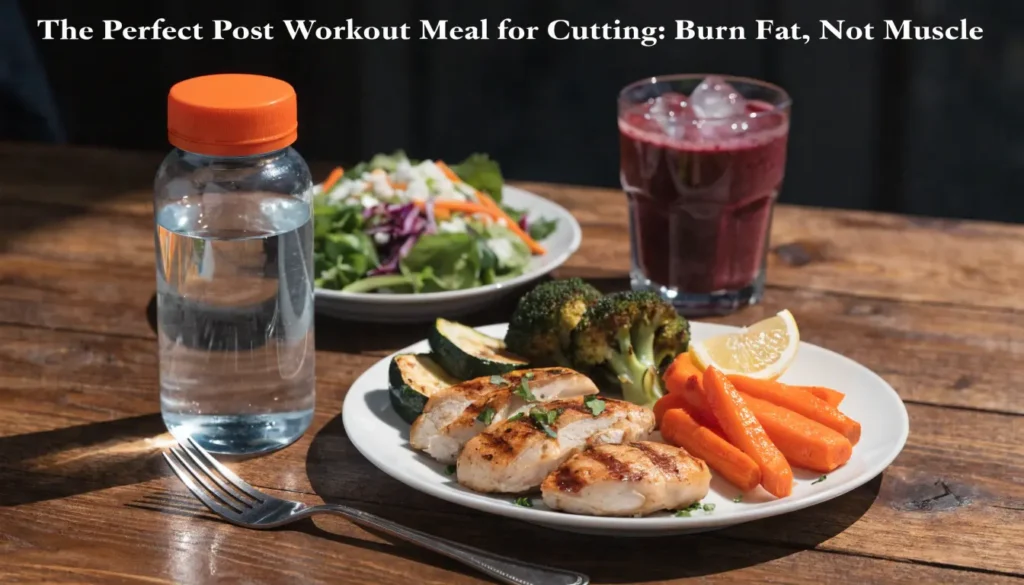
Drink water with electrolytes, or include whole foods containing them—vegetables, salt, bananas, potatoes with skin.
Five Post-Workout Meals That Actually Work
Theory matters, but you need practical solutions that fit real life. Here are five meals designed for different scenarios, each delivering the protein and carbohydrates your body demands.
The Mass Builder Shake
Some days your appetite simply vanishes after heavy training. Blood shunts away from digestion toward recovering muscle groups, and food feels repulsive. This is when liquid nutrition saves you.
Combine in a blender:
- Two scoops quality chocolate or vanilla protein powder
- One cup whole milk (adds calories and fat-soluble vitamins)
- One full banana (potassium and quick carbs)
- Two tablespoons peanut or almond butter (healthy fats, more calories)
- Quarter cup rolled oats (slow-burning carbs for sustained energy)
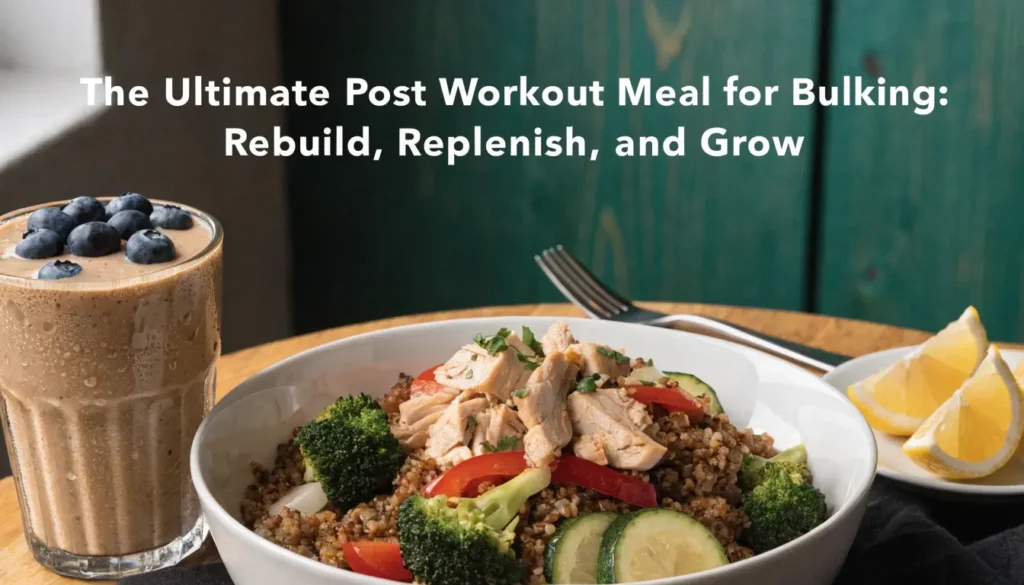
Blend until smooth. Drink immediately. This delivers roughly fifty grams protein and seventy grams carbohydrates depending on your specific products.
The Lean Mass Bowl
For guys prioritizing body composition without bulking dirty, this meal hits every marker without excess calories.
Grill or bake:
- Six ounces chicken breast (season aggressively—bland food kills compliance)
- One cup diced sweet potatoes roasted in olive oil
- Two cups steamed broccoli or asparagus
- Sprinkle with sea salt and pepper
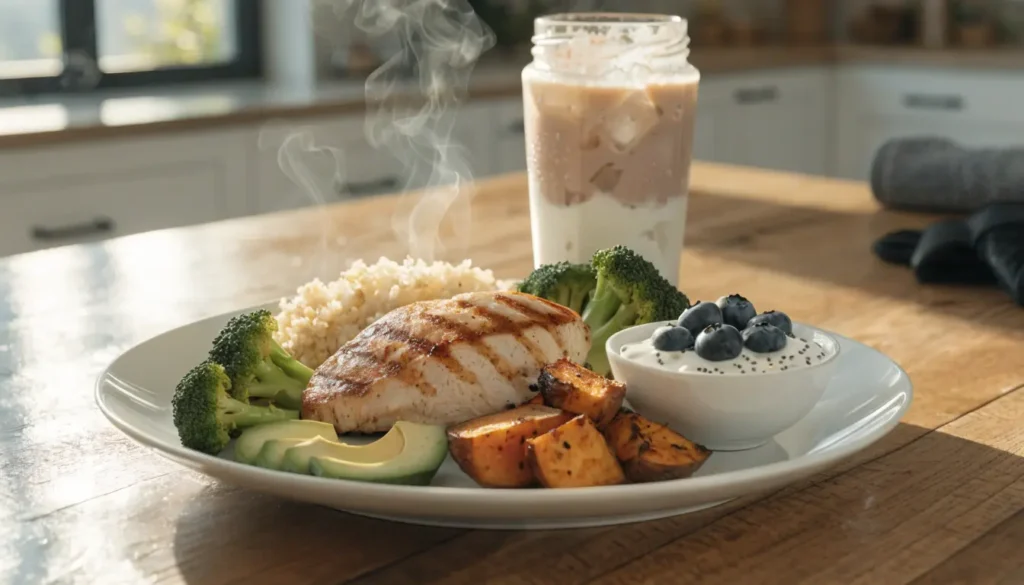
The sweet potatoes replenish glycogen. The chicken provides complete protein. The vegetables deliver micronutrients and fiber. Total time: about twenty minutes if you prep ingredients ahead.
The Three-Minute Wrap
Real life doesn’t always allow kitchen time. Maybe you train during lunch break. Maybe you’re racing to pick up kids. This wrap assembles in literally three minutes.
Grab:
- One large whole wheat tortilla (look for at least five grams fiber)
- One can tuna or pre-cooked chicken strips (keep these in your pantry)
- Handful fresh spinach (adds volume and micronutrients)
- Two tablespoons plain Greek yogurt instead of mayo (more protein, less garbage)
- Hot sauce to taste
Roll tightly. Eat on the go. This meal travels anywhere and requires zero heating.
The Breakfast-for-Dinner Scramble
Eggs remain one of nature’s most perfect muscle-building foods. Don’t fall for the outdated fear of dietary cholesterol—research consistently shows dietary cholesterol minimally impacts blood cholesterol for most men.
Whisk together:
- Three whole eggs plus two additional egg whites
- Half cup black beans (rinsed and drained)
- Quarter cup shredded cheese if desired
- Handful chopped spinach
Scramble in a hot pan with butter or coconut oil. Serve with one cup roasted potatoes and fresh salsa. This meal provides complete protein, complex carbohydrates, and vegetables all in one skillet.
The Steakhouse Recovery
Red meat offers unique advantages for male athletes. Beyond complete protein, beef provides creatine (supports strength output), zinc (critical for testosterone production), and highly absorbable iron.
Prepare:
- Four to five ounces lean sirloin or flank steak (marinate for tenderness)
- One large baked potato (eat the skin for fiber and potassium)
- Grilled asparagus with lemon juice
- Pat of butter for the potato
This meal feels indulgent while delivering exactly what your body needs post-training. Save it for days when you truly crushed your workout.
Timing and Portion Control
You’ve heard about the “anabolic window” your entire training life. Like many fitness concepts, it’s been both overhyped and underappreciated.
Research suggests the urgency of the thirty-minute window matters less for recreational lifters eating multiple meals daily. However, a substantial body of evidence confirms that consuming protein and carbohydrates within roughly two hours post-exercise produces superior results compared to delaying intake beyond that point.
The sweet spot appears to be one to two hours after training. This allows your muscles to remain sensitive to nutrient uptake while providing enough time to prepare something substantial.
Regarding portions, visual cues help more than obsessive weighing:
- Protein should occupy roughly one to two palm-sized portions
- Carbohydrates should fill one to two cupped handfuls (adjust based on training intensity)
- Vegetables should cover one to two fist-sized portions
- Fats should remain minimal in this specific meal (they slow digestion)
Mistakes That Sabotage Your Results
Even experienced guys screw these up regularly. Avoid these common pitfalls.
The Protein-Only Trap
Shake with water, nothing else. This remains epidemic among guys who heard “protein builds muscle” and stopped learning. Without carbohydrates, you miss the insulin response that drives amino acids into muscle tissue. You’re essentially mailing repair materials to the wrong address.
The Junk Food Justification
“I earned this pizza.” You’ve said it. We’ve all said it. High-fat, processed foods post-workout delay digestion and introduce inflammatory compounds that actually impair recovery. Save the cheat meal for later, when digestion speed matters less.
The Dehydration Blind Spot
Chugging a protein shake and calling it hydration doesn’t work. Protein requires water for metabolism. You need actual water, separate from your shake, with electrolytes.
Skipping Entirely
Busy schedule. Forgot groceries. Not hungry. Whatever the reason, skipping post-workout nutrition guarantees slower progress. Your body doesn’t care about your excuses—it either receives building materials or it doesn’t.
Frequently Asked Questions About the Post Workout Meal for Men
Is a protein shake sufficient as a post workout meal for men, or should you prioritize whole food?
Think of shakes as tools rather than complete solutions. A high-quality shake immediately post-workout delivers rapid amino acids when convenience matters most. However, relying exclusively on shakes means missing the micronutrients, fiber, and digestive benefits of whole food. The optimal approach uses a shake immediately after training if necessary, followed by a solid meal within two hours. This combination covers immediacy and completeness.
Can you lose fat while eating substantial post workout meals?
Absolutely, and you should. Post-workout nutrition actually supports fat loss through multiple mechanisms. Replenishing glycogen prevents the metabolic slowdown that occurs when muscles run empty. Protein intake increases thermic effect—you burn calories simply digesting it. Additionally, proper recovery allows harder training sessions, which increases total calorie expenditure. Skipping post-workout meals to “save calories” backfires almost universally.
What carb-to-protein ratio works best for muscle building?
Research generally supports a two-to-one or three-to-one ratio favoring carbohydrates. For a two hundred pound man with substantial muscle mass, this might mean sixty to seventy-five grams carbohydrates alongside twenty-five to thirty-five grams protein. Individual variation exists based on training intensity, body composition goals, and personal tolerance, but this range provides a reliable starting point.
Should you avoid fats completely after working out?
Avoid isn’t the right word. Minimize might be better. Small amounts of fat—like the natural fat in eggs or a pat of butter on potatoes—won’t significantly impair digestion. However, high-fat meals (think fried foods or oil-drenched preparations) substantially slow gastric emptying. Save the avocado, nuts, and heavy oils for meals further removed from training when digestion speed matters less.
What about BCAAs or EAAs—are they necessary?
Essential amino acids, particularly leucine, trigger muscle protein synthesis. Whole protein sources contain these amino acids naturally. Supplemental BCAAs offer convenience during training or when whole food isn’t possible, but they shouldn’t replace complete protein sources post-workout. Save your money for quality whole food and use supplements strategically when circumstances demand.
Conclusion
The gym shows you what’s possible. The kitchen determines whether you achieve it.
Every rep you grind through, every drop of sweat on the floor, every moment of discomfort during training represents an investment. That investment either compounds with proper nutrition or evaporates through neglect. Your choice determines the return.
Stop treating post-workout nutrition as optional. Stop rationalizing fast food because you “earned it.” Stop skipping meals because you’re busy or not hungry. Your body just performed controlled destruction in the pursuit of improvement. Meet that effort with equal respect during recovery.
Start today. Prepare something substantial for your next post-workout meal. Notice how you feel tomorrow morning—fuller, less sore, more energized. Notice how your next training session feels stronger because you properly refueled. Notice the cumulative effect over weeks and months.
The difference between average results and exceptional results rarely comes from training harder. It comes from recovering smarter. Your post-workout meal represents the single most important nutritional intervention in your entire day. Treat it accordingly.