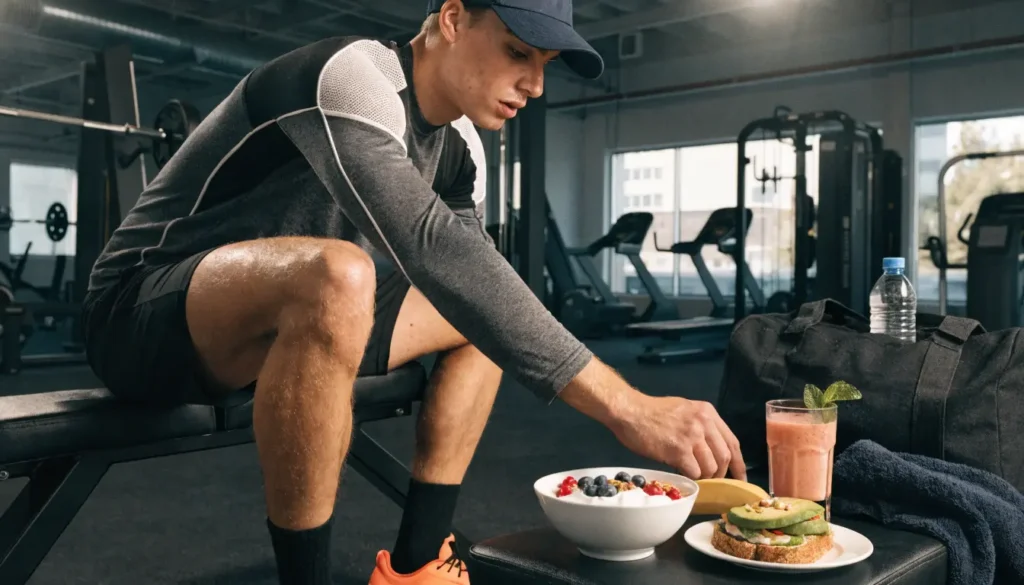
You just finished destroying your leg day workout. Your muscles feel like warm jelly, your shirt is soaked through, and there’s a satisfying ache in your quads that tells you today was different. You walk through the front door, drop your gym bag, and suddenly that primal hunger hits you like a wave. The kind of hunger that makes a box of crackers look like a five-star meal.
I remember those moments all too well. Standing in my kitchen, staring into the refrigerator abyss, caught between two powerful forces. On one side, my body screaming for fuel, demanding something substantial. On the other side, that quiet voice reminding me about the weight loss goals I wrote down, the progress I’ve made, the number on the scale I’m trying to move in the right direction.
For the longest time, I genuinely believed those two things couldn’t coexist. You either ate to satisfy your hunger, or you ate to lose weight. One meant flavor and fullness. The other meant bland chicken, steamed broccoli, and rice cakes that tasted suspiciously like styrofoam.
Then something shifted. I realized that post workout meal ideas for weight loss didn’t have to taste like cardboard punishment. The secret wasn’t eating less food. The secret was eating smarter food. And that’s exactly what we’re going to build together today.
This isn’t just another recipe article you’ll scroll past and forget. This is your permission slip to enjoy pasta again. Real pasta. Satisfying pasta. The kind of meal that makes you forget you’re even trying to lose weight in the first place. Let’s get started.
Why Pasta Actually Belongs on Your Weight Loss Plate
Before we dive into the kitchen and start chopping vegetables, we need to address the elephant in the room. Pasta has spent the last twenty years getting dragged through the mud by every diet trend that came along. Low carb this. Keto that. Gluten free everything else.
Here’s what the fitness industry doesn’t want you to know. Your body needs carbohydrates after exercise, and it needs them desperately. When you finished that last rep, when you pushed through that final set, your muscles basically emptied their fuel tanks. Those glycogen stores? Completely depleted.
The Science of Refueling That Nobody Talks About
Think of your muscles like a smartphone battery. Before your workout, you’re at maybe eighty percent. During exercise, you drain down to twenty percent. If you never plug that phone back in, it’s going to shut off when you need it most. The same thing happens to your body.
Carbohydrates are your charger. When you consume them within that golden window after training, usually about thirty to sixty minutes post workout, your body rushes to shuttle those carbs directly into your muscle tissue. This process actually repairs the microtears you created during exercise and prepares you for tomorrow’s workout.
Skipping carbs after training doesn’t accelerate weight loss. It actually sabotages it. Your body, desperate for fuel, starts looking elsewhere for energy. Where does it look? At your hard earned muscle tissue. You end up lighter on the scale, sure, but you’re losing the very thing that keeps your metabolism firing hot all day long.
Breaking Free from the Diet Mentality Trap
Here’s where most people get stuck. They think weight loss requires perfection. Every meal must be optimized. Every calorie must be accounted for. Every indulgence must be eliminated.
That approach works for about two weeks. Then real life happens. You get busy. You get stressed. You get tired of chewing plain chicken breast. And suddenly the whole plan collapses.
Sustainable weight loss doesn’t come from deprivation. It comes from substitution. You keep the foods you love, the meals that bring you comfort and satisfaction, and you simply rebuild them with better ingredients. You’re not giving up pasta. You’re upgrading it.
The recipe I’m about to share with you follows that exact philosophy. You’ll get the creamy, satisfying, deeply flavorful pasta experience your taste buds are craving. You’ll also get the protein, fiber, and nutrient density your muscles are begging for after that workout. Everybody wins.
The Star of the Show: Our Signature Low Calorie Pasta Sauce Recipe
This sauce is the workhorse of your new post workout routine. It comes together quickly, uses ingredients you can keep stocked in your kitchen year round, and adapts to whatever protein or pasta shape you’re feeling that day.
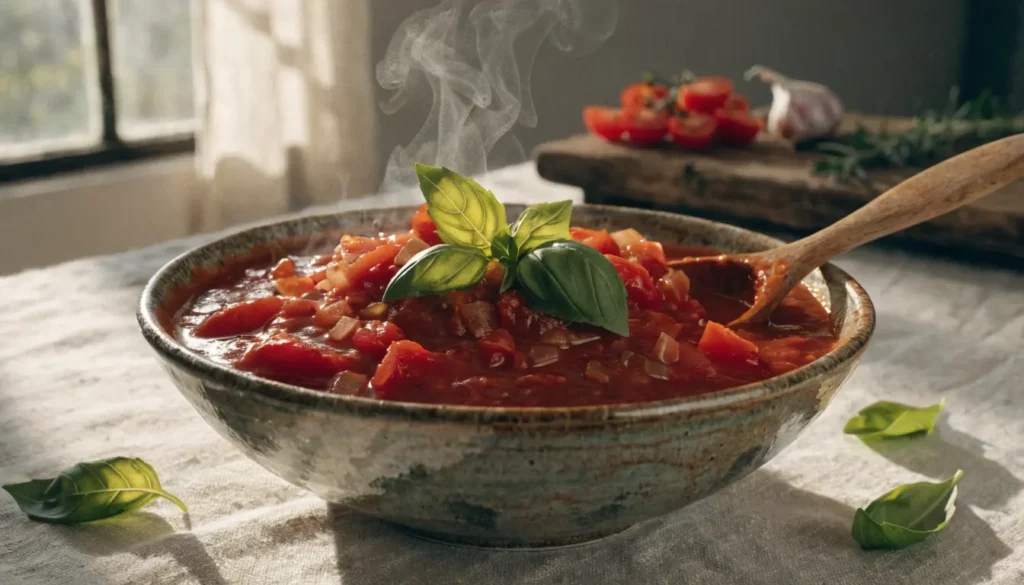
I’ve tested this recipe about a dozen times, tweaking proportions and techniques until it hit that sweet spot between rich and light. The final version manages to taste decadent while keeping calories surprisingly low. Let me show you exactly how it works.
Ingredient List: Fresh, Simple, and Satisfying
The magic here lies in building flavor without relying on heavy cream or excessive oil. Every ingredient serves a purpose, and together they create something greater than the sum of their parts.
- Fresh garlic, four cloves, minced – Not the jarred stuff. Fresh garlic brings a pungent sharpness that mellows into sweetness as it cooks.
- One shallot, finely diced – Shallots are milder than onions and add a subtle sophistication to the sauce base.
- Two tablespoons of olive oil, divided – You’ll use some for cooking and save a tiny bit for finishing. Quality matters here.
- One large carrot, grated on the small holes of a box grater – This disappears into the sauce completely while adding natural sweetness and a boost of vitamin A.
- One medium zucchini, grated and gently squeezed of excess moisture – More volume, more fiber, and a silky texture that mimics the mouthfeel of a long simmered sauce.
- Twenty eight ounces of crushed tomatoes – Look for San Marzano varieties if your budget allows, or any brand with no added sugar and low sodium.
- One tablespoon of balsamic vinegar – This is your secret weapon. It adds depth and brightness without extra calories.
- Handful of fresh basil leaves, roughly torn – Save this for the end to preserve its vibrant flavor.
- Two tablespoons of non fat Greek yogurt – Added off the heat, this creates creaminess and adds protein without the heavy cream calories.
- Salt, black pepper, and red pepper flakes to taste
Step by Step Instructions: Where Technique Meets Flavor
The process matters almost as much as the ingredients. Follow these steps and you’ll nail this sauce on your very first attempt.
Start by heating one tablespoon of olive oil in a large skillet over medium heat. Add your minced garlic and diced shallot, stirring frequently. You want them to soften and become fragrant, usually about two to three minutes, without taking on any brown color. Browning adds bitterness here, and we’re aiming for sweet and mellow.
Now add your grated carrot and zucchini to the pan. This is where patience becomes important. Let these vegetables cook down for about five to seven minutes, stirring occasionally. The carrot will release its sweetness. The zucchini will break down and practically disappear into the background. By the time you’re done, you’ll have a soft, almost paste like mixture that forms the foundation of your sauce.
Pour in your crushed tomatoes and add the balsamic vinegar. Stir everything together and bring it up to a gentle simmer. Not a rolling boil. Just those lazy bubbles breaking the surface here and there. Reduce your heat to low and let this cook for fifteen to twenty minutes. This short simmer allows the flavors to marry without cooking the life out of the tomatoes.
Here’s where this low calorie pasta sauce recipe really shines. Remove the pan from the heat entirely. Let it sit for just one minute to stop the cooking process. Then stir in your torn fresh basil and that final tablespoon of olive oil. The residual heat will wilt the basil gently and bloom the oil.
Just before you’re ready to serve, whisk in the Greek yogurt. This step requires a gentle hand. If you add yogurt to a screaming hot pan, it might separate and turn grainy. Off the heat, stirred in slowly, it emulsifies into the sauce and creates that creamy texture you thought required heavy cream.
Taste your sauce and adjust seasoning. You’ll likely need more salt than you expect, tomatoes demand it. Add your black pepper and red pepper flakes if you want some heat.
Customizing Your Post Workout Meal Ideas for Weight Loss
The sauce recipe above gives you a flexible foundation. Now let’s talk about building it into a complete meal that supports your fitness goals and keeps your taste buds engaged meal after meal.
Protein Pairings to Maximize Muscle Recovery
Your muscles just went through significant stress during your workout. They’re literally torn on a microscopic level. Protein provides the amino acid building blocks required to repair that damage and come back stronger.
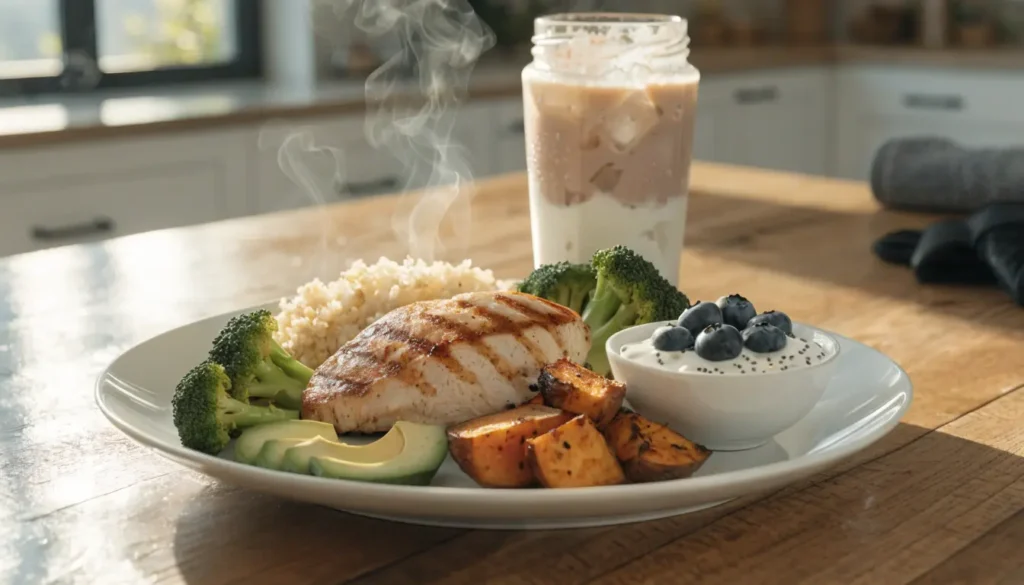
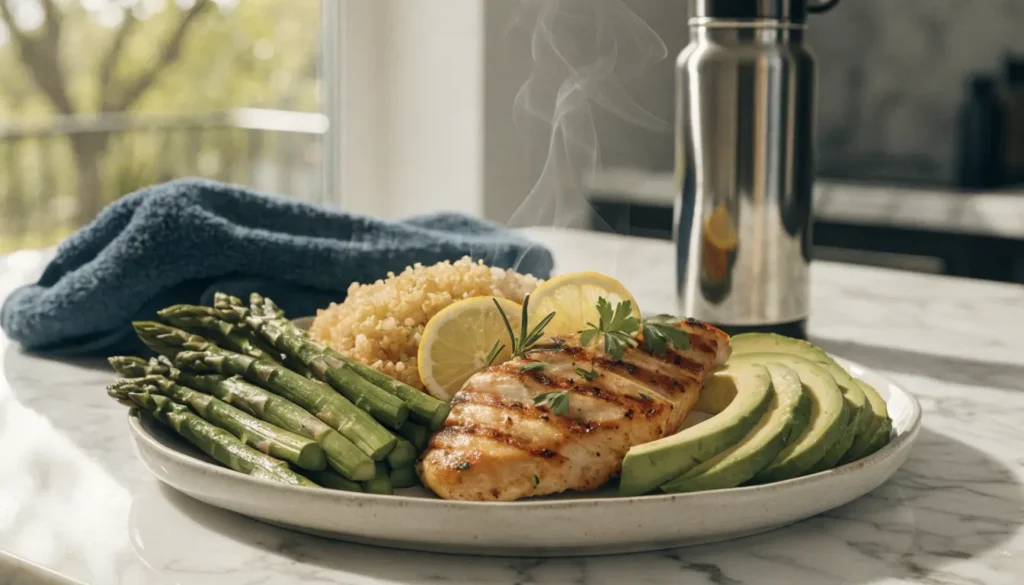
- Grilled chicken breast remains the classic choice for good reason. It’s lean, widely available, and takes on the flavor of whatever sauce you add it to. Slice a pre cooked breast thinly and warm it gently in the sauce during the last few minutes of simmering.
- Shrimp cooks so quickly it almost feels like cheating. Season them simply with salt and pepper, sear them in a separate pan for about ninety seconds per side until they’re pink and opaque, then nestle them into your finished sauce right before serving. Squeeze a little lemon over everything for brightness.
- Lean ground turkey makes sense if you’re craving something heartier. Brown it in the pan before you start your aromatics, remove it to a plate, then build your sauce in the same pan. The browned bits left behind add incredible depth. Stir the turkey back in at the end to warm through.
- Plant based options work beautifully here too. Crispy baked tofu cubes, pan fried tempeh crumbles, or a handful of shelled edamame stirred in at the last minute all add substantial protein without weighing you down.
Pasta Alternatives to Keep Things Interesting
The pasta aisle has transformed over the last five years. You now have genuinely good options beyond traditional white flour noodles.
- Red lentil pasta tastes remarkably similar to regular pasta while packing around twenty five grams of protein per serving. It holds up well to sauce and has a pleasant, slightly nutty flavor.
- Chickpea pasta offers another high protein, high fiber alternative. It’s a bit firmer than wheat pasta, so cook it according to package directions and taste test frequently to avoid overcooking.
- Whole wheat spaghetti provides more fiber and nutrients than white pasta while maintaining that familiar texture you grew up with. Look for bronze die cut varieties, they have a rougher surface that grabs sauce better.
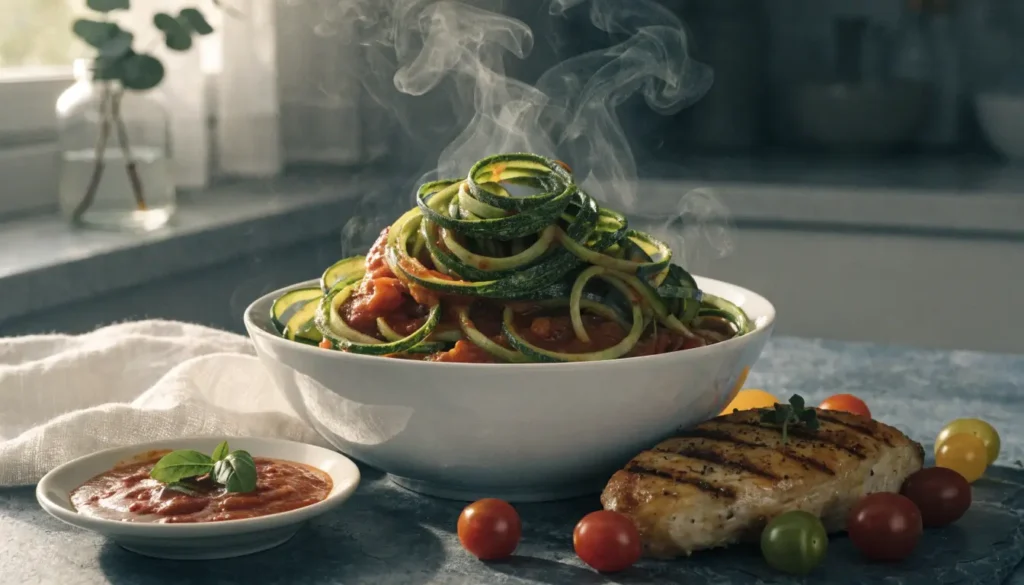
- Zucchini noodles deserve a place in your rotation for days when you want an extra light meal. Spiralize a couple zucchinis, salt them lightly and let them drain on paper towels for ten minutes to remove excess moisture, then sauté them for just two minutes before topping with your sauce.
Pro Tips for Meal Prep and Storage
Life gets busy. Work gets demanding. Social obligations pile up. Your nutrition plan needs to accommodate reality, not the other way around.
This sauce was designed with meal prep in mind. Make a double batch on Sunday afternoon and you’ve solved dinner for several nights. The flavor actually improves after a day in the refrigerator as the ingredients continue mingling together.
Store your sauce separately from your cooked pasta. This simple habit prevents the noodles from absorbing all the liquid and turning into a mushy mess. Keep them in their own containers and combine only when you’re ready to eat.
The sauce freezes remarkably well for up to three months. Portion it into quart sized freezer bags, lay them flat to freeze, and you’ll have individual servings ready to thaw whenever motivation runs low or time runs short.
When reheating, warm the sauce gently in a small saucepan over low heat. If it thickened up in the refrigerator, add a tablespoon of water or pasta cooking water to loosen it back to the right consistency.
Frequently Asked Questions
Is this sauce actually low enough in calories to support weight loss?
Yes, and the numbers prove it. Traditional Alfredo or creamy vodka sauces can pack three hundred calories or more into a single half cup serving, mostly from heavy cream and butter. This vegetable forward sauce uses bulk and flavor to satisfy you for a fraction of that. A generous half cup serving contains roughly seventy calories, leaving you plenty of room for protein and pasta.
Can I make this low calorie pasta sauce recipe completely vegan?
Absolutely. The only non vegan ingredient is the Greek yogurt stirred in at the end. You can replace it with a tablespoon of cashew cream, made by blending soaked cashews with water until smooth, or simply omit it entirely. The sauce remains delicious either way. A sprinkle of nutritional yeast adds a savory, almost cheesy note if you miss that dairy richness.
How much protein will I actually get from this meal?
That depends entirely on your choices. The sauce itself contributes minimal protein, maybe four to five grams from the vegetables and yogurt. Pair it with two ounces of chickpea pasta and you add another twelve to fourteen grams. Add four ounces of grilled chicken and you’re looking at thirty five to forty grams of total protein, which hits the ideal post workout recovery range for most active individuals.
What if I don’t have time to grate vegetables after a workout?
Nobody expects you to come home from the gym and start julienning carrots while you’re still catching your breath. The beauty of this recipe is its flexibility. Grate your vegetables on a weekend afternoon and store them in the refrigerator. They’ll keep for three or four days. Or use a food processor with the grating attachment and finish the job in thirty seconds flat.
Can I use jarred pasta sauce as a shortcut?
You absolutely can, though you’ll sacrifice some control over ingredients. Many jarred sauces add sugar and excessive oil. If you go that route, look for brands with short ingredient lists and no added sugar. Then doctor it up at home by sautéing fresh garlic, stirring in your grated vegetables, and finishing with fresh basil and a splash of good olive oil. You’ll bridge the gap between convenience and homemade flavor.
Your Victory Meal Awaits
You came here looking for post workout meal ideas for weight loss that actually deliver. Not bland suggestions that leave you unsatisfied. Not complicated recipes requiring seventeen obscure ingredients. Real food. Real flavor. Real results.
This low calorie pasta sauce recipe represents a different approach to healthy eating. One where you don’t have to choose between what tastes good and what moves you toward your goals. One where pasta night stays on the menu indefinitely.
The next time you walk through that door after a hard workout, dripping sweat and running on empty, you’ll know exactly what to do. You’ll reach for real ingredients. You’ll build something satisfying. You’ll feed your body exactly what it needs to recover, rebuild, and come back stronger tomorrow.
Now I want to hear from you. Which protein pairing are you trying first? Will you go classic with grilled chicken, or are you feeling adventurous enough to try the shrimp option? Drop a comment below and let me know how this recipe works in your kitchen. Your experience might be exactly what someone else needs to read today.
Here’s to getting stronger, going further, and enjoying every single bite along the way.