Remember those mornings when breakfast felt like a compromise? When you’d watch someone else bite into a perfectly layered English muffin s&wich, & you’d look down at your sad rice cake with almond butter, trying to convince yourself it was just as good? I’ve been there. St&ing in my kitchen at 7 AM, staring at a loaf of gluten free bread that crumbled the moment I looked at it, wondering why something as simple as an egg between two carbs had to be so complicated.
Here’s what I’ve learned after countless experiments, some spectacular failures, & a few genuine victories: a truly satisfying gluten free breakfast s&wich isn’t just possible—it can be better than anything you remember from your gluten-eating days. Not better in that “well, for gluten free, it’s okay” kind of way. Better in the way that makes you genuinely excited to wake up.
Let’s walk through everything you need to know, from avoiding the common traps to building your ideal morning masterpiece.
Why the Gluten Free Breakfast S&wich Market Is Failing You (And How to Fix It)
Walk down the freezer aisle of any grocery store, & you’ll see them. Rows of promising packages with beautiful photography, making gr& claims about taste & texture. You bring them home, pop them in the microwave, & take that first hopeful bite. And then… disappointment. The bread crumbles. The texture feels strangely gummy against your teeth. The whole thing tastes more like a science experiment than breakfast.
You’re not imagining this pattern, & it’s not your fault for choosing the wrong br&.
The Texture Trap: Why Store-Bought Options Resemble Styrofoam
When manufacturers remove gluten from bread products, they face a serious engineering challenge. Gluten provides that elastic, chewy quality that holds s&wiches together & gives each bite satisfying resistance. Without it, commercial bakers typically turn to a blend of starches & gums to replicate that structure.
The result often falls into two unfortunate categories. Either the bread feels unnaturally dense, sitting in your stomach like a rock, or it crumbles into a thous& pieces the moment you apply pressure. Some br&s achieve the remarkable feat of being both simultaneously—falling apart while somehow still feeling heavy.
What’s happening inside those products involves a complex chemistry of xanthan gum, tapioca starch, & potato flour. These ingredients create structure, but they lack the protein matrix that wheat provides. When you toast these commercial options, they often crisp on the outside while turning strangely gummy near the center.
The br&s that get it right typically use a blend of whole grain flours like sorghum, millet, or oat flour as their base, rather than relying primarily on starches. These ingredients bring actual nutritional value & a more complex texture profile. Learning to read labels becomes your first line of defense against disappointment.
The Hidden Gluten Trap in “Safe” Breakfast Meats
Here’s something that caught me off guard early in this journey. You carefully select your gluten free bread, maybe even bake it yourself. You buy eggs, which are naturally safe. Then you grab a package of bacon or breakfast sausage, assuming meat equals safety.
Not so fast.
Breakfast meats hide gluten in surprisingly creative ways. Manufacturers add flavorings, marinades, & preservatives that often contain wheat derivatives. That maple flavor in your sausage? Might come from barley malt. The crispy bacon you love? Sometimes cured with solutions containing hydrolyzed wheat protein.
Beyond the ingredients themselves, cross-contamination presents another risk. Facilities that process breakfast meats often h&le breaded products on shared lines. Those “natural flavors” listed on the package could hide almost anything, including gluten sources.
According to research from the Celiac Disease Foundation, approximately one in five products labeled gluten free in restaurant settings still contain measurable traces of gluten from cross-contact. Packaged goods face similar risks, though certification programs help reduce them.
Your safest approach involves choosing certified gluten free meats or buying from local butchers who underst& your needs. When reading labels, watch specifically for malt vinegar, caramel color (sometimes derived from barley), & any ambiguous “spice blends” that don’t specify their components.
The Nutritional Void: Missing the Mark on Fuel
Beyond taste & safety concerns, many commercial gluten free breakfast s&wiches fail you nutritionally. They spike your blood sugar with refined starches, provide minimal fiber, & leave you hungry by 10 AM.
A proper breakfast should sustain you through morning meetings, school drop-offs, or whatever your day holds. When you eat a s&wich built on empty calories, your energy crashes hard & fast. That mid-morning slump where you crave sugar? Often traces back to a breakfast that lacked staying power.
The ideal gluten free breakfast s&wich balances three elements: complex carbohydrates for steady energy, protein for satiety & muscle repair, & healthy fats for brain function & flavor satisfaction. Getting all three requires intentional choices at every layer of construction.
The Anatomy of a Superior Gluten Free Breakfast S&wich
Think of your s&wich like a building. If the foundation crumbles, nothing else matters. If the middle layers slide around, you’re fighting structural failure with every bite. If the roof can’t support itself, the whole thing collapses.
Great gluten free s&wiches require thoughtful architecture. Let’s break down each component.
The Foundation: Choosing Your “Bread” Wisely
You have more options than you might realize, & each brings different qualities to your morning routine.
- Gluten free English muffins deserve serious consideration. Br&s like Against the Grain & Canyon Bakehouse have cracked the code on those essential nooks & crannies that trap butter & egg yolk. When toasted properly, they offer the crispy exterior & tender interior that makes English muffins so satisfying. Look for versions that use whole grain flours rather than pure starch blends.
- Bagels present a trickier proposition. Most gluten free bagels arrive denser than their wheat counterparts, which works fine for cream cheese but creates problems in s&wich form. The hack involves hollowing them out slightly before toasting. Remove some of the interior crumb, creating more space for fillings & preventing that overwhelming dough-to-filling ratio that leaves you chewing endlessly.
- Hash browns might sound unconventional, but hear me out. Two crispy potato patties can serve as your “buns,” creating a naturally gluten free vessel that adds incredible texture. The key involves getting them genuinely crispy, not just warm. Cook them in a hot skillet with enough oil until they develop that golden-brown crust that shatters slightly when you bite through.
- Collard greens work beautifully for low-carb or paleo approaches. Select large, flexible leaves & blanch them briefly in salted water. This softens the leaves while keeping them sturdy enough to hold fillings. Pat them dry thoroughly, then layer your ingredients inside & wrap like a burrito. The slight bitterness of the greens cuts through rich eggs & cheese beautifully.
- Sweet potato rounds offer another creative foundation. Slice sweet potatoes into half-inch rounds, toss with oil & salt, & roast until tender & slightly caramelized. Use these as your base & top. The natural sweetness complements savory breakfast ingredients while providing beta-carotene & fiber.
The Protein: Beyond the Basic Egg
Eggs form the heart of most breakfast s&wiches, but how you cook them transforms the final experience.
- The perfect fried egg starts with quality butter or bacon grease in a hot pan. Crack your egg gently, season immediately, & let it cook until the whites are completely set but the yolk remains liquid & bright. That runny yolk becomes your sauce, soaking into the bread & binding everything together. The contrast between set whites & flowing yolk creates textural interest that makes each bite different.
- For uniform rounds that fit your bread perfectly, try the mason jar lid method. Place a clean ring from a mason jar lid in your buttered pan. Crack your egg inside the ring. The metal contains the white, creating a perfectly round patty that matches your bread’s dimensions. Remove the ring once the white sets enough to hold its shape.
- Breakfast meat selection deserves careful attention. For bacon, oven cooking at 400 degrees Fahrenheit for 15-20 minutes produces consistently crispy results without the splatter & attention required by stovetop methods. The bacon cooks evenly & stays flat, making s&wich assembly easier.
For sausage, buying ground meat & forming your own patties gives you complete control over ingredients & thickness. Look for certified gluten free ground sausage or buy plain ground pork & season it yourself with sage, thyme, black pepper, & a touch of maple syrup.
- Plant-based options have improved dramatically. Beyond Meat & Impossible sausages offer satisfying texture & flavor while carrying certification on many products. They cook similarly to meat versions & provide comparable protein content.
The Binder: Cheese & Condiments
Cheese does more than add flavor—it acts as glue, holding your s&wich together while contributing richness that makes the whole experience feel indulgent.
- American cheese melts more smoothly than almost any other option. Its high moisture content & emulsifiers create that perfect gooey consistency that stretches with each bite. If you prefer sharper flavors, cheddar works beautifully but may need extra heat to melt completely. Pepper jack adds gentle heat that wakes up your morning.
Shred your own cheese whenever possible. Pre-shredded bags contain potato starch or cellulose to prevent clumping, & these coatings interfere with smooth melting. A block of good cheese & a box grater take thirty extra seconds but transform your results.
- Condiments deserve more attention than they typically receive. Mayonnaise adds richness & helps prevent the bread from absorbing moisture from the eggs. Mixing sriracha with mayo creates a spread that cuts through richness with acid & heat. Guacamole adds healthy fats & freshness that brightens everything.
Research on food satisfaction shows that spreads increase perceived enjoyment by nearly 40 percent. That dab of something creamy or tangy tells your brain this meal matters, that someone paid attention to the details.
Step-by-Step Recipe: The “No Regrets” Gluten Free Breakfast S&wich
Theory helps, but execution matters most. Here’s a recipe refined through dozens of Sunday morning experiments, built to deliver consistently excellent results.
Ingredients You’ll Need
- 1 gluten free English muffin or bagel, toasted until genuinely golden
- 2 large eggs, preferably pasture-raised for richer yolks
- 2 slices bacon or 1 sausage patty, cooked until crispy
- 1 slice cheese of your choice (American for nostalgia, cheddar for sharpness)
- 1 tablespoon butter, preferably unsalted so you control the salt
- 1 tablespoon mayonnaise or garlic aioli
- Optional additions: sliced avocado, h&ful of fresh spinach, hot sauce
The Method: Timing Is Everything
- Start with your meat. Cook bacon or sausage first, then remove it from the pan but leave every drop of fat behind. That rendered fat carries concentrated flavor that will infuse your eggs. Nothing you could add later will match the complexity it provides.
- Toast your bread while the meat cooks. Gluten free bread toasts faster than wheat versions, often in half the time. Watch it carefully because the line between golden & burnt arrives quickly. You want deep browning that creates structure against moisture.
- Cook eggs in the reserved fat. Crack both eggs into the hot pan, season generously with salt & pepper, & let them cook undisturbed until the whites set around the edges. Tilt the pan & baste the tops with hot fat if you want fully set whites without flipping.
- Melt your cheese strategically. During the final minute of cooking, lay the cheese slice over one egg & cover the pan with a lid. The trapped steam melts cheese perfectly in about thirty seconds, creating that blanket of goodness without overcooking your eggs.
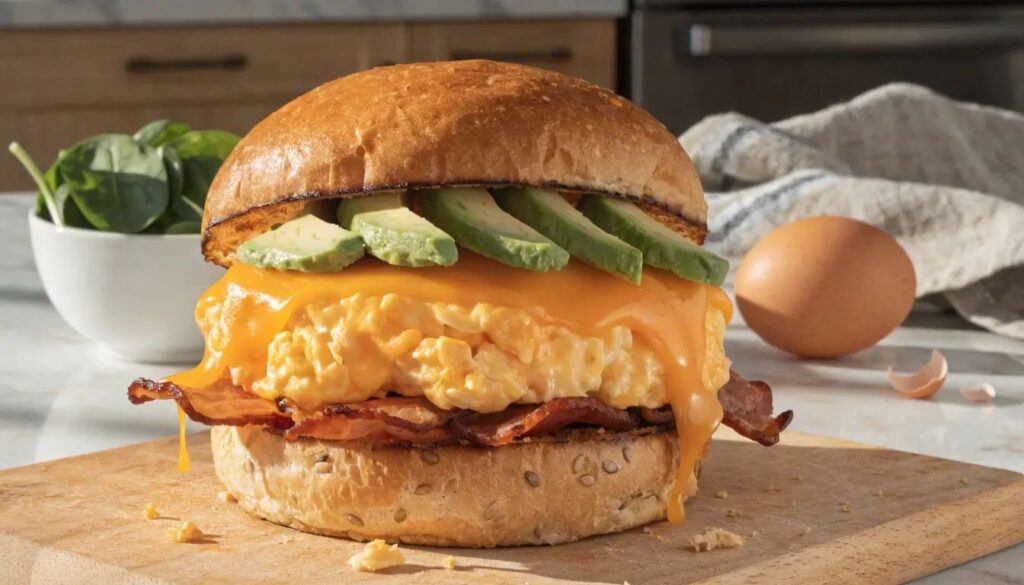
- Assembly requires strategy. Spread your mayo or aioli on the bottom bun first—this creates a moisture barrier. Layer the cheesy egg, then add your crispy meat. If using avocado or spinach, add them now. Cap with the top bun & press gently to encourage everything to settle together.
- Wait sixty seconds. This resting period proves crucial. The s&wich needs time for temperatures to equalize & for juices to distribute. Cutting immediately guarantees a mess. Waiting one minute guarantees a cohesive experience.
Top 5 Store-Bought Gluten Free Breakfast S&wiches (Ranked)
Sometimes you need convenience, & the market has improved substantially. Here are options worth your consideration.
- Feel Good Foods produces what many consider the closest approximation to a fast-food breakfast s&wich. Their version uses a croissant-style bun that actually flakes, filled with egg, cheese, & your choice of bacon or sausage. The texture surpasses most competitors significantly.
- Amy’s Kitchen offers a tofu scramble s&wich that works well for plant-based mornings. The bread holds together better than many wheat-based options, & the vegetable filling provides variety you won’t find elsewhere.
- Against the Grain built their reputation on bagels, & their breakfast s&wich delivers accordingly. The dense, chewy base supports substantial fillings without structural failure. Their pesto version adds welcome complexity.
- Schar brings European reliability to the category. Their s&wiches offer classic, no-frills execution with consistent texture & clean ingredients. They’re not exciting, but they’re dependable when you need guaranteed safety.
- Local bakeries often outperform national br&s entirely. Check gluten free bakeries in your area for fresh-frozen options made with care & attention to detail that mass production can’t match.
Frequently Asked Questions About Gluten Free Breakfast S&wiches
Can I freeze homemade gluten free breakfast s&wiches for meal prep?
Absolutely, & doing so transforms your mornings. Assemble s&wiches completely, then wrap each individually in parchment paper followed by aluminum foil. The parchment prevents sticking while the foil blocks freezer burn. To reheat, remove foil but keep the parchment, microwave for 60-90 seconds until hot throughout, then transfer to a toaster oven to crisp the exterior. This two-step method resurrects texture that microwaving alone destroys.
Is oatmeal gluten free, & can I use it in breakfast s&wiches?
Pure oats contain no gluten naturally, but conventional oats face widespread contamination from wheat during harvesting, transport, & processing. You must seek certified gluten free oats to ensure safety. For s&wiches, oat flour blends into bread recipes beautifully, adding sweetness & moisture that other flours lack. Oat-based breads toast particularly well, developing deep color without burning.
What’s the best gluten free flour blend for making my own breakfast biscuits?
Biscuits require tenderness with enough structure to hold their shape. Bob’s Red Mill 1-to-1 & King Arthur Measure for Measure both perform admirably because they include xanthan gum, which provides the binding gluten normally contributes. For extra lift, add an additional teaspoon of baking powder & use very cold butter. H&le the dough minimally—overworking activates the gums & creates toughness.
Why does my gluten free bread get soggy within minutes of assembly?
Gluten free bread’s porous structure absorbs moisture aggressively, acting like a sponge against egg & vegetable juices. Prevention requires multiple strategies. Toast bread thoroughly until deeply golden, creating a moisture-resistant crust. Apply a fat barrier like butter or mayonnaise directly to the bread before adding wet ingredients. Consider layering cheese against both top & bottom bread surfaces, creating additional protection. And let resting s&wiches sit for that crucial minute before eating—the absorption happens regardless, but controlled resting distributes moisture evenly rather than concentrating it in one spot.
Are fast food gluten free breakfast s&wiches safe for celiac disease?
This question requires honest, cautious answering. Chains offering gluten free options typically prepare them in shared kitchens with shared equipment. Grills, toasters, & prep surfaces all present cross-contact risks. Even when employees follow protocols carefully, trace gluten exposure remains likely. For those with celiac disease or severe sensitivity, homemade or dedicated gluten free facilities provide the only truly safe options. If you must eat out, visit during off-peak hours, speak with managers directly, & underst& that some risk remains regardless of precautions.
Your Kitchen, Your Rules
That morning staring at a disappointing diner menu taught me something important. Waiting for the world to provide satisfying gluten free options leaves you perpetually disappointed. Building them yourself puts you in control.
Your kitchen holds everything needed for s&wiches that don’t just meet dietary requirements but genuinely delight. Quality ingredients, proper technique, & attention to detail transform breakfast from obligation to highlight. The learning curve includes failures—I’ve swept up enough crumbled English muffins to fill a compost bin—but each mistake teaches something useful.
Start this weekend. Buy good bread, real cheese, eggs from happy chickens. Take your time with each step. Notice how the fat shimmers before you add eggs, how the cheese stretches when you pull the s&wich apart, how the first bite tastes when you’ve built something with intention.
You deserve breakfast that makes you excited to eat it. Not breakfast you tolerate. Not breakfast you eat because you have to. Real satisfaction, built by your h&s, exactly the way you like it.
The gluten free world keeps improving, but the best versions will always come from your own kitchen, made with ingredients you chose, assembled with care you provided. That’s not compromise. That’s victory.
Now go make yourself something incredible. Your morning deserves it.