You know that feeling, right? It’s Sunday afternoon, & you’re st&ing in the grocery store aisle, clutching a bag of mixed greens like a life raft in a sea of temptation. You’ve made the decision—this week is different. This week, you’re going to eat clean, feel energized, & finally shed those stubborn pounds that have been hanging around like an unwelcome house guest.
So you fill your cart with vibrant bell peppers, crisp cucumbers, & those adorable little grape tomatoes that actually taste like something. You’re feeling virtuous. You’re feeling unstoppable.
Then you get home, wash everything, arrange it beautifully on a plate, & take that first hopeful bite.And it tastes like nothing. Worse than nothing. It tastes like penance.
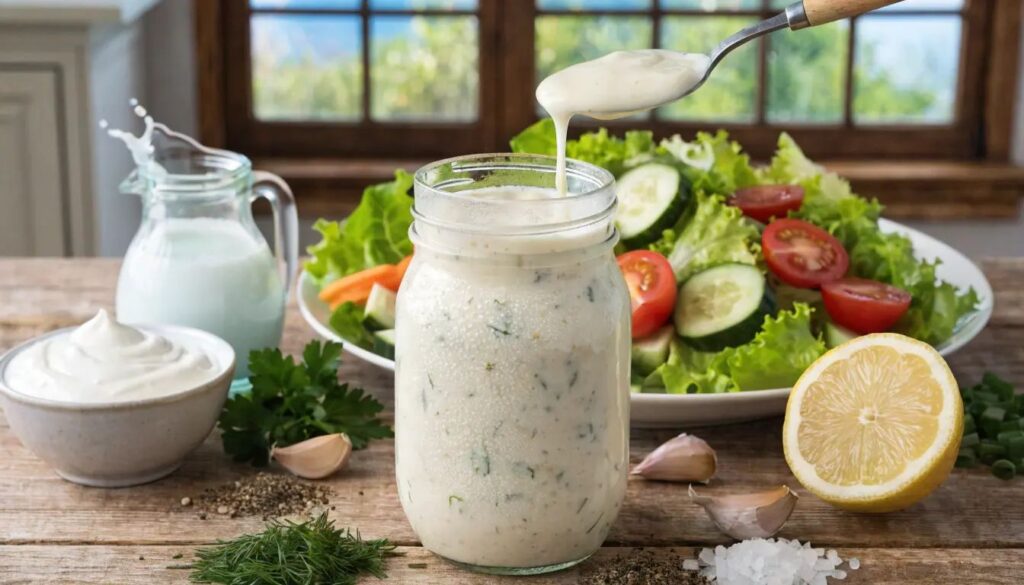
Your eyes dart to the refrigerator door, where a bottle of ranch dressing sits like a delicious temptation wrapped in plastic. You know the one—thick, creamy, loaded with enough calories to turn your virtuous salad into something closer to a cheat meal. You tell yourself you’ll just use a little. A tablespoon. Maybe two. But we both know how that story ends, don’t we?
Then one Tuesday evening, st&ing in my kitchen with a sad bowl of romaine staring back at me, I had enough. There had to be another way. There had to be a version of ranch that didn’t require a calculator to figure out if it was worth the calories.
Turns out, there is. And after months of testing, tweaking, & taste-testing (the sacrifices we make, right?), I l&ed on something genuinely special. This low calorie ranch dressing recipe delivers everything you crave—the creaminess, the tang, the herbaceous punch—without the guilt complex that usually comes with it.
Let me show you how to make it.
Why Store-Bought “Light” Ranch Lets You Down
Before we dive into the solution, let’s talk honestly about the problem. Because if you’ve tried the “light” options at the grocery store, you already know something feels off. But maybe you couldn’t quite name it.
The Hidden Calories & Chemical Cocktail
Here’s what happens when food manufacturers try to strip calories out of something like ranch dressing: they have to put other things back in to make it resemble food.
Think about what real ranch dressing contains—cream, buttermilk, egg yolks, oil. These ingredients provide richness, body, & that luxurious mouthfeel you associate with the real deal. When companies remove the fat, they’re left with a watery, flavorless mess that nobody would willingly pour on their salad.
So they add stabilizers. Thickeners. Starches. Sugars. Artificial flavors designed to trick your brain into thinking you’re eating something satisfying.
Consider this comparison:
- Popular Br& “Light” Ranch (2 tablespoons): 70 calories, 2g sugar, 12+ ingredients including modified food starch, monosodium glutamate, artificial flavors, & preservatives.
- Our Homemade Low Calorie Ranch (2 tablespoons): 45 calories, 0g added sugar, 7 whole-food ingredients you can pronounce.
Beyond the numbers, there’s something else worth considering. Research published in various nutrition journals suggests that artificial additives can actually interfere with your body’s natural hunger signals. Those modified starches & artificial thickeners might trick your palate, but they don’t trigger the same satiety responses as real food. You end up eating more—more dressing, more crackers, more everything—trying to satisfy a craving that processed food can never quite fulfill.
The Taste Compromise
Let’s be brutally honest about the flavor situation, too.
You’ve tried them. Those watery, anemic-looking bottles promising “all the taste with half the calories.” You shake them vigorously, pop the top, & drizzle what looks like thin milk over your carefully prepared vegetables. The first bite delivers a whisper of something vaguely ranch-adjacent, followed by a strange chemical aftertaste that lingers longer than it should.
It’s disappointing in a way that feels almost personal. Like the food industry is winking at you, saying, “Did you really think you could have something nice & still fit into those jeans?”
The problem runs deeper than just calories. Fat carries flavor. It’s a scientific fact. When you strip away the fat without reimagining the entire approach, you’re left with a hollow imitation that reminds you of what you’re missing rather than satisfying what you actually want.
This is why homemade matters. When you control the ingredients, you control the outcome. You’re not trying to make something “light” taste like the original—you’re building something entirely new that delivers satisfaction on its own terms.
The Secret to a Creamy Low Calorie Ranch Dressing Recipe
The magic here isn’t really magic at all. It’s about underst&ing what actually creates the experience of ranch dressing & finding smarter ways to achieve it.
The Base: Greek Yogurt Is Your Best Friend
Let me introduce you to the backbone of this entire operation: plain, non-fat Greek yogurt.
If you’ve never cooked with Greek yogurt before, you’re in for a pleasant surprise. Unlike regular yogurt, Greek yogurt undergoes a straining process that removes much of the liquid whey, leaving behind a thick, luxurious product with a protein punch that regular yogurt can’t touch.
Here’s why it works so perfectly for ranch:
- Texture Without the Fat: Greek yogurt mimics the mouthfeel of sour cream & mayonnaise with remarkable accuracy. It’s dense, creamy, & satisfying in a way that low-fat sour cream alternatives simply aren’t.
- Natural Tanginess: Real ranch dressing gets its distinctive edge from buttermilk. Greek yogurt shares that same pleasant tang, creating an authentic foundation without requiring any special ingredients.
- Protein Bonus: A single cup of non-fat Greek yogurt packs around 20 grams of protein. When you use this as your base, you’re not just avoiding empty calories—you’re actively adding nutritional value to your meal. That protein helps stabilize blood sugar & keeps you feeling satisfied longer, which means you’re less likely to find yourself hunting for a snack an hour after dinner.
- No Weird Ingredients: That’s it. Just yogurt. Fermented milk. Nothing processed, nothing artificial, nothing your gr&mother wouldn’t recognize.
The Flavor Trinity: Herbs, Spices, & a Secret Weapon
Now we get to the fun part—building the actual ranch flavor. Classic ranch seasoning follows a fairly st&ard blueprint, but the proportions make all the difference between something that tastes “close enough” & something that makes you close your eyes & actually enjoy eating your vegetables.
The Essential Herb Lineup:
- Dried Dill Weed: This is non-negotiable. Dill provides that unmistakable ranch signature—slightly sweet, slightly grassy, completely distinctive. Fresh dill works too, but dried actually performs better in dressings because it slowly rehydrates & infuses throughout the mixture.
- Dried Parsley: Parsley adds background color & a subtle freshness. It’s not the star, but you’d notice if it were missing.
- Dried Chives: These bring a mild onion note without the harshness of raw onion. They contribute to that “something savory” quality that keeps you coming back for another bite.
The Savory Foundation:
- Garlic Powder: Not garlic salt—powder. You want control over your sodium levels, so always season with salt separately.
- Onion Powder: Same deal here. Onion powder provides sweetness & depth without the texture of actual onion pieces.
The Secret Weapon:
Here’s where this recipe parts ways with conventional thinking. To achieve that pourable consistency without adding sugar or extra fat, you need something to thin out the Greek yogurt just enough.
Unsweetened almond milk fills this role perfectly.
A quarter cup transforms thick yogurt into something that flows gracefully over your salad greens without becoming watery. It adds nothing in terms of calories or flavor, making it invisible in the final product but essential for the experience.
The Brightness Factor:
Don’t skip the acid. A splash of fresh lemon juice & a teaspoon of white wine vinegar wake up all those herbs & spices, preventing the dressing from tasting flat or one-dimensional. This acidity also helps balance the richness of the yogurt, creating that craveable quality that makes ranch so addictive in the first place.
Ingredient Spotlight: Why Dill Is the Star
Let’s pause here for a moment & give dill its due appreciation.
Dill occupies a unique space in the herb world. It’s delicate enough to feel fresh & lively, yet distinctive enough that you recognize it immediately. In ranch dressing, dill does something almost magical—it bridges the gap between the creamy base & the savory seasonings, creating harmony rather than competition.
When you’re shopping for dried dill, look for bright green color & a strong aroma. If the dill in your spice cabinet has faded to brown or smells like nothing, toss it & buy fresh. Stale herbs are the fastest way to disappointing ranch, & you deserve better than that.
The Foolproof Low Calorie Ranch Dressing Recipe
Ready to make this happen? Clear your counter, grab a mixing bowl, & let’s get to work. This recipe comes together in about five minutes of active time, though you’ll need to exercise a little patience at the end.
Ingredients You’ll Need
- 1 cup plain, non-fat Greek yogurt (Fage or Chobani work beautifully here)
- 1/4 cup unsweetened almond milk (plus an extra tablespoon or two for adjustments)
- 1 tablespoon fresh lemon juice (bottled works in a pinch, but fresh really shines)
- 1 teaspoon white wine vinegar
- 1 teaspoon garlic powder
- 1 teaspoon onion powder
- 1 1/2 teaspoons dried dill weed
- 1 teaspoon dried parsley
- 1/2 teaspoon dried chives
- 1/2 teaspoon salt (fine sea salt or kosher, adjust to your preference)
- 1/4 teaspoon black pepper (freshly ground if possible)
Step-by-Step Instructions
Step 1: Build Your Base
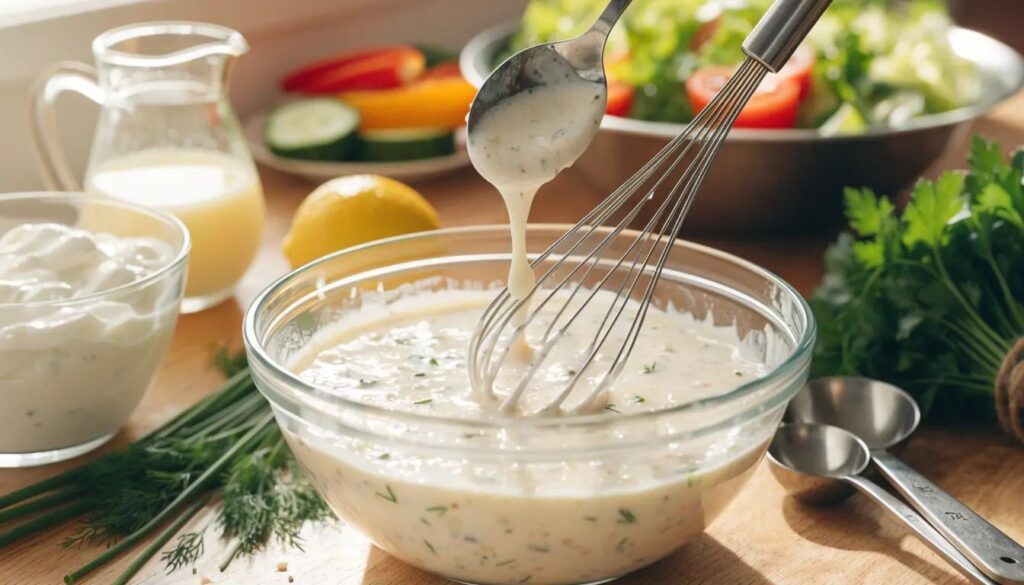
Scoop that cup of Greek yogurt into a medium-sized mixing bowl. Add the almond milk, lemon juice, & white wine vinegar. Grab a whisk & start combining—you’re looking for a smooth, uniform mixture without any stubborn yogurt clumps. The acid from the lemon & vinegar will start working immediately, brightening the yogurt & preparing it to receive the herbs.
Step 2: Deploy the Seasonings
Now add everything else—garlic powder, onion powder, dill, parsley, chives, salt, & pepper. Don’t dump them all in one pile if you can help it. Scatter them around the surface of the yogurt mixture so they incorporate more evenly.
Step 3: Whisk Like You Mean It
This step matters more than you might think. Whisk vigorously for a full minute, maybe longer. You’re not just mixing here—you’re aerating slightly & ensuring every speck of herb gets thoroughly distributed. Taste a tiny bit from the whisk (go ahead, nobody’s watching) & you’ll notice how the flavors haven’t quite married yet. That’s normal. Give it time.
Step 4: The Taste Test (Crucial!)
Here’s where you become the chef rather than just a recipe follower. Dip a clean spoon into your dressing & really taste it. Consider each component:
- Is there enough salt? Salt doesn’t just make things salty—it enhances every other flavor present.
- Does the dill come through clearly? If not, add another quarter teaspoon.
- Could it use more brightness? Another squeeze of lemon might be in order.
- Is the garlic present without being overwhelming?
Trust your instincts here. Everyone’s palate differs slightly, & the beauty of homemade dressing is that you can customize it to your exact preferences.
Step 5: Exercise Patience (The Hard Part)
Cover your bowl with plastic wrap or transfer the dressing to a jar with a tight-fitting lid. Place it in the refrigerator & walk away for at least 30 minutes. I know—you want to taste it now, on something, anything. But trust the process.
During this resting period, those dried herbs slowly rehydrate in the yogurt mixture, releasing their essential oils & flavors throughout the dressing. What tasted promising but separate before will transform into something cohesive & deeply satisfying.
Nutritional Breakdown: The Numbers You’ll Love
Let’s look at what you’re actually getting here, because numbers matter when you’re making intentional choices about what you eat.
Per 2-Tablespoon Serving:
| Calories | 45 |
| Total Fat | 0.5g |
| Carbohydrates | 3g |
| Protein | 7g |
| Added Sugar | 0g |
Compare this to traditional ranch made with mayonnaise & sour cream, which typically runs 120-140 calories per serving with minimal protein & significantly more fat. You’re essentially getting three times the volume for the same caloric investment, plus the staying power that protein provides.
For anyone tracking macros or simply trying to make smarter choices without feeling deprived, these numbers represent a genuine victory.
5 Delicious Ways to Use This Low Calorie Ranch Dressing (Beyond Salad)
Here’s where things get interesting. Yes, this dressing performs beautifully on a simple green salad. But limiting it to that role would be like owning a Swiss Army knife & only using the toothpick.
The Perfect Veggie Dip
Arrange a platter of colorful vegetables—crisp bell pepper strips, cucumber rounds, snap peas, celery sticks, cherry tomatoes—& serve your ranch in a small bowl at the center. The protein content transforms this from a simple snack into something that actually holds you until dinner. Kids love this. Adults love this. Everyone loves this.
A Healthy Pizza Drizzle
Hear me out on this one. After a long week when cooking feels impossible & you’ve ordered a pizza (it happens to the best of us), drizzle a little of this ranch over the top before eating. The cool, herby creaminess cuts through the richness of the cheese & pepperoni in a way that makes each bite more interesting. You’ll eat less pizza because you’ll actually taste what you’re eating.
Buffalo Chicken Dip Makeover
Traditional buffalo chicken dip relies on cream cheese, ranch dressing mix, & usually more ranch dressing on top. Swap in this homemade version as the base, & you’ve transformed a Super Bowl indulgence into something you could reasonably eat on a Tuesday. Same spicy, creamy satisfaction. Fewer regrets.
Burger & Wrap Spread
That special sauce on your favorite burger or wrap? It’s usually just mayo with stuff added. Use this ranch instead, & you’ve upgraded your lunch without upgrading your calorie count. Works beautifully on turkey burgers, chicken wraps, or even as a spread for a veggie s&wich that needs a little something extra.
Baked Potato Topper
A hot baked potato, split open, with a generous dollop of this ranch melting into the fluffy interior. Maybe some chopped chives on top if you’re feeling fancy. This combination delivers all the satisfaction of a loaded potato without the butter & sour cream that typically accompany it. Comfort food that actually comforts instead of making you feel heavy afterward.
Storage Tips & Shelf Life
You’ll want to make this dressing in batches, & here’s what you need to know about keeping it at its best.
Container Choice Matters: Glass jars with tight-fitting lids work perfectly. Mason jars are ideal—wide-mouth versions make scooping easy, & you can see exactly how much dressing remains.
Refrigerator Longevity: This recipe stays fresh for 5-7 days when properly stored. After that point, the herbs begin losing their brightness & the texture may start to separate slightly. You won’t get sick from eating it, but you won’t enjoy it as much either.
Consistency Adjustment: Here’s something you’ll notice—the dressing thickens as it sits in the cold. This is normal. Greek yogurt does that. When you pull it from the fridge, give it a good stir & assess the texture. If it seems too thick for your purposes, whisk in a teaspoon of almond milk or even just water until it reaches your preferred consistency.
Freezing Notes: Don’t do it. Yogurt-based dressings separate when frozen & thawed, leaving you with a grainy, unpleasant texture that no amount of whisking can fix. Make what you’ll use within a week & enjoy it at its best.
Frequently Asked Questions About Low Calorie Ranch Dressing
Can I make this low calorie ranch dressing recipe dairy-free?
Absolutely. Substitute the Greek yogurt with a plain, unsweetened dairy-free alternative. Coconut-based yogurts provide the creamiest texture, while soy versions work well too. Just read labels carefully—many dairy-free yogurts contain added sugars that will throw off both the flavor profile & your nutritional goals. Use unsweetened almond milk as directed, & you’ll have a completely dairy-free dressing that still delivers on flavor.
Why is my homemade ranch dressing so thick?
You haven’t done anything wrong. Greek yogurt starts thick by nature, & refrigeration amplifies this tendency. The recipe deliberately begins with a thicker base so you can control the final consistency yourself. If you prefer a runnier dressing for drizzling over salads, simply incorporate more almond milk—one tablespoon at a time, stirring thoroughly—until you reach your happy place.
Can I use fresh herbs instead of dried?
Yes, though the experience differs slightly. Fresh herbs provide a brighter, more delicate flavor that many people prefer during summer months when gardens overflow with dill & parsley. If you go this route, use approximately three times the amount called for in the recipe (1 tablespoon fresh dill instead of 1 teaspoon dried). Be aware that fresh herb dressings deteriorate faster, so plan to consume within 3-4 days.
Is this dressing keto-friendly?
It certainly is. With minimal carbohydrates coming primarily from the yogurt & herbs, this dressing fits comfortably within ketogenic macros. Pair it with low-carb vegetables or use it as a sauce for grilled chicken, & you’ve got a satisfying meal that keeps you firmly in ketosis.
Can I double this recipe?
Please do. The recipe scales beautifully, & having extra ranch on h& means you’ll reach for vegetables more often throughout the week. Just maintain the same proportions & whisk thoroughly to ensure even herb distribution.
Your New Favorite Kitchen Staple
Here’s what I want you to take away from all this: healthy eating shouldn’t feel like punishment.
For years, I approached salads & vegetables with a sense of obligation rather than anticipation. They were things I had to eat, not things I wanted to eat. And that mindset made every healthy choice feel like a sacrifice.
This dressing changed that for me.
Knowing I had a batch waiting in the refrigerator made me look forward to lunch. I started experimenting with different vegetable combinations just to see how they’d taste with that creamy, herby goodness drizzled on top. I found myself eating more vegetables without trying, without forcing, without that little voice in my head calculating how much longer until I could eat something “real.”
That’s the power of a recipe like this. It removes the barrier between you & the food you know you should be eating. It transforms obligation into opportunity.
So here’s my invitation to you: make a batch this weekend. Not next weekend, not when you have more time, not when life settles down a little—this weekend. St& in your kitchen, whisk in h&, & take five minutes to create something that will make the coming week’s meals genuinely better.
Drizzle it over your lunch salads. Dip your afternoon vegetables in it. Spread it on s&wiches. Dollop it on baked potatoes. Use it anywhere you’d normally reach for something heavy & processed, & notice how different it feels to eat something that nourishes you completely—body & spirit.
When you do, come back & tell me about it. Drop a comment below sharing your experience, your variations, your favorite way to use this dressing. Tag me in your social media photos so I can celebrate your kitchen victory with you.
Because here’s the truth I’ve learned through years of trial & error in my own kitchen: food tastes better when we make it ourselves. It satisfies more deeply. It connects us to something real in a world that often feels processed & packaged & distant from what matters.
This dressing is just dressing. But what it represents—taking control, choosing real ingredients, refusing to settle for less than delicious—that’s something worth sharing.
Now go make some ranch. Your vegetables are waiting.