Every kitchen has a story, & mine started with kabocha squash. As a home cook, I found a world of vegan recipes from China. This Japanese pumpkin’s sweet, nutty taste opened doors to healthy & tasty dishes.
Kabocha squash is more than just an ingredient. It’s a journey through Chinese vegan dishes full of flavor & health. Whether you’re new to vegan cooking or experienced, these recipes will take you to China’s vibrant streets.
Imagine making meals that are tasty & full of nutrients. Kabocha squash adds vitamins, minerals, & a creamy texture to your dishes. From stir-fries to soups, these recipes will change how you cook vegan.
Get ready to mix traditional Chinese flavors with vegan innovation. Your kabocha squash journey starts now. No passport needed!
Table of Contents
Underst&ing Kabocha: The Japanese Pumpkin in Chinese Cuisine
Kabocha squash is a hidden gem in healthy Chinese cuisine. It offers a mix of nutrition & flavor for vegan recipe lovers. This winter squash has a sweet taste that makes dishes special.
Explore the world of this amazing vegetable in vegan cooking. Its vibrant orange flesh & dense texture make it a nutritional powerhouse. It can make your healthy Chinese kabocha dishes even better.
Nutritional Powerhouse
Kabocha squash is packed with essential nutrients. It offers great health benefits:
- Low in calories (only 30 calories per 100g)
- Rich in vitamin C & beta-carotene
- Contains dietary fiber for digestive health
- Potential cancer-prevention properties
Selecting the Perfect Kabocha
When picking kabocha for vegan recipes, look for:
- Deep green or orange-green rind
- Heavy for their size
- Firm exterior without soft spots
- Dull, not shiny skin
| Nutritional Content | Per 100g |
|---|---|
| Calories | 30 |
| Protein | 1.1g |
| Carbohydrates | 8.2g |
| Fiber | 1.2g |
Preparation Tips
To prepare kabocha, wash it thoroughly. Then cut it in half. Remove seeds & slice into shapes. The edible rind adds nutrition & texture.
“Kabocha squash is not just a vegetable, it’s a culinary adventure waiting to be explored.” – Devorah Bowen, Culinary Expert
Kabocha squash can make your vegan Chinese dishes special. It’s great for hearty stews or light stir-fries. Its unique flavor & nutritional profile are unmatched.
Essential Chinese Ingredients for Vegan Kabocha Dishes
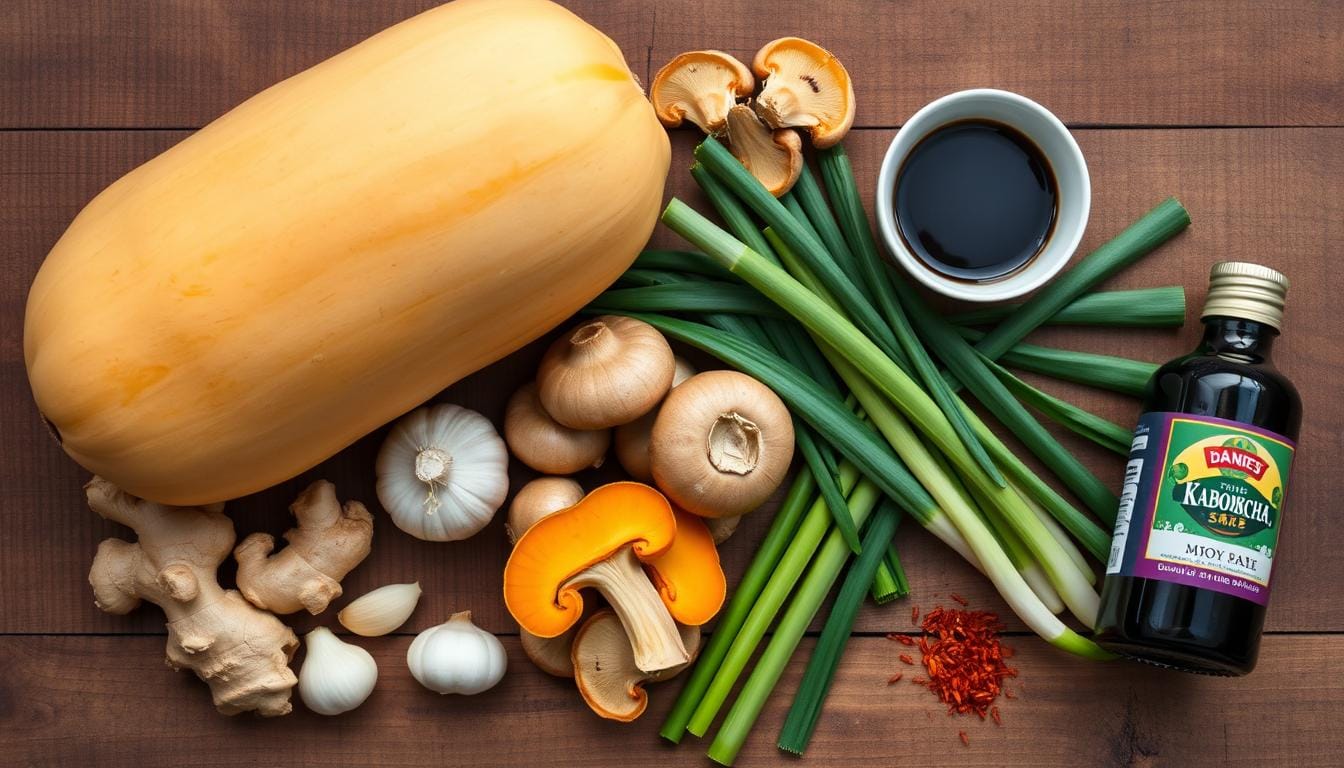
Starting with the right ingredients is key to making tasty easy Chinese squash dishes. Your vegan kabocha squash stir-fry needs the right mix to highlight its natural sweetness & creamy texture.
Let’s look at the must-have ingredients for amazing Chinese vegan cooking with kabocha:
- Soy Sauce: Adds deep umami flavor & saltiness
- Fresh Ginger: Brings spicy & aromatic notes
- Garlic: Gives a sharp, pungent kick
- Sesame Oil: Offers a rich, nutty aroma
- Rice Vinegar: Balances sweetness with subtle acidity
“The secret to an amazing vegan kabocha dish lies in balancing flavors & embracing traditional Chinese cooking techniques.” – Traditional Chinese Culinary Expert
Chinese five-spice powder is a magical blend that takes your kabocha dishes to the next level. It combines star anise, cloves, cinnamon, Sichuan peppercorns, & fennel. This spice mix adds a warm & slightly sweet flavor to your cooking.
Your kabocha squash is packed with nutrients like beta-carotene, vitamins A & C, & fiber. By using these essential ingredients, you’ll turn simple squash into a remarkable vegan meal that honors Chinese culinary traditions.
Chinese Squash Recipes Kabocha Vegan: A Complete Guide
Vegan Chinese cuisine is amazing, thanks to kabocha squash. This squash makes simple dishes into works of art. It adds flavors & textures that vegans love.
Kabocha squash is loved in Chinese vegan cooking. It’s creamy & sweet, making dishes both tasty & healthy.
Traditional Cooking Methods
Chinese cooking has many ways to use kabocha squash:
- Stir-frying with garlic & ginger
- Roasting at 400°F (200°C) for 25-35 minutes
- Steaming to keep nutrients
- Adding to soups & stews
Regional Variations
Chinese regions have their own kabocha squash recipes:
| Region | Signature Preparation | Key Ingredients |
|---|---|---|
| Sichuan | Spicy Stir-Fry | Chili oil, Sichuan peppercorns |
| Cantonese | Steamed Squash | Mushroom broth, light soy sauce |
| Northern China | Roasted Cubes | Five-spice powder, sesame seeds |
Seasonal Considerations
When making kabocha squash recipes, think about the season. Winter is the best time for kabocha squash. It’s perfect for warm, hearty dishes.
Pro tip: Choose kabocha with deep green, hard skin & no soft spots for the best cooking results.
Knowing about regional & seasonal tips can make your vegan Chinese cooking better. You’ll create amazing meals that celebrate this special squash.
Stir-Fried Kabocha with Garlic & Ginger Recipe
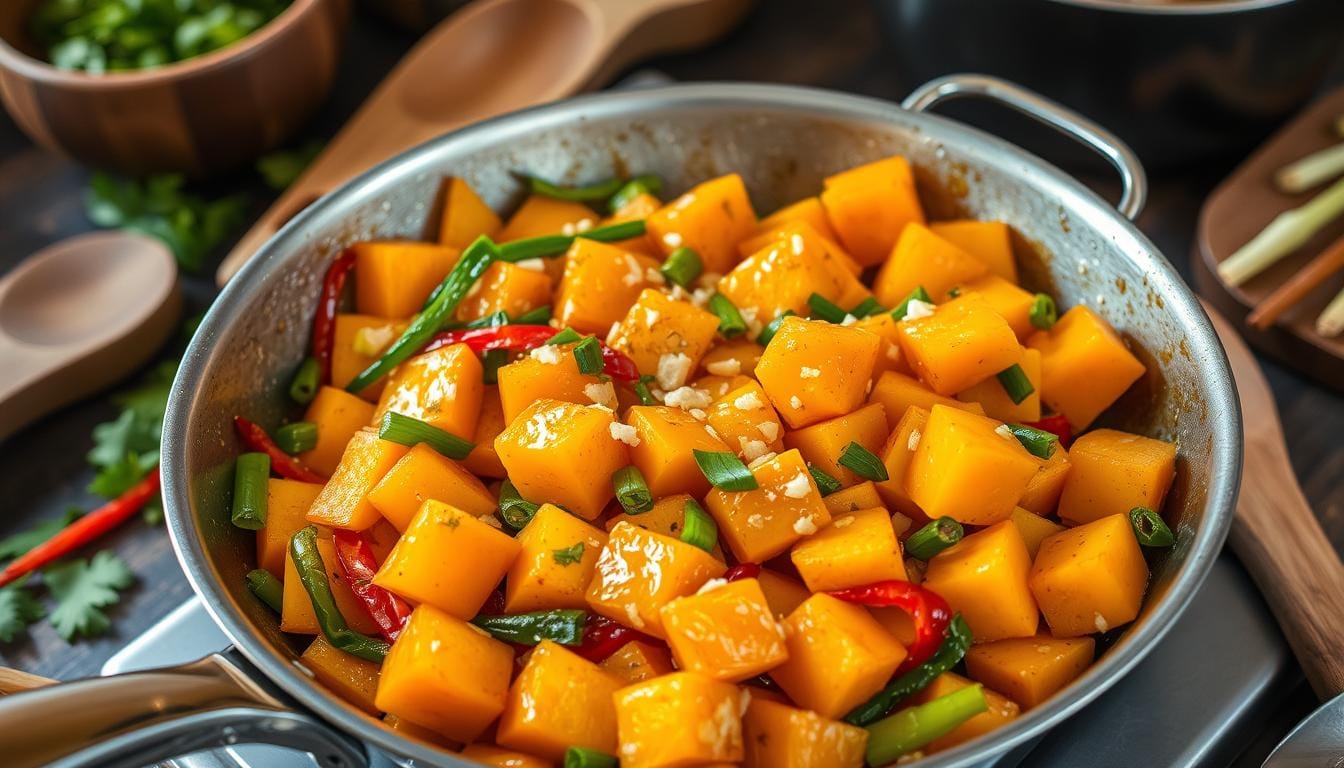
Discover the magic of an easy Chinese squash dish that turns kabocha squash into a tasty vegan meal. This vegan kabocha squash stir-fry combines classic Chinese flavors with healthy ingredients.
Kabocha squash is the star in this simple yet elegant recipe. It’s packed with beta-carotene & fiber, making it a great base for a quick & healthy stir-fry.
Ingredients You’ll Need
- 5-6 cups cubed kabocha squash (with skin)
- 2 tablespoons vegetable oil
- 3 cloves minced garlic
- 1 tablespoon fresh chopped ginger
- 2 tablespoons soy sauce
- 1 tablespoon rice vinegar
- 1 teaspoon sesame oil
- Salt & white pepper to taste
- Optional: Toasted sesame seeds for garnish
Cooking Method
- Heat vegetable oil in a wok or large skillet
- Sauté garlic & ginger until fragrant
- Add kabocha squash cubes
- Pour in soy sauce & rice vinegar
- Stir-fry until squash is tender but not mushy
- Finish with a drizzle of sesame oil
“The key to a perfect stir-fry is high heat & quick cooking!” – Chinese Culinary Experts
Pro tip: For extra protein, add extra-firm tofu or tempeh. Top with fresh cilantro or green onions to make your easy Chinese squash dish even better.
Miso-Glazed Roasted Kabocha Recipe
Finding the right vegan kabocha recipe can make your Chinese-inspired cooking better. This miso-glazed roasted kabocha dish mixes old flavors with new plant-based ideas. It’s a tasty & healthy Chinese kabocha dish.
Glaze Preparation Tips
Making a great glaze is key for your vegan kabocha recipe. Begin by mixing these important ingredients:
- ½ cup white miso paste
- 2 tablespoons rice vinegar
- 3 tablespoons maple syrup
- 1 tablespoon sesame oil
- Minced garlic to taste
Roasting Techniques
Roasting kabocha needs care to get it just right. Heat your oven to 400°F & prep the squash well.
| Preparation Step | Details |
|---|---|
| Squash Selection | 3-4 pound kabocha, deep green rind |
| Cutting | Remove seeds, cut into 1-inch thick wedges |
| Preparation | Brush with avocado oil, sprinkle with sea salt |
| Roasting Time | 35-40 minutes until tender |
Serving Suggestions
Your vegan Chinese kabocha dishes look great when served nicely. Add toasted sesame seeds & fresh scallions. It serves 4 & is very nutritious:
- Only 161 calories per serving
- Rich in beta-carotene
- Contains essential B vitamins
- Low sodium option
“Kabocha squash turns simple ingredients into a culinary masterpiece that celebrates both flavor & nutrition.”
Kabocha Squash & Chinese Vegetable Soup
Explore the wonders of healthy Chinese kabocha dishes with this comforting vegetable soup. This Asian vegan squash recipe turns the simple kabocha into a creamy, nutritious meal. It will warm you up from the inside.
Kabocha squash, also known as the Japanese pumpkin, adds a sweet flavor & smooth texture to this soup. It’s a perfect base for a hearty, plant-based meal.
“A bowl of kabocha soup is like a warm embrace on a cold day” – Traditional Chinese Cooking Wisdom
Key Ingredients for the Perfect Soup
- 1 medium kabocha squash, seeded & cubed
- Vegetable broth (1 quart)
- Full-fat coconut milk
- Fresh ginger & garlic
- Aromatic spices: cori&er, smoked paprika
Nutrition Highlights
| Nutrient | Amount |
|---|---|
| Calories | 469 kcal |
| Protein | 8g |
| Fiber | 11g |
| Vitamin A | 6214 IU |
To make this soup, roast the kabocha to bring out its natural sweetness. Sauté onions, garlic, & ginger first. Then add broth & coconut milk. Let it simmer for 15-20 minutes until the squash is soft. Finish with a squeeze of fresh lime juice.
Leftovers can be stored in an airtight container for up to 5 days in the fridge or frozen for 3 months. A tip: Use full-fat coconut milk for the creamiest texture in your Asian vegan squash recipes!
Balancing Flavors in Vegan Chinese Cooking
Mastering flavor balance is key in vegan Chinese cooking. It’s about knowing how tastes work together. This is important for making delicious vegan Chinese squash recipes.
Vegan kabocha squash dishes are all about complex flavors. They mix sweet, savory, & umami tastes. The natural sweetness of kabocha is perfect for trying out different flavor combinations.
Sweet & Savory Combinations
To create great flavors, choose your ingredients wisely:
- Match kabocha’s sweetness with salty soy sauce
- Add fermented black beans for depth
- Use miso paste for more umami
- Try fresh herbs like cilantro for a bright taste
Umami Enhancement Techniques
To boost umami in your dishes, try these:
- Roast mushrooms for deeper flavors
- Add nutritional yeast for a cheesy taste
- Use white pepper for a hint of heat
- Drizzle sesame oil for a nutty flavor
“Balance is not something you find, it’s something you create in your cooking.” – Chinese Culinary Wisdom
Learning these flavor tips will help you make amazing vegan kabocha squash dishes. They’ll show off the beauty of Chinese cooking.
Time-Saving Tips for Kabocha Preparation
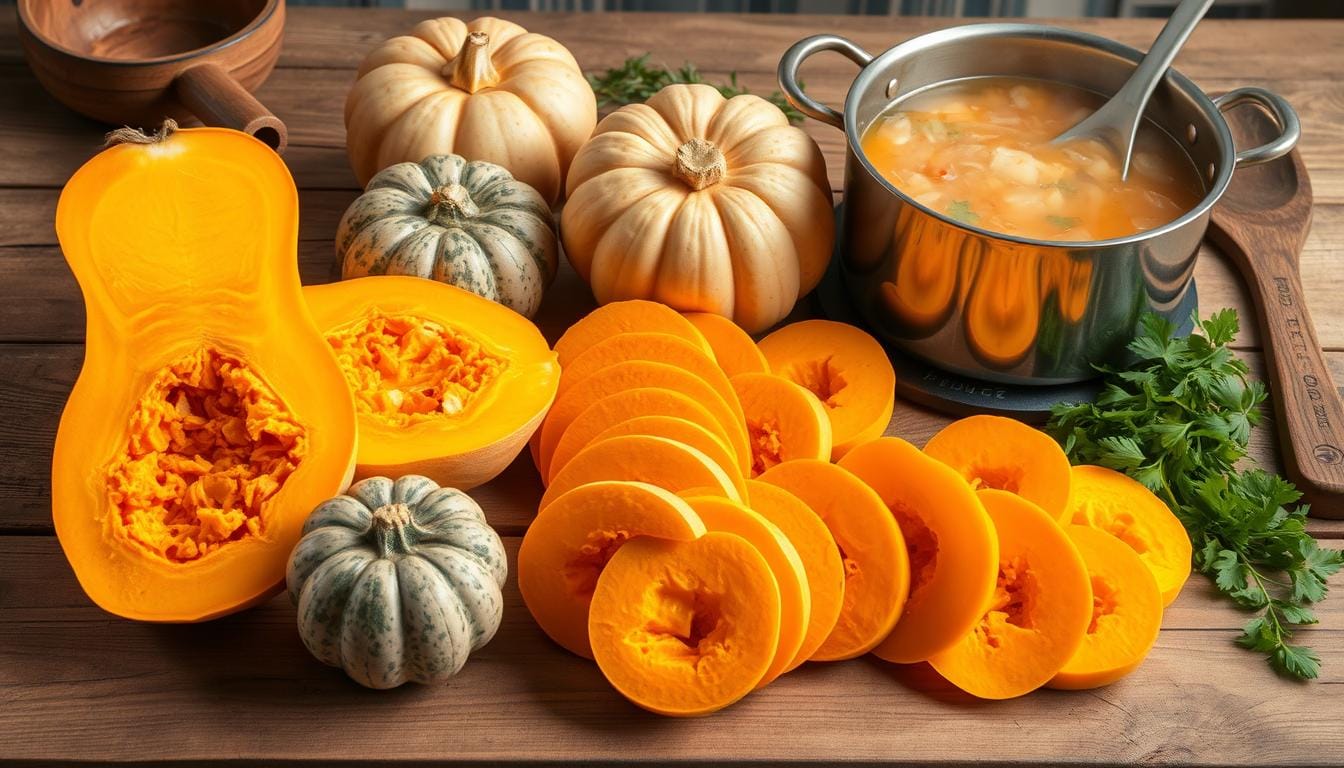
Preparing kabocha squash for easy Chinese squash dishes doesn’t have to be time-consuming. With a few smart techniques, you can make cooking more efficient. This way, you can enjoy your vegan kabocha squash recipe ideas without stress.
When working with this nutrient-dense squash, consider these practical preparation strategies:
- Soften the squash in the microwave for 2-3 minutes before cutting to reduce knife strain
- Use a sharp chef’s knife & stable cutting board for safer, faster chopping
- Pre-cut kabocha into uniform cubes & store in airtight containers for quick meal assembly
- Roast larger batches to use throughout the week in various vegan dishes
Pro tip: Select firm kabocha squash with deep green skin for the best texture & flavor in your recipes.
“Efficient preparation transforms cooking from a chore into a creative adventure” – Chef Maria Wong
Storage is crucial for maintaining your squash’s quality. Keep whole kabocha in a cool, dark place for up to one month. Cut pieces can be refrigerated for 3-5 days. This makes meal planning smoother for your Chinese-inspired vegan cuisine.
By implementing these time-saving techniques, you’ll spend less time prepping. You’ll have more time to enjoy delicious, nutrient-packed kabocha dishes.
Common Mistakes to Avoid When Cooking Vegan Kabocha
Mastering healthy Chinese kabocha dishes requires underst&ing potential pitfalls. Cooking vegan kabocha can be tricky, but knowing common mistakes helps you create delicious meals with confidence.
When preparing chinese kabocha dishes vegan, several key errors can compromise your culinary success:
- Overcooking the squash, resulting in a mushy texture
- Under-seasoning, which masks kabocha’s natural sweetness
- Neglecting proper cleaning techniques
- Ignoring nutritional balance in your dish
Texture is crucial when cooking kabocha. Cutting pieces uniformly ensures even cooking. The squash should remain firm yet tender, not falling apart during preparation.
“The secret to perfect kabocha is underst&ing its unique cooking characteristics.” – Chinese Culinary Expert
Protein pairing becomes essential in vegan kabocha recipes. Without animal proteins, you’ll want to incorporate ingredients like:
- Tempeh
- Chickpeas
- Edamame
- Tofu
| Cooking Mistake | Solution |
|---|---|
| Uneven cutting | Use sharp knife, cut uniform pieces |
| Bl& flavor | Layer seasonings, use fresh herbs |
| Lack of protein | Add plant-based protein sources |
Remember, cooking vegan kabocha is an art. Practice, patience, & attention to detail will transform your dishes from simple to spectacular.
Seasonal Pairings & Meal Planning
Exploring vegan squash recipes from Asia shows how kabocha squash changes with the seasons. This journey lets you create meals that match the seasons & celebrate special times.
Winter Flavor Combinations
In winter, kabocha squash recipes can be warm & hearty. Try these tasty pairings:
- Roasted kabocha with root vegetables
- Spiced kabocha soup with warming ginger
- Braised squash with Chinese five-spice blend
Summer Culinary Adaptations
Summer cooking with kabocha is lighter. Your vegan dishes might include:
- Chilled kabocha salad with fresh herbs
- Grilled kabocha slices with citrus dressing
- Raw kabocha noodle bowls
Festival Dish Inspirations
Chinese festivals are a great time to use kabocha in special meals. Vegan versions keep the true flavors of traditional dishes.
“Kabocha squash bridges traditional cooking with modern plant-based cuisine” – Chinese Culinary Institute
| Season | Cooking Style | Key Ingredients |
|---|---|---|
| Winter | Braising | Root vegetables, warming spices |
| Summer | Raw/Grilling | Fresh herbs, citrus |
| Festival | Traditional Techniques | Five-spice, ginger, garlic |
Planning meals with kabocha is a fun journey. It lets you enjoy the seasons & cultural traditions while staying vegan.
Conclusion
Your journey through Chinese squash recipes kabocha vegan shows how versatile this Japanese pumpkin is. Its creamy texture & sweet taste make it perfect for vegan dishes. These dishes are not only tasty but also good for you.
Trying out vegan kabocha squash dishes is a fun way to get creative in the kitchen. You can make everything from stir-fries to soups with it. This vegetable is full of vitamins & minerals, making it great for those who care about their health.
Learning to cook with kabocha is all about underst&ing its unique qualities & trying new things. Whether you roast, stir-fry, or blend it, you’ll find something special. With time, you’ll get better at mixing flavors & textures, making amazing vegan meals.
Now that you know more about cooking with kabocha, you can make tasty, healthy meals. Start your adventure, trust yourself, & enjoy making delicious, Chinese-inspired vegan dishes with kabocha squash.
FAQ
What is Kabocha squash?
Kabocha squash, also known as Japanese pumpkin, is a sweet & nutty winter squash. It has vibrant orange flesh & a thick green rind. It’s packed with vitamins A & C, dietary fiber, potassium, & B vitamins, making it great for vegan Chinese dishes.
How do I select a good Kabocha squash?
Choose Kabocha squash with a deep green, uniform color & a hard, heavy feel. It should have no soft spots, bruises, or moldy areas. A ripe Kabocha will have a slight give when pressed & a sweet, earthy aroma.
What are the best cooking methods for Kabocha squash?
Kabocha squash is versatile & works well with multiple cooking methods. You can stir-fry, roast, steam, or use it in soups. Each method brings out different flavors & textures, making it perfect for various vegan Chinese dishes.
Is Kabocha squash good for a vegan diet?
Absolutely! Kabocha squash is an excellent addition to a vegan diet. It’s low in calories, high in nutrients, & a good source of fiber. Its ability to absorb flavors makes it perfect for creating satisfying, protein-rich vegan meals.
How do I prepare Kabocha squash for cooking?
Start by washing the squash thoroughly. You can either peel the skin (which is edible) or leave it on. Use a sharp knife to cut the squash in half, remove the seeds, & then cut into desired shapes. For easier cutting, you can microwave the squash for a few minutes to soften it.
What traditional Chinese ingredients pair well with Kabocha squash?
Key ingredients include soy sauce, ginger, garlic, sesame oil, rice vinegar, & Chinese five-spice. These ingredients enhance the squash’s natural sweetness & create complex, satisfying flavor profiles in vegan dishes.
Can I store Kabocha squash for a long time?
Yes, whole Kabocha squash can be stored in a cool, dry place for up to a month. Once cut, store pieces in an airtight container in the refrigerator for 3-5 days. For longer storage, you can freeze cubed Kabocha for up to 3 months.
Are there protein options to combine with Kabocha in vegan recipes?
Definitely! You can add tofu, tempeh, edamame, or seitan to Kabocha dishes to increase protein content. Nuts like toasted sesame seeds or crushed peanuts also provide additional protein & texture to your vegan Kabocha recipes.
What are some common mistakes to avoid when cooking Kabocha?
Avoid overcooking, which can lead to a mushy texture. Don’t under-season the squash, as it needs balanced flavors. Always ensure proper cleaning, & cut the squash into uniform pieces for even cooking. Pair it with protein-rich ingredients for a complete meal.
Can Kabocha squash be used in different seasonal dishes?
Yes! In winter, use Kabocha with hearty root vegetables & warming spices. For summer, try lighter preparations like cold salads or grilled Kabocha. It’s versatile enough to adapt to different seasons & can be incorporated into traditional Chinese holiday recipes.