You know that feeling. It’s Friday night, you’ve somehow made it through another long week, and every fiber of your being is screaming for a slice of hot, cheesy pizza. But then the other voice chimes in—the one keeping track of your jeans fitting properly, the one that remembers you promised yourself you’d eat better this week.
I spent years trapped in that exact mental tug-of-war. For the longest time, I genuinely believed I had to choose. Either I could have pizza, or I could feel good about my body. Never both. And let me tell you, the first time I attempted a “diet pizza” during my early health kick days, it was genuinely depressing. We’re talking about a cardboard-like crust, watery canned sauce, and cheese that looked sad and sweaty all at once. I sat there chewing through it, wondering if this was what “getting healthy” really meant—a lifetime of punishing myself with food that tasted like punishment.
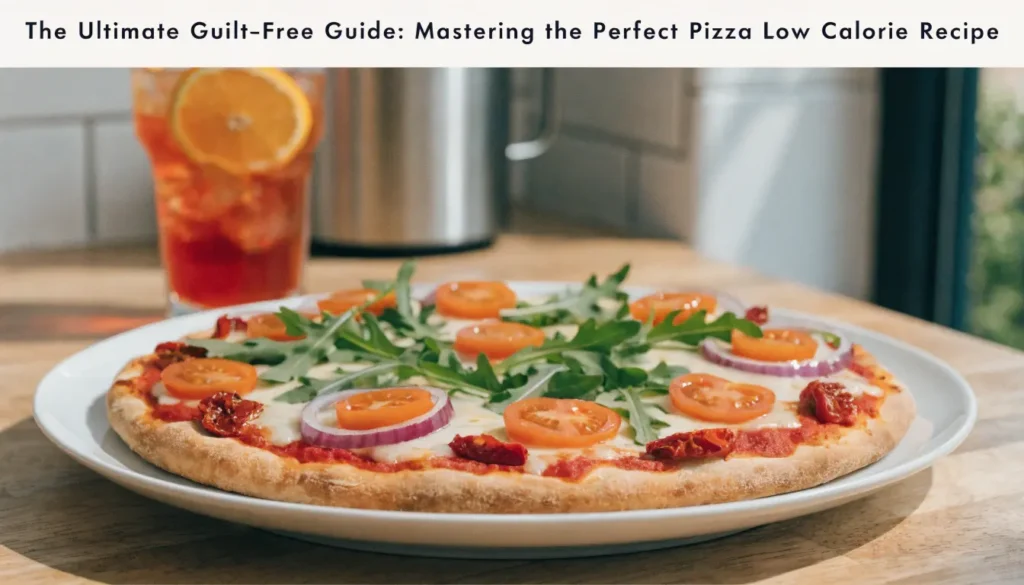
But here’s what I discovered after months of experimenting, failing, and finally figuring it out: you absolutely do not have to choose. That moment when I finally pulled a bubbling, golden-brown pizza low calorie recipe out of my oven, one that actually smelled and tasted like the real deal, something clicked. The crust was crispy. The cheese stretched when I pulled a slice away. And the best part? I finished the entire pizza feeling satisfied, not stuffed and regretful.
This guide is going to walk you through exactly how to reclaim your favorite food. No gimmicks, no sad substitutes—just real pizza that happens to fit into your life without derailing your progress.
Why You Should Make Your Own Pizza Low Calorie Recipe
Before we get into the nitty-gritty of dough and toppings, let’s talk about why rolling up your sleeves and making pizza yourself completely changes the game compared to ordering in or grabbing a frozen box.
The Calorie Reality Check
Take a second and think about your typical delivery pizza. A single slice of hand-tossed pepperoni from a major chain usually clocks in somewhere between 280 and 350 calories. But let’s be real—when was the last time you stopped at one slice? Two slices easily put you at 600 to 700 calories, and that’s before we talk about the garlic knots you added to your cart or the soda you washed it down with.
A well-constructed pizza low calorie recipe made at home typically runs you somewhere between 400 and 550 calories for the entire personal-sized pizza. That’s the whole thing, not just a slice. You get to eat the equivalent of two or three delivery slices for fewer calories than one. The math alone should make you want to preheat your oven right now.
You Become the Boss of Your Ingredients
When you open a delivery app, you’re at the mercy of whatever that restaurant decided to dump into their food. Most commercial pizza sauces are loaded with sugar—sometimes as much as a candy bar per serving. The cheese blends often include fillers and starches to keep costs down. The dough? Frequently made with low-quality oils and preservatives designed to survive a freezer, not nourish your body.
Making your own flips the script completely. You decide exactly what goes into every layer. You choose the olive oil, you pick the cheese quality, you control the salt. That level of control isn’t just about calories—it’s about eating food that actually fuels you instead of making you feel sluggish twenty minutes later.
Macro Management Made Simple
Maybe you’re not strictly counting calories. Maybe you’re watching carbs, aiming for higher protein, or keeping an eye on saturated fat. Whatever your specific nutritional goals look like, building your own pizza means you can tailor everything to fit. Need more protein? The Greek yogurt dough option delivers around 15 grams before you even add toppings. Watching carbs? The portobello mushroom caps or cauliflower crust have your back. Trying to reduce saturated fat? Part-skim mozzarella and careful portioning keep things in check while still delivering that cheesy satisfaction.
The Secret Weapons: Essential Ingredients for a Low Calorie Pizza
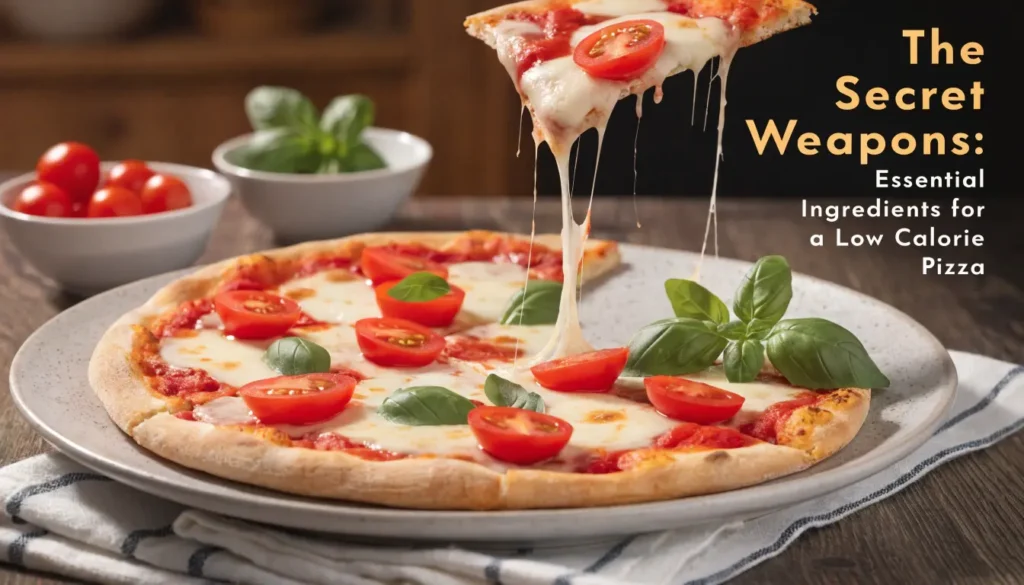
Building a pizza that tastes indulgent but stays light on calories comes down to strategic choices. You’re not removing flavor—you’re simply swapping heavy, calorie-dense ingredients for smarter alternatives that work just as hard.
The Crust: Three Foolproof Low-Calorie Bases
Let’s start with the foundation. Traditional pizza dough is essentially white flour, water, yeast, and oil. It’s delicious, sure, but it’s also calorie-dense and offers very little in terms of nutrition. Here are three alternatives that change the game entirely.
The Cauliflower Powerhouse
You’ve probably heard about cauliflower crust by now, but you might have also experienced a soggy, disappointing version that fell apart the second you tried to pick it up. When done correctly, though, this crust is genuinely fantastic.
The trick comes down to one thing: moisture removal. Cauliflower is mostly water, and if you don’t get that water out before baking, your crust will steam instead of crisp. After you rice your cauliflower and microwave or steam it, you absolutely must let it cool slightly, then dump it into the center of a clean kitchen towel. Wrap it up and wring it out over your sink like you’re trying to choke the life out of it. The amount of liquid that comes out will shock you. But that liquid is exactly what would have made your crust fall apart.
Once it’s dry, you mix it with a binding agent—usually an egg and a small amount of cheese or almond flour—press it thin on parchment paper, and bake until golden. The result is a crust that crisps up beautifully and saves you roughly 150 to 200 calories compared to traditional dough per serving.
The Greek Yogurt Dough Miracle
If you haven’t tried the two-ingredient dough yet, you’re in for a pleasant surprise. This method uses exactly that—two ingredients. Self-rising flour and non-fat plain Greek yogurt. Mix them together in equal parts until a shaggy dough forms, then knead gently on a floured surface until smooth.
The magic here is the protein. Greek yogurt packs a serious protein punch, so your crust ends up with somewhere between 12 and 15 grams of protein before you even add cheese or toppings. It also bakes up with a chewy texture that reminds you of actual bread, which is a huge win if you’re someone who misses the doughiness of traditional pizza.
One note—this dough performs best when rolled thin. It also benefits from a quick pre-bake before you add toppings, which helps it firm up and develop that golden bottom.
The Portobello Mushroom Cap Solution
Maybe you’re watching carbs strictly. Maybe you want a pizza experience that feels completely different. Portobello mushroom caps make an excellent personal-sized pizza base.
You’ll want to scoop out the gills with a spoon—this creates a little more room for toppings and prevents any bitter flavors. Rub the caps lightly with olive oil, season with salt and pepper, and roast them for about ten minutes before adding your sauce and cheese. That pre-roast step pulls out some of the initial moisture and concentrates the mushroom flavor. After that, you top them and return them to the oven just long enough to melt the cheese.
Each cap is incredibly low in calories, packed with umami flavor, and sturdy enough to hold plenty of toppings.
Sauce: Flavor Without the Sugar
Walk down the pasta sauce aisle at any grocery store and flip a few bottles around to read the ingredients. You’ll find sugar listed in most of them—often high up on the list. Commercial pizza sauce manufacturers add sugar to balance the acidity of tomatoes and to make the sauce more addictive.
You don’t need it.
The simplest, most flavorful sauce for your pizza low calorie recipe comes from a can of whole peeled San Marzano tomatoes. Crush them by hand or blitz them quickly with an immersion blender, then add a clove of minced garlic, some fresh basil leaves, and a pinch of salt. That’s it. The tomatoes themselves bring natural sweetness without added sugar, and the freshness cuts through the richness of your cheese perfectly.
If you want to branch out, try a thin layer of basil pesto—just watch the quantity, as pesto is oil-heavy and calories add up fast. Spicy arrabbiata sauce works beautifully too, giving you heat and depth without extra calories.
Cheese: Maximum Flavor with Minimal Quantity
Here’s a truth that took me too long to learn: you don’t need a mountain of cheese to get that satisfying, gooey pizza experience. You just need the right cheese applied strategically.
Part-Skim Mozzarella deserves a permanent spot in your kitchen. It melts just as beautifully as whole-milk mozzarella, but it contains significantly less fat and fewer calories. The texture remains stretchy and satisfying without leaving a pool of orange grease on top of your pizza.
Hard cheeses like Parmesan and Pecorino Romano are your secret weapons. These cheeses are intensely flavorful, which means a small amount goes a long way. Grating just one or two tablespoons over the top of your pizza adds a salty, nutty punch that makes your brain register “lots of cheese” even though you used very little.
If you’re feeling adventurous, crumbled goat cheese or feta brings tanginess and creaminess without requiring much volume. A tablespoon of crumbled feta distributed across your pizza adds pops of salty flavor that let you reduce the mozzarella even further.
Step-by-Step: Building Your Pizza Low Calorie Recipe
Now let’s walk through the actual construction process. This blueprint yields a personal pizza in the 450 to 500 calorie range that actually satisfies.
Step 1: Prep Your Base
Whatever crust option you chose, it needs attention before toppings go on. Roll or press your crust to an even thickness—thinness helps with crispiness and keeps calories in check. Transfer it to a piece of parchment paper on a baking sheet or pizza stone.
Slide it into a preheated oven at around 425 degrees Fahrenheit for five to seven minutes. This par-baking step drives off surface moisture and creates a barrier that prevents your sauce from soaking into the crust later. You’ll notice the crust firming up and the edges just starting to color.
Step 2: The Strategic Sauce Layer
Pull your par-baked crust out and reach for your sauce. You want about a quarter cup total—enough to cover the surface without pooling. Use the back of a spoon to spread it all the way to the edges. That thin layer of sauce right at the edge actually helps prevent the exposed crust from burning during the final bake.
Step 3: Cheese Placement Matters
Measure out roughly two ounces of part-skim mozzarella. Two ounces is about the size of two dominoes stacked together, or a generous handful shredded. Sprinkle it evenly across the sauce, leaving a tiny bit of space between shreds rather than dumping it all in one pile.
This is enough cheese to cover most of your pizza with a thin layer. It will melt and spread during baking, giving you coverage without creating a greasy situation.
Step 4: Load Up on Volume Toppings
Here’s where you get to pile things on. Vegetables add bulk, texture, and flavor for almost zero calories.
Thinly sliced mushrooms, red onions, bell peppers in any color, fresh spinach leaves, jalapeños if you like heat, halved cherry tomatoes—these all roast beautifully on top of a pizza. Don’t be shy with them. A generous layer of veggies makes your pizza feel abundant and satisfying.
If you want meat, choose wisely. Grilled chicken breast, lean ham, or turkey pepperoni all deliver protein without the excessive fat and calories of regular pepperoni or sausage. Portion your meat out rather than dumping—an ounce or two provides plenty of flavor without overwhelming the calorie count.
Three Delicious Variations to Keep Things Fresh
Eating the same pizza week after week gets old fast. Rotate through these flavor profiles to keep your taste buds guessing.
The Spicy Mediterranean
Start with a base of Greek yogurt mixed with a little lemon juice and garlic powder instead of tomato sauce. Top with fresh spinach, thinly sliced red onions, a few kalamata olives (use them sparingly—they’re calorie-dense), and a sprinkle of feta cheese. After baking, finish with a drizzle of hot honey or a pinch of red pepper flakes.
The BBQ Chicken
Use a sugar-free barbecue sauce as your base—plenty of brands make versions with minimal or no added sugar. Top with shredded grilled chicken breast, thinly sliced red onions, and your mozzarella. After baking, scatter fresh cilantro over the top for brightness.
The Veggie Supreme
Classic tomato sauce, light mozzarella, and every vegetable you can find. Bell peppers in multiple colors, mushrooms, red onions, artichoke hearts (rinsed and chopped), and a handful of fresh arugula added after baking for a peppery finish.
Pro Tips for the Perfect Bake
Small adjustments make a big difference in your final result.
Crank the Heat. Your home oven might not hit 800 degrees like a pizzeria oven, but you can get close to 500 or 550. The higher the temperature, the faster your pizza cooks, and the crispier your crust gets before toppings dry out.
Use a Pizza Stone or Steel. If you have one, preheat it in the oven for at least thirty minutes before baking. The thermal mass of the stone or steel transfers intense heat to the bottom of your crust, creating that restaurant-quality crispiness that’s hard to achieve on a regular baking sheet.
Finish Under the Broiler. Watch your pizza during the last minute or so of baking. If the cheese looks melted but not quite blistered, switch your oven to broil for sixty seconds. Keep a close eye—broilers work fast—and pull it out when the cheese bubbles and browns in spots.
Frequently Asked Questions About Pizza Low Calorie Recipes
Can you freeze a homemade pizza low calorie recipe?
Absolutely. The best approach is to freeze the par-baked crust separately, then add fresh toppings after thawing. If you’ve already baked the whole pizza, let it cool completely, wrap tightly in plastic wrap and then foil, and freeze for up to three months. Reheat in a hot oven or air fryer—microwaving will turn your carefully crafted crust into a sad, rubbery situation.
What’s the absolute lowest calorie pizza crust option?
Cauliflower crust typically comes in lowest for calories, provided you don’t load the crust mixture itself with excessive cheese. The Greek yogurt dough wins for protein, which might matter more to you depending on your goals.
My cauliflower crust always turns out soggy—what am I doing wrong?
You aren’t squeezing hard enough. After cooking the cauliflower rice, let it cool until you can handle it, then wrap it in a thin kitchen towel and twist and squeeze with serious effort. The water that comes out should be substantial. Dry cauliflower equals crispy crust. Wet cauliflower equals steamed mush.
How many calories are in a typical serving of this pizza?
A personal-sized pizza made with these methods, using part-skim mozzarella and plenty of veggies, usually falls between 400 and 550 calories total. That’s for the whole pizza, not per slice.
Your Pizza Nights Are Saved
Here’s the thing about eating well long-term—it can’t feel like punishment. Deprivation diets never stick because eventually your willpower runs out and you find yourself elbow-deep in a delivery box at midnight, wondering how you got there.
Learning to make a pizza low calorie recipe that genuinely satisfies changes that dynamic. You’re not white-knuckling your way through cravings anymore. You’re not staring at other people’s food wishing you could join in. You’re simply making choices that work for you, and enjoying every bite along the way.
The smell of this pizza baking in your oven fills your kitchen with the same warmth and comfort as always. The first bite delivers that same hit of satisfaction. The only difference is how you feel afterward—energized instead of weighed down, satisfied instead of guilty.
Preheat your oven. Pick your crust. Load up those veggies. You’ve got this.
And when you pull that golden, bubbly pizza out and take your first bite, come back and tell me how it turned out. I’d genuinely love to hear.