Every kitchen has a story, & Persian recipes tell tales of ancient times. They share stories of rich traditions & vibrant flavors. These stories have won the hearts of food lovers all over the world.
Exploring Persian recipes is like entering an art world. It’s a journey from Tehran’s busy streets to kitchens everywhere in Iran. These dishes connect us to family, history, & the l&’s gifts.
Persian cuisine is incredibly diverse, with over 24 unique recipes. You might want a hearty Kofta Kebab or a delicate Fesenjan chicken stew. These dishes give us a peek into Iran’s culinary heritage.
On your Persian recipe journey, you’ll find more than just tasty food. You’ll learn about a cooking philosophy that values balance, freshness, & sharing meals with loved ones. Prepare to make your kitchen a place of flavor & cultural discovery.
Table of Contents
Underst&ing the Rich Heritage of Persian Cuisine
Persian cuisine is a journey through time, filled with cultural traditions & geographical diversity. It shows a deep underst&ing of cooking that goes beyond just eating. It’s about finding the perfect balance of flavors.
The history of Iranian food goes back over 3,000 years. Ancient clay tablets tell us about it. When Cyrus the Great ruled around 550 BCE, Persian food spread far & wide.
Ancient Origins & Cultural Significance
Persian cuisine is more than food; it’s a story passed down through generations. It’s filled with:
- Complex flavor combinations
- Intricate cooking techniques
- Deep respect for ingredient quality
- Symbolic connections to historical events
The Persian Culinary Philosophy of Balance
At the heart of Persian dishes is a philosophy of culinary equilibrium. It’s all about balance:
- Hot & cold sensations
- Crunchy & soft textures
- Sweet & tangy flavors
- Raw & cooked ingredients
Persian cuisine turns eating into an art form. Every meal is a story of cultural richness & sophistication.
Regional Influences on Iranian Cooking
Iran’s diverse geography shapes its cooking. Each region adds its own twist with unique ingredients & techniques.
| Region | Culinary Characteristic | Signature Ingredient |
|---|---|---|
| Northern Iran | Seafood-focused cuisine | Pomegranate molasses |
| Central Iran | Rice & herb-based dishes | Saffron |
| Southern Iran | Spicy & intense flavors | Dates & citrus |
Underst&ing Persian cuisine means seeing a tradition that has evolved but stayed true. It’s all about balance, diversity, & cultural expression.
Essential Ingredients for Persian Cooking
Exploring Persian spices & middle eastern cooking opens a world of amazing flavors & traditions. Your kitchen can become a lively Persian culinary space with the right ingredients & knowledge.

The core of Persian cuisine is its incredible ingredients. Let’s explore the key elements that make Middle Eastern cooking st& out:
- Saffron: Known as the “red gold,” Iran produces 90% of the world’s saffron, making it a cornerstone of Persian cooking
- Dried limes (limu omani): Providing a complex, tangy flavor to stews & soups
- Turmeric: A staple spice used in sautéing onions for many Persian dishes
- Fresh & dried herbs: Parsley, cilantro, dill, mint, & fenugreek
“In Persian cooking, ingredients are not just food; they are a celebration of culture & history.”
When looking for Persian ingredients, check out specialty markets in big cities. Many Iranian-American communities have stores with authentic products. If you can’t find them locally, online stores are a good option.
| Ingredient | Culinary Use | Unique Characteristic |
|---|---|---|
| Kashk | Appetizers & soups | Fermented whey with umami flavor |
| Fenugreek | Stews & rice dishes | Digestive health benefits |
| Dried Limes | Khoresh dishes | Complex, tangy flavor profile |
With these ingredients, you’re ready to start your Persian cooking journey. You’ll bring the rich tastes of Middle Eastern cooking to your dinner table.
Traditional Persian Rice Dishes & Techniques
Rice is at the center of Persian dishes, more than just a side. Persian recipes turn simple grains into culinary wonders. They celebrate flavor, texture, & cultural tradition.
The art of Persian rice preparation is unique. Iranian chefs use a double-cooking technique. This ensures each grain is fluffy & separate.
The Art of Making Perfect Persian Rice
Making exceptional Persian rice needs precision & patience. Key steps include:
- Selecting high-quality basmati rice
- Rinsing rice until water runs clear
- Parboiling rice for 4-5 minutes
- Draining & preparing for final steaming
Popular Rice Variations & Accompaniments
Persian rice dishes are incredibly diverse. Some popular variations include:
- Jeweled Rice (Morassa Polo) – A festive dish with colorful ingredients
- Saffron Rice – Featuring the luxurious golden spice
- Adas Polo – Lentil-infused rice with rich flavors
Mastering the Crispy Tahdig
Tahdig is the highlight of Persian rice cooking. This crispy rice bottom is a delicacy that requires skill & practice.
“Tahdig is not just a dish, it’s an art form in Persian cuisine.” – Persian Culinary Expert
Key tahdig preparation details:
- Preparation time: 20 minutes
- Cooking time: 30 minutes
- Recommended rice-to-salt ratio: 2 cups basmati to ½ cup kosher salt
- Fat content: ¾ cup (butter & olive oil)
Whether you’re a beginner or an experienced cook, mastering Persian rice techniques will elevate your culinary skills. It will transport your taste buds to Iran’s rich gastronomic l&scape.
Classic Persian Stews & Braises
Persian cuisine is known for its deep flavors, especially in stews & braises called khoresh. These dishes are the heart of Iranian food. They mix complex spices, fresh herbs, & slow cooking to make simple ingredients special.
Ghormeh Sabzi is a favorite stew, known as the “King of Persian Stews”. It shows Persian cooking’s skill through its detailed preparation:
- Uses about 1 pound of fresh parsley
- Includes 1 1/2 pounds of cubed beef
- Has 2 cans of red kidney beans
- Features 4 dried limes for a unique sourness
Chefs fry herbs for about 5 minutes, then cook for another 15 minutes. This develops deep, rich flavors. The stew simmers for up to 1 hour & 30 minutes, blending all ingredients perfectly.
“In Persian cooking, a stew is not just a meal, but a story of tradition & family.” – Persian Culinary Expert
Fesenjan is another amazing stew that shows Persian cooking’s philosophy of balancing flavors. It combines sweet, tart, & savory elements, showcasing the complexity of Iranian food.
Every stew has a story of regional ingredients, family traditions, & culinary skill passed down through generations. Whether it’s a hearty beef stew or a delicate chicken khoresh, these dishes take you on a delicious journey through Persian culinary heritage.
Authentic Persian Recipes for Beginners
Starting with Persian cuisine might seem daunting, but it’s easier than you think. With some guidance, you can learn to make delicious & healthy Persian dishes. These meals bring together amazing flavors, nutrition, & tradition, making your cooking at home exciting.
Persian cooking focuses on making balanced, nutritious meals that are easy to make. Whether you’re new to cooking or have experience, these healthy Persian dishes will encourage you to try something new in the kitchen.
Simple Starter Recipes to Try
- Lubia Polo (Green Bean Rice): A nutritious dish packed with flavor
- Kabab Koobideh: Easy grilled meat skewer perfect for beginners
- Zereshk Polo: Rice with barberries that’s simple to prepare
Basic Cooking Methods
Most Persian recipes use simple techniques. The main thing is to learn how to cook rice & use slow-cooking methods. Tahdig (crispy rice bottom) might seem hard, but with a bit of practice, you’ll get the hang of it.
Time-Saving Kitchen Tips
- Prep ingredients in advance
- Use pre-cut vegetables when possible
- Invest in a good quality rice cooker
- Learn to batch cook & freeze portions
“Cooking is about passion, so don’t be afraid to experiment with Persian flavors!” – Traditional Persian Cooking Wisdom
With these tips & recipes, you’ll soon be making authentic Persian meals. Remember, the key to getting better is to keep practicing. Every famous chef began as a beginner.
Persian Appetizers & Side Dishes

Persian recipes open a world of vibrant appetizers & side dishes. They turn any meal into a feast. Middle Eastern cooking offers a variety of starters that excite the taste buds & enhance main courses.
Some iconic Persian appetizers include:
- Shirazi Salad: A refreshing vegetable dish from Shiraz, with diced cucumbers, tomatoes, & onions
- Mast-o Khiar: A cool & creamy yogurt & cucumber dip
- Torshi: Traditional pickled vegetables with many regional flavors
- Zeytun Parvardeh: Marinated olives loved in Iranian restaurants
Yogurt is key in Persian cuisine, used in many side dishes. You’ll find it mixed with cucumbers & shallots. The Mirza Ghasemi, from Gilan province, is a favorite. It’s a mix of grilled eggplant, tomatoes, eggs, & garlic.
“In Persian cuisine, appetizers are not just starters, they’re a celebration of flavor & tradition.”
Kuku Sabzi is a popular herb-based dish. It’s an egg-based dish that can be an appetizer or a full meal. It’s filled with fresh vegetables.
To make these dishes, use fresh ingredients & traditional methods. This will bring out the true taste of Persian cooking.
Seasonal Persian Dishes & Celebrations
Persian cuisine changes with the seasons, showing a deep bond with nature & culture. Exploring traditional Iranian food, you’ll see how dishes reflect each season’s spirit.
With each season, Persian cooking uses special ingredients & methods. These tell a rich story of culinary traditions.
Spring & Summer Specialties
Summer brings cool, refreshing dishes. Ab Doogh Khiar, a cold yogurt soup with cucumbers & herbs, is a favorite in the heat. Lighter dishes are common during warm months.
- Ab Doogh Khiar – cold yogurt soup
- Fresh herb-based dishes
- Light vegetable preparations
Fall & Winter Comfort Foods
Colder months bring hearty, warming dishes. Soup-e Jo, a creamy barley soup, is a comfort food in the cold.
| Season | Featured Dish | Key Ingredients |
|---|---|---|
| Fall | Khoresh Kadu Halvaee | Pumpkin, spices |
| Winter | Ash Anar | Pomegranate, herbs |
Festival & Holiday Dishes
Celebrations highlight special dishes. Nowruz, the Persian New Year, features Kuku Sabzi. This herb-packed dish symbolizes renewal & spring.
Persian cuisine is a celebration of seasonal bounty & cultural heritage.
From spring’s light dishes to winter’s stews, each tells a story of Iranian traditions. These have been loved for generations.
Modern Interpretations of Persian Recipes
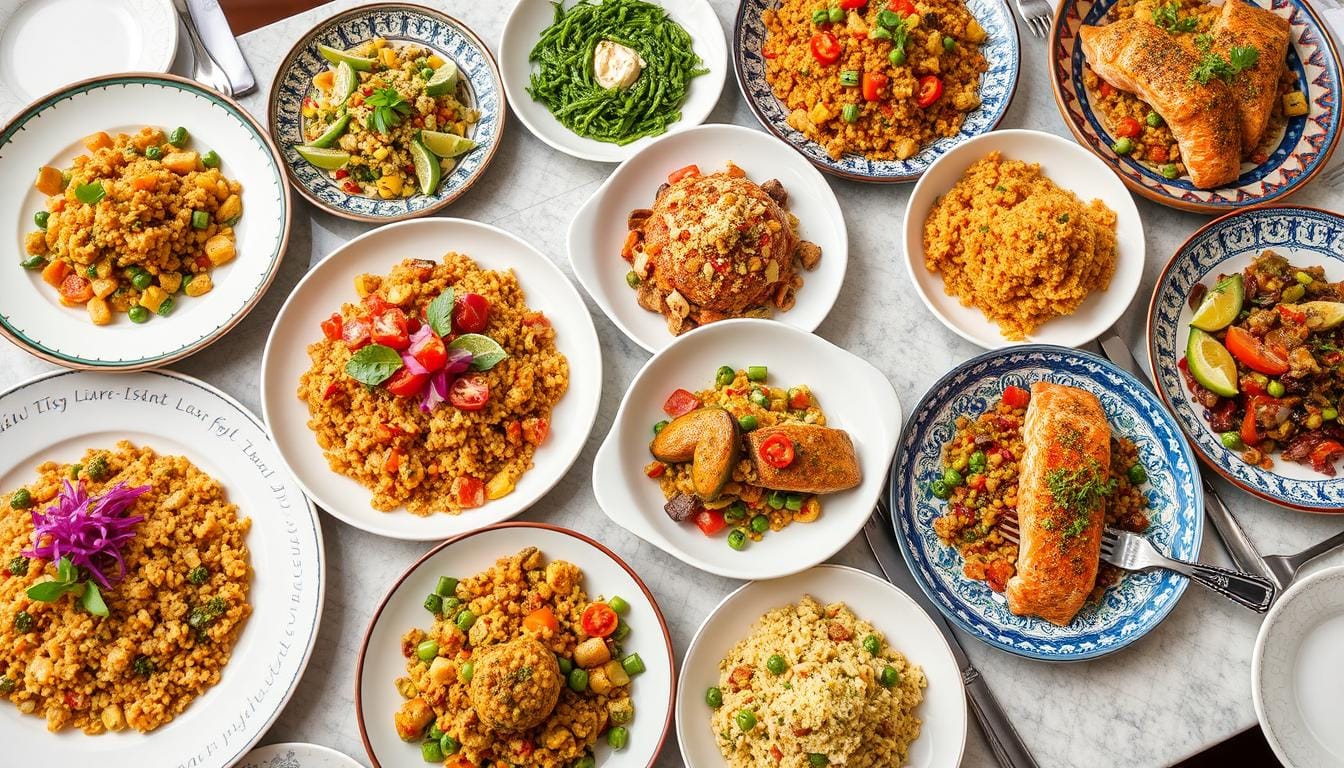
Persian recipes are getting a fresh makeover in today’s kitchens. Chefs are mixing old traditions with new tastes, keeping the true flavors alive. This new way of cooking shows how tradition & innovation can go h& in h&.
Modern takes on Persian food are changing how we see Iranian cooking. About 15% of old dishes are now made to fit different diets. This includes:
- Gluten-free versions
- Vegan options
- Low-carb choices
- Plant-based protein swaps
Innovative chefs are mixing Persian tastes with global cooking styles. The art of reinvention keeps Iranian cuisine fresh while keeping its cultural roots strong. This mix of flavors brings new excitement to classic dishes.
“Cooking is about tradition & innovation – & Persian cuisine beautifully embodies both.” – Chef Reza Moaddel
The world has seen a 30% rise in Persian restaurants opening up. This shows how Iranian food is becoming more popular. It proves that traditional recipes can be updated for today’s tastes.
New cooking methods are making Persian dishes quicker to make. What used to take 2-3 hours now takes under an hour. This makes Persian food more accessible to everyone, keeping its traditions alive & inspiring new cooks.
Persian Desserts & Sweet Treats
Explore the world of authentic Persian desserts. They are a true art form, blending unique flavors & ancient traditions. Persian sweets are a journey through taste & texture.
Traditional Pastries & Cookies
Persian sweets are a feast for the senses. Some must-try treats include:
- Nan-e Berenji: Delicate rice flour cookies
- Ranginak: Date & walnut pastry
- Zoolbia Bamieh: Deep-fried dough soaked in syrup
- Aard Nokhodchi: Gluten-free chickpea flour cookies
Refreshing Persian Beverages
Pair your desserts with traditional Persian drinks. They refresh & delight:
- Sharbat-e Sekanjabin: Mint & vinegar syrup
- Doogh: Savory yogurt drink
Special Occasion Sweets
Persian desserts are a big part of cultural celebrations. During Nowruz, special sweets like:
- Baklava
- Qottab
- Gaz from Isfahan
“Saffron ice cream has roots tracing back to the Achaemenid dynasty around 500 BC, demonstrating the rich culinary heritage of Persian sweets.”
These desserts show the amazing diversity & sophistication of Middle Eastern cooking. They invite you to discover a world of sweet delights.
Conclusion
Your journey through Iranian cuisine is a rich tapestry of flavors & techniques. Persian recipes are more than just food; they connect us to history, family, & art. From the complex Fesenjan stew to the aromatic saffron rice, these meals show a unique cooking approach.
Exploring Iranian cuisine opens a world of culinary possibilities. The use of spices like turmeric & the preparation of dishes like Chelo Kebab show Persian cooking’s sophistication. These recipes are about more than just food; they create memorable moments that bring people together.
Persian recipes st& out for their unique flavors & nutritional balance. Whether you’re new to cooking or experienced, Iranian cuisine offers endless creativity. By trying these traditional methods & ingredients, you’ll exp& your cooking skills & connect with a centuries-old food tradition.
Your culinary adventure doesn’t end here. Keep exploring Persian recipes, trying traditional techniques, & sharing with friends & family. Iranian cuisine’s true essence is in turning simple ingredients into extraordinary meals that share stories of culture, tradition, & passionate cooking.
FAQ
What makes Persian cuisine unique compared to other Middle Eastern cooking styles?
Persian cuisine st&s out for its focus on balance. It uses a mix of herbs, spices, & special cooking methods. Unlike others, Persian dishes blend sweet & savory tastes. They also use fresh herbs & fruits in main dishes.
Are Persian recipes difficult for beginners to prepare?
Persian cooking can be complex, but many recipes are easy for beginners. Start with dishes like Mirza Ghasemi or simple rice recipes. Many recipes can be made simpler, & slow cooking helps beginners.
What are the most essential Persian spices I should have in my pantry?
Key spices include saffron, turmeric, cinnamon, cardamom, & dried lime. These are vital for authentic Persian flavors. Saffron, in particular, is a key ingredient in many dishes.
Is Persian cuisine healthy?
Yes, Persian cuisine is very healthy. It uses fresh herbs, vegetables, legumes, & lean proteins. The focus on whole grains & fresh ingredients makes dishes nutritious & balanced.
What is tahdig, & why is it so special in Persian cooking?
Tahdig is the crispy bottom layer of Persian rice. It’s made through a special double-cooking method. This golden layer is crispy & flavorful, making it a favorite at meals.
Are there vegetarian options in traditional Persian cuisine?
Yes, there are many vegetarian dishes. Examples include Kuku Sabzi, vegetable stews, & rice dishes. Many traditional recipes can be made vegetarian or vegan without losing flavor.
Where can I find authentic Persian ingredients in the United States?
You can find Persian ingredients in Middle Eastern or international stores. Specialty markets & online retailers also carry them. Stores like Whole Foods & Amazon have a wide selection.
What are some must-try Persian dishes for first-time explorers of the cuisine?
Try Ghormeh Sabzi, Fesenjan, Chelo Kabab, & Zereshk Polow. These dishes show the variety & richness of Persian cuisine.