There’s something almost sacred about sneaking a taste of cookie dough before the tray goes into the oven. Maybe for you, it was sneaking a finger swipe from your grandmother’s mixing bowl while she pretended not to notice. Or perhaps it was the silent agreement you made with yourself as a teenager—the raw dough somehow tasted better than anything that came out hot and fresh minutes later.
I found myself thinking about this recently while standing in my own kitchen, staring at a recipe book open to a page promising “authentic chocolate chip cookies.” The picture looked incredible. The ingredient list? Butter, sugar, more sugar, eggs, and enough calories to make my weekly meal plan weep.
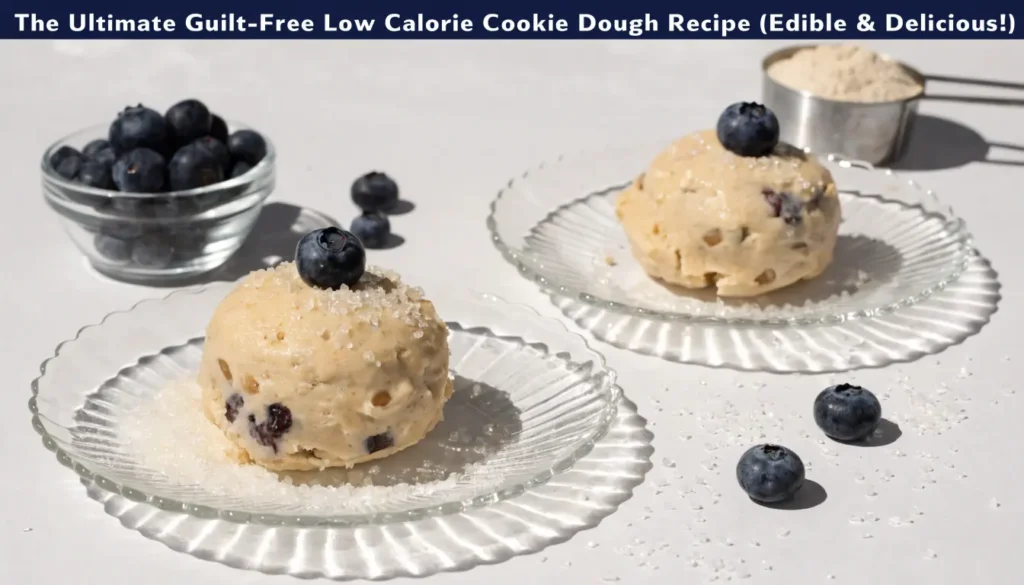
That familiar craving washed over me—that specific longing for the soft, sweet, melt-on-your-tongue texture of raw dough. But so did the memory of every time I’d caved, eaten half the bowl, and spent the rest of the evening convincing myself that “starting fresh tomorrow” was still an option.
Here’s what I’ve learned on the other side of that struggle: you don’t have to choose between honoring your health goals and honoring your cravings. This low calorie cookie dough recipe exists precisely for moments like those—when you want the comfort without the compromise, the indulgence without the invoice your body has to pay later. Let’s walk through it together.
Why You’ll Love This Low Calorie Cookie Dough Recipe
Before we dive into measuring cups and mixing techniques, let’s talk about what actually makes this recipe different from every other “healthy” dessert you’ve tried and been disappointed by. You know the ones—they taste like cardboard dressed up in vanilla extract, leaving you more frustrated than satisfied.
This version breaks that pattern entirely.
It treats your cravings with respect. When you’re longing for something sweet, your brain isn’t asking for a rice cake sprinkled with cinnamon. It wants richness, texture, and that specific satisfaction that comes from eating something that feels genuinely indulgent. This recipe delivers exactly that experience while keeping the numbers where you want them.
It removes the fear factor entirely. Traditional dough carries two genuine risks—raw eggs carrying salmonella concerns and untreated flour potentially harboring bacteria. Neither of those appear here. What you’re making is technically a no-bake dessert that happens to taste exactly like the dough you remember, minus the worry that usually follows the pleasure.
It works with your schedule, not against it. We’re talking about ten minutes from ingredient-gathering to spoon-in-mouth. No preheating, no waiting for butter to soften, no watching the clock while something bakes. This respects that your time matters and your patience has limits.
It actually keeps you full. Standard sugar-heavy dough sends your blood sugar on a roller coaster—spiking fast, crashing hard, and leaving you hunting for more within the hour. The protein and fiber in this version stabilize your energy and tell your stomach that yes, you genuinely ate something of substance.
Key Ingredients for the Best Low Calorie Cookie Dough
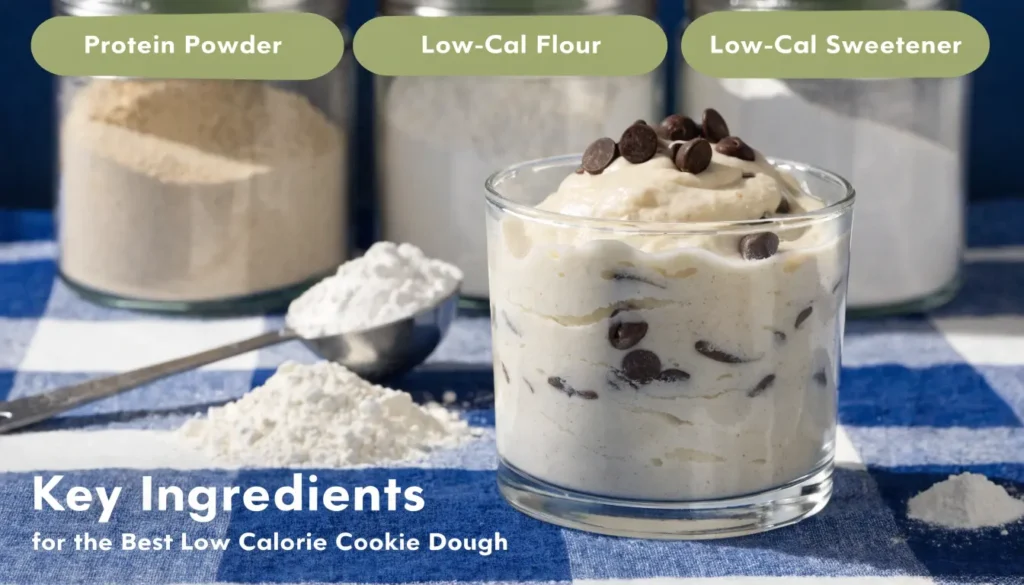
Here’s where the transformation happens. Every ingredient in traditional dough plays a specific role—fat for richness, sugar for sweetness, flour for structure. Your job now is finding replacements that perform those same functions without carrying the same baggage.
The Base (Dry Ingredients)
Protein powder carries more weight in this recipe than you might expect. It’s not just there to boost numbers on a nutrition label—it provides the actual structure that holds everything together. Vanilla-flavored options work beautifully here, adding sweetness and that warm bakery aroma. Unflavored varieties give you more control if you plan to experiment with other mix-ins later. The texture matters immensely though. Some protein powders turn gritty when mixed with minimal liquid, and nobody wants crunchy dough in the worst way. Look for brands that specifically mention mixing well or use a finer grind.
Almond flour or oat flour replaces traditional white flour completely. Almond flour brings this buttery richness that mirrors what you’d get from actual butter, minus the saturated fat load. It’s naturally gluten-free if that matters to you, and it blends seamlessly with the other ingredients. Oat flour offers a milder flavor and slightly different texture—choose based on what you have available or personal preference. Either option works perfectly.
Sugar-free or calorie-free sweetener needs careful selection here. Granular options won’t dissolve properly and will leave you with a gritty mouthfeel that ruins the experience. Powdered erythritol or monk fruit sweetener blends mimic the fineness of powdered sugar, incorporating smoothly and giving you that authentic sweetness without the blood sugar spike. Some brands measure cup-for-cup like sugar, others concentrate more intensely—read your labels and adjust accordingly.
The Binding (Wet Ingredients)
Nut butter or PB2 creates the richness your palate expects from dough. Traditional recipes rely on butter for this role—delicious, certainly, but packed with calories and saturated fat. Peanut butter powder, often called PB2, works wonders here. You mix it with water until it reaches a paste-like consistency, and suddenly you have peanut butter flavor for a fraction of the calories. If you prefer actual nut butter, measure carefully and choose natural varieties without added oils or sugars.
Unsweetened almond milk acts as the control dial for your dough’s texture. Too little and you’ll have crumbles that won’t hold together. Too much and you’ll be scooping batter rather than dough. Start conservatively, add gradually, and watch how the mixture responds. The goal is a cohesive ball that holds its shape when pressed but yields easily to a spoon.
Vanilla extract might seem like a background player, but don’t underestimate its importance. Quality vanilla enhances every other flavor in the bowl and creates that nostalgic “cookie” taste that processed imitations can’t replicate. A teaspoon makes a noticeable difference. Two teaspoons creates something special.
The Mix-Ins
Sugar-free chocolate chips have improved dramatically in recent years. Brands like Lily’s have figured out how to use stevia and erythritol in ways that actually taste like chocolate rather than disappointment. They melt similarly, they chip similarly, and they satisfy the chocolate craving that brought you here in the first place.
Chopped nuts or cacao nibs add texture variation if you want to elevate the experience further. The crunch interrupts the softness in a way that keeps each bite interesting. Walnuts, pecans, or sliced almonds all work beautifully.
Step-by-Step: The Perfect Low Calorie Cookie Dough Recipe
Now we get to the actual process. Read through completely before you start—this ensures you understand the rhythm of what you’re doing and won’t discover halfway through that you’re missing something crucial.
Preparation
Pull out a medium mixing bowl, a sturdy spatula or wooden spoon, and your measuring tools. Having everything within reach makes the process smoother and prevents the frantic searching that usually happens when your hands are covered in sticky dough.
If you’re using nut butter rather than powder, let it sit at room temperature for about fifteen minutes before starting. Cold nut butter fights incorporation and leaves you with streaks rather than uniform dough.
Mixing Instructions
Combine your dry ingredients first. This step matters more than you might think. Protein powder has a tendency to clump when it hits liquid directly, and nobody wants to bite into a pocket of unincorporated sweetener. Whisk the protein powder, almond flour, and powdered sweetener together thoroughly until they look like a uniform blend. The color should be consistent throughout, with no dark or light patches remaining.
Add your wet ingredients to the center. Make a small well in the dry mixture and pour in the vanilla extract, almond milk, and your prepared nut butter or PB2 paste. Don’t dump them all in separate spots—concentrating them in one area helps the incorporation happen more evenly.
Fold with patience and attention. Use your spatula to cut through the mixture, turning the bowl as you go. The dough will look crumbly and hopeless at first. This is normal. Keep working it, pressing the mixture against the sides of the bowl, gathering it back into the center. Gradually, the moisture will distribute and the crumbles will start adhering to each other.
If the dough remains too crumbly after thorough mixing, add almond milk one drop at a time. Yes, drops. Liquid goes further than you expect, and adding too much too fast creates a sticky situation you can’t reverse. If you accidentally overshoot and the dough becomes too sticky, sprinkle in a tiny bit more almond flour and work it through.
Add your chocolate chips last. You’ve worked hard to achieve the perfect texture—don’t smash it all by overmixing at the end. Sprinkle the chips over the surface, then fold gently just until they’re distributed. This keeps them intact and ensures every bite contains chocolate without any getting pulverized into the dough itself.
Serving Suggestion
Straight from the bowl remains the classic approach and honestly, sometimes that’s exactly what your soul requires. Grab a spoon and enjoy your creation immediately.
Rolled into portions gives you more control and makes the dough feel more like a treat. Use a small cookie scoop or your hands to form bite-sized balls and arrange them on a plate. They look beautiful this way and feel more intentional than eating from the bowl.
Chilled and firmer changes the experience entirely. Refrigerate your dough balls for thirty minutes and the texture transforms—firmer, more substantial, with the flavors having time to meld together. Some people actually prefer this version to the fresh-made dough.
Calorie Breakdown: How It Compares
Numbers only matter insofar as they help you make informed decisions. Here’s what you’re actually working with when you choose this recipe over traditional alternatives.
A standard two-tablespoon serving of traditional raw cookie dough contains approximately 170 to 200 calories. This varies by recipe, but that range represents a conservative estimate for most homemade versions. The same serving delivers minimal protein, significant saturated fat, and a sugar load that hits your system like a wave.
Your low calorie cookie dough recipe tells a different story:
- Calories: 95 to 110 per serving
- Protein: 9 to 11 grams
- Carbohydrates: 7 to 9 grams total
- Fiber: 3 to 4 grams
- Net carbohydrates: 4 to 5 grams
- Fat: 3.5 to 5 grams
- Sugar: Less than 2 grams
These figures come from standard USDA nutritional databases cross-referenced with common protein powder and almond flour specifications. Your specific numbers may vary slightly depending on the exact brands you choose, but the range remains consistent—roughly half the calories of traditional dough with ten times the nutritional value.
Flavor Variations to Beat Boredom
The base recipe works beautifully on its own, but variety keeps your taste buds engaged and prevents the boredom that usually derails healthy eating habits. Try these variations when you’re feeling adventurous.
Double Chocolate Chip: Add one tablespoon of unsweetened cocoa powder to your dry ingredients before mixing. The cocoa absorbs some moisture, so you may need an extra teaspoon of almond milk to compensate. Fold in sugar-free chocolate chips and optionally a handful of sugar-free chocolate chunks for textural variety.
Birthday Cake: Use vanilla protein powder as your base. Add half a teaspoon of almond extract alongside the vanilla—this creates that nostalgic “bakery” flavor that reminds people of cake batter. Fold in rainbow sprinkles at the end, choosing sugar-free versions if you’re strictly monitoring carbohydrate intake.
Peanut Butter Cup: Replace half your protein powder with chocolate protein powder. Use actual peanut butter rather than PB2 for the fat component—the richness pairs perfectly with chocolate. Fold in chopped sugar-free peanut butter cups or additional chocolate chips. The combination creates something dangerously close to candy in dessert form.
Snickerdoodle: Add one full teaspoon of ground cinnamon to your dry ingredients. After rolling your dough into balls, combine a tablespoon of powdered sweetener with half a teaspoon of cinnamon in a small bowl. Roll each ball in the mixture until coated. The warmth of the cinnamon against the sweet exterior replicates the experience of snickerdoodle cookies without any baking required.
Storage Tips for Meal Prep
Making this dough ahead of time might actually improve the experience. The flavors continue developing in the refrigerator, and having ready-to-eat portions available prevents those moments when cravings hit and your willpower is at its lowest.
Refrigeration method: Transfer your dough to an airtight container, pressing a piece of parchment paper directly against the surface before sealing the lid. This prevents a skin from forming on top. Stored properly, the dough remains fresh for up to five days. The texture will firm up considerably, which some people actually prefer.
Freezer preparation: Roll your dough into individual bite-sized portions and arrange them on a parchment-lined baking sheet. Place the sheet in your freezer for about two hours, until the balls are solid. Transfer them to a zip-top freezer bag, squeeze out excess air, and seal. They’ll keep for up to three months.
Eating from frozen: Pull a few dough balls from the bag and let them sit at room temperature for about five minutes. They’ll soften just enough to become edible while retaining a firm, almost fudge-like texture that’s entirely different from fresh dough and absolutely worth experiencing.
Frequently Asked Questions (FAQ)
Is this low calorie cookie dough recipe safe to eat raw?
Absolutely. Traditional dough carries two risks—salmonella from raw eggs and bacterial concerns from untreated flour. This version contains no eggs at all, and almond flour doesn’t carry the same concerns as raw wheat flour. You’re essentially eating a no-bake protein dessert that happens to taste like cookie dough.
Can I bake this low calorie cookie dough recipe into actual cookies?
You can certainly try, but you’ll likely be disappointed with the results. This recipe was specifically formulated to be eaten as dough. Baking it removes moisture and changes the structure entirely, typically resulting in dry, crumbly disks that don’t resemble cookies. If you want baked goods, look for recipes specifically designed for baking rather than adapting this one.
What protein powder works best for texture?
Whey-casein blends generally perform best in no-bake recipes because they absorb liquid differently than pure whey isolate. The casein component creates thickness and structure that mimics dough texture. Vegan pea protein also works well, though it may require slightly more liquid to achieve the same consistency. Experiment with what you have available—different brands behave differently.
Can I make this recipe nut-free?
Easily. Replace almond flour with sunflower seed flour, often called sunflower seed meal. Replace any nut butter with sunflower seed butter. Note that sunflower seeds can react with baking soda or powder if you were to bake this (which you aren’t), but for no-bake purposes, they work beautifully. The only difference you might notice is a slight green tinge developing over time—this is a natural reaction and doesn’t affect taste or safety.
How do I know when the consistency is right?
The dough should hold together when pressed but shouldn’t feel sticky on your fingers. If it leaves residue on your hands, it needs more dry ingredients. If it crumbles apart when squeezed, it needs more moisture. The perfect texture feels similar to play-dough—pliable, cohesive, and clean.
Conclusion
You came here looking for a way to honor your cravings without abandoning your goals. That’s not a small ask—our food environment constantly pushes indulgence at the expense of health, creating an either-or choice that leaves you feeling deprived no matter which path you choose.
This low calorie cookie dough recipe exists outside that false binary. It recognizes that satisfaction matters, that pleasure isn’t the enemy of progress, and that the foods you love can evolve alongside you. The dough you’ll make from this recipe carries the spirit of those childhood kitchen moments forward—the joy, the anticipation, the simple happiness of eating something that tastes like love.
Your spoon is waiting. Your ingredients are ready. And that craving you’ve been fighting? You can finally meet it halfway.
Try this recipe tonight. Make a batch, share it with someone who needs a reminder that healthy eating doesn’t mean boring eating, and come back to tell us how it turned out. Your version might inspire someone else who’s been waiting for permission to enjoy dessert again.