I remember the first time I sat down at a traditional table in Seoul. The spread was intimidating—a dozen small bowls, steam rising from a central pot, and vibrant colors I couldn’t yet name. As someone who had spent years viewing “dieting” as a series of restrictive salads and bland chicken breasts, I felt a strange sense of guilt. How could a feast this beautiful be good for me?
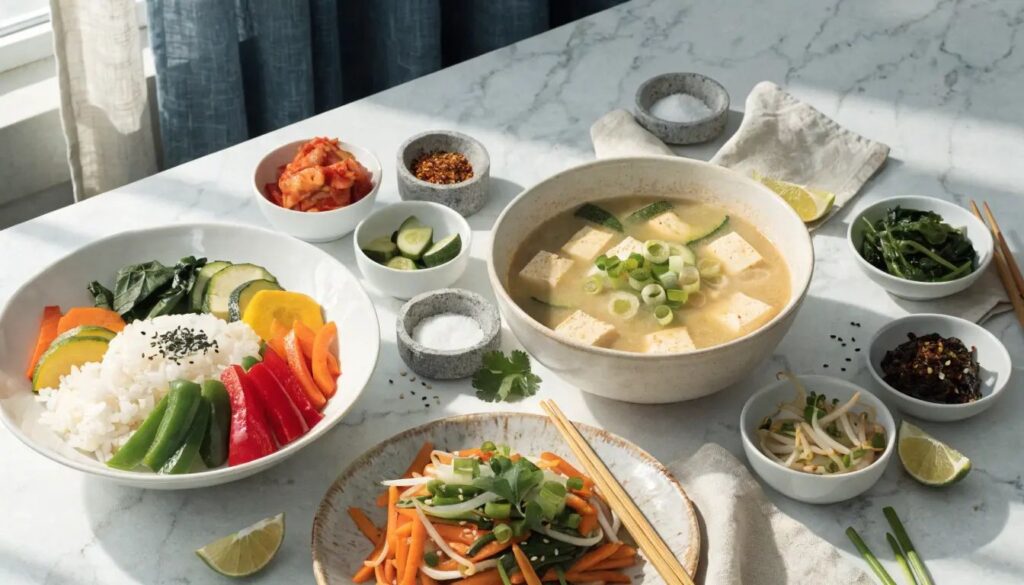
But as I reached for a piece of crisp, spicy kimchi and a spoonful of light soybean sprout soup, I realized that Korean cuisine doesn’t ask you to choose between flavor and your health goals. It’s a way of eating that celebrates volume, fermentation, and the natural beauty of vegetables. It’s not about eating less; it’s about eating vibrant. If you’ve been searching for a way to nourish your body without losing your love for food, these Korean recipes low calorie style are your new sanctuary.
Why Korean Recipes are Perfect for Low-Calorie Weight Loss
When you think of “diet food,” your mind might jump to flavorless steamed broccoli. Korean cuisine flips that script. It’s inherently structured for weight management because it treats vegetables as the stars, not the garnish. Unlike Western “plates” dominated by heavy meats and refined starches, a traditional Korean meal is built around Banchan (side dishes) that prioritize high-volume, low-energy-density foods.
The Philosophy of “Yak-sik-dong-won”
In Korea, there is an ancient proverb: Yak-sik-dong-won, which means “Food and medicine grow from the same root.” This isn’t just a catchy phrase; it’s a culinary blueprint. When you cook Korean, you aren’t just counting calories—you are feeding your gut microbiome, reducing inflammation, and balancing your macronutrients naturally.
- High Vegetable-to-Meat Ratio: You’ll notice that most dishes use meat as a seasoning or a small protein component rather than a 12-ounce steak. This automatically lowers the caloric density of your meal while keeping you full on fiber.
- The Power of Fermentation: Probiotic-rich foods like Kimchi and Doenjang (fermented soybean paste) support gut health. Modern nutritional science increasingly links a healthy gut to an efficient metabolism and reduced cravings.
- Steaming and Boiling vs. Frying: While “KFC” (Korean Fried Chicken) is famous, traditional home cooking relies on poaching, blanching, and grilling. This significantly reduces hidden fats and oils that can sneak into your daily total.
Top 5 Low Calorie Korean Soup and Stew Recipes
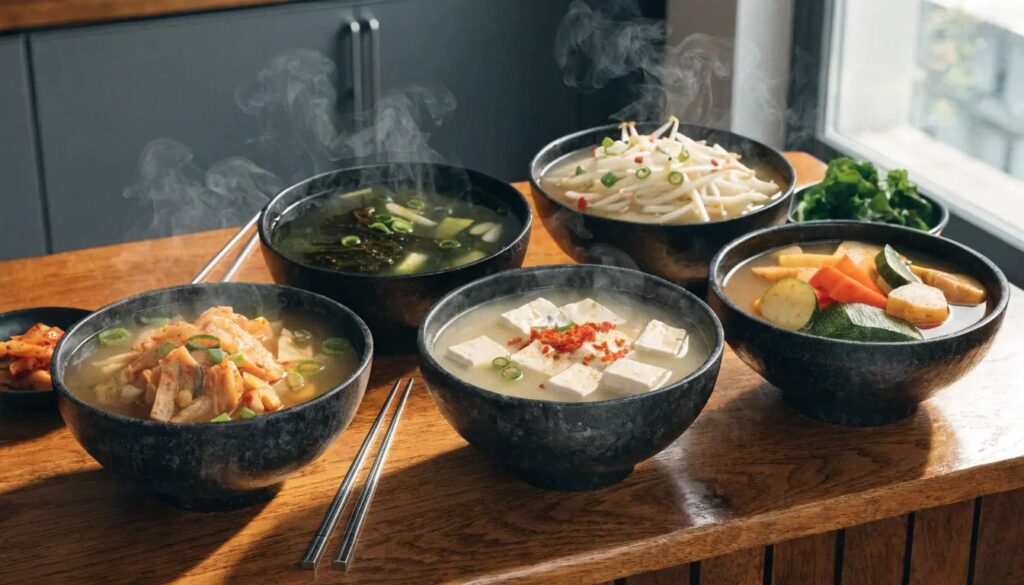
In Korea, a meal isn’t complete without a “Guk” (soup) or “Jjigae” (stew). These are the ultimate “volume eaters”—they fill you up with hydrating broth and fiber-rich ingredients, making it hard to overeat the more calorie-dense portions of the meal.
1. Kongnamul Guk (Soybean Sprout Soup)
If you need a “reset” meal, this is it. Clocking in at roughly 40-60 kcal per serving, it is one of the most effective Korean recipes low calorie enthusiasts swear by.
- The Foundation: A light, clear broth made from dried anchovies and kelp (Dashima).
- The Benefits: Soybean sprouts are incredibly high in Vitamin C and surprisingly filling due to their fibrous texture.
- Pro Tip: Add a generous pinch of Gochugaru (red pepper flakes). The capsaicin in the pepper can boost thermogenesis, helping your body burn slightly more energy during digestion.
2. Soondubu Jjigae (Soft Tofu Stew)
This is comfort in a bowl. While a restaurant version might be oily, making it at home allows you to keep it between 180-250 kcal.
- The Protein: Silken tofu is the secret weapon here. It provides lean, plant-based protein with a creamy mouthfeel that mimics fat.
- The Veggie Load: Focus on a version loaded with shiitake mushrooms, zucchini, and onions.
- Data Note: Using silken tofu keeps the fat content lower than firm tofu while maintaining that signature melt-in-your-mouth texture.
3. Miyeok-guk (Seaweed Soup)
Known as the “birthday soup” or “recovery soup,” this is a nutritional powerhouse.
- Calories: ~80-100 kcal per serving.
- Why it works: Seaweed is packed with iodine, which supports healthy thyroid function—a key player in your metabolic rate.
- Healthy Swap: Instead of fatty beef ribs, use lean brisket or even mussels to keep the saturated fat at a minimum.
4. Doenjang Jjigae (Soybean Paste Stew)
Think of this as the more robust, earthy cousin of Miso soup.
- The Flavor: Doenjang is a fermented powerhouse.
- The Mix: Load it with radish, squash, and green chilies. The fermentation process breaks down the soy, making the nutrients more bioavailable for your body.
5. Bukkeo-guk (Dried Pollack Soup)
This clear, savory soup is often used as a “hangover cure,” but its high-protein, low-fat profile makes it perfect for weight loss.
- Protein Punch: Dried pollack is almost pure protein.
- Lightness: It’s savory without being heavy, usually seasoned with just a touch of sesame oil and garlic.
Healthy Main Dishes: Korean Recipes Low Calorie Alternatives
You don’t have to give up your favorites. You just need to master the art of the “swap.” You can still enjoy the soul-satisfying flavors of Korean BBQ and street food by making a few strategic adjustments to the ingredients.
6. Bibimbap with Cauliflower or Brown Rice
The classic “mixed rice” bowl is a nutrition student’s dream, but the white rice base can be calorie-heavy.
- The Swap: Replace the white rice with a mix of 50% cauliflower rice and 50% brown rice or quinoa. This maintains the texture while slashing the glycemic load.
- The Toppings: Focus on Namul (seasoned vegetables) like spinach, carrots, and fernbrake.
- The Egg: Use a poached or soft-boiled egg instead of one fried in oil to save roughly 50 calories per bowl.
7. Grilled Ssam (Lettuce Wraps)
Korean BBQ doesn’t have to be a caloric disaster.
- The Strategy: Instead of fatty pork belly (Samgyeopsal), opt for lean chicken breast or thinly sliced flank steak.
- The Marinade: Use a light soy-ginger-pear marinade rather than heavy sugar-laden sauces.
- The Golden Rule: Use the “Three-to-One” ratio—one small piece of meat for every three large pieces of lettuce or perilla leaves. This ensures you’re getting plenty of crunch and fiber, which triggers your brain’s “fullness” signals.
8. Japchae with Shiritaki Noodles
Traditional Japchae is made with sweet potato starch noodles. While delicious, they are pure carbohydrate.
- The Swap: Use Shiritaki (Konjac) noodles. These are virtually calorie-free and do an excellent job of soaking up the sesame and soy flavors.
- The Result: You can drop the calorie count of a standard Japchae serving by nearly 80%, allowing you to eat a much larger portion.
9. Dakgalbi (Spicy Stir-fried Chicken) – The Lean Version
Usually cooked on a large iron plate with lots of oil and rice cakes, you can make a home version that fits your goals.
- Adjustments: Double the cabbage and sweet potatoes (good slow-burning carbs) and halve the rice cakes (Tteok). Use chicken breast instead of thighs.
10. Godeungeo Joroim (Braised Mackerel with Radish)
Mackerel is an oily fish, but it’s packed with Omega-3 fatty acids that are essential for heart health.
- The Secret: The large chunks of radish in this dish braise in the fish juices, becoming incredibly flavorful and filling for very few calories.
Essential Banchan: Low-Calorie Side Dishes to Fill Your Plate
In a Korean household, the fridge is always stocked with “Mit-banchan” (basic side dishes). The secret to never feeling deprived is having an endless supply of these Korean recipes low calorie sides ready to go.
11. Sigeumchi Namul (Blanched Spinach)
- How it’s made: Quickly blanched, squeezed dry, and seasoned with garlic, salt, and a tiny drop of sesame oil.
- Why it’s great: You can eat two cups of this for under 50 calories. It’s a massive hit of iron and fiber.
12. Oi Muchim (Spicy Cucumber Salad)
- The Refreshment: High water content makes this a perfect hydrating snack.
- The Kick: The vinegar and chili flakes wake up your metabolism and satisfy cravings for something crunchy and spicy.
13. Mu Saengchae (Spicy Radish Salad)
- Digestive Aid: Korean radish (Mu) contains enzymes that help digest starch.
- Low Cal: It is almost zero calories but offers a satisfying “crunch” that makes it a great substitute for heavier salads.
14. Gaji Namul (Steamed Eggplant)
- The Texture: Steaming eggplant makes it soft and silky without needing any oil.
- The Dressing: A mix of soy sauce, garlic, and scallions makes this side dish feel decadent even though it’s incredibly light.
15. Kimchi (The GOAT of Side Dishes)
- The Staple: No list is complete without it. At 15-20 calories per serving, it provides a spicy, sour punch that rounds out any meal.
FAQ: Frequently Asked Questions About Korean Recipes (Low Calorie)
Are Korean recipes low calorie by default?
Not necessarily. While traditional home cooking is very health-conscious, modern “K-Food” (like Korean Corn Dogs, cheesy Tteokbokki, or honey-butter fried chicken) can be very high in sugar, fat, and refined carbohydrates. To keep it low-cal, look for terms like “Guk” (soup), “Namul” (seasoned veg), and “Jjim” (steamed).
Is Gochujang (Red Pepper Paste) high in calories?
Gochujang does contain sugar and fermented grains, averaging about 30 calories per tablespoon. While it’s perfectly fine in moderation, if you are looking for strict Korean recipes low calorie hacks, you can swap some of the paste for Gochugaru (pepper flakes). This gives you the heat and color without the added sugars.
Can I eat Kimchi every day on a diet?
Absolutely! Kimchi is a probiotic powerhouse. However, be mindful of the sodium content. If you are salt-sensitive or have high blood pressure, look for “white kimchi” (Baek-kimchi) or rinse your kimchi slightly to reduce the salt intake while keeping the beneficial bacteria.
How do I manage portion sizes with so many side dishes?
The beauty of the Korean table is that it encourages “slow eating.” Use a small bowl for your rice/base and fill your table with as many vegetable side dishes as you want. The variety of flavors prevents “sensory-specific satiety,” meaning you feel satisfied sooner because your taste buds have been fully engaged.
Conclusion
Embracing Korean recipes low calorie style isn’t just about a temporary diet change; it’s an invitation to a more colorful, flavorful way of living. You don’t have to suffer through bland meals to see results. By focusing on the “Switch-On” principles—high protein, fermented foods, and massive amounts of seasoned vegetables—you can reach your health goals while actually looking forward to every single meal.
Korean food teaches us that health isn’t about subtraction; it’s about adding color, adding spice, and adding life to your plate. Start small—maybe replace your side of chips with a spicy cucumber salad tonight, or try a clear sprout soup for lunch. Your body will thank you for the nourishment, and your palate will thank you for the adventure.
Ready to start your healthy Korean cooking journey? I can provide a specific, step-by-step meal plan for your first week, or perhaps you’d like the exact recipe for our 80% lower-calorie Japchae? Let me know what you’d like to cook first!