Remember the exact moment you realized your relationship with food had to change forever? Maybe it was the morning after your celiac diagnosis when you stood in front of your pantry feeling like you’d walked into a foreign country where you didn’t speak the language. Or perhaps it was that quiet Tuesday afternoon when you finally admitted that the mysterious digestive issues plaguing you for years were directly linked to that sandwich you ate for lunch.
I’ve been there. We’ve all been there.
You start second-guessing everything. Bread and pasta are obvious culprits, sure. But then your eyes land on that plastic bear sitting on your counter, golden honey dripping from its nozzle, and suddenly you’re spiraling into an existential crisis over breakfast.
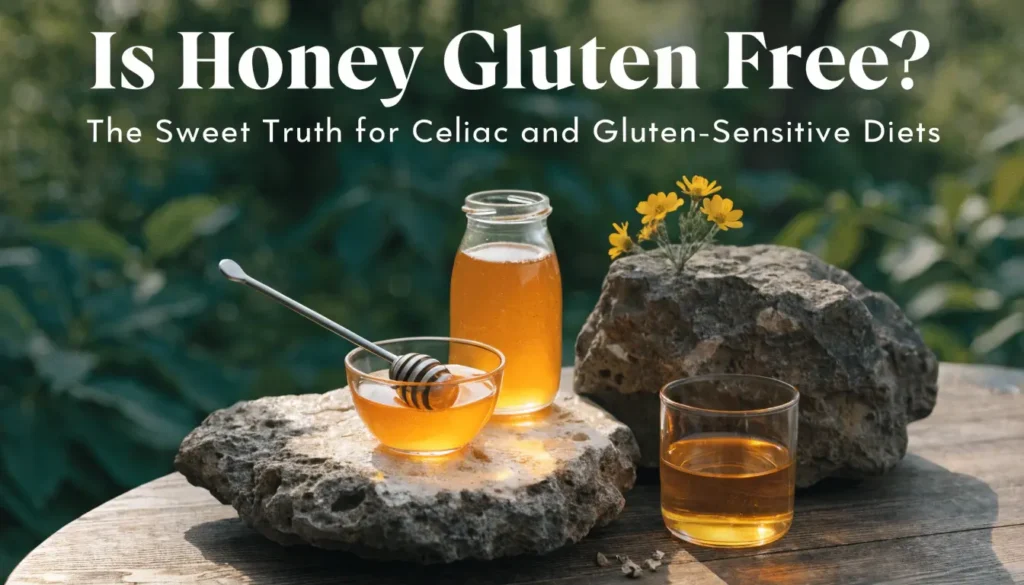
Is honey gluten free? How can something so simple, so pure, so seemingly innocent possibly contain gluten? And yet, here you are, reading ingredient labels like a detective hunting for clues, because you’ve learned the hard way that “natural” doesn’t always mean “safe.”
That moment of uncertainty—standing in your kitchen, jar in hand, wondering if this basic staple of human civilization is going to wreck your week—that’s real. That’s valid. And you deserve answers that don’t leave you guessing.
Let’s clear this up once and for all.
Is Honey Gluten Free by Nature? Understanding Pure Honey
Before we dive into the complicated stuff, let’s start where all good investigations should: at the very beginning. To truly answer whether honey contains gluten, you need to understand where honey actually comes from and how it’s made.
The Biology of Bees: No Gluten Here
Think about what happens inside a beehive for a moment. Honey bees fly from flower to flower, collecting nectar—that sweet liquid plants produce to attract pollinators. They store this nectar in their “honey stomachs” (a separate compartment from their digestive stomach, interestingly enough) and fly back to the hive. Once home, they pass the nectar to other worker bees through regurgitation, who then chew it. Yes, it sounds less romantic when you describe it that way, but stick with me.
The enzymes in the bees’ saliva break down the complex sugars in the nectar into simpler sugars. Then, through evaporation and further processing, that nectar transforms into the thick, sweet substance you drizzle on your biscuits.
Now here’s the critical part: gluten is a protein composite found specifically in certain grains—wheat, barley, rye, and their derivatives. It’s what gives bread its chewy texture and helps it rise. Bees don’t visit wheat fields for nectar. Wheat doesn’t produce nectar. There is simply no biological pathway for gluten to exist in the nectar of flowers or in the honey that bees produce from it.
Think of it this way: asking if pure honey contains gluten is a bit like asking if an apple contains gluten. It’s not a matter of processing or hidden ingredients—it’s simply not part of the plant or animal kingdom that produces gluten.
In its purest form, straight from the comb, untouched by human hands or industrial equipment, honey is unequivocally, unquestionably gluten-free.
Defining Pure Honey Versus Processed Honey
But here’s where things get slightly more complicated. Most of us aren’t harvesting honey from backyard hives. You’re probably buying your honey from a grocery store, a farmer’s market, or maybe an online retailer. And that’s where the distinction between “pure” and “processed” matters.
Raw honey typically means honey that’s been strained (to remove bits of wax and bee parts—nobody wants those in their tea) but not heated or filtered beyond that. It might crystallize faster. It might look cloudier. But it’s about as close to straight-from-the-hive as you can get without keeping your own bees.
Processed honey, on the other hand, undergoes pasteurization—high heat treatment that kills any yeast cells that could cause fermentation. It’s also usually fine-filtered under pressure to remove pollen grains and other particles that cause crystallization. This gives you that clear, golden liquid that never seems to change texture, no matter how long it sits in your cabinet.
Here’s what you need to understand: the processing itself doesn’t add gluten to honey. Nobody’s out here intentionally putting wheat protein into honey jars. But processing introduces something far more insidious: opportunity for contamination.
The Hidden Dangers: When Honey Might Not Be Gluten Free
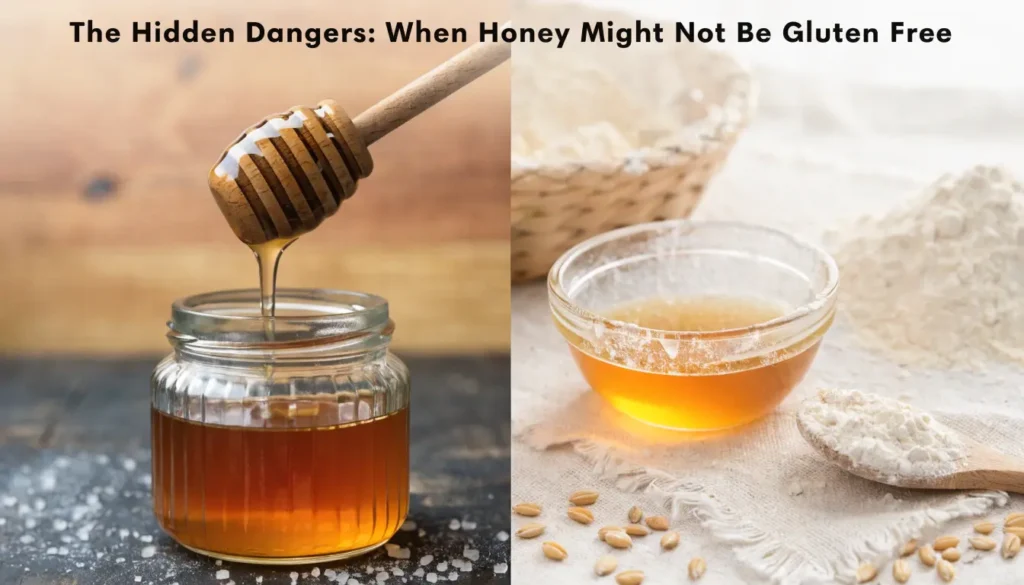
This is where your vigilance pays off. While the answer to “is honey gluten free” remains yes for the honey itself, the path from hive to your table isn’t always a straight line.
The Risk of Cross-Contamination in Facilities
Picture a large food manufacturing facility. It’s vast, it’s efficient, and it’s designed to process multiple products simultaneously or in rotation. One day, that facility is packaging granola clusters loaded with oats and wheat crisps. The next day, they’re bottling honey. The equipment might be cleaned between runs, but “cleaned” in food manufacturing terms doesn’t always mean “gluten-free clean.”
Those shared conveyor belts, those bottling lines, those storage tanks—they can harbor microscopic particles of gluten-containing ingredients that later find their way into your honey jar.
I’m not saying this to scare you. I’m saying this because knowledge is power, and power means you don’t spend three days recovering from something that could have been avoided with thirty seconds of label reading.
What you should look for on labels:
- “May contain wheat” statements – This is the manufacturer voluntarily warning you that despite their best efforts, cross-contact is possible
- “Manufactured in a facility that processes wheat” – This means somewhere in that building, gluten lives
- “Processed on shared equipment” – This is the highest-risk scenario for cross-contamination
What offers genuine protection:
- “Certified Gluten-Free” seals – This isn’t just a suggestion; it means the product has been tested and contains less than 20 parts per million of gluten, the FDA standard for gluten-free labeling
The Honey Fraud Problem: Adulteration and Additives
Here’s something they don’t tell you in the grocery store: not everything labeled “honey” is actually just honey. The global honey market has a significant problem with adulteration—cutting pure honey with cheaper sweeteners to increase profit margins.
According to food authenticity testing, a substantial percentage of commercial honey sold worldwide contains added syrups. We’re talking about rice syrup, corn syrup, and in some cases, more exotic sweeteners depending on the region.
Now, are corn syrup and rice syrup gluten-free? Generally, yes. But here’s the catch: these are processed ingredients. They come from facilities that may also process gluten-containing grains. They introduce another layer of potential contamination into a product that should have been simple.
And then there are the flavored honeys. Infused with cinnamon, vanilla, lemon, or other natural flavors. Those “natural flavors” sometimes use carriers or extracts that can contain gluten. It’s rare, but it happens often enough that you should never assume.
The bottom line: If the ingredient list on your honey contains anything other than the single word “honey,” you’ve entered murky waters. Proceed with extreme caution.
Decoding the Label: How to Choose Safe Honey
By now, you might be feeling overwhelmed. Don’t be. Choosing safe honey is actually straightforward once you know what you’re looking for. Let me walk you through exactly how to evaluate any jar of honey you encounter.
A Shopper’s Guide to Gluten-Free Honey
Think of this as your personal checklist. Run through these steps every time you pick up a honey jar, and you’ll never have to wonder again.
Step 1: Read the ingredient list
This should take approximately three seconds. If it says “Honey” and nothing else, you’re off to a good start. If you see anything else—any syrup, any flavor, any additive—put it back unless you’re prepared to do significant research on that specific ingredient’s gluten status.
Step 2: Look for certification
That Certified Gluten-Free logo isn’t just marketing. Organizations like the Gluten-Free Certification Organization (GFCO) require testing and facility audits. When you see their seal, you’re not guessing—you’re knowing.
Step 3: Scan for allergen statements
Manufacturers are required to clearly state if a product contains major allergens, including wheat. Look at the bottom of the ingredient list for “Contains: Wheat” or similar statements. Also look for voluntary “may contain” warnings. These aren’t required by law, but reputable companies include them when there’s genuine risk.
Step 4: Consider the source
Local honey from a farmer’s market? You can actually talk to the beekeeper. Ask them directly: “Do you process anything with wheat? Do you use shared equipment?” Most small-scale beekeepers handle only honey. You can’t get safer than that.
Step 5: When in doubt, reach out
Company websites often have allergen information posted. If they don’t, email them. A reputable company will know their protocols and will share them with concerned customers. If they can’t or won’t tell you whether their honey is processed in a gluten-free facility, that’s an answer in itself.
The Best Gluten-Free Honey Brands to Look For
I believe in giving you practical help, not just theory. While manufacturing practices can change and you should always verify current labels, here are some honey options that have strong reputations in the gluten-free community.
Trusted Brands and Types
Local raw honey from apiaries
This remains your safest option. Find a local beekeeper at your farmer’s market. Ask about their extraction and bottling process. Most small operators handle only honey, meaning cross-contamination risk is virtually nonexistent. Bonus: local honey may help with seasonal allergies, though the evidence for this is mixed.
Y.S. Eco Bee Farms
This brand has long been trusted in the gluten-free community. They offer raw, unfiltered options and are generally transparent about their practices. Many of their products carry clear gluten-free labeling.
Nature Nate’s
Widely available in grocery stores across the country, Nature Nate’s has built a reputation for transparency. They test their honey for adulteration and are responsive to customer questions about allergens.
Wedderspoon Manuka Honey
If you’re splurging on Manuka honey (and it is a splurge), Wedderspoon is a reliable choice. Their single-origin Manuka honey is minimally processed and generally considered safe. Their website provides detailed allergen information.
Local co-op brands
Many food co-ops and natural food stores source honey from regional producers who prioritize purity. These smaller batches often bypass the industrial equipment that creates cross-contamination risks.
Frequently Asked Questions About Honey and Gluten
Let me address the questions that come up repeatedly when people start researching whether honey is safe for their gluten-free lifestyle.
Can people with Celiac Disease eat honey?
Yes, with reasonable precautions. Pure honey contains no gluten proteins. However, because celiac disease requires extreme vigilance against cross-contamination, individuals with celiac should prioritize honey that is either certified gluten-free or comes from a source they’ve personally verified as safe. If you’re highly sensitive, stick to raw honey from local producers or certified brands.
Is there gluten in McDonald’s honey?
In the United States, McDonald’s honey is considered gluten-free. According to their published allergen information, the honey served in McDonald’s restaurants contains no gluten ingredients. However—and this is important—McDonald’s kitchens are high-risk environments for cross-contact. Fryers, shared utensils, and busy prep areas mean that while the honey itself is gluten-free, there’s always a possibility of trace contamination from other menu items. Use your judgment based on your sensitivity level.
Is honey worse for you than sugar on a gluten-free diet?
From a gluten perspective, neither contains gluten, so both are safe choices. From a nutritional standpoint, honey offers some advantages over refined sugar. It has a lower glycemic index, meaning it won’t spike your blood sugar as dramatically. It contains trace amounts of vitamins, minerals, and antioxidants that refined sugar completely lacks. That said, honey is still sugar—it’s still calorie-dense and should be consumed in moderation. But if you’re choosing between sweeteners, honey brings more to the table nutritionally.
Is it safe to buy honey from a farmer’s market?
Generally, yes—and often safer than grocery store honey. Farmer’s markets give you direct access to the person who produced the honey. You can ask about their extraction methods, their bottling process, and whether they handle any gluten-containing products. Most small-scale beekeepers work exclusively with honey. The transparency alone makes farmer’s market honey a reliable choice.
Can honey be used as a substitute for barley malt syrup?
Yes, but expect differences. Barley malt syrup contains gluten and cannot be used in gluten-free cooking. Honey can replace it in equal amounts by volume, but honey is sweeter and thinner. You may need to reduce other liquids in your recipe slightly and adjust for the flavor difference—honey brings its own distinct taste that barley malt syrup doesn’t have. For baking, maple syrup or molasses are also common substitutes, each with their own flavor profiles.
Does raw honey have more health benefits than processed honey?
Raw honey contains more of the natural enzymes, pollen, and antioxidants that processing can diminish through heat and filtration. Some people believe these components offer additional health benefits, from immune support to digestive aid. For gluten-free purposes, raw honey also carries less risk of being cut with other sweeteners, since raw honey can’t be adulterated without detection. If you can find quality raw honey from a trusted source, it’s generally the superior choice.
Sweeten Your Life Safely
Here’s what I want you to take away from all of this: honey, in its essence, is one of the simplest, purest foods available to us. Bees make it. Flowers provide the raw material. Gluten never enters the equation.
The complications come from us—from our industrial food system, from profit-driven adulteration, from shared equipment and crowded production facilities. But you have the power to navigate these complications. You have the knowledge now to read labels intelligently, to ask the right questions, and to choose sources you can trust.
That moment of standing in your kitchen, honey jar in hand, uncertain and anxious? You don’t have to live there anymore. You can pick up that jar, run through your mental checklist, and know—actually know—whether it’s safe for you.
And when you find that perfect honey, the one from the local beekeeper who assured you they only handle honey, or the certified brand you’ve verified online, you can enjoy it fully. Drizzle it on your morning yogurt. Stir it into your tea when you’re feeling under the weather. Use it in your favorite gluten-free baking recipes. Honey has been sweetening human lives for thousands of years, long before anyone had ever heard of gluten.
You deserve that sweetness. You deserve to enjoy food without fear, without second-guessing, without that knot of anxiety in your stomach. Knowledge gives you that freedom, and now you have it.
So go ahead. Find your honey. Enjoy every drop. And the next time someone asks you “is honey gluten free?”, you’ll know exactly what to tell them.
Have you found a favorite gluten-free honey brand that you trust? Drop the name in the comments below—your recommendation might be exactly what another reader needs to find their own safe sweetness.