Picture this: It’s a quiet Sunday morning. You’ve carved out precious time to bake something special for your family—maybe fluffy biscuits, a coffee cake, or a batch of muffins your kids used to love. You’ve carefully sourced your gluten-free flour blend, checked every chocolate chip for cross-contamination warnings, and wiped down every counter surface twice. Then you reach for the baking powder, and suddenly your hand freezes mid-air.
That little yellow can has been sitting in your cupboard for months. Maybe years. You turn it over in your hands, squinting at the fine print. Your stomach tightens. Is baking powder gluten free? Can something that seems so simple actually contain the very ingredient you’ve worked so hard to eliminate?
If you’ve ever stood frozen in your own kitchen, a recipe book open on the counter and doubt creeping into what should be a joyful moment, you’re not alone. That moment of uncertainty—that split second where a beloved hobby transforms into a potential health risk—is something nearly everyone avoiding gluten understands intimately.
Here’s the good news: You don’t have to guess. You don’t have to cross your fingers and hope for the best. And you definitely don’t have to give up baking. What you need is straight answers, clear guidance, and the confidence to walk back into that kitchen knowing exactly what belongs in your bowl and what doesn’t.
Let’s clear up the confusion about baking powder once and for all.
What Actually Goes Into That Little Can?
Before you can feel confident about whether baking powder fits into your gluten-free life, it helps to understand what you’re actually dealing with. Baking powder isn’t some mysterious chemical compound dreamed up in a laboratory to confuse shoppers. It’s actually a beautifully simple invention with a very specific job.
Baking powder is what’s known as a leavening agent. That’s just a fancy way of saying it makes things rise. Without it, your cakes would be dense pucks, your pancakes would resemble tortillas, and your biscuits would be better suited for doorstops than dinner plates.
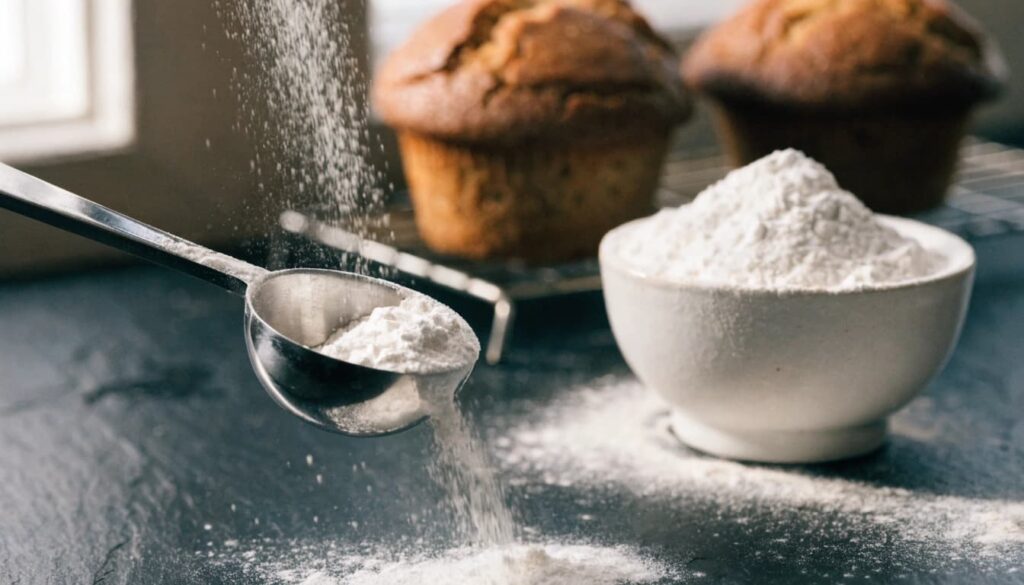
The magic happens because of a simple chemical reaction. When baking powder gets wet and meets heat, it releases tiny bubbles of carbon dioxide. Those bubbles get trapped in your batter, expand in the oven, and create all those lovely air pockets that give baked goods their tender crumb.
But what’s actually inside that can? The ingredients list is surprisingly short:
- Baking soda (sodium bicarbonate) forms the base. This alkaline compound is what ultimately creates those rising bubbles, and it’s naturally free from any gluten-containing grains.
- An acid completes the reaction. Most commonly, this is cream of tartar, though some commercial brands use sodium aluminum sulfate for a double-acting effect (meaning it bubbles when wet and again when hot). Neither of these ingredients has any connection to wheat, barley, or rye.
- A starch acts as the buffer. This is the ingredient that keeps the acid and base from reacting inside the can while moisture is present. The starch absorbs any ambient humidity and keeps your baking powder shelf-stable until you’re ready to use it.
That starch is where the question “is baking powder gluten free” gets interesting. Because while the first two ingredients are unquestionably safe, that third component sometimes creates confusion.
The Starch Situation: Where Problems Can Hide
Here’s what you need to understand about that buffering agent. In the vast majority of baking powders sold in North America, that starch is cornstarch. Corn, in its pure form, contains no gluten proteins. So theoretically, a baking powder made with cornstarch should be perfectly safe for anyone avoiding gluten.
But here’s where the picture gets more complicated. The question isn’t always about the ingredient itself—it’s about what happens to that ingredient before it reaches your kitchen.
Corn is often grown in rotation with wheat. It’s transported in the same trucks, stored in the same silos, and processed in facilities that handle multiple grains. Even though corn doesn’t contain gluten, it can certainly come into contact with it. This cross-contamination risk means that a product made with theoretically safe ingredients might still contain traces of gluten by the time it reaches store shelves.

In some parts of the world, manufacturers occasionally use wheat starch as the buffering agent instead of cornstarch. This practice is much less common in the United States than it once was, but it hasn’t disappeared entirely. And for someone with celiac disease or serious gluten sensitivity, even wheat starch that’s been processed to remove most of its protein content can trigger reactions.
This is why the answer to “is baking powder gluten free” can never be a simple yes or no. The real answer is: It depends entirely on the brand, the manufacturing process, and how rigorously the company tests for cross-contamination.
What the Major Brands Are Doing
Let’s get specific about the products you’re likely to encounter on store shelves. Walking down the baking aisle can feel overwhelming when you’re reading every label with suspicion, so having a roadmap helps.
Rumford has long been the gold standard in the gluten-free community. Their baking powder uses a cornstarch base and carries a gluten-free certification. This certification matters because it means the product has been independently tested and meets strict standards—usually below 10 parts per million of gluten, which is even more stringent than the FDA’s requirement of less than 20 parts per million. When you see the certified gluten-free seal on a red Rumford can, you can stop worrying.
Clabber Girl is another major player you’ll find in almost every grocery store. Their standard double-acting baking powder is clearly labeled gluten-free on the package. They also produce a sodium-free version that’s also labeled safe. The key with Clabber Girl is actually reading that label every single time you buy. While the formulation has remained consistently safe, companies sometimes change ingredients or manufacturing locations, and the only way to stay protected is to verify with your own eyes.
Bob’s Red Mill built their reputation on serving the gluten-free community, so it should come as no surprise that their baking powder is labeled gluten-free. They use potato starch in some of their products and maintain dedicated facilities to prevent cross-contamination. If you’re already buying their flours, grabbing a can of their baking powder keeps everything consistent.
Davis baking powder has been around for generations and currently labels their product gluten-free. It’s widely available and reasonably priced, making it a solid choice when you need something accessible.
Store brands present a mixed picture. Walmart’s Great Value baking powder often carries a gluten-free label, but you need to check each canister because formulations can vary by region. The same goes for Target’s Market Pantry and Good & Gather brands, as well as Kroger store brand. These are generally safe when labeled, but they don’t always carry certification, so you’re relying on the company’s word rather than independent testing.
How to Protect Yourself at the Store
Armed with knowledge about specific brands, you still need a system for shopping safely. Because here’s the truth: Companies change ingredients. Packaging gets redesigned. And mistakes happen.
When you pick up a can of baking powder, here’s exactly what to look for:
The gluten-free label should be your first checkpoint. This isn’t just marketing language. When a product bears a gluten-free label in the United States, the manufacturer is legally required to ensure it contains less than 20 parts per million of gluten. The FDA can and does take action against companies that mislabel products. That label carries legal weight.
The certified gluten-free seal adds another layer of protection. Organizations like the Gluten-Free Certification Organization (GFCO) require companies to submit to regular testing and facility inspections. Their standard of less than 10 parts per million provides extra reassurance for those who are highly sensitive.
The “contains” statement offers clear guidance. Federal law requires that packaged foods clearly state if they contain any of the major allergens, including wheat. If you see “Contains: Wheat” on a baking powder label, put it back on the shelf immediately. There’s no ambiguity there.
“May contain” warnings deserve your attention. Statements like “processed in a facility that also processes wheat” or “shared equipment” aren’t required by law, but when manufacturers include them, they’re signaling a real risk. If you’re highly sensitive, these warnings should guide your choices away from that product.
When a package lacks any of these indicators, proceed with extreme caution. An unlabeled product might be perfectly safe, or it might be manufactured in a facility where wheat flour dust settles on everything. Without information, you can’t make an informed decision.
Testing What You Already Own
Maybe you’re not shopping right now. Maybe you’re standing in your kitchen right this minute, holding a can of baking powder that’s been in your cupboard for weeks, wondering if you need to toss it in the trash.
Here’s how to handle that situation:
If the can has a gluten-free label that you can clearly read, and it hasn’t expired, you’re likely fine to use it. Trust that label—it’s there for a reason.
If the can has no gluten-free labeling, or if the label has worn off, you face a choice. You could contact the manufacturer with the lot number and ask about their gluten status. Many companies respond quickly to these inquiries. Or you could simply replace it. Baking powder is inexpensive compared to the cost of a gluten exposure. A few dollars for peace of mind is money well spent.
If the can is unlabeled and you decide to use it anyway, pay attention to how your body responds. Some people can tolerate trace amounts without symptoms. Others cannot. Only you know your own sensitivity level.
Making Your Own: The Foolproof Solution
For those who want complete control over every ingredient entering their kitchen, homemade baking powder offers a simple solution. This approach removes all uncertainty because you choose every component yourself.
The formula couldn’t be simpler:
- One part baking soda. Look for a brand that labels itself gluten-free to ensure the mining and packaging processes haven’t introduced contamination.
- Two parts cream of tartar. This acidic powder comes from winemaking and is naturally gluten-free across all brands.
- One part gluten-free starch. Cornstarch works beautifully if you tolerate corn. Arrowroot powder or potato starch are excellent alternatives.
Mix these three ingredients thoroughly in a small bowl, then transfer them to an airtight container. Shake or stir before each use to redistribute any settling.
This homemade version works exactly like commercial baking powder in recipes. The only catch is freshness. Because homemade baking powder lacks the stabilizers that commercial versions use, it starts losing potency sooner. Plan to make small batches and use them within a month or two for best results.
You can test your homemade baking powder the same way you’d test commercial: stir a teaspoon into hot water. If it bubbles enthusiastically, it’s still active. If it barely fizzes, it’s time to mix a fresh batch.
Baking Success with Gluten-Free Flours
Once you’ve confirmed your baking powder is safe, you still face the unique challenges of gluten-free baking. Wheat flour contains proteins that create structure and elasticity. Remove those proteins, and you’re working with a completely different set of ingredients.
Your safe baking powder becomes even more important when you’re using gluten-free flours. Here’s why:
Gluten-free flours tend to be heavier than wheat flour. Rice flour, almond flour, oat flour, and the various starch blends all weigh more than their wheat counterparts. They need extra help rising to achieve that light, tender texture you’re after.
Check your baking powder’s freshness before every major baking project. That can might have been sitting in your cupboard for six months. If you can’t remember when you bought it, test it. A quick fizz test takes thirty seconds and can save you from wasting expensive gluten-free ingredients on a dense, sunken disaster.
Consider letting your batter rest. Gluten-free flours are thirsty. They need time to absorb liquid fully. Letting your batter sit for fifteen to thirty minutes before baking gives the flours time to hydrate and gives the baking powder time to start working. Many gluten-free bakers find this simple step dramatically improves their results.
Handle your batter gently. Those bubbles your baking powder creates are delicate. Vigorous mixing pops them and deflates your hopes for a light texture. Stir just until ingredients are combined, then stop.
If your recipe seems too dense, you might need more leavening. Gluten-free baking often requires slightly more baking powder than traditional recipes. Many experienced gluten-free bakers add an extra half-teaspoon to recipes converted from wheat flour.
Understanding Different Types of Baking Powder
You might notice that baking powder comes in different varieties. This matters for your baking results, though not necessarily for gluten safety.
Single-acting baking powder releases its bubbles as soon as it gets wet. This means you need to get your batter into the oven immediately after mixing, or you’ll lose the rise. Single-acting powders are less common in American grocery stores but appear in some specialty and international brands.
Double-acting baking powder releases some bubbles when wet and more bubbles when heated. This gives you a longer window between mixing and baking. Most American brands use this double-acting formula, which offers more forgiveness for home bakers.
Aluminum-free baking powder uses cream of tartar as the acid instead of sodium aluminum sulfate. Some people detect a metallic aftertaste from aluminum-based powders, particularly in delicate baked goods. Rumford and some other brands offer aluminum-free options that many bakers prefer.
All of these varieties can be gluten-free. The type you choose depends on your taste preferences and baking style, not on safety concerns.
Navigating International Products
If you bake with recipes from other countries or shop at international markets, the question “is baking powder gluten free” deserves extra attention.
In the United Kingdom and Europe, baking powder regulations differ from those in the United States. Most standard baking powders use maize starch or calcium phosphate as the buffering agent, making them naturally gluten-free. However, labeling laws vary, and some imported specialty products may behave differently. When shopping internationally, look for crossed-grain symbols or gluten-free certifications specific to that country.
In Australia and New Zealand, wheat starch appears more commonly in commercial baking powders than in North America. The Australian government has strict labeling requirements, so reading packages carefully is essential. Some Australian brands clearly label their products as both wheat-free and gluten-free, while others contain wheat starch and must declare it.
In Asian grocery stores, baking powder formulations can vary widely depending on the country of origin. Some Asian baking powders contain rice starch rather than cornstarch, which is fine for gluten-free diets. Others may include wheat-based ingredients. When labels aren’t in English, stick with brands you recognize from mainstream grocery stores or order certified products online.
Living Confidently Without Living Fearfully
Here’s what I want you to take away from all this information: Knowledge replaces fear.
That moment of hesitation in front of your pantry—that second-guessing that steals the joy from baking—it doesn’t have to be your permanent reality. When you understand what’s in your food and how to verify its safety, you move from anxiety to confidence.
Yes, you need to read labels. Yes, you need to know which brands you can trust. Yes, you need to stay alert to changes in formulation. But none of that means you have to approach your kitchen with dread.
The gluten-free lifestyle comes with extra steps. That’s just reality. But those steps become routine. They become habits. They become second nature. And eventually, they fade into the background, allowing you to focus on what really matters: creating food you love, sharing it with people you care about, and reclaiming the simple pleasure of pulling something beautiful out of the oven.
Your grandmother’s biscuit recipe might need adjustments. Your favorite coffee cake might turn out differently than you remember. But the act of baking—the measuring, the mixing, the waiting, the scent filling your kitchen—that belongs to you. No ingredient gets to take that away.
Frequently Asked Questions
Is baking powder gluten free in all brands?
No, not all brands are safe. While most major manufacturers in the United States use gluten-free ingredients, some products may be at risk for cross-contamination, and a small number of international brands still use wheat starch. Always verify by reading the label.
Can I use baking powder past its expiration date?
Expired baking powder won’t make you sick, but it may not work effectively. The chemical reaction weakens over time, especially if the package has been opened. If your baking powder is past its date, test it by adding a teaspoon to hot water. Vigorous bubbling means it’s still active.
Does cream of tartar contain gluten?
Cream of tartar is a byproduct of wine making and contains no gluten. It’s safe across all brands, making it an excellent choice for homemade baking powder.
Why does my gluten-free baking sometimes taste metallic?
That metallic taste might come from baking powder containing aluminum compounds. Switching to an aluminum-free brand like Rumford often eliminates this issue. The metallic taste can also result from using too much baking powder, so double-check your measurements.
Is there a difference between baking powder and baking soda for gluten-free diets?
Yes, and the difference matters. Baking soda is pure sodium bicarbonate and requires an acidic ingredient in your recipe to activate it. Baking powder contains its own acid. Both can be gluten-free when you choose the right brands, but they aren’t interchangeable in recipes without adjustments.
Your Turn to Bake With Confidence
You now have the information you need to answer that question whenever it arises. Is baking powder gluten free? For the brands you choose, armed with the knowledge of what to look for and how to verify, the answer will be a confident yes.
The next time you’re standing in the baking aisle, you won’t freeze. You’ll know exactly which can to reach for. The next time you’re pulling ingredients from your pantry, you’ll check that label out of habit, not fear. And the next time someone asks if they can eat what you’ve baked, you’ll answer without hesitation.
That’s the goal. Not just safe food, but freedom. Freedom to bake, to share, to enjoy.
So go ahead. Preheat that oven. Find that recipe you’ve been wanting to try. You’ve done the hard work of learning what you need to know. Now comes the good part—the part where you actually get to bake.
Have you found a brand of baking powder that works well for you? Drop a comment below and share your experience. Your recommendation might be exactly what another reader needs to hear.