remember that Tuesday morning like it was yesterday. My alarm never went off—or maybe it did and I murdered it in a sleepy rage—and suddenly I had exactly twelve minutes to get from my bed to a client meeting across town. Twelve minutes. No time for the usual smoothie. No time for the eggs I’d promised myself I’d make. Just me, my growling stomach, and the golden arches looming on the horizon like a delicious, greasy question mark.
You know that feeling, right? That moment when your health goals and your reality collide in the worst possible way? For years, I treated fast food breakfast as the enemy. A necessary evil when life got chaotic. I’d order with shame, eat with guilt, and spend the rest of the morning fighting off a food coma before 10 a.m. It felt like choosing between being on time and being healthy—as if the universe designed mornings specifically to make you fail.
But here’s what I’ve learned after countless drive-thru experiments, nutrition label deep-dives, and honest conversations with dietitians: you don’t have to choose anymore.
The healthiest fast food breakfast isn’t a myth whispered about on wellness blogs. It’s real. It’s orderable. And honestly? Some of it actually tastes better than the stuff that’s been sabotaging you for years.
Let me show you exactly how to navigate those menus like a pro, because your mornings—and your body—deserve better than another regret-filled breakfast sandwich.
Why Most Fast Food Breakfasts Fail Your Health Goals (And How to Spot the Traps)
Look, fast food companies aren’t evil. They’re just playing a game with different rules than you are. Their goal? Make food taste so irresistible that you crave it repeatedly. Your goal? Fuel your body efficiently while maybe not hating yourself afterward. These two objectives don’t naturally align.
The average fast food breakfast is engineered for maximum flavor impact, which usually means loading up on the three things that taste amazing but treat your body poorly: fat, sugar, and sodium. Understanding what you’re up against is the first step toward outsmarting the system.
The Calorie Bomb Reality
Walk into any fast food joint and look at their signature breakfast items. That fluffy biscuit sandwich with sausage and egg? You’re likely holding 600 to 800 calories in your hand before you even consider the hash browns and sugary coffee drink that somehow always end up in the bag with it. For context, that’s roughly half of what many people need in an entire day, consumed before most folks have even properly woken up.
The Hidden Sugar Menace
Here’s something that surprised me during my research: breakfast is arguably the meal where sugar hides most effectively. That oatmeal you think is virtuous? Many chains prepare it with brown sugar packets larger than you’d ever use at home. Those yogurt parfaits? The fruit layer is often more syrup than actual fruit. And don’t get me started on flavored coffees—a medium caramel concoction can easily pack 60 grams of sugar, which is roughly what you’d get from eating fifteen Oreos before noon.
The Sodium Situation
Processed meats dominate breakfast menus for a reason—they’re cheap, shelf-stable, and intensely flavorful. But that flavor comes with a sodium price tag that can blow past recommended limits before lunch. One breakfast burrito from certain chains contains more sodium than you should consume in an entire day if you have blood pressure concerns.
The Golden Rule That Actually Works: When hunting for the healthiest fast food breakfast, train yourself to scan menus for two numbers: protein and fiber. You want them high. Then scan for two more numbers: added sugar and sodium. You want them low. If an item stays under 500 calories while hitting those marks, you’ve found a winner.
The Criteria: What Actually Makes a Fast Food Breakfast “Healthy”?
Before we dive into specific orders, let’s establish honest criteria. “Healthy” means different things to different people, and I’m not here to push some rigid definition that leaves you hungry and resentful. Instead, let’s agree on what actually matters for a breakfast that fuels your morning without weighing you down.
Protein Power Matters More Than You Think
You’ve heard it before, but let me explain why protein deserves top billing in your breakfast decisions. When you eat protein in the morning, you’re essentially giving your brain a reason to stop thinking about food for the next few hours. It stabilizes your blood sugar, prevents that 10:30 a.m. energy crash, and actually helps you make better decisions throughout the day because you’re not operating from a place of hanger.
For our purposes, we’re looking for items with 15 grams of protein or more. That’s the sweet spot where a meal transitions from “snack” to “breakfast that actually works.”
Fiber Keeps Things Moving
Pardon the honesty, but fiber is the unsung hero of morning meals. It slows digestion, keeps you full, and prevents the blood sugar spikes that lead to mid-morning energy crashes. When you’re scanning options, look for whole grains, actual fruit (not fruit filling), and vegetables where you can find them.
Sugar Needs Boundaries
Here’s a hard truth I had to accept: breakfast doesn’t need to be sweet to be satisfying. Our culture has conditioned us to associate morning with sugar—cereal, pastries, sweetened coffees—but your body doesn’t share that association. When evaluating options, we’re flagging anything that relies on added sugar for its appeal. Natural sugars from fruit are fine. High fructose corn syrup disguised as “natural flavors” is not.
Sodium Awareness
Full disclosure: fast food almost always means higher sodium. That’s just reality. But some items are genuinely outrageous, pushing 1,500 milligrams or more in a single serving. We’re prioritizing options that keep sodium relatively reasonable, understanding that “reasonable” in fast food terms is different from what you’d accept in your home kitchen.
The Top Picks: The Healthiest Fast Food Breakfast Items by Chain
Enough theory. Let’s get to what you actually came here for: specific orders from specific places that won’t derail your progress. I’ve tested these myself, verified the nutrition information, and considered how they actually taste—because the healthiest option in the world means nothing if you won’t eat it.
Starbucks: The High-Protein, Customizable Option
Starbucks deserves credit for being one of the easier places to eat well, provided you walk past the pastry case without making eye contact. Their food offerings have evolved significantly over the years, and several options genuinely deliver on nutrition without sacrificing flavor.
The Classic Choice That Never Disappoints:
- Spinach, Feta & Egg White Wrap
- The Numbers: 290 calories, 20 grams of protein, just 3 grams of sugar, and an impressive 8 grams of fiber.
- Why This One Wins: The wrap uses whole grains, which gives you that fiber boost most fast food breakfasts completely ignore. The egg whites keep things light, but the feta adds enough flavor that you never feel like you’re eating diet food. It’s warm, satisfying, and somehow still manages to feel indulgent despite being one of the smartest choices on any fast food menu.
The Oatmeal Option (With a Caveat):
- Rolled & Steel-Cut Oatmeal
- The Strategy: Order it plain. Seriously. The brown sugar packet that comes with it contains more sugar than you’d probably add at home, and you can’t remove it once it’s mixed in. Ask for extra nuts if they have them, or bring your own nut butter if you’re really planning ahead.
- The Result: You get a warm, filling breakfast with whole grains and minimal processing. Just be honest with yourself about whether you’ll actually skip that sugar packet.
Chick-fil-A: Simple Ingredients, Solid Macros
Chick-fil-A operates differently than most fast food chains, and their breakfast menu reflects that. They use whole chicken breasts rather than processed patties for many items, and their commitment to quality ingredients makes finding healthy options surprisingly straightforward.
The Savory Winner That Actually Satisfies:
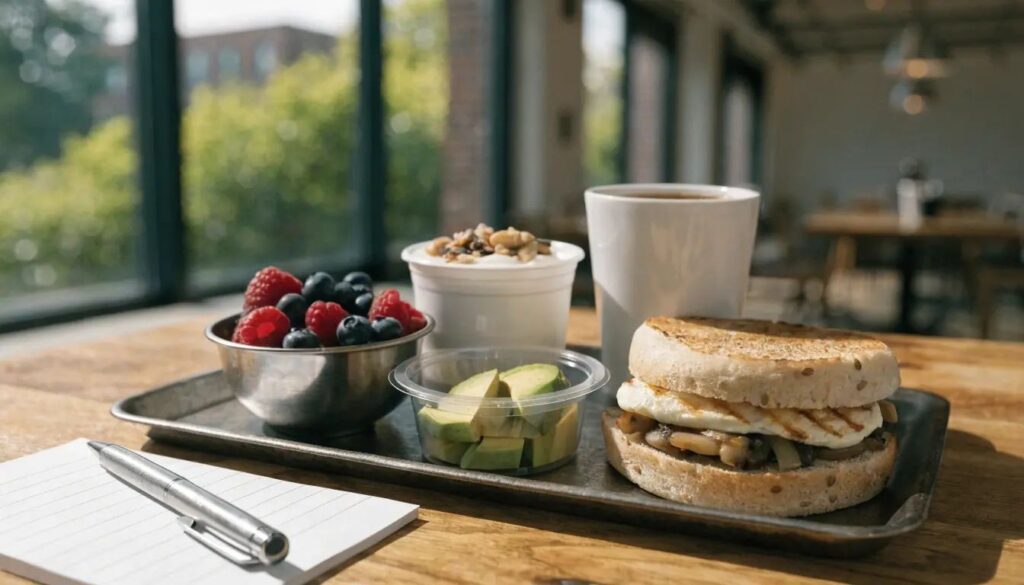
- Egg White Grill
- The Numbers: 290 calories, 25 grams of protein, only 2 grams of sugar.
- Why This One Changes the Game: Grilled chicken for breakfast sounds unusual until you try it. Then it becomes obvious. The chicken is lean, flavorful, and provides that protein punch without the grease that leaves you feeling heavy. It sits on a toasted English muffin instead of a biscuit, which saves you significant calories and avoids the refined flour crash. This might be the most balanced fast food breakfast sandwich in existence.
The Yogurt Alternative Worth Considering:
- Greek Yogurt Parfait
- What to Know: The yogurt itself is excellent—thick, protein-rich, and actually Greek. But that granola layer? It’s sweetened. If you’re watching sugar intake, consider eating around some of it or asking if they can go light on the granola. The fruit provides natural sweetness that often makes the added sugar in the granola feel unnecessary anyway.
McDonald’s: How to Survive the Golden Arches
Let’s be real: McDonald’s isn’t trying to be a health food store. But if you find yourself in their drive-thru—and statistically, you will at some point—you need a strategy. The good news is that a few items stand out as genuinely reasonable choices.
The Surprisingly Solid Option:
- Fruit & Maple Oatmeal (with modifications)
- The Adjusted Numbers: Around 260 calories if you skip the brown sugar.
- The Crucial Warning: By default, this oatmeal includes a brown sugar packet that transforms it from a healthy choice into a sugar bomb. The oatmeal itself contains diced apples, cranberries, and raisins, which provide natural sweetness. You genuinely don’t need the added sugar. Order it without, or ask for the packet on the side and use a fraction of what they provide.
The Original That Still Holds Up:
- Egg McMuffin
- The Numbers: 310 calories, 17 grams of protein.
- Why It Endures: This sandwich hasn’t changed much over the decades because it didn’t need to. A fresh-cracked egg (real egg, not the folded processed version they use elsewhere), lean Canadian bacon, and a simple English muffin. The magic is in what it doesn’t have: no processed cheese product masquerading as something else, no greasy sausage patty, no excessive sauces. It’s straightforward breakfast food that happens to be fast.
What to Avoid: Anything with “biscuit” or “bagel” in the name at McDonald’s adds significant calories and refined carbs without proportional nutritional benefit. The biscuit alone adds around 250 calories of mostly white flour and fat.
Panera Bread: Clean Ingredients, Clear Conscience
Panera operates with a different philosophy than traditional fast food chains. They’ve committed to removing artificial preservatives, sweeteners, and flavors from their food, which means you’re getting ingredients closer to what you’d use at home.
The Power Pick Worth Waking Up For:
- Steel Cut Oatmeal with Strawberries & Pecans
- The Numbers: 350 calories, 12 grams of protein.
- Why It Works: Steel cut oats digest more slowly than rolled oats, providing sustained energy rather than a spike and crash. The pecans add healthy fats and make the bowl feel substantial, while the strawberries provide sweetness without needing to reach for sugar.
The Egg Sandwich That Gets It Right:
- Avocado, Egg White & Spinach Breakfast Sandwich on sprouted grain bagel flat
- What Makes It Special: The sprouted grain bread offers more nutrients and fiber than standard options. The avocado provides monounsaturated fats that support brain function and help you absorb fat-soluble vitamins from the eggs. It’s one of the few fast food breakfasts that feels genuinely nourishing rather than just “not terrible.”
The Secret Weapon: How to Hack Any Menu for a Healthier Breakfast
Here’s the truth that chains don’t advertise: you have more control than you think. Every menu item is customizable, and the people taking your order have heard stranger requests than yours. Learning a few simple hacks transforms almost any fast food breakfast into something closer to what you’d make at home.
The “No Bun” Advantage That Changes Everything
Bread products in fast food restaurants serve two purposes: they make eating convenient, and they add cheap bulk to the meal. But that biscuit, bagel, or croissant is often the least nutritious part of your breakfast, providing refined carbohydrates without corresponding benefits.
Try this next time: order your breakfast sandwich and ask for it “in a container” or “as a bowl.” Most places will happily serve you the eggs, meat, and cheese in a plastic container. You lose the convenience of hand-held eating but gain significant control over your carbohydrate intake. Plus, you actually taste the eggs and meat rather than just tasting bread.
Sauce on the Side Changes the Math
Restaurants apply sauces with a heavy hand because sauce is cheap and flavor is expensive. That “light cream cheese” or “drizzle of syrup” often amounts to two or three times what you’d use at home.
Asking for sauces, spreads, and syrups on the side puts you in control. Dip your forkful rather than letting the sandwich soak up everything. You’ll be surprised how much less you actually need once you’re the one controlling the application.
Black Coffee Is Your Secret Weapon
I’m not here to shame anyone’s coffee order. Life is hard, and if a vanilla latte brings you joy, enjoy it. But understand what you’re drinking: many specialty coffee drinks contain more sugar than a dessert, more calories than a meal, and virtually no nutritional value to offset those costs.
A medium caramel frappe from certain chains can pack 70 grams of sugar. That’s more than two full-size candy bars. Before lunch.
If you’re serious about finding the healthiest fast food breakfast, consider making your coffee the one place you simplify. Black coffee, cold brew, or coffee with a splash of unsweetened milk keeps caffeine benefits without the sugar crash that follows sweetened drinks.
What to Absolutely Avoid (The “Nutritional Landmines”)
Knowledge includes knowing what to avoid. These items appear on menus everywhere, and they’re engineered to tempt you. But understanding what makes them problematic helps you resist when cravings hit.
The Loaded Burrito Trap
Breakfast burritos seem reasonable—eggs, maybe some potatoes, wrapped in a tortilla. But chains load them with processed cheese sauces, multiple meats, and tortillas that function more as carbohydrate delivery systems than wrappers. A single burrito from places like McDonald’s or Taco Bell often exceeds 700 calories while providing minimal nutritional return.
The Jumbo Platter Problem
Platters that include pancakes, eggs, meat, and hash browns create the illusion of variety while delivering excess of everything. You’re getting refined carbohydrates from multiple sources, processed meat, and fried potatoes—often exceeding 1,000 calories before you add syrup. No single meal should require that much nutritional negotiation.
The Muffin Deception
Muffins occupy a strange space in our cultural imagination where we’ve decided they’re acceptable breakfast foods despite resembling cake in almost every way. A typical fast food muffin contains 500 to 600 calories, 40 or more grams of sugar, and virtually no protein or fiber. You’d be better off with actual cake, at least psychologically, because you wouldn’t pretend it was healthy.
Frequently Asked Questions About the Healthiest Fast Food Breakfast
Q: Is it really possible to eat a healthy fast food breakfast while trying to lose weight?
A: It absolutely is, but you need to approach it strategically. The key is knowing what to order before you arrive. When you’re standing at the counter with a hungry stomach and people waiting behind you, you’ll make different decisions than if you’d planned ahead. Look for items with at least 15 grams of protein and stay under 500 calories. The Egg White Grill from Chick-fil-A and the Spinach & Feta Wrap from Starbucks both fit this profile perfectly. They keep you full without blowing your daily calories before lunch.
Q: What is the single most important nutrient to look for in a healthiest fast food breakfast?
A: Protein, without question. Protein regulates your appetite, stabilizes your blood sugar, and provides the mental clarity you need to function. A breakfast high in protein but moderate in everything else will serve you better than a breakfast that’s “balanced” but low in protein. Aim for at least 15 to 20 grams. If you hit that number, you’ve already won most of the battle regardless of what else happens with your order.
Q: Are smoothies from fast food restaurants a healthy breakfast choice?
A: Almost never, and I wish this weren’t true. Smoothies at fast food restaurants are designed for taste, not nutrition. They typically use fruit purees that concentrate sugar, add sherbet or frozen yogurt for creaminess, and skip the fiber you’d get from eating whole fruit. A small smoothie from most chains contains more sugar than a can of soda, with minimal protein to balance it out. You’re essentially drinking liquid sugar that happens to have some fruit molecules present.
Q: Is oatmeal always a safe bet for the healthiest fast food breakfast?
A: Oatmeal is only safe if you order it strategically. The base oatmeal itself is excellent—whole grains, fiber, minimal processing. But chains add significant sugar through brown sugar packets, dried fruit with added sugar, and flavored toppings. Order your oatmeal plain or with the sugar on the side. Use the natural sweetness from fruit rather than processed sugar. If you do this, oatmeal remains one of your best options. If you don’t, you’re eating dessert disguised as breakfast.
Q: How do I handle breakfast meetings where food is provided and options are limited?
A: This situation requires a different strategy because you can’t customize. Look for the simplest options—scrambled eggs if available, fresh fruit, plain yogurt. Avoid pastries, bread baskets, and anything that looks glazed or frosted. Eat the protein first, then add fruit if you’re still hungry. And remember that one meal won’t derail your progress. Make the best choice available, enjoy the conversation, and return to your normal eating pattern at your next meal. Perfection isn’t the goal; consistency over time matters more.
Your Morning Strategy Starts Now
You now have everything you need to navigate any fast food breakfast situation with confidence. The next time life throws you a morning curveball—and it will—you won’t have to choose between being on time and eating well. You’ll know exactly where to go and exactly what to order.
Start small. Maybe tomorrow you try that Egg White Grill from Chick-fil-A instead of your usual order. Or you modify your Starbucks oatmeal and notice how different you feel at 11 a.m. when you’re not hunting for a snack. These small changes compound over time, and before you know it, drive-thrus become tools rather than temptations.
I’d love to hear about your experiences. What’s your go-to healthy breakfast order when you’re in a hurry? Have you discovered a menu hack that changed your mornings? Drop by and share your story—because the more we share what actually works, the easier this gets for everyone.
Here’s to mornings that work with you, not against you. You’ve got this.
Have questions about a specific chain not covered here? Reach out and ask. The fast food landscape changes constantly, and I’m always researching new options to help you make informed choices when every minute counts.