There is something almost spiritual about the way steam rises from a hot bowl of soup, carrying with it the aroma of simmered herbs and slow-cooked vegetables. It hits your face before the spoon even reaches your lips, and for a split second, everything feels right with the world. I remember standing in my grandmother’s kitchen years ago, watching her stir a massive pot of chicken soup on the stove. She never measured anything—a pinch of this, a handful of that—and somehow it always turned out perfect. Back then, I never thought about what was in it. I just knew it made me feel loved.

Fast forward to life after a celiac diagnosis, and those carefree kitchen moments felt like distant memories. The first time I tried to order soup at a restaurant after going gluten-free, the waiter looked at me like I had asked for the moon on a silver platter. “I think it’s fine?” he said, shrugging. I didn’t eat it. I couldn’t take the chance. For months, soup became this forbidden comfort food—something I associated with sickness rather than solace.
But here is the truth I eventually discovered, and the truth I want to plant firmly in your mind today: gluten free soup isn’t some watered-down version of the real thing. It isn’t a compromise you have to make. When done right, it can be richer, more flavorful, and infinitely more satisfying than anything that comes from a can with mysterious ingredients you cannot pronounce. You just need to know where to look, what to avoid, and how to build flavors that don’t rely on wheat as a crutch.
Why Most Canned Soups Aren’t Safe (And What to Look For)
Let’s address the elephant in the kitchen right now. You are standing in the soup aisle at the grocery store. You are tired, maybe hungry, and definitely not in the mood to cook. Your hand reaches for that familiar can of creamy tomato soup—the one you have eaten since childhood. But then you stop. Your eyes scan the label, and suddenly, you are lost in a sea of words you barely understand.
Here is the hard truth: the soup industry has relied on wheat for decades, not just as a thickener, but as a cheap filler and flavor stabilizer. When manufacturers boil down bones and vegetables to make broth, they often add hydrolyzed wheat protein to deepen the savory notes. It tricks your tongue into thinking the broth has been simmering for days when it has actually been processed in about twenty minutes.
The hidden dangers lurk in three main places:
- Broth bases: Many commercial chicken and beef broths start with a base that contains wheat. It is listed as “hydrolyzed wheat protein” or sometimes just hides under the umbrella term “natural flavors.” You would never suspect it because the broth looks clear, but the damage is done before the soup even begins.
- Thickening agents: Cream-based soups are the obvious offenders here. If you see “cream of mushroom” or “cream of chicken” on a label, you can almost guarantee that wheat flour was used to create that velvety texture. But even broth-based soups can contain flour slurry added at the end of processing to give them a heartier mouthfeel.
- Barley sneak attacks: Vegetable beef soup sounds perfectly safe, doesn’t it? Vegetables. Beef. Broth. What could possibly go wrong? Then you flip the can over and see “barley” listed right there in the middle of the ingredients. Barley is a gluten-containing grain that shows up constantly in soups, often masquerading as a wholesome addition when it is actually a landmine for your digestive system.
So how do you navigate this minefield? You become a label detective. You train your eyes to scan for specific things. Look for the certified gluten-free seal from organizations like the Gluten Intolerance Group—that little symbol means the product has been tested and contains less than 10 parts per million of gluten. Train yourself to spot code words like malt (which comes from barley), brewer’s yeast, and any variation of wheat, rye, or barley. And when you see “natural flavors” on a can of soup from a brand you don’t recognize, proceed with caution until you can verify their sourcing practices.
Building Your Pantry: Essential Ingredients for Gluten Free Soup

Here is where the magic happens. Once you accept that you will be making most of your soups at home, a whole new world opens up. You become the person in control. You decide exactly what goes into that pot, and you quickly realize that wheat was never the hero of the story anyway.
Thickening Agents That Actually Work Better
Let’s talk about texture for a moment. The biggest fear people have when switching to gluten free soup is that it will be thin and watery—like dishwater with vegetables floating in it. I get it. Soup without body feels incomplete. But here is the secret wheat flour doesn’t want you to know: there are at least five other thickeners that work better, taste cleaner, and won’t leave you curled up on the couch regretting your life choices.
Cornstarch is probably the most accessible option. You likely already have a box in your pantry. The trick is to never dump it directly into hot liquid unless you enjoy eating lumpy glue. Make a slurry instead—mix it with cold water until smooth, then whisk it into your simmering soup. It creates this beautiful, glossy finish that catches the light and makes everything look restaurant-quality.
Arrowroot powder deserves a spot in your cabinet if you follow a paleo lifestyle or just want something that freezes well. Unlike cornstarch, arrowroot holds up to freezing and thawing without breaking down into a watery mess. It is slightly more expensive, but for soups you plan to batch cook and stash away for busy nights, it is worth every penny.
White rice flour is the closest substitute for wheat flour if you want to make a traditional roux. Melt butter in the pot, sprinkle in the rice flour, and cook it for a few minutes until it smells nutty and toasted. Then slowly add your liquid while whisking constantly. The result is a creamy, satisfying base that tastes just like the soups you remember from before.
Potato starch is another heavyweight contender. It dissolves easily and gives soups a smooth, almost buttery texture without adding any flavor of its own. Use it sparingly though—a little goes a long way.
And then there is my personal favorite: pureed vegetables. This technique feels almost like cheating because it requires no special ingredients at all. You simply take a cup or two of the cooked vegetables from your soup—potatoes work especially well, but carrots, cauliflower, or winter squash also shine—and blend them until smooth. Stir that puree back into the pot, and suddenly your soup has body, flavor, and nutrients, all without a single thickener in sight.
Grains and Pasta That Play Nice
The other piece of the puzzle is knowing what to put in your soup besides vegetables and meat. Traditional recipes call for wheat pasta or barley, but you have better options now.
Rice noodles are the obvious choice for chicken noodle soup. They cook quickly and don’t turn into mush the way some gluten-free pastas do. Just be careful not to overcook them—add them in the last few minutes of simmering so they retain their tender chew.
Quinoa adds protein and a pleasant pop of texture to vegetable soups. Rinse it well before adding to remove any bitterness, and watch it transform from tiny seeds into fluffy little pearls as it cooks.
Gluten-free oats might sound strange in soup, but hear me out. If you are making a hearty mushroom soup or a chicken and dumplings situation, oat flour or even whole oats can add a rustic heartiness that feels deeply satisfying. Just make sure you buy certified gluten-free oats, as conventional oats are often contaminated during processing.
Lentils and beans are naturally gluten-free and bring substance to any soup. A good minestrone with kidney beans and cannellini beans, or a ham and bean soup simmered until thick and fragrant, proves that you never needed wheat in the first place.
Top 5 Gluten Free Soup Recipes for Every Craving
Let’s get practical now. You have the knowledge, you have the pantry staples—now you need the recipes. These five soups cover every mood you might find yourself in, from sick-day comfort to hearty winter fuel.
Classic Chicken and Rice (Not Noodle)
There is a reason chicken soup is called Jewish penicillin. When you are sick, tired, or just needing a hug in a bowl, this is what you want. But traditional chicken noodle soup relies on wheat pasta that turns to mush by the second day. Enter chicken and rice.
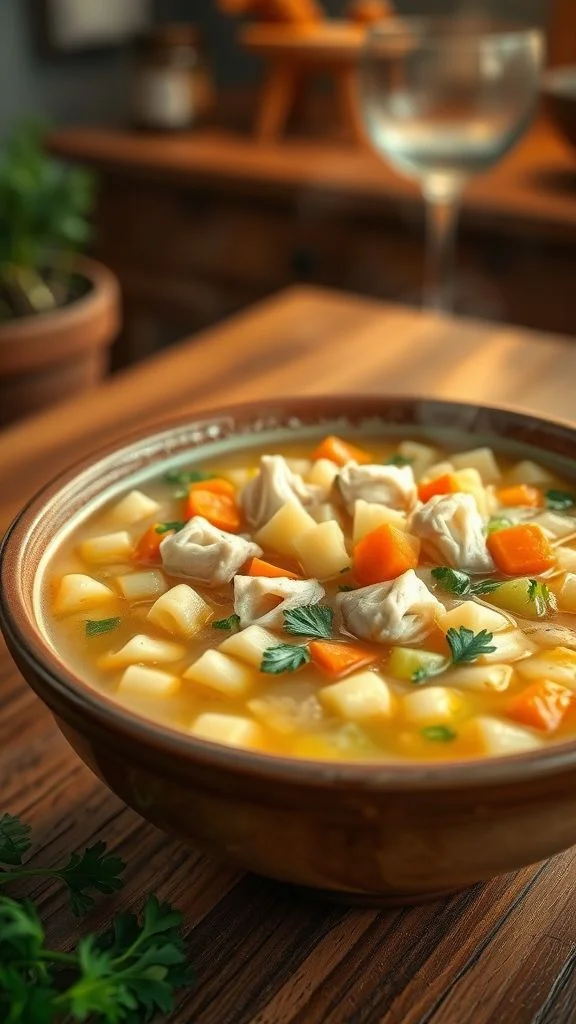
Start by dicing one onion, two carrots, and two stalks of celery. Sweat them in olive oil until they soften and release their fragrance—this takes about eight minutes and forms the flavor foundation for everything that follows. Add eight cups of good quality chicken broth (homemade is best, but a trusted store-bought brand works), a pound of boneless skinless chicken thighs, and a cup of long-grain white rice. Bring it to a boil, then reduce to a simmer and cover.
Here is the magic part: the rice releases starch as it cooks, naturally thickening the broth without any flour at all. After about twenty minutes, the chicken will be tender enough to shred with two forks. Pull it out, shred it, return it to the pot. Just before serving, squeeze in the juice of half a lemon and sprinkle fresh dill over the top. That brightness cuts through the richness and makes every spoonful taste alive.
Creamy Tomato Basil (Dairy-Free Option)
Canned tomato soup from your childhood probably came from a red and white label and contained more sugar and wheat than actual tomatoes. This version erases those memories and replaces them with something far superior.
Heat olive oil in a heavy pot and add four cloves of minced garlic plus one diced onion. Cook until translucent, then pour in two 28-ounce cans of high-quality crushed tomatoes. San Marzano tomatoes are worth the splurge here—they are sweeter and less acidic than standard varieties. Add two cups of vegetable broth and a handful of fresh basil leaves, stems removed. Simmer for thirty minutes, then blend until completely smooth using an immersion blender or careful work with a countertop blender.
For creaminess, stir in a cup of full-fat canned coconut milk if you are dairy-free, or heavy cream if you tolerate dairy. The coconut milk version has a slight tropical undertone that pairs surprisingly well with the tomatoes. Taste and adjust seasoning with salt, pepper, and maybe a pinch of red pepper flakes if you want some heat.
Loaded Baked Potato Soup
Potato soup can go wrong in so many ways—gluey texture, bland flavor, sad toppings. This version avoids every pitfall.
Cook six strips of bacon in your soup pot until crisp. Remove the bacon and set aside, leaving the rendered fat in the pot. Add one diced onion and cook until softened. Then add four cups of peeled and diced russet potatoes, four cups of chicken broth, and a teaspoon of dried thyme. Simmer until the potatoes are fork-tender.
Now comes the thickening step. Use a potato masher right in the pot to break up about a third of the potatoes. This releases their starch and creates body without any flour. In a small bowl, whisk two tablespoons of cornstarch with a quarter cup of cold water or heavy cream. Stir this slurry into the simmering soup and cook for another five minutes until it thickens.
Serve in bowls topped with the reserved bacon crumbles, shredded cheddar cheese, and sliced green onions. The contrast between the creamy soup and the salty, crunchy toppings is absolute perfection.
Hearty Beef and Vegetable Stew
Beef stew is the kind of meal that makes you feel like a competent adult even when the rest of your life is chaos. It fills your home with rich aromas and fills your stomach with warmth.
Start with two pounds of chuck roast cut into bite-sized cubes. Toss them in a mixture of two tablespoons cornstarch and a teaspoon of salt. This serves two purposes: it seasons the meat and creates a coating that will thicken the stew as it cooks. Brown the beef in batches in hot oil, making sure not to crowd the pan. Crowding leads to steaming instead of browning, and browning is where the flavor lives.
Once the beef is deeply browned, remove it and add chopped onions, carrots, and celery. Scrape up the browned bits from the bottom of the pot—those bits are pure flavor gold. Add the beef back in, along with four cups of beef broth, a cup of red wine (optional but recommended), two diced potatoes, and a bouquet garni of thyme and rosemary. Simmer low and slow for two hours until the beef is fall-apart tender and the liquid has reduced to a rich, glossy gravy.
Vegan Lentil and Spinach Soup
Even if you eat meat, you need this soup in your rotation. It costs pennies to make, comes together in under an hour, and delivers serious nutrition without trying too hard.
Sauté diced onion, carrots, and celery in olive oil until softened. Add a pound of brown or green lentils (red lentils will dissolve too much), a can of diced tomatoes, and six cups of vegetable broth. Toss in a bay leaf and let it simmer for about forty minutes until the lentils are tender but still hold their shape.
Right before serving, stir in a few generous handfuls of fresh spinach and let it wilt into the hot soup. Here is the trick that elevates this from good to great: add a tablespoon of balsamic vinegar and stir. That acidity mimics the richness of meat-based broths and wakes up every other flavor in the bowl.
Store-Bought Gluten Free Soup Brands We Love
Look, I am not going to pretend you will make soup from scratch every single day of your life. Sometimes you need to grab something and go. Sometimes you are traveling and stuck with limited options. Sometimes you just don’t feel like chopping vegetables. That is fine. That is human.
Progresso has done an impressive job marking their gluten-free options clearly. Look at the top left corner of the label—if it says “Gluten-Free” in a bright green circle, you are good to go. Their chicken rice soup and vegetable classics are reliable standbys.
Pacific Foods makes shelf-stable broths and creamy soups that consistently test safe. Their roasted red pepper and tomato soup is creamy without containing any dairy, which feels like sorcery but is actually just good food science.
Amy’s Kitchen built their reputation on catering to special diets, and their gluten-free line delivers. The lentil vegetable soup tastes remarkably close to homemade, and their split pea soup has that perfect thick texture that usually comes from hours of simmering.
Imagine Foods focuses primarily on creamy soups and broths. Their butternut squash soup tastes like autumn in a bowl and contains exactly the ingredients you would use at home.
Always check labels anyway, because formulations change and manufacturing practices vary. But these brands have earned trust over years of consistent performance.
Frequently Asked Questions About Gluten Free Soup
Is all vegetable soup gluten free?
No, and this misconception trips up a lot of people. Vegetables themselves contain no gluten, but the soup they swim in often does. Commercial vegetable soups frequently add wheat flour for body or barley for texture. Even “clear” vegetable soups can contain hydrolyzed wheat protein in the broth base. Your safest bet is to look for certified gluten-free labeling or make your own.
Can I freeze homemade gluten free soup?
Yes, with a few caveats. Soups thickened with cornstarch can sometimes separate or develop a slightly spongy texture after freezing and reheating. If you plan to freeze a creamy soup, consider using arrowroot powder instead—it handles freezing much better. Soups thickened with pureed vegetables freeze beautifully because the vegetable starches remain stable. For dairy-based creamy soups, consider adding the cream after thawing and reheating rather than before freezing.
What is a gluten-free alternative to barley in soups?
Barley adds a specific chewy texture to soups that some people really miss. The best substitutes are short-grain brown rice, hulled millet, or sorghum. These grains hold their shape during long simmering and provide that hearty bite you are looking for. Cook them separately and add toward the end of cooking, or add them early and adjust your liquid levels accordingly.
Can I use regular soy sauce in soup?
Never. Regular soy sauce contains wheat as a primary ingredient. If a recipe calls for soy sauce to add depth and umami, reach for tamari instead—most tamari is made with little or no wheat. Coconut aminos also work well and bring a slightly sweeter flavor profile that complements many soups.
How do I fix soup that turned out too thin?
Don’t panic. You have options. Remove a cup or two of the liquid and whisk in a tablespoon of cornstarch or arrowroot powder until smooth, then stir it back into the pot and simmer for five minutes. Alternatively, mash some of the cooked vegetables against the side of the pot to release their starches. If you have an immersion blender, you can puree a portion of the soup directly in the pot to thicken the whole batch.
Conclusion
You have the tools now. You know where the dangers hide and how to avoid them. You have recipes that work and brands you can trust. But more than any of that, you have permission to stop viewing soup as a risk and start viewing it as the comfort it was always meant to be.
The next time you are standing in your kitchen on a cold evening, watching onions soften in olive oil and listening to broth bubble on the stove, remember this: you are doing something that generations of cooks have done before you. You are nourishing yourself and the people you love. The fact that your soup happens to be gluten-free is almost incidental—it is just good food, made with care.
I would love to hear about your soup adventures. What recipes have become staples in your kitchen? What store-bought brands have you discovered that deserve more recognition? Drop a comment below and share your wins, your questions, and your favorite combinations. The gluten-free community grows stronger when we cook together, even if we are all in our own separate kitchens.
Now go make some soup. Your bowl is waiting.