The morning after your diagnosis, everything changes. You might find yourself standing in front of the refrigerator, hand hovering over the egg carton, suddenly terrified that something as simple as breakfast could somehow harm the tiny life growing inside you. That fear? It’s completely valid. But here’s what you need to hear right now: you haven’t failed, and you certainly haven’t done anything wrong. Your placenta is simply throwing a hormonal tantrum, and together, you’re going to learn exactly how to work with it.

I remember those early mornings all too well. The anxiety of pricking my finger, watching that number appear, and wondering if what I ate yesterday was somehow sabotaging everything. But here’s what I discovered through trial, error, and plenty of research: breakfast became the meal where I felt most in control. Once I understood how to build a plate that kept my blood sugar steady, the fear dissolved. What replaced it was confidence, and honestly, some pretty delicious meals.
Let’s walk through this together. No judgment, no complicated medical jargon, just real talk about what works.
Why Breakfast Matters So Much with Gestational Diabetes

You’ve probably noticed that morning seems to be the trickiest time for your blood sugar readings. There’s a biological reason for this, and understanding it might just take the edge off that morning dread.
The “Dawn Phenomenon” Explained
Here’s what’s happening inside your body while you sleep. Those pregnancy hormones you’ve been hearing about? They’re working overtime, specifically human placental lactogen. In the early morning hours, typically between 2 AM and 8 AM, your body releases stored glucose from your liver. Under normal circumstances, your pancreas would release insulin to handle this. But with gestational diabetes, your cells become resistant to insulin’s signal, meaning that glucose hangs around in your bloodstream longer than it should.
This isn’t your body betraying you. It’s actually doing exactly what evolution designed it to do: ensuring your baby has a steady supply of energy even before you’ve eaten breakfast. The challenge is that your system now needs a little extra help managing that morning glucose surge.
The Golden Rule: The Balanced Plate Method
If you take away only one thing from this entire article, let it be this formula: Fiber + Protein + Healthy Fat = Stable Blood Sugar.
Think of carbohydrates as paper. Alone, they burn up fast and furious. But when you wrap them in protein and fat, you’ve essentially created a slow-burning log that releases energy steadily rather than all at once. Protein and fat act as buffers, slowing down how quickly carbohydrates enter your bloodstream. This means no terrifying spikes, and no crashing energy crashes mid-morning.
For gestational diabetes specifically, applying this formula at breakfast is non-negotiable. Your body is most insulin resistant in the morning, which means those first bites of the day set the tone for everything that follows.
The Golden Rules of a GD Breakfast
Before we dive into specific meals, let’s establish some ground rules that’ll serve you well beyond just the breakfast hour.
What to Limit (or Avoid)
You don’t need me to tell you to skip the donuts. But there are some sneaky culprits that even health-conscious women might reach for without realizing the impact.
Sugary Cereals deserve a special mention here. Even the ones marketed as “healthy” with whole grains and fiber often pack more sugar per serving than a candy bar. Without protein and fat to slow absorption, that bowl of cereal hits your bloodstream fast.
Fruit juice feels virtuous, doesn’t it? Fresh squeezed, full of vitamins. But here’s the hard truth: juice removes the fiber from fruit while concentrating the sugar. A glass of orange juice might contain four or five oranges worth of sugar, none of the pulp that would normally slow absorption. Save your fruit budget for the whole version.
White bread and pastries behave similarly. Refined flour breaks down quickly into sugar, causing rapid spikes that your resistant cells struggle to handle.
What to Load Up On
Now for the fun part. Building your plate becomes a creative exercise rather than a restrictive one.
Protein Power comes from eggs, full-fat Greek yogurt, cottage cheese, tofu, and even quality breakfast meats. Don’t skimp here. Protein keeps you full and actively works to stabilize your numbers.
Fiber Heroes include avocado, chia seeds, ground flaxseed, and non-starchy vegetables. These add volume and satisfaction while barely registering on the glycemic scale.
Smart Carbs aren’t forbidden. You just need to choose them wisely and watch portions. Think small servings of steel-cut oats, sprouted grain bread, or low-glycemic fruits like berries.
15 Gestational Diabetes Breakfast Ideas to Keep You Full and Steady
Here’s where theory meets practice. These ideas range from practically instant to weekend-worthy, so you’ll find something that fits your morning rhythm.
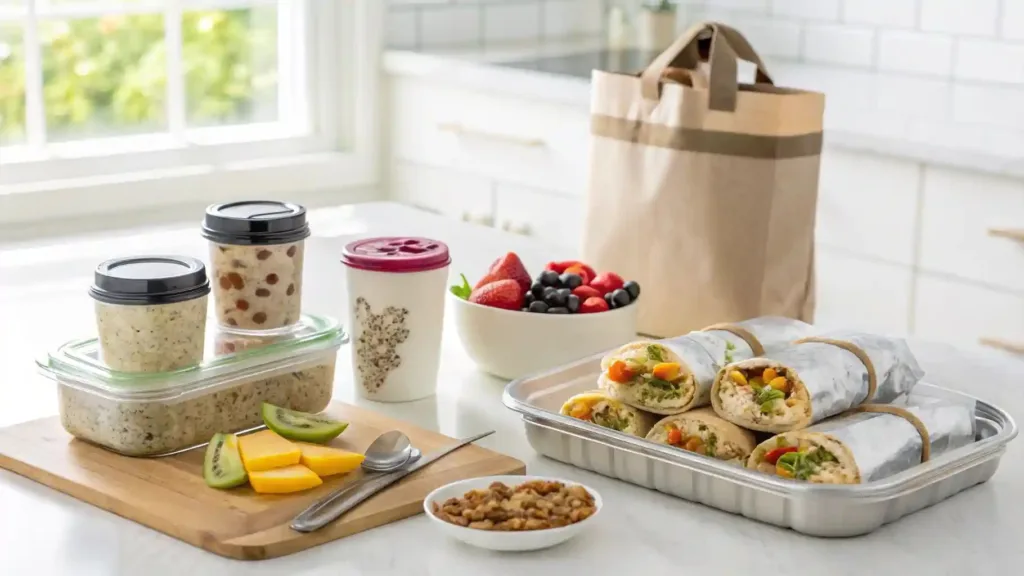
5-Minute “No-Spike” Grab-and-Go Ideas
1. Greek Yogurt Berry Parfait
Scoop full-fat plain Greek yogurt into a bowl, add a generous handful of fresh or frozen blueberries, and top with a tablespoon of chopped walnuts. The yogurt delivers protein, the berries contribute fiber without overwhelming sugar, and the walnuts bring healthy fats that slow digestion further.
2. Cottage Cheese and Avocado Bowl
This combination sounds simple until you taste it. Spoon full-fat cottage cheese into a bowl, top with sliced avocado, sprinkle with salt and pepper, and finish with everything bagel seasoning if you have it. The creamy textures contrast beautifully, and the fat from the avocado pairs perfectly with the protein from the cheese.
3. Chia Seed Pudding
Make these the night before and morning becomes effortless. In a jar, combine three tablespoons of chia seeds with one cup of unsweetened almond milk and a splash of vanilla extract. Stir well, refrigerate overnight, and top with sunflower seeds before eating. Chia seeds expand into a pudding-like consistency while delivering remarkable fiber and omega-3 fatty acids.
4. Hard-Boiled Eggs and Cheese Stick
Sometimes simple wins. Keep hard-boiled eggs in your refrigerator at all times. Pair one with a full-fat cheese stick and you’ve got a balanced breakfast that requires absolutely no thought when mornings feel overwhelming.
5. Nut Butter on Celery Sticks
Spread almond or peanut butter generously onto celery sticks and sprinkle with a few raisins if you tolerate dried fruit well. The celery provides crunch and hydration while the nut butter delivers satisfying fat and protein.
Warm and Comforting Breakfasts
6. Veggie-Packed Omelette
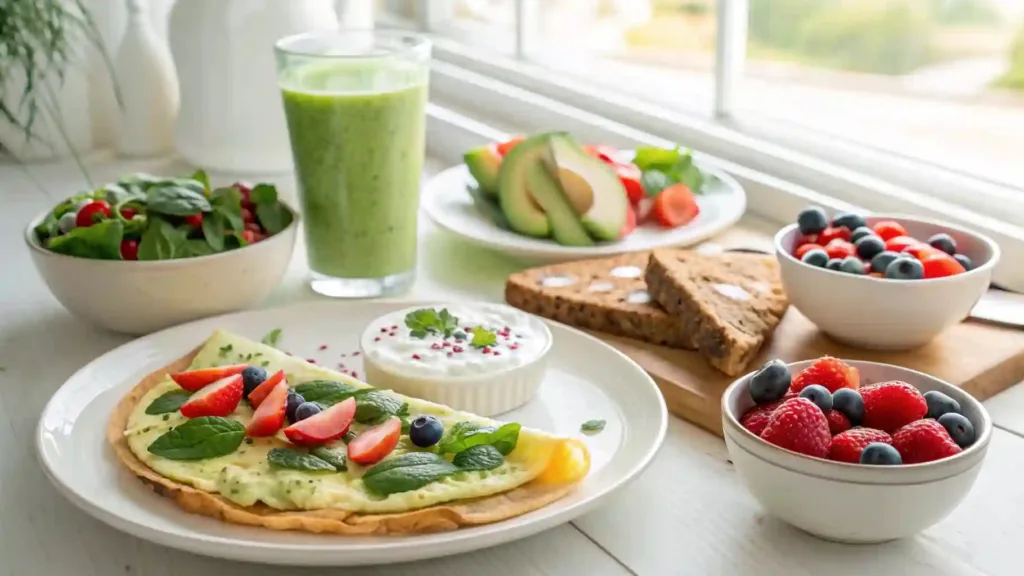
Whisk two eggs with a tablespoon of water until frothy. Pour into a heated buttered pan, then fill with handfuls of fresh spinach, sliced mushrooms, and crumbled feta cheese. Fold and cook until golden. Serve with half a slice of whole-grain toast if your numbers tolerate it.
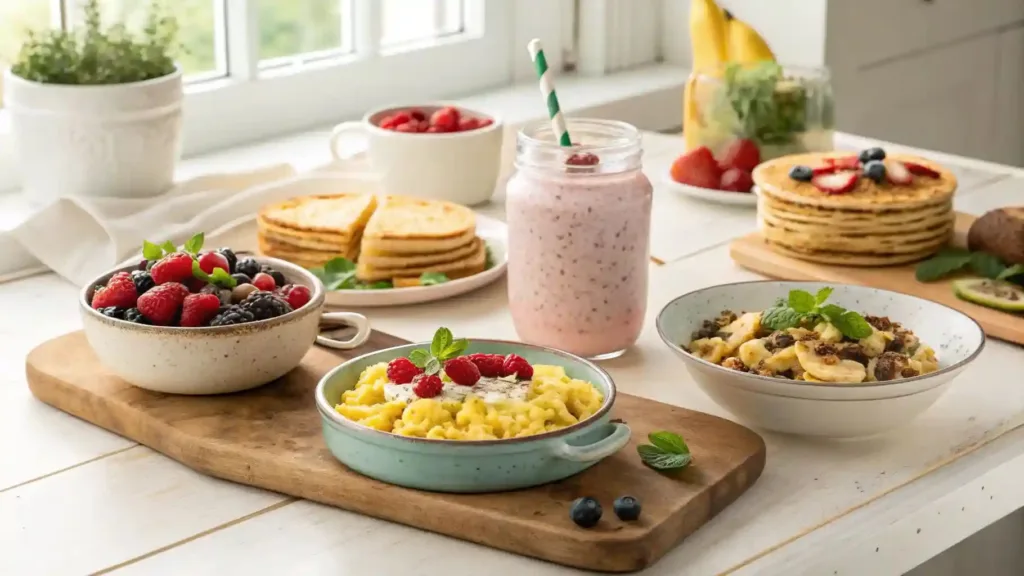
7. The Protein Pancake
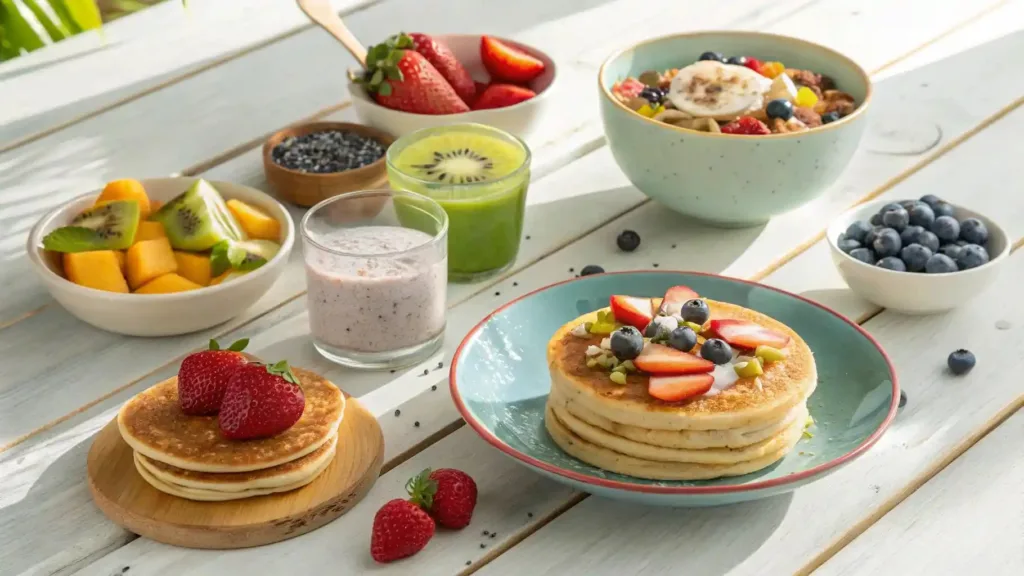
Mash one ripe banana thoroughly, then whisk in two eggs until completely combined. Pour the batter into a coconut oil-heated pan and cook like a regular pancake. The result tastes satisfyingly sweet from the banana while delivering significant protein. Top with a few raspberries rather than syrup.
8. Steel-Cut Oats with Peanut Butter
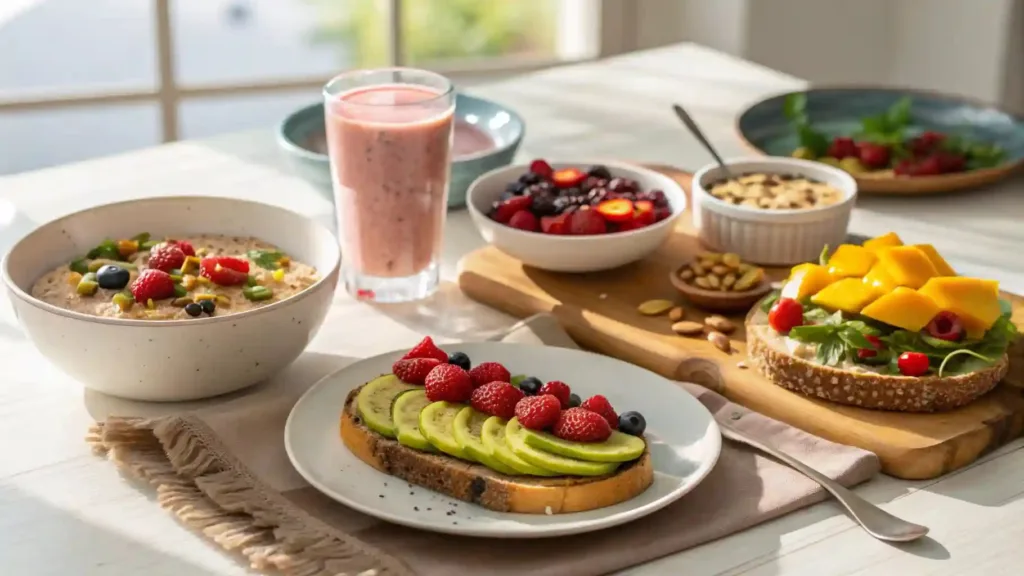
Cook steel-cut oats according to package directions, keeping your portion to about half a cup cooked. Stir in a tablespoon of natural peanut butter and top with a scattering of raspberries. Steel-cut oats digest more slowly than rolled or instant varieties, making them the smarter choice for blood sugar management.
9. Scrambled Eggs with Sautéed Greens
Heat butter in a pan, add a generous handful of kale or spinach, and cook until wilted. Push the greens aside, pour in beaten eggs, and scramble everything together. The greens add volume and nutrients while barely affecting your blood sugar.
10. Breakfast Sausage and Apple Slices
Choose high-quality breakfast sausage links or patties with minimal added sugar. Serve alongside a small apple sliced thin. The sausage provides protein and fat while the apple offers fiber and satisfaction. The combination keeps your numbers steady while feeling thoroughly satisfying.
Savory Breakfast Ideas to Beat Sweet Cravings
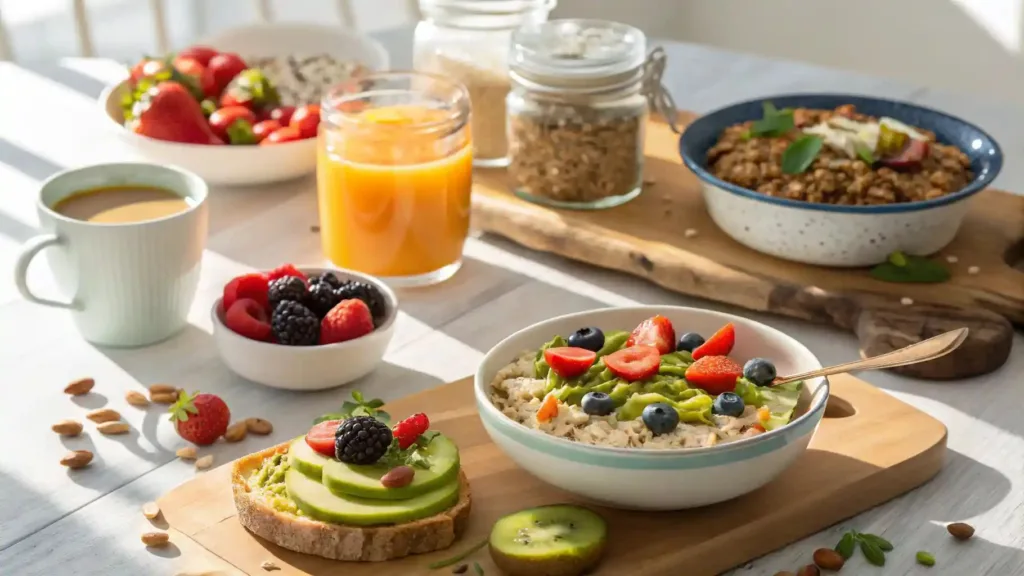
11. Avocado Toast Done Right
Toast one slice of sprouted grain bread like Ezekiel brand. Mash half an avocado onto the toast, top with a fried egg, and finish with red pepper flakes or everything bagel seasoning. Sprouted grains have a lower glycemic impact than conventional bread, and the egg adds protein that transforms this from a snack into a meal.
12. Breakfast Tostada
Place a quarter cup of shredded cheddar cheese in a circle on a parchment-lined baking sheet. Bake at 375 degrees until melted and beginning to brown, about five to seven minutes. Let cool slightly, then top with mashed black beans, salsa, and a fried egg. The cheese becomes a zero-carb shell that satisfies any craving for crunch.
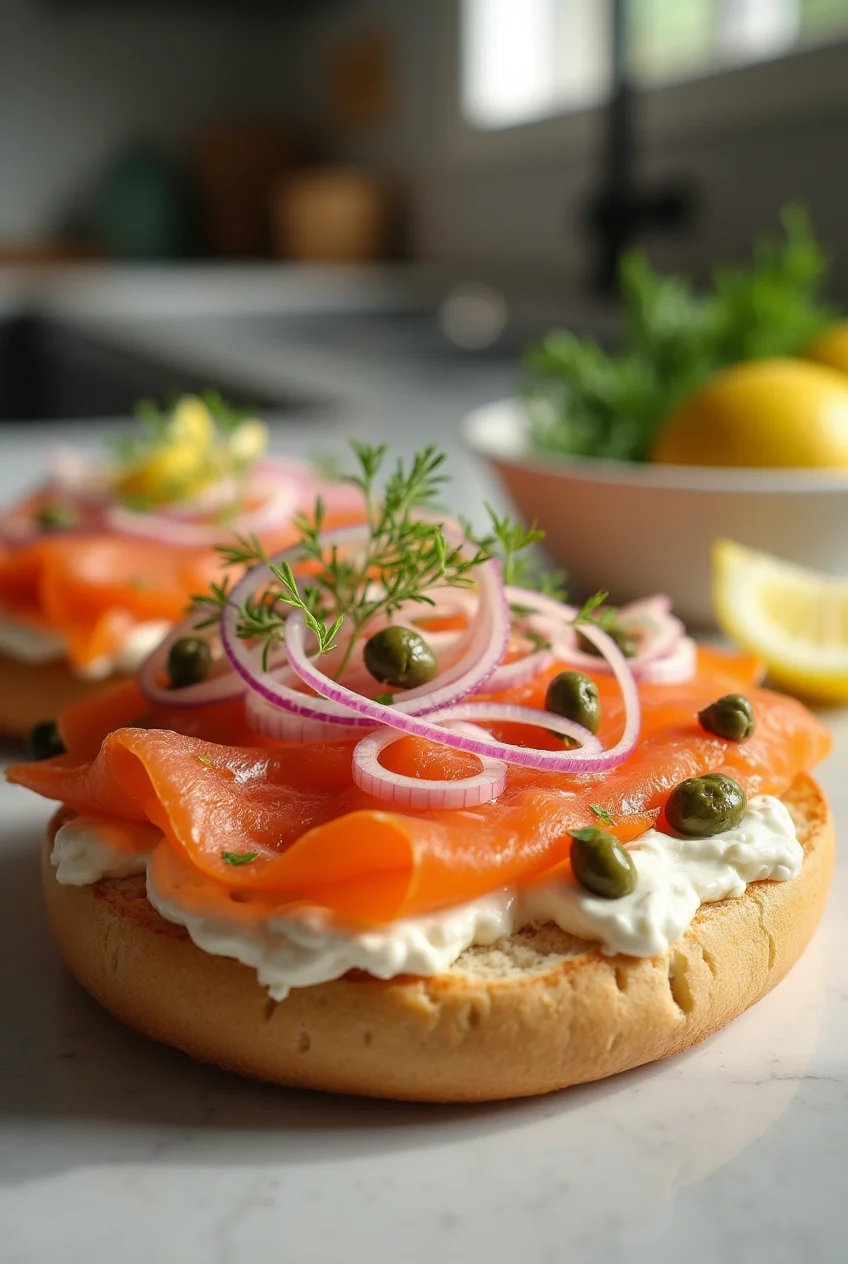
13. Smoked Salmon and Cream Cheese Roll-Ups
Spread cream cheese onto slices of smoked salmon and roll them up. Serve with thick cucumber slices. This meal feels luxurious while delivering protein, healthy fats, and virtually no carbohydrates. The omega-3 fatty acids in salmon support both your health and your baby’s developing brain.
14. Breakfast Burrito Bowl
Skip the tortilla entirely. In a bowl, layer scrambled eggs, sauteed peppers and onions, black beans, salsa, and sliced avocado. Top with a dollop of sour cream. All the satisfaction of a breakfast burrito without the blood sugar impact of the wrap.
15. Quinoa Breakfast Bowl
Cook quinoa in unsweetened almond milk with a sprinkle of cinnamon. Top with a handful of chopped pecans and a few blackberries. Quinoa provides complete protein and fiber, making it a smarter alternative to traditional breakfast grains.
Smoothies With a Warning
Smoothies deserve their own category because they can go wrong quickly. Without the fiber of whole foods, fruit smoothies often spike blood sugar. But made correctly, they work beautifully.
16. The Green Goddess Smoothie
In a blender, combine a large handful of spinach, a quarter of an avocado, one scoop of unsweetened protein powder, unsweetened almond milk, and a few frozen strawberries. The avocado creates creaminess while adding healthy fat, and the protein powder ensures you’re actually getting a meal rather than a sugar drink.
17. Peanut Butter and Jelly Smoothie
Blend a scoop of vanilla protein powder, a tablespoon of natural peanut butter, a handful of frozen raspberries, unsweetened almond milk, and a tablespoon of ground flaxseed. The raspberries provide that jelly flavor with minimal sugar, and the flaxseed adds fiber that further stabilizes the drink.
Sample 3-Day Gestational Diabetes Breakfast Meal Plan
Seeing how these meals work together across days might help you visualize your own rhythm.
Day One
Breakfast: Spinach and feta omelette made with two eggs, served with half a slice of whole-grain toast
Mid-Morning Snack: Small handful of almonds
Day Two
Breakfast: Vanilla chia seed pudding made with coconut milk, topped with a scattering of blackberries
Mid-Morning Snack: One hard-boiled egg
Day Three
Breakfast: Full-fat Greek yogurt with two tablespoons of chopped pecans and a generous sprinkle of cinnamon
Mid-Morning Snack: Celery sticks spread with cream cheese
Expert Tips: How to Track Your Response
Every woman responds differently to foods during gestational diabetes. What works perfectly for your friend might spike your numbers unexpectedly. This isn’t failure. It’s simply information.
The One Hour Versus Two Hour Test
Follow your provider’s specific instructions about when to test. Generally, if you’re testing at one hour, you want to see numbers under 140 milligrams per deciliter. If testing at two hours, under 120 is typical. Write these numbers in your phone or on a sticky note until they become second nature.
The Test, Don’t Guess Approach
When you try a new breakfast food, test your blood sugar at the appropriate interval. Write down exactly what you ate and what your number was. Over time, patterns emerge. You might discover that you handle oats beautifully but quinoa spikes you unexpectedly. This information becomes your personal roadmap.
Frequently Asked Questions About Gestational Diabetes Breakfast Ideas
Can I eat fruit for breakfast with gestational diabetes?
Yes, absolutely. Choose fruits with care. Berries of all varieties deliver sweetness with less sugar than alternatives. Pair them consistently with protein, meaning Greek yogurt alongside raspberries rather than a solo banana. Save tropical fruits like mango and large bananas for later in the day when your insulin sensitivity improves, or eat them in very small portions alongside substantial protein.
What if I’m not hungry in the morning?
Eat anyway. Your blood sugar doesn’t care about your appetite. When you skip breakfast, your liver may release stored glucose, potentially raising your numbers higher than if you’d eaten. Start small. A cheese stick, a handful of nuts, or a hard-boiled egg requires minimal effort while providing enough to stabilize your system. You can eat a fuller breakfast an hour later when appetite awakens.
Is oatmeal safe for gestational diabetes?
Safe, yes, but with conditions. Instant oatmeal packets belong in the past. They digest quickly and often contain added sugar. Steel-cut oats offer the best choice because they digest slowly. Keep your portion modest, about half a cup cooked. Always add protein, either stirred into the oats or alongside. Peanut butter stirred in works beautifully, as does a side of scrambled eggs.
Will skipping breakfast help lower my morning blood sugar?
This misconception causes real problems. When you skip meals, your body may release stored glucose from the liver as a protective mechanism. This can actually raise your blood sugar higher than if you’d eaten. Additionally, skipping breakfast often leads to ravenous hunger later, which typically results in overeating and subsequent spikes. Eat something, even if small.
What can I drink with breakfast besides water?
Unsweetened almond milk works beautifully in smoothies and with cereal. Plain coffee or tea with a splash of cream causes minimal impact for most women. Avoid sweetened coffee drinks, which essentially function as liquid dessert. If you crave flavor, try sparkling water with a squeeze of fresh lemon or lime.
Conclusion
Gestational diabetes asks you to think about food differently, but it doesn’t ask you to suffer through miserable meals. The breakfast ideas you’ve explored here offer real satisfaction, real flavor, and genuine nourishment for both you and your baby.
You might notice that these meals look remarkably like how humans ate before processed food took over our pantries. That’s intentional. Whole foods, properly combined, provide everything you need without the constant blood sugar drama.
Pick one or two ideas from this list to try this week. Maybe the protein pancake on Saturday morning when you have extra time. Maybe the Greek yogurt parfait on a busy Tuesday. See how they make you feel, both in your blood sugar numbers and in your overall energy.
This season feels intense right now. The finger pricks, the food tracking, the worry. But here’s what I want you to hold onto: you’re doing something incredibly hard, and you’re doing it while growing a human. That deserves genuine respect. The habits you’re building now won’t disappear after delivery. You’ll carry forward a deeper understanding of how food affects your body, knowledge that serves you for the rest of your life.
Now I’d love to hear from you. Which breakfast idea are you most excited to try? Or maybe you’ve already discovered a combination that works beautifully for your numbers. Drop a comment below and share your experience. Your insight might be exactly what another woman needs to hear today.