There are certain smells that have the power to stop you in your tracks, transporting you instantly to another time and place. For me, that scent is a complex tapestry of star anise, cinnamon, and soy mingling with the deep, savory perfume of beef simmering for hours on the stove. It’s the smell of a rainy Sunday afternoon with no place to go. It’s the smell of patience rewarding you. I can still picture the first time I pulled a chunk of beef shank from a bubbling, dark liquid, watching it cling to the fork before yielding with almost no resistance. In that moment, I wasn’t just cooking; I was participating in a culinary tradition that spans generations and continents.
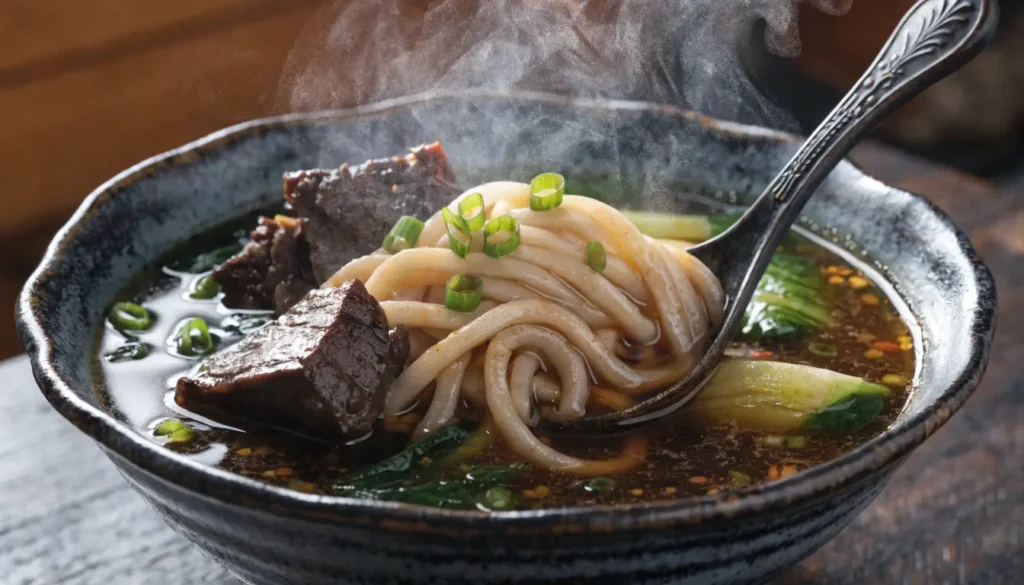
This article is your passport to that experience. We aren’t just going to throw ingredients into a pot. We are going to decode the magic, dismantle the mystery, and guide you step-by-step toward creating a braised beef noodle soup so profound, so layered, that it will rival your favorite noodle shop. Whether you are seeking solace on a cold evening or looking to impress dinner guests, mastering this dish is a skill you will treasure forever.
What is Braised Beef Noodle Soup? A Cultural Icon
Before we get our hands dirty, it is worth understanding exactly what you are about to create. At its core, this is a dish built on the philosophy of transformation—taking tough, inexpensive cuts of meat and turning them into something luxurious through low and slow cooking.
The “Red Cooking” Tradition (Hong Shao)
You might hear this dish referred to as “Hong Shao Niu Rou Mian.” The term “Hong Shao,” or “red cooking,” is a quintessential Chinese braising technique. It involves slowly simmering meat in a mixture of dark soy sauce, light soy sauce, and Shaoxing wine. The “red” doesn’t come from spice, but from the caramelization of the sugars and the deep, dark hue of the soy sauce interacting with the meat over time. This method doesn’t just color the beef; it penetrates it, creating a flavor profile that is salty, sweet, and deeply savory all at once.
While the technique is widespread, you will find regional variations.
- Taiwanese Style: Often features a clearer broth that is intensely aromatic, sometimes with a hint of five-spice powder, and is typically served with thick, chewy wheat noodles.
- Sichuan Style: If you like heat, this is your version. It incorporates Sichuan peppercorns for a numbing sensation (mala) and often includes chili bean paste (Doubanjiang) in the braise.
- Cantonese Style: Tends to be slightly sweeter and less soy-heavy, focusing more on the pure flavor of the beef and a complex blend of roasted spices.
Key Components of the Dish
To truly appreciate the craft, you must understand the three pillars that support this dish.
- The Broth: This is non-negotiable. A great broth is not just beef-flavored water. It should be unctuous, coating your lips slightly as you sip it. This texture comes from collagen, which we will discuss shortly. The flavor should hit you in waves—first the warmth of the spices, then the saltiness of the soy, and finally, the lingering taste of pure beef.
- The Beef: Tenderness is the goal, but not mushy tenderness. You want the meat to have enough structure that it still feels substantial in your mouth, yet pulls apart with the gentle pressure of your chopsticks.
- The Noodles: You need a noodle that can stand up to this hearty broth. Thick, fresh wheat noodles (often labeled “thick noodles” or “ramen-style” noodles in Western supermarkets) are the gold standard. They have the chewiness—what the Chinese call “Q texture”—necessary to make the meal satisfying.
Why Braised Beef Noodle Soup is the Ultimate Comfort Food
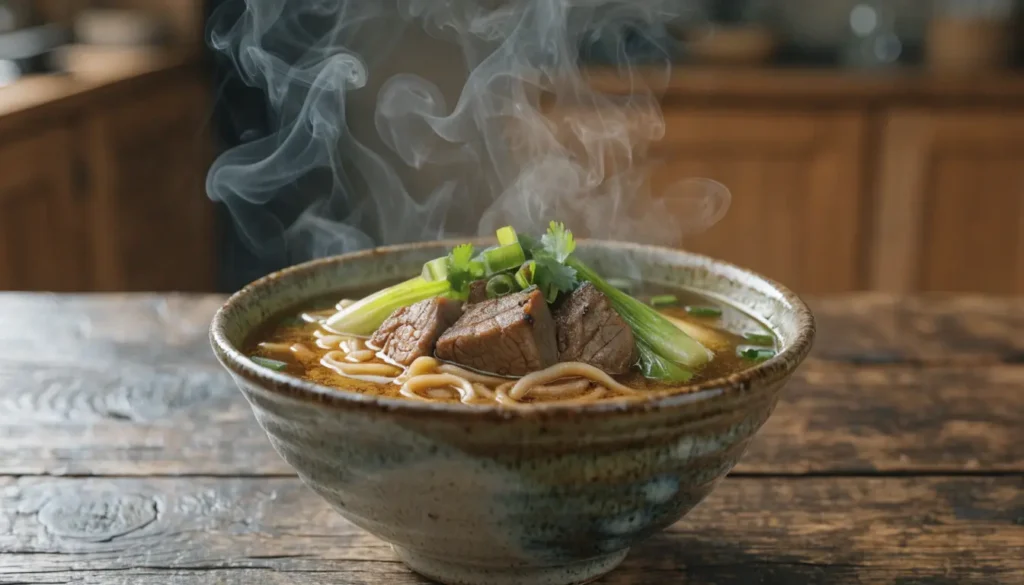
We often throw the term “comfort food” around loosely. But this soup redefines the category. It’s not just about being warm; it’s about the physiological and emotional response it triggers.
The Science of Savory (Umami)
There is a scientific reason why you feel so content after a bowl of this soup. The slow braising process breaks down the connective tissues in the beef—namely collagen—into gelatin. This gelatin enriches the broth, giving it a velvety, almost buttery texture that your brain interprets as richness and quality. Furthermore, the long cooking time breaks down proteins into amino acids, specifically glutamates, which are the building blocks of umami. When you combine that with the glutamates found in the soy sauce, you create a flavor bomb that hits specific receptors on your tongue, signaling satisfaction and satiety in a way that few other foods can.
A Hug in a Bowl
On an emotional level, the spices play a crucial role. Cinnamon and star anise are warming spices. They evoke feelings of coziness and festivity. On a cold, damp day, the heat from the broth and the gentle warmth from these aromatics can literally make you feel warmer from the inside out. It’s a dish that asks you to slow down. You can’t eat it while standing at the counter. You have to sit, breathe in the steam, and savor it. In our fast-paced world, that forced moment of pause is perhaps the most comforting ingredient of all.
Essential Ingredients for the Perfect Braised Beef Noodle Soup
The quality of your final dish is directly proportional to the quality of your ingredients and your understanding of their roles. Don’t just grab and go; be intentional.
Choosing the Right Cut of Beef
This is where most home cooks stumble. They grab a steak because they think “tender meat” comes from tender cuts. In braising, the opposite is true.
- Best Option: Beef Shank. This is the cut you want to look for. It comes from the leg of the animal, meaning it gets a lot of exercise. This exercise creates a high amount of connective tissue. During a long braise, that connective tissue melts into gelatin, basting the meat fibers from the inside out and creating an unbelievably rich broth. It is the perfect choice.
- Second Best: Beef Brisket. This cut comes from the breast area and is also well-exercised. It has a high-fat content, which renders down and keeps the meat incredibly moist. The flavor of brisket is hard to beat, though it can be slightly greasier than shank if not skimmed properly.
- The “Don’t”: Avoid lean cuts like sirloin, tenderloin, or round steak. They have very little collagen or fat. By the time the broth is ready, they will be dry, stringy, and tough, offering none of the succulence you are after.
The Aromatic Trinity (The Spice Kit)
You will be building a spice sachet or simply adding these whole to the pot. Their job is to perfume the broth without overwhelming the beef.
- Star Anise: Provides that classic licorice-like sweetness that is unmistakable in Asian braised dishes.
- Cinnamon Stick: Adds warmth and a subtle sweetness. Use a whole stick, not ground cinnamon, which will make the broth cloudy and gritty.
- Sichuan Peppercorns: These are optional but highly recommended. They don’t just add heat; they create a unique tingling or numbing sensation on your tongue called “ma,” which opens up your palate to perceive other flavors more intensely.
- Fresh Ginger and Garlic: The backbone of the aromatics. Smash the ginger cloves and garlic with the flat side of your knife to release their oils before they hit the pot.
Liquid Building Blocks
The liquid is your canvas. It needs depth and balance.
- Light Soy Sauce: This is for seasoning. It’s saltier and thinner than dark soy sauce. Think of it as your primary source of salt.
- Dark Soy Sauce: This is for color and a hint of sweetness. It is aged longer and often contains molasses, giving it a thicker consistency. It will give your broth that dark, caramelized, “red cooked” appearance. Without it, your soup will look like a pale beef stew.
- Shaoxing Wine: This is a Chinese rice cooking wine. It is crucial for deglazing the pan and cutting through the richness of the beef. It adds a fermented complexity that you simply cannot replicate with any other ingredient. If you cannot consume alcohol, a dry sherry is the closest substitute, though the flavor profile will shift slightly.
- Rock Sugar: You might see this in Asian markets. It looks like lumps of amber crystal. It dissolves slowly and provides a cleaner sweetness than granulated sugar. It is essential for balancing the harsh saltiness of the soy sauces and helps create a beautiful glaze on the meat.
Step-by-Step Guide to Making Braised Beef Noodle Soup at Home
Now for the main event. Follow these steps, and you will be rewarded with a pot of liquid gold.
Preparation (Mise en Place)
Before you turn on the heat, get organized. You will need:
- 2 lbs beef shank or brisket, cut into large 2-3 inch chunks
- 2 tablespoons oil (vegetable or peanut)
- 4 slices of ginger, smashed
- 6 cloves of garlic, smashed
- 2 whole star anise
- 1 cinnamon stick
- 1 teaspoon Sichuan peppercorns
- ¼ cup light soy sauce
- 2 tablespoons dark soy sauce
- ¼ cup Shaoxing wine
- 1 tablespoon rock sugar (or 2 teaspoons granulated sugar)
- 6 cups of water or unsalted beef broth
- Noodles and greens for serving
The Searing Process (Building the Fond)
This step is mandatory. Do not skip it.
- Pat your beef chunks completely dry with paper towels. Moisture is the enemy of browning.
- Heat your oil in a heavy-bottomed Dutch oven or pot over medium-high heat until it shimmers.
- Working in batches (do not crowd the pan!), add the beef. Let it sit undisturbed for 3-4 minutes until a deep brown crust forms.
- Flip and brown on all sides.
- This browning is the Maillard reaction—the chemical process that creates hundreds of new flavor compounds. It is the foundation upon which the entire dish is built.
The Braise (Low and Slow)
- Remove the last batch of beef. Reduce the heat to medium. Add the smashed ginger and garlic to the pot. Scrape up the browned bits (the “fond”) from the bottom with a wooden spoon.
- Add the Shaoxing wine to deglaze, letting it bubble and reduce by half.
- Return the beef to the pot. Add the soy sauces, rock sugar, star anise, cinnamon, Sichuan peppercorns, and your 6 cups of liquid. The liquid should just about cover the beef.
- Bring it to a boil, then immediately reduce the heat to the lowest possible setting. You want a gentle simmer, not a rolling boil. A boil will make the meat tough.
- Cover and let it cook.
- Stovetop: Simmer for 2.5 to 3 hours, checking occasionally to ensure the liquid isn’t evaporating too quickly.
- Slow Cooker: Transfer everything to a slow cooker after deglazing and cook on low for 6-8 hours.
The Final Assembly
- Once the beef is fork-tender, use a slotted spoon to remove it carefully. It will be fragile.
- Strain the broth through a fine-mesh sieve into a clean pot. Discard the solids. You now have a pristine, aromatic broth. Taste it and adjust seasoning if necessary.
- Cook your noodles according to package directions in a separate pot of boiling water.
- While the noodles cook, blanch a handful of bok choy or greens in the noodle water for 1 minute.
- Slice the beef against the grain into thick, glorious pieces.
- To serve: Place noodles in a deep bowl. Arrange the beef and greens on top. Ladle the piping hot broth over everything. The heat will wake up the noodles and finish warming the beef.
Tips and Tricks from the Kitchen
A few insider secrets can take your soup from great to legendary.
- Make it Ahead: Here is a secret restaurants rely on: braised beef always tastes better the next day. The proteins and starches continue to break down, and the flavors meld and marry in the refrigerator. If you have the time, make the broth and beef a day ahead.
- Skim the Fat: Refrigerating the broth overnight solves another problem. The fat will rise to the top and solidify into a hard white layer. You can easily scrape it off with a spoon, leaving you with a rich, but fat-free, broth underneath.
- The Toppings: Do not underestimate the power of fresh garnishes. They cut through the richness and add freshness. Your table should have:
- Fresh scallions: Thinly sliced.
- Cilantro: Roughly chopped.
- Chili oil: Homemade is best, but a good quality store-bought one works. The oil carries the spice flavor better than dried flakes.
- Fried garlic or shallots: For an extra crunch.
Frequently Asked Questions About Braised Beef Noodle Soup
Can I freeze braised beef noodle soup?
Absolutely. This recipe is freezer-friendly. However, you must store the components separately. The noodles will turn to mush if frozen in the liquid. Portion the beef and broth into freezer-safe containers. When you are ready to eat, simply thaw and reheat the broth and beef while you boil fresh noodles.
What is the best cut of beef for braised beef noodle soup?
As we covered, beef shank is the top contender due to its high collagen content. This collagen is the secret to that luxurious, lip-smacking broth. If you prioritize fatty, melting meat over broth texture, brisket is a fantastic alternative.
How do I make braised beef noodle soup spicy?
There are two routes you can take. You can incorporate heat into the braising liquid by adding a tablespoon of chili bean paste (Doubanjiang) along with your aromatics, or by tossing in a few dried red chilies. For a more controlled heat, the best method is to let each person spice their own bowl at the table using a robust homemade chili oil.
Is braised beef noodle soup gluten-free?
It can be with a few smart swaps. The main source of gluten is the soy sauce and the noodles. You can substitute both light and dark soy sauce with tamari or coconut aminos, which are gluten-free. Be sure to pair this with rice noodles or 100% buckwheat soba noodles to keep the dish completely gluten-free.
Your Bowl Awaits
Mastering braised beef noodle soup is more than just learning to follow a recipe. It is a lesson in patience and a testament to the fact that the best things in life take time. You are learning to coax flavor from simple ingredients through the gentle application of heat and care. It is a deeply rewarding process that fills your home with an incredible aroma and your belly with unparalleled comfort.
Now, it is your turn. Gather your ingredients, clear your Sunday afternoon, and take the plunge. Make a big pot. Invite a friend over. Share the warmth.
After all, isn’t everything better shared over a warm bowl of noodles? We would love to hear how your first batch turns out. Did you add your own twist? Let us know in the comments below