You know that feeling when the weather turns gray, your nose gets stuffy, or you just need something that wakes up every single taste bud? You reach for a bowl of Tom Yum soup. That first spoonful hits you like a warm, spicy wave—lemongrass dancing in your throat, chili tickling your lips, lime cutting through everything like a bright sunrise.
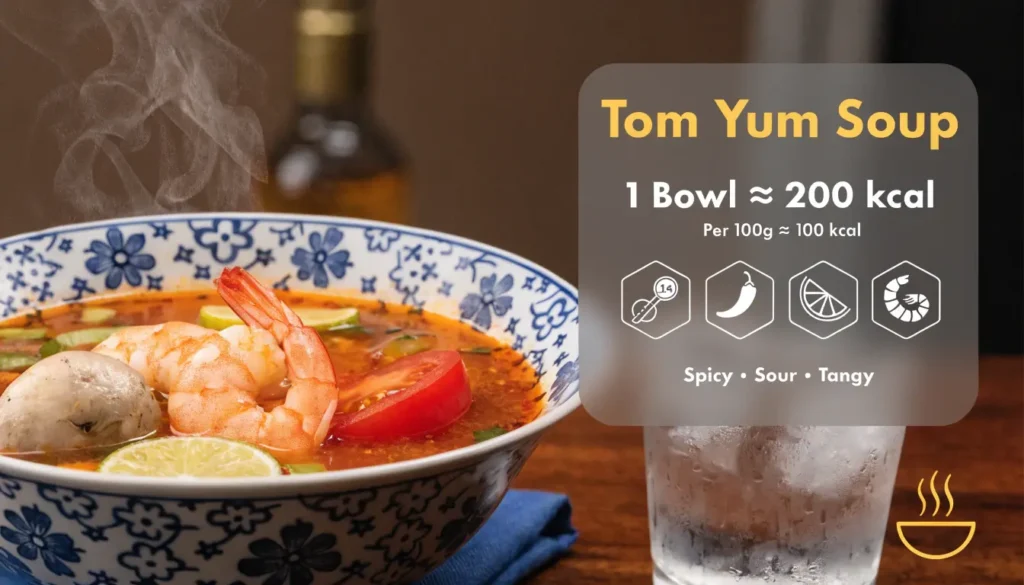
But then, right in the middle of your happy place, a tiny voice whispers: “How many calories are in this bowl?”
You’re not alone. Plenty of people have stared into that ruby-red broth, spoon halfway to their mouth, trying to do mental math between sips. Here’s the honest truth you’ve been looking for: you don’t have to give up this soup. You just need to know which bowl to pick. Let’s walk through the real numbers behind tom yum soup calories—and trust me, the answer is better than you think.
What Determines Tom Yum Soup Calories? (The Core Variables)
Before anyone throws out a single number, you have to understand that Tom Yum isn’t one soup. It’s a family of soups. And like any family, some members are leaner than others.
Think of it this way: two different restaurants can serve “Tom Yum” that look completely different. One might be clear as tea. Another might be creamy and pale orange. Their calorie counts won’t even be in the same neighborhood.
Here’s what actually changes the math in your bowl:
- Broth base: Clear broth (called Nam Sai) vs. creamy coconut milk (Nam Khon). This single choice makes the biggest difference—sometimes triple the calories.
- Protein choice: Shrimp, chicken, tofu, or a mixed seafood pile. Each brings a different calorie load.
- Added fats and sugars: Restaurants often toss in a swirl of oil or a pinch of palm sugar. You won’t see it, but you’ll feel it later.
- Serving size: An appetizer cup (around 8 ounces) versus a meal-sized entree bowl (16 to 24 ounces) changes everything.
Where these numbers come from: Nutrition databases like the USDA FoodData Central and specific Thai nutrition studies show that a plain clear broth (without any protein) often sits under 50 calories per cup. That’s almost nothing. The moment you add coconut milk? You’re climbing fast.
So before you panic about tom yum soup calories, take a breath. You have control here. Most of it comes down to a single question: clear or creamy?
Tom Yum Soup Calories Chart (At a Glance)
Let’s get the numbers out on the table. Below is a realistic breakdown for a standard 1-cup serving (about 240ml). These aren’t perfect restaurant averages—because every kitchen is different—but they’ll give you a reliable map.
| Type of Tom Yum | Calories (Approx.) | Fat (g) | Carbs (g) | Protein (g) |
|---|---|---|---|---|
| Clear Tom Yum (Shrimp) | 90 – 120 | 3 – 5 | 8 – 10 | 8 – 12 |
| Creamy Tom Yum (Coconut Milk) | 250 – 350 | 20 – 28 | 12 – 15 | 9 – 14 |
| Tom Yum with Tofu (Vegan, Clear) | 70 – 90 | 2 – 3 | 9 – 11 | 4 – 6 |
| Restaurant Style (Full bowl) | 400 – 600+ | Varies widely | Varies widely | Varies widely |
Look at that creamy version again. See how the fat number jumps? That’s coconut milk doing what coconut milk does—delicious, but dense.
If you’re someone who tracks your daily intake, here’s the bottom line: clear Tom Yum has roughly one-third the calories of creamy Tom Yum. That’s not a small difference. That’s the difference between a snack and a meal.
Clear vs. Creamy Tom Yum – A Calorie Showdown
You’re standing at a Thai restaurant counter. The menu lists both. Which one goes into your stomach? Let’s break this down like you’re comparing two cars before a test drive.
Clear Tom Yum (Tom Yum Nam Sai)
This is the original. The traditional version. The one your Thai grandmother might have made on a weekday night.
- Calorie range: 80–120 per cup.
- Why it stays low: The broth is basically flavored water—but in the best way. Galangal, lemongrass, kaffir lime leaves, and a little chili paste float around in a clear liquid base. No heavy creams. No coconut fats.
- Who this works for: Weight loss, low-carb eating, keto (if you add a healthy fat later), or anyone who wants flavor without the heavy feeling afterward.
A quick note on taste: Clear Tom Yum is sharper. More sour. More in-your-face with the herbal notes. Some people actually prefer it because it feels cleaner on the tongue.
Creamy Tom Yum (Tom Yum Nam Khon)
This is the weekend version. The “treat yourself” bowl. And there’s nothing wrong with that—as long as you know what you’re getting.
- Calorie range: 250–350+ per cup.
- The main player: Coconut milk. Just one tablespoon packs about 50-70 calories, mostly from saturated fat. A generous bowl might have four to six tablespoons.
- The trade-off: You stay full longer. The fat slows down digestion, so you won’t be hungry again in an hour. But you pay for that fullness with denser calories.
Here’s a pro move most people don’t know: Many Thai restaurants add evaporated milk and coconut milk to make the broth extra velvety. That’s a double hit. If you want creamy but lighter, ask this exact question: “Do you use only coconut milk, or is there evaporated milk too?”
And if you want to save 150 to 200 calories instantly? Learn two words in Thai: “Mai sai kati.” That means “no coconut milk.” Say that, and you’ve just turned a creamy bowl into a clear one.
How to Reduce Tom Yum Soup Calories (Without Losing Flavor)
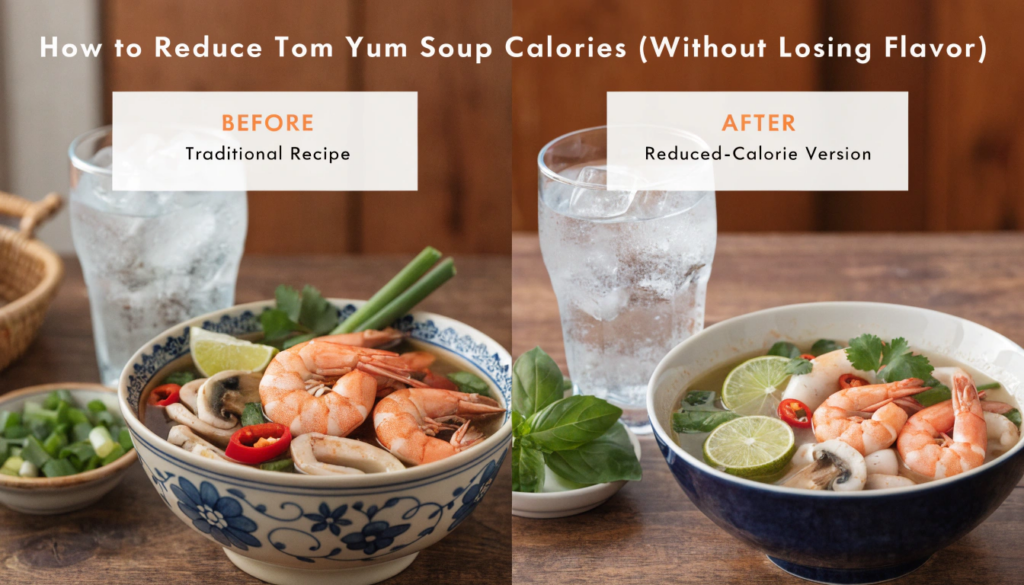
Nobody wants a sad, watered-down version of their favorite soup. You want the real thing—just smarter. Here’s your game plan, step by step.
1. Always choose clear broth first.
Walk into any Thai spot and say “Tom Yum Nam Sai.” You’ve just saved 150–200 calories compared to the creamy version. That’s like skipping a small bag of chips without missing a thing.
2. Pile on the vegetables.
Ask for extra mushrooms, cherry tomatoes, and onion slices. These add crunch, color, and fiber for almost no calories—usually under 30 for a generous handful. Plus, they make the bowl look fuller, so your brain feels more satisfied.
3. Pick your protein wisely.
Not all proteins are equal inside this soup.
- Best bet: Shrimp or tofu. Shrimp gives you high protein for low calories. Tofu keeps it plant-based and light.
- Good option: Sliced chicken breast.
- Avoid: Fried tofu (soaks up oil like a sponge) or fatty cuts of pork.
4. Skip the side of rice.
That little bowl of jasmine rice next to your soup? It adds roughly 200 calories of mostly starch. Drink the broth by itself. You’ll still get the satisfaction without the filler.
5. Make it at home with a swap.
When you cook Tom Yum in your own kitchen, you control everything. Use light coconut milk (which has about 60% fewer calories than regular). Or try a splash of unsweetened almond milk for creaminess without the coconut fat. It’s not traditional, but it works surprisingly well.
Real talk: You don’t have to do all five of these at once. Pick two or three. Even small changes add up over time.
Nutritional Benefits Beyond the Calories (Why It’s Worth It)
Let’s zoom out for a second. Calories matter, sure. But they’re not the only story. Tom Yum brings things to the table that most Western soups can’t touch.
Even the higher-calorie creamy version offers real health perks. Here’s what you’re getting in every bowl:
- Vitamin C boost: From fresh lime juice and chilies. Great for your immune system, especially during cold season.
- Antioxidants: Lemongrass and galangal aren’t just for smell. They help lower inflammation in your body over time.
- Metabolism nudge: Capsaicin—the compound that makes chilies hot—can temporarily increase calorie burn by about 5 to 10 percent. Not a miracle, but every little edge helps.
- Electrolyte support: The broth contains sodium and potassium. That’s actually useful after a sweaty workout or if you’ve been sick and dehydrated.
Where the research comes from: A study from Mahidol University in Thailand looked at the herbal properties of Tom Yum ingredients. They found that regular consumption may support digestion and reduce minor inflammation, thanks to the combination of galangal, lemongrass, and kaffir lime leaves.
So even if you choose the creamy version once in a while, you’re still putting real, whole ingredients into your body. That’s not nothing.
Frequently Asked Questions (FAQ) About Tom Yum Soup Calories
You’ve got questions. Let’s clear them up one by one.
Is Tom Yum soup good for weight loss?
Yes—with one condition. Clear tom yum soup calories are low enough (under 120 per cup) that you can enjoy it regularly while staying in a calorie deficit. The soup fills you up, keeps you hydrated, and the spice naturally curbs your appetite. Just avoid the creamy coconut version if weight loss is your main goal.
How many calories are in a whole bowl of Tom Yum soup from a restaurant?
A typical 16- to 20-ounce restaurant bowl lands somewhere between 350 and 600 calories for the creamy style. For clear broth, you’re looking at 150 to 250 calories for that same size bowl. Remember—those numbers don’t include rice or noodles on the side.
Is Tom Yum healthier than Tom Kha?
Absolutely, and it’s not even close. Tom Kha Gai (the coconut milk soup with chicken) usually runs 450 to 700 calories per bowl. That’s because it relies heavily on coconut cream and often includes fattier chicken pieces. Tom Yum is the lighter, leaner choice every time.
Can I eat Tom Yum soup on a keto diet?
Yes. Clear Tom Yum has roughly 8 to 10 grams of net carbs per cup. That fits perfectly into most keto plans. One warning, though: some restaurants add palm sugar to their chili paste. If you’re strict keto, ask them to leave out any added sugar. And if you want more fat for your macros, add an extra splash of coconut milk yourself.
Do the chilies in Tom Yum actually burn calories?
Temporarily, yes. Capsaicin raises your metabolic rate for about 30 to 60 minutes after you eat. The effect is small—maybe 5 percent more calories burned during that window—but it’s real. Think of it as a bonus, not a strategy.
Conclusion: Savor the Soup, Not the Stress
Here’s what I want you to take away from all of this.
You walked into this article worried that your favorite comfort food was secretly ruining your goals. But now you know the truth: tom yum soup calories range from a light 90 all the way up to a heavier 600, depending entirely on choices you get to make.
You know to ask for clear broth. You know to load up on shrimp and mushrooms. You know to skip the rice and save the creamy version for special occasions.
So here’s your call to action—and I mean this sincerely:
The next time you crave Tom Yum, don’t hesitate. Order it. Eat it slowly. Let the steam hit your face. And enjoy every single spoonful without apology.
You’ve done the research. You know the numbers. Now you get to have your soup and feel good about it.
And if you want to take things further? Spend twenty minutes this weekend making a big batch of Clear Tom Yum at home. Portion it into one-cup containers. You’ll have a 100-calorie spicy snack ready for every craving all week long. Your future self will thank you—probably while standing in front of the fridge at 10 p.m.
Hungry for more smart eating guides? Drop a comment below with your favorite Thai dish, and I’ll break down the calories for that one next. Or share this article with a friend who needs to hear that they don’t have to give up flavor to stay on track.