You probably have a picture in your head right now. A flaky, golden croissant. A tiny espresso cup. Maybe a beret and a striped shirt somewhere in the background. I get it. That image sells plane tickets and perfume commercials.But here is the truth nobody tells you.
When you actually sit down for a typical French breakfast in a real home—not a tourist hotel in the 7th arrondissement—you might feel confused at first. You might even feel a little cheated.Let me walk you through what actually happens.
I remember my first morning in a French apartment outside Lyon. My host, a retired schoolteacher named Madame Fournier, placed a wooden board in front of me. On it sat half a baguette that had gone slightly hard overnight. A square of butter. A small pot of apricot jam. And a bowl of coffee so light brown it looked like weak tea.
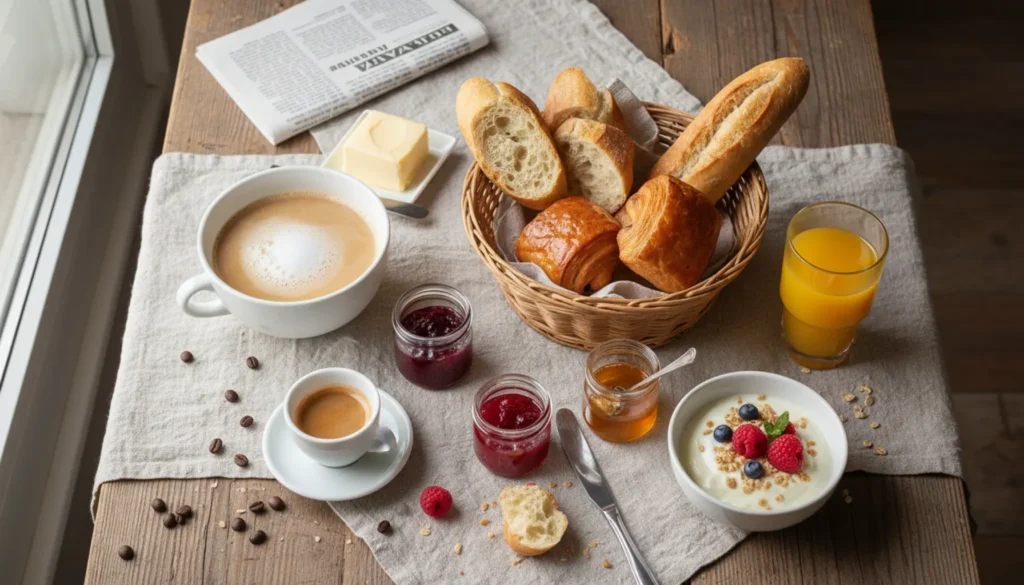
No eggs. No bacon. No orange juice. No pancakes.I looked around the kitchen, thinking she had forgotten the rest. She hadn’t. She sat down across from me, tore a piece of bread with her fingers, spread it with butter and jam, dipped it into her bowl, and smiled. That was it. That was breakfast.
And here is the thing that took me years to understand. That quiet, simple moment? It changed how I think about mornings forever.Because a typical French breakfast is not about filling your stomach until it hurts. It is about something else entirely. Something you cannot find on a menu.
What a Typical French Breakfast Actually Looks Like (No, Really)
Let me clear up the confusion right now.
The French call it petit-déjeuner. Notice the word petit in there. Small. Little. That is your first clue.
Unlike the breakfast you might be used to—the one with three eggs, four strips of bacon, a pile of hash browns, and a stack of pancakes—the French version runs light, sweet, and fast. Very fast.
Here are the non-negotiable rules:
- You eat almost nothing savoury before noon. No eggs, no sausages, no salty meats.
- Bread appears at every single breakfast table. Not toast always, but bread.
- You do not cook anything complicated. A toaster is considered an appliance.
- The entire meal wraps up in under twenty minutes. Often closer to ten.
Does that sound disappointing? Maybe. But stick with me.
What Changes When You Leave Paris
You should know that a typical French breakfast shifts slightly depending on where you find yourself in the country.
In Normandy, you will notice more butter. Not just any butter—salted, creamy, almost yellow butter that tastes like liquid gold. They put it on everything, including their pain au chocolat sometimes.
Down in Provence, the breakfast table might include fresh figs or peaches during summer months. People there also lean harder toward pain au chocolat on weekday mornings, which northerners would consider slightly decadent.
And Paris? Paris runs on speed. Commuters grab a tartine—that is a slice of baguette with butter and jam—and eat it walking toward the metro. No sitting. No ceremony. Just fuel.
Here is a number that might surprise you. According to a 2022 study from FranceAgriMer, eighty-two percent of French adults eat breakfast daily. But only eight percent include eggs or meat in that meal. The average duration? Eleven minutes. That is it.
So when you picture a typical French breakfast, stop imagining a two-hour café crawl. Start imagining a quick, quiet ritual before the day swallows you whole.
The Four Things You Will Always Find on the Table
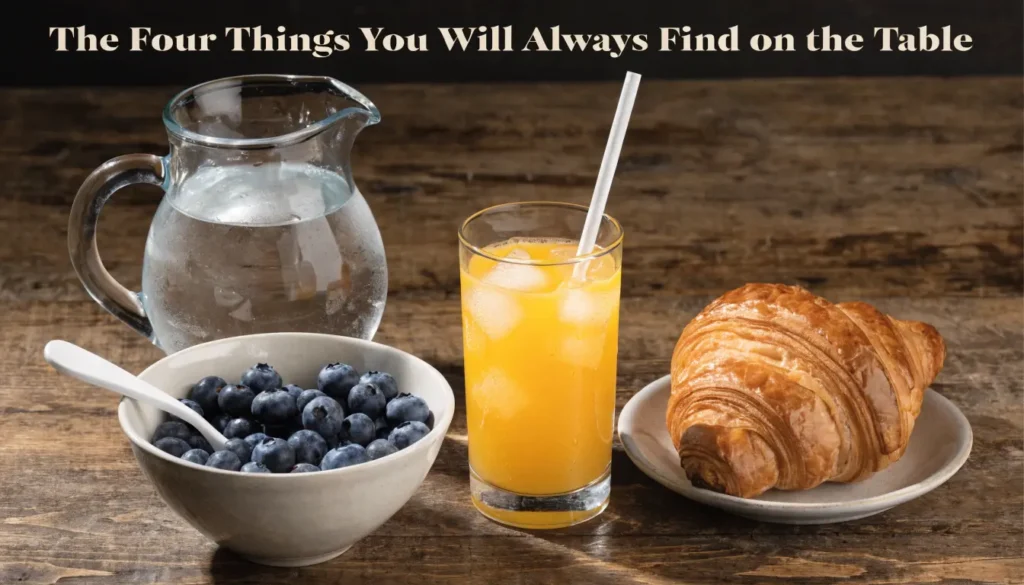
Let me break this down into actual components. Because if you want to recreate this at home, you need to know exactly what to buy.
The Bread Basket
You cannot have a French breakfast without bread. It simply does not happen.
The most common form is the tartine. You take half a baguette—preferably from yesterday, because fresh baguette actually crumbles too much—slice it lengthwise, toast it lightly if you want, and spread it with beurre demi-sel. That means salted butter. Then you add jam on top.
For weekend mornings, you might see fancier options:
- A croissant (buttery, flaky, almost like eating a cloud)
- A pain au chocolat (chocolate hidden inside laminated dough)
- A pain aux raisins (pastry cream and raisins swirled together)
But here is the reality check. Most French families do not eat viennoiseries on Tuesday mornings. Those are weekend treats. Your weekday typical French breakfast is bread, butter, jam. Nothing more.
The Hot Drink
Coffee rules this category. But not the coffee you know.
A café au lait comes in a bowl. A literal bowl. You pour strong coffee—usually dark roast, sometimes with chicory—and then add hot milk. Not steamed milk with foam art. Just hot milk from a saucepan. You drink it by cupping the bowl with both hands.
Children do not drink coffee. They get chocolat chaud, which is thick, dark, almost pudding-like hot chocolate. Not the watery powder mix you grew up with. Real melted chocolate in warm milk. Many French adults still drink this on cold mornings.
Tea exists but ranks as a distant third. You might see Earl Grey or jasmine in nicer homes, but coffee is the default.
The Spreads and Toppings
Your butter should be demi-sel. Unsalted butter is for baking, not for breakfast tables.
Your jam—confiture—should have visible fruit pieces. Apricot, fig, wild berry, sometimes orange marmalade. The sugar content runs lower than American jams because the fruit does the work.
Modern additions you might spot:
- Nutella (extremely common with children under fifteen)
- Local honey (lavender honey in the south, acacia honey elsewhere)
- Half a grapefruit or sliced orange
That is it. No cream cheese. No peanut butter. No maple syrup.
What You Will Never See
Let me save you from an embarrassing mistake. French people do not eat the following for breakfast:
- Scrambled eggs (that is dinner or a light lunch)
- Breakfast cereal with cold milk (too industrial, though kids secretly love Chocapic)
- Breakfast burritos or breakfast sandwiches (completely foreign)
- Smoothies or acai bowls (seen as a strange Californian import)
According to Statista data from 2023, only six percent of French people eat eggs for breakfast. Compare that to sixty-seven percent of Americans. The gap tells you everything.
Why No Eggs? The Strange Cultural Logic
You might be wondering at this point. Are the French just weird? Is this some kind of culinary snobbery?
No. The reasons run deeper than you think.
The Historical Explanation
Go back two hundred years. Most French people worked as farmers or labourers. They ate their big meal at lunch—heavy, savoury, sometimes lasting two hours. Breakfast was simply meant to “break the night” of fasting. Hence the name: petit-déjeuner means “little lunch.” Déjeuner by itself means lunch.
If you ate a heavy breakfast, you would not be hungry for the midday meal. And the midday meal was where you got your actual calories.
That pattern stuck. Even now, when most people sit in offices instead of fields, the rhythm remains.
The Biological Argument
French nutritionists make a compelling case. A heavy, savoury breakfast packed with protein and fat creates a massive insulin spike around 11 AM. Then you crash. You feel foggy, hungry, irritable.
A typical French breakfast uses slower carbohydrates from bread. The jam gives you quick sugar for immediate energy. The bread releases glucose gradually. The butter provides enough fat to keep you satisfied without triggering a crash.
You stay steady until lunch at 12:30 PM. Then you eat your savoury meal.
Does this work for everyone? No. But it works for millions of French people every single day.
How to Build Your Own French Breakfast at Home
You do not need to book a flight to try this. Let me walk you through the exact steps.
The Five-Step Morning Ritual
- Buy your bread the night before. Fresh baguette goes stale in about twelve hours. That stale texture works perfectly for dipping. Do not buy morning-of.
- Never refrigerate your bread. The cold temperature makes the starch molecules recrystallize faster. You end up with hard, sad bread. Use a linen bag or a bread box instead.
- Get a bowl. A large ceramic bowl. Your coffee goes in there, not a mug. This changes the entire experience because you can cup the warmth.
- Tear with your hands. Do not use a knife. Tear off a piece of baguette roughly the size of your palm. The rough edge holds butter and jam better than a clean cut.
- Dip quickly. Two seconds maximum. Any longer and your bread becomes a soggy mess. A quick plunge, then straight to your mouth.
Your Shopping List for Tomorrow Morning
Here is exactly what to buy if you want an authentic typical French breakfast:
- One demi-baguette (or a pain de campagne if you prefer round loaves)
- Salted butter (beurre de baratte if you can find it—churned butter tastes different)
- One jar of fruit jam with at least sixty-five percent fruit content (read the label)
- Dark roast coffee beans (look for Arabica, preferably from a former French colony like Martinique)
- Whole milk (skimmed milk ruins the texture)
Total time from waking up to finishing breakfast? Twelve minutes. Maybe fifteen if you toast the bread.
How the Typical French Breakfast Is Changing Right Now
I would be lying if I told you nothing has changed. Because things are shifting, especially in big cities.
The Brunch Invasion
Young French people in Lyon, Bordeaux, and Marseille have discovered brunch. Real brunch. With avocado toast and cold-pressed juices and—gasp—scrambled eggs served before noon.
Some traditional boulangeries now sell smoothie bowls. This would have been unthinkable ten years ago.
Newer trends you might encounter:
- Avocado toast on pain de campagne (purists hate this with a passion)
- Cold-brew coffee served in bottles
- Weekend brunch buffets that include American-style pancakes
What Refuses to Die
Despite these changes, the core remains shockingly intact.
According to INSEE data from 2024, seventy-four percent of French parents still serve a typical French breakfast of baguette, jam, and coffee to their children before school. Not cereal. Not eggs. Not protein bars.
The ritual passes down through families like an heirloom recipe. A French friend once told me, “My mother’s confiture is the taste of safety. Even now, at forty, one bite and I am seven years old again.”
That is not marketing. That is memory.
Final Thoughts: What This Breakfast Teaches You
You could walk away from this article thinking the French have it wrong. That breakfast should be bigger, heartier, more savoury.
But here is what a typical French breakfast taught me after I stopped feeling disappointed.
It taught me that not every meal needs to be an event. Sometimes, tearing a piece of bread and dipping it into warm coffee is enough. That act—simple, repetitive, almost meditative—wakes you up more gently than bacon grease ever could.
It taught me that quality beats quantity. One piece of good bread with real butter and honest jam satisfies more than a buffet of mediocre options.
And it taught me that mornings do not need to be a rush. Eleven minutes of sitting still with a bowl in your hands changes your entire day.
So tomorrow morning, try it. Just once. Skip the eggs. Skip the cereal. Buy a baguette the night before. Get the good butter. Pour your coffee into a bowl.
Tear. Spread. Dip. Smile.
Then come back and tell me how it felt.
Frequently Asked Questions About the Typical French Breakfast
What is the most common typical French breakfast for children?
Children eat a bowl of chocolat chaud with tartines—sliced baguette spread with salted butter and a light layer of jam. Many dip the bread directly into the hot chocolate. Adults find this messy. Children find it heavenly.
Do French people eat cereal for a typical French breakfast?
Rarely. Only about twelve percent of French households buy breakfast cereal regularly. The typical French breakfast prioritises fresh bread and pastry over processed flakes. Cereal feels lazy to many French parents.
Is a croissant actually part of a typical French breakfast?
Yes, but mostly on weekends. A weekday typical French breakfast means a simple tartine of bread, butter, and jam. Croissants contain too much butter for daily consumption, according to most French adults. They are treats, not staples.
What time do French people eat breakfast?
Between 6:30 AM and 8:30 AM on weekdays. This is the fastest meal of the day, rarely lasting more than twenty minutes. Lunch is the long, social meal. Breakfast is fuel.
Can I order a savoury typical French breakfast in a café?
You can try, but expect confusion. You would need to specifically request a petit-déjeuner salé. Outside of tourist-heavy areas, the waiter might stare at you blankly. Stick to the sweet version. It tastes better when you stop fighting it.
Your Turn
Now I want to hear from you.
Have you ever tried a real French breakfast? Did you love it or hate it? Are you going to attempt the bowl-and-baguette method tomorrow morning?
Drop a comment below sharing your experience. And if you found this helpful, pass it along to someone who still believes breakfast needs eggs to be complete. They need this article more than you know.
À demain. See you at the breakfast table.