You know that feeling when you take a bite of something labeled healthy, and your soul just sighs? Not in relief. In disappointment.
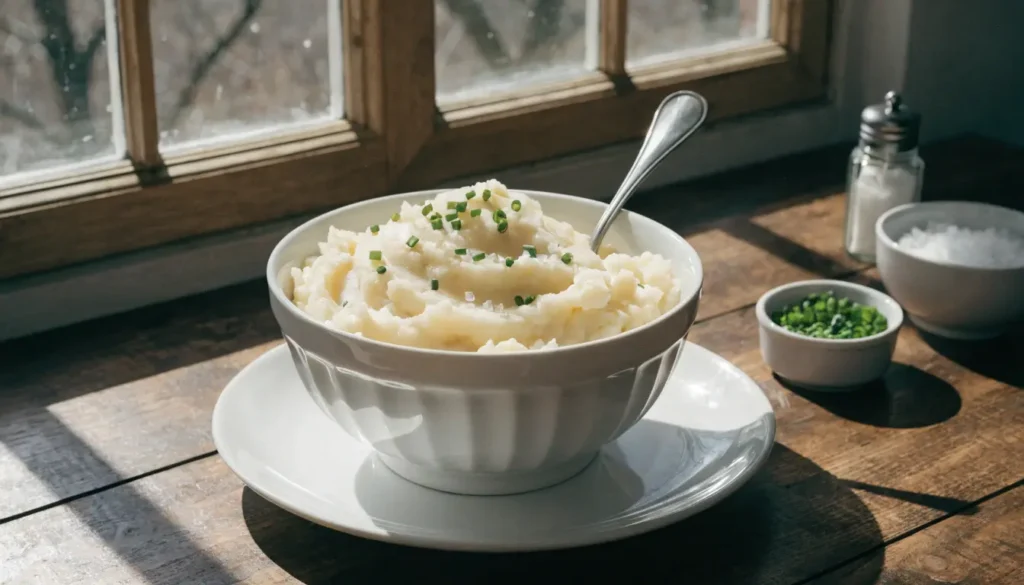
I remember sitting at my kitchen table three winters ago, pushing a spoon through a pile of what the recipe called “diet mash.” It was gray. It was gritty. And it tasted like wet cardboard that had once shared a shelf with a potato.
I missed my grandmother’s version—the one where butter pooled into tiny golden lakes and cream made every forkful feel like a hug. But I was also tired of carrying extra weight that made my knees ache and my energy crash by 2 p.m.
For months, I believed I had to choose. Comfort or health. Taste or jeans that fit. Warmth or willpower.
Then I got angry. Not at my body—but at the lie that comfort food and wellness can’t live in the same kitchen.
So I started experimenting. I failed. A lot. I made mash that was too runny, too gluey, too cauliflower-y. But somewhere between batch number twelve and a moment of reckless hope, I cracked the code.
You don’t have to say goodbye to creamy mashed potatoes. You just have to cook them smarter.
And that’s exactly what you’re about to learn. No gimmicks. No sad little portions. Just real food that makes you feel good—in your mouth and in your body.
Why This Low Calorie Mashed Potato Recipe Actually Works
Let’s get one thing straight right now. You’re not here for a tiny side dish that leaves you staring at your plate wondering where the rest went. You’re here for a big, generous scoop of comfort that doesn’t wreck your progress.
So why does this version work when so many “light” recipes fail?
The Simple Math of Swapping (Without Losing the Magic)
Traditional mashed potatoes are delicious because they’re simple. Potatoes, butter, cream, salt. But that simplicity has a cost.
Here’s what a typical homemade serving looks like:
– 1 cup of standard mashed potatoes (made with whole milk and butter): roughly 237 calories
– Add a tablespoon of heavy cream? +50 calories
– Add gravy on top? +60 to 100 calories
By the time you’re done, that innocent-looking side dish is pushing 350 calories. Before you’ve even touched your protein or vegetables.
Now here’s the good news. You can slash that number by more than half without changing how the dish feels in your mouth. The trick isn’t removing fat—it’s swapping heavy ingredients for lighter ones that do the same job.
Unsweetened almond milk replaces heavy cream. Greek yogurt replaces butter. And a clever little vegetable (cauliflower) replaces some of the potato starch, adding volume without adding calories.
The result? A creamy, fluffy, satisfying mash that comes in around 80–90 calories per cup.
Ingredient Heroes vs. Villains
Let’s break this down so you can see exactly where the savings come from.
The Villains (what you’re leaving behind):
– Heavy cream – 50 calories per tablespoon
– Whole butter – 100 calories per tablespoon
– Whole milk – 18 calories per tablespoon (doesn’t sound bad, but it adds up fast)
The Heroes (what you’re bringing in):
– Unsweetened almond milk – 3 calories per tablespoon
– Fat-free Greek yogurt – roughly 8 calories per tablespoon (plus protein!)
– Roasted garlic – almost zero calories, but massive flavor
– Cauliflower – 25 calories per cup, adds fiber and volume
Here’s the part that surprises most people. When you mash cauliflower alongside potatoes, you don’t taste it. Really. The potato’s flavor is stronger, and the garlic and yogurt cover any leftover traces. What you do notice is that your mash feels lighter on your stomach—in a good way.
No heaviness. No food coma. Just satisfied.
Essential Ingredients for Creamy Low Calorie Mashed Potatoes
Before you start chopping, let’s walk through exactly what you’ll need. This recipe serves about six people generously, or four people very generously (no judgment here).
| Ingredient | Quantity | Calories (Est.) | Why It Matters |
|---|---|---|---|
| Yellow or Russet potatoes | 2 lbs | ~350 | High starch = fluffier mash |
| Fresh cauliflower | 1 cup florets | ~25 | Adds volume, not calories |
| Plain nonfat Greek yogurt | 1/2 cup | ~65 | Creaminess + protein |
| Unsweetened almond milk | 1/2 cup | ~15 | Smooth texture without fat |
| Roasted garlic cloves | 4 medium | ~20 | Deep, sweet flavor |
| Salt, white pepper, chives | To taste | ~0 | Essential for finishing |
Total recipe calories: Approximately 475
Per serving (6 servings): 79 calories
Per serving (4 servings): 118 calories
Even at the larger portion size, you’re still looking at less than half the calories of traditional mash.
A quick note on potatoes: Russets give you the fluffiest, lightest texture. Yukon Golds give you a naturally buttery flavor without adding butter. Both work beautifully here. Just don’t use red potatoes or new potatoes—they’re waxy and will turn your mash into a sticky mess.
Step-by-Step Low Calorie Mashed Potato Recipe
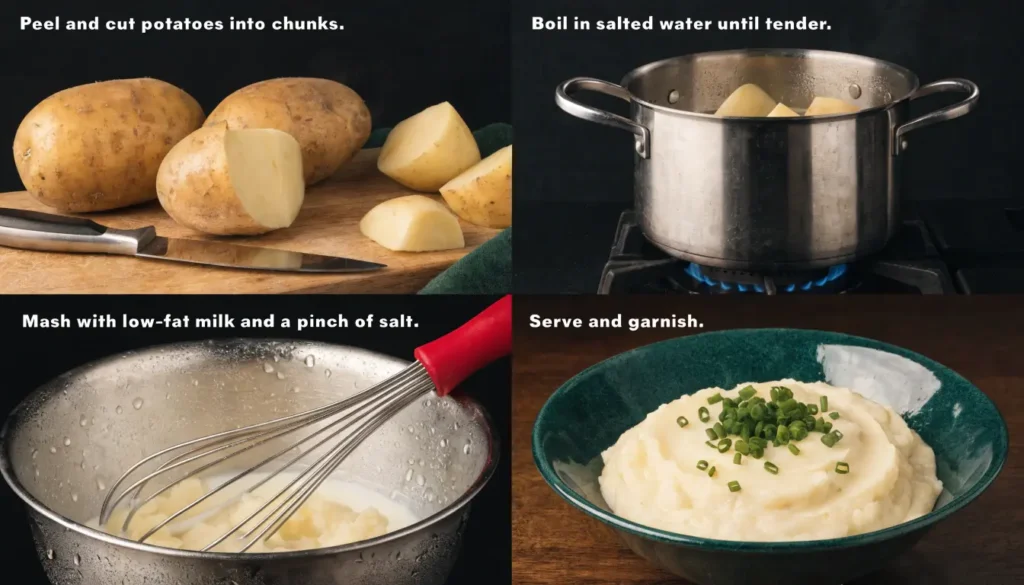
Alright, let’s cook. You’re about fifteen minutes away from a pot full of creamy goodness.
Prep Work (10 minutes)
1. Wash and chop your potatoes. You can peel them if you want an ultra-smooth mash, but leaving the skins on adds fiber and a rustic texture. Cut them into 1-inch cubes. Smaller pieces = faster cooking.
2. Chop your cauliflower. Cut it into florets roughly the same size as your potato cubes. Even sizes mean even cooking.
3. Preheat your oven or toaster oven to 400°F if you’re roasting your garlic fresh. Wrap four unpeeled garlic cloves in foil with a tiny splash of water. Roast for 15 minutes until soft and sweet. (You can also do this days ahead.)
The Cooking Method (20 minutes)
Bring a large pot of salted water to a rolling boil. Use enough salt that the water tastes like the ocean—this is your only chance to season the potatoes from the inside out.
Drop in your potato cubes and cauliflower florets together. Boil for about 15 minutes, or until a fork slides through a potato piece with zero resistance.
Here’s a trick most recipes won’t tell you: don’t drain immediately. Turn off the heat, let everything sit in the hot water for two more minutes. This lets the cauliflower absorb more potato flavor.
Drain thoroughly in a colander. Then—and this is crucial—return the drained potatoes and cauliflower back to the hot pot. Let them sit in the dry, warm pot for about two minutes. Shake the pot gently. You’ll see steam rising. That’s excess water evaporating. Skipping this step gives you watery mash.
The Mashing Technique
While your potatoes are drying off, warm your almond milk. Cold liquid + hot starch = glue. Just 30 seconds in the microwave is enough.
Now mash. A potato ricer gives you the dreamiest texture, but a standard hand masher works just fine. Do not use a food processor or blender. Those blades overwork the starch and turn your mash into wallpaper paste.
Mash until the big lumps are gone, but stop there. Over-mashing is the number one reason homemade mash fails.
Switch to a rubber spatula. Fold in your Greek yogurt gently—don’t stir aggressively. Fold in your roasted garlic cloves (just squeeze them out of their skins). Then pour in your warm almond milk a little at a time, folding as you go.
You’re looking for a texture that’s soft and scoopable but holds its shape. If it’s too thick, add another tablespoon of warm almond milk. If it’s too thin, stir in two tablespoons of powdered milk (adds protein and thickness without fat).
Final Seasoning
Now taste. Really taste.
Add salt gradually. Use white pepper if you have it—it blends invisibly. Black pepper works fine but leaves visible specks. Sprinkle in fresh chopped chives for a mild onion kick.
Want a cheesy flavor without the cheese? Stir in one tablespoon of nutritional yeast. That adds about 20 calories and three grams of protein, plus a savory, almost Parmesan-like depth.
Serve immediately, or keep warm in a slow cooker on the lowest setting for up to two hours.
Pro Tips for the Best Low Calorie Mashed Potato Recipe
You’ve got the basics. Now here’s how you take this from “good” to “I can’t believe this is low calorie.”
- Don’t over-mash. I said it before, but it bears repeating. Stop as soon as the lumps are gone. Every extra stroke increases starch release, and starch equals glue.
- Use the broth trick. Replace half of your warm almond milk with warm chicken or vegetable broth. You add deep umami flavor for only about five extra calories per serving.
- Fix runny mash without adding fat. Stir in two tablespoons of nonfat powdered milk. It absorbs excess liquid, adds protein, and thickens beautifully.
- Make it ahead without stress. This mash holds beautifully in a slow cooker on the “warm” setting for up to two hours. Stir once halfway through. You can also reheat leftovers in a nonstick pan with a splash of broth—not almond milk, which can separate.
- Double the cauliflower slowly. If you want to push the calorie savings even further, replace an extra half-cup of potato with cauliflower. But do it gradually. Too much cauliflower too fast changes the texture more than the taste.
Nutritional Breakdown & Health Benefits
Numbers matter, but so does how you feel after eating. Let’s look at both.
Calories & Macros (Per serving, based on 6 servings)
- Calories: 82
- Protein: 5.2 grams
- Carbohydrates: 14 grams
- Fiber: 2.8 grams
- Fat: 0.6 grams
- Sugar: 2.1 grams (naturally occurring)
Compare that to traditional mashed potatoes:
– Traditional: 237 calories, 4g protein, 1.5g fiber, 8g fat
You’re getting more protein, more fiber, less fat, and fewer than half the calories.
Why This Works for Weight Loss (and Everyday Health)
- High volume, low density. The cauliflower bulks up your portion without bulking up your calorie count. You eat the same amount of food for way fewer calories. That’s the secret to sustainable weight management—not starvation.
- Protein keeps you full. Greek yogurt adds over five grams of protein per serving. Protein triggers satiety hormones that tell your brain “you’re done eating.” Traditional mash has almost none.
- Blood sugar stability. Replacing some potato starch with cauliflower lowers the glycemic load of the dish. That means slower, steadier energy instead of a quick spike and crash.
According to data from the USDA FoodData Central, meals with higher protein and fiber content lead to significantly lower calorie intake at the next meal. In plain English: eating this mash for lunch means you’ll naturally eat less at dinner.
Delicious Variations of Low Calorie Mashed Potato Recipe
Once you’ve mastered the base recipe, here are four ways to change it up.
Vegan Version
Swap the Greek yogurt for unsweetened vegan yogurt. Add one tablespoon of tahini (sesame paste) to bring back the richness. Tahini adds about 30 calories but provides healthy fats and a nutty depth.
Loaded “Baked Potato” Style
Top your mash with:
- 1 tablespoon low-fat shredded cheddar (about 20 calories)
- 1 tablespoon turkey bacon bits (about 15 calories)
- A sprinkle of chopped green onion
- A dollop of the same Greek yogurt you used in the mash
You get that loaded baked potato experience for under 120 calories per serving.
Spicy Chipotle Mash
Add one teaspoon of adobo sauce (from a can of chipotles) plus a quarter teaspoon of smoked paprika. The smokiness tricks your brain into thinking there’s bacon or butter involved. Serve alongside black beans and grilled chicken for a low-calorie bowl meal.
Rosemary and Lemon Zest
Skip the garlic. Add one tablespoon of finely chopped fresh rosemary and the zest of one lemon. This version pairs beautifully with roasted fish or spring vegetables.
Frequently Asked Questions (FAQ)
Can you freeze this low calorie mashed potato recipe?
Yes, but expect a slight texture change after thawing. The water content in cauliflower freezes differently than potato starch. Freeze portions in zip-top bags for up to three months. To reheat, thaw overnight in the fridge, then warm in a nonstick pan with a tablespoon of broth or almond milk. Stir constantly.
Will this low calorie mashed potato recipe taste like cauliflower?
You will not taste the cauliflower. I’ve served this to picky eaters, self-described “cauliflower haters,” and even a seven-year-old who lives on chicken nuggets. Not one person has ever guessed cauliflower was inside. The potato flavor dominates, and the garlic and yogurt cover any remaining traces.
What is the best potato for a low calorie mashed potato recipe?
Russets give you the fluffiest texture. Yukon Golds give you a naturally buttery flavor without butter. Both are excellent choices. Avoid red potatoes, fingerlings, or any waxy variety—they have less starch and more moisture, which leads to sticky, dense mash.
Can I use a microwave instead of boiling?
Absolutely. Place your diced potatoes and cauliflower in a large microwave-safe bowl with two tablespoons of water. Cover tightly with plastic wrap or a microwave-safe lid. Microwave on high for eight to ten minutes, stirring halfway through. Let it sit covered for two minutes, then drain and proceed with the recipe.
How do I reheat leftovers without ruining the texture?
Skip the microwave if you can. Reheat slowly in a nonstick skillet over medium-low heat. Add a splash of warm broth (not milk or water). Stir frequently until hot. The microwave tends to create hot spots that can make the mash watery in some areas and dry in others.
Conclusion – Comfort Food Reimagined
You came here looking for a low calorie mashed potato recipe that didn’t taste like punishment. And now you have it.
Not a sad little side dish. Not a bowl of bland, dry flakes pretending to be food. But real, creamy, satisfying mashed potatoes that happen to be kind to your waistline.
Here’s what you get to take away today:
- A simple swapping strategy that cuts calories by more than half
- A step-by-step method that guarantees fluffy texture every time
- A recipe that works for weight loss, diabetes management, or just eating better without suffering
- Five variations so you never get bored
You don’t have to choose between food you love and a body you feel good in. That’s a false choice, and you’ve been sold a lie for too long.
Make this recipe tonight. Serve it alongside your favorite protein—roasted chicken, baked fish, even a hearty veggie burger. Watch the faces of the people you feed. Listen to them say, “Wait, this is low calorie?”
Then take a second scoop. You’ve earned it.
Your next step: Make this recipe within the next 48 hours. Take a photo of your finished mash. Share it in the comments below (or tag us on social media if you’re reading this online). Tell us one swap you made—or one variation you created.
And if you have a family member who thinks “diet food” means bland food? Send them this article. Let’s change some minds together.