Picture this: You’re walking through a vibrant city street, the scent of cumin and fried herbs wafting from a food cart. Your stomach growls. You spot a sign for authentic falafel. For a moment, you feel the joy of convenience—a quick, seemingly healthy meal. Then, the anxiety hits. The what ifs. Is the pita wheat-based? Is there flour in the mix? What about cross-contamination?
If you are navigating life with celiac disease, gluten sensitivity, or even just a commitment to a gluten-free lifestyle, that moment of hunger turns into a moment of stress. You aren’t just looking for food; you’re looking for safety. I’ve been there—standing at a counter, asking a dozen questions, feeling like a burden just to enjoy a simple meal. The good news? Falafel can be your safe haven. But only if you know exactly what to look for. Let’s break down the crumbs (or lack thereof) so you can eat with confidence again.
What is Falafel? Understanding the Traditional Ingredients
Before we answer is falafel gluten free, we need to look at what this Middle Eastern staple is made of. Traditionally, falafel is a beautiful example of naturally gluten-free cuisine. Its roots stretch back centuries, originating as a plant-based protein source that relied solely on the land’s bounty.
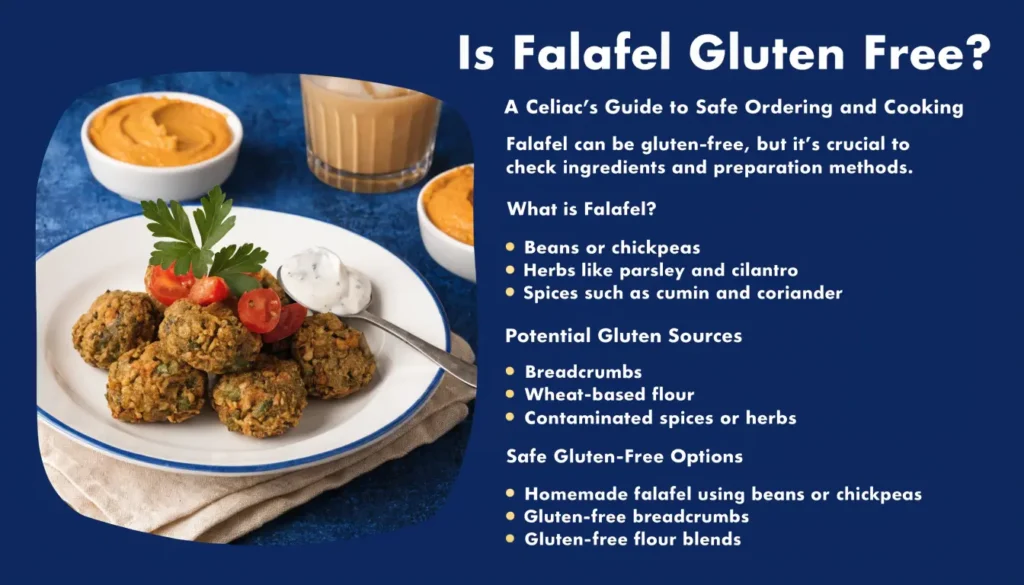
At its core, authentic falafel is a simple mixture. You’re looking at:
- The Base: Ground chickpeas (or fava beans, depending on the region). In Egypt, you’ll often find it made exclusively with fava beans, while the Levantine version leans heavily on chickpeas.
- The Herbs: Fresh parsley, cilantro, and sometimes mint. These aren’t just for garnish; they are structural elements that add moisture and prevent the patty from drying out.
- The Aromatics: Garlic, onion, cumin, coriander, salt, and pepper.
- The Binder (Crucial Point): Traditional recipes rely on the starch from the chickpeas and the moisture from the vegetables to hold the patty together. No glue, no flour, no complicated chemistry.
If you were to travel to Beirut or Cairo and watch a street vendor make falafel from scratch, you would see a process that is inherently gluten-free. According to the Gluten Intolerance Group, single-ingredient legumes like chickpeas are naturally gluten-free. So, if the question were simply about the raw ingredients, the answer would be a definitive yes.
However, the moment falafel enters a commercial kitchen—or a grocery store freezer aisle—the simplicity often gets complicated. The journey from street food staple to your plate involves modern shortcuts that can introduce gluten where it doesn’t belong.
The Hidden Dangers: When Falafel is NOT Gluten Free

If the base ingredients are safe, why is this such a common question? Because the restaurant industry often takes shortcuts to save money, speed up production, or achieve a texture that appeals to the masses. Here is where gluten usually sneaks in.
The “Flour” Factor
To save money or achieve a crispier texture, many food establishments add wheat flour to the falafel mixture. Think about it from a restaurateur’s perspective: wheat flour is cheap, it absorbs excess moisture, and it ensures that the falafel balls hold their shape perfectly every time, even if the prep cook was heavy-handed with the parsley.
- The Risk: Wheat flour acts as a cheap binder. Even a small amount can turn a safe meal into a source of intestinal distress.
- What to ask: “Do you add flour to your falafel mix, or is it 100% chickpea and herb?” Pay attention to how they answer. A confident “no flour, just chickpeas” is a good sign. A hesitant “we use a little bit for texture” means you should steer clear.
Cross-Contamination in the Fryer
Even if the falafel mix is safe, the cooking method can be a deal-breaker for celiacs. This is arguably the most overlooked danger in the gluten-free community.
- The Shared Fryer: If the restaurant uses the same oil to fry falafel that they use to fry breaded chicken tenders, onion rings, or spring rolls, the oil is contaminated. Gluten proteins are not broken down by heat; they linger in the oil and attach themselves to everything that goes in.
- Note: For someone with celiac disease, shared fryers are generally unsafe. For those with non-celiac gluten sensitivity, the risk varies depending on your personal sensitivity level. However, if you are celiac, a shared fryer is a hard “no.”
The Accompaniments (The Pita Problem)
Often, the falafel itself is safe, but the meal is not. You order a “gluten-free falafel plate,” only to realize too late that the environment surrounding your food is hostile.
- Pita Bread: The most obvious culprit. Even if you don’t eat it, if it’s sitting on the same plate as your falafel, crumbs can migrate.
- Tabbouleh: This refreshing salad is traditionally made with bulgur wheat. It looks like a safe grain salad, but it is a gluten landmine.
- Sauces: Some creamy sauces or syrups used in wraps may contain malt vinegar (derived from barley) or thickeners derived from gluten. Even a drizzle of the wrong sauce can ruin a safe meal.
How to Order Falafel Safely at Restaurants
To help you navigate the anxiety of dining out, use this checklist. This isn’t about being “that difficult customer”; it’s about protecting your health. You have every right to know what is going into your body.
The 4-Step Safe Ordering Process:
- Ask About the Mix: “Is the falafel made with chickpea flour only, or do you add all-purpose flour?” Use the term “all-purpose flour” because it’s universally understood. If they say “a little bit,” assume it contains gluten.
- Inquire About the Fryer: “Do you have a dedicated gluten-free fryer, or are the falafel fried in the same oil as breaded items?” If they look confused, explain that you have a medical allergy. Often, staff are trained to take allergies more seriously than “preferences.”
- Request “Naked”: Order the falafel as a bowl or on a salad. Remove the pita from the equation entirely. Many Mediterranean restaurants offer “protein bowls” where you get the falafel on a bed of rice, lettuce, and vegetables. This eliminates the bread variable completely.
- Verify the Sauce: Ask to see the ingredient list for sauces like tahini or yogurt sauce. Tahini is usually safe (sesame paste), but some chain restaurants use pre-packaged sauces that contain modified food starch or malt flavoring.
Making Authentic Gluten Free Falafel at Home
The only way to be 100% certain is falafel gluten free is to make it yourself. It is easier than you think, and the taste is superior to pre-made mixes. Once you make it from scratch, you’ll likely never go back to the gritty, dry, frozen versions.
The Perfect Gluten-Free Falafel Recipe (No Flour Needed)
The secret to success lies in one critical rule: use dried chickpeas, not canned.
- Ingredient Highlight: Use dried chickpeas, not canned. This is the number one mistake home cooks make. Canned chickpeas are pre-cooked and too soft; they will cause the falafel to fall apart in the oil without flour. Dried, soaked chickpeas provide the natural starch needed for binding. The starch acts as the glue that gluten-free eaters are often missing.
- The Process:
- Soak dried chickpeas overnight (or for at least 12 hours) in cold water with a pinch of baking soda to soften them.
- Drain them thoroughly. Pat them dry with a towel. Water is the enemy of frying.
- Pulse in a food processor with herbs and spices until fine (not pureed). You want the texture of coarse sand, not hummus.
- Refrigerate the mixture for 1 hour to solidify. This resting time is crucial; it allows the starches to hydrate and bind.
- Fry in fresh oil (vegetable, canola, or avocado oil) at 350°F until golden brown.
Pro Tip: For a baked alternative, shape the patties, brush them generously with olive oil, and bake at 375°F for 20-25 minutes, flipping halfway. This eliminates the frying oil variable altogether and gives you a healthier, less messy option.
Navigating Pre-Made and Frozen Falafel
Sometimes you need the convenience of a grocery store run. Whether you’re grabbing a quick lunch or stocking your freezer, you need to read the label like a detective.
What to Look for on the Packaging
When scanning the ingredients list, watch out for these red flags. Food manufacturers are required to list wheat, but barley and rye can sometimes hide under ambiguous terms.
- Explicit Gluten: Wheat flour, enriched flour, semolina, breadcrumbs, durum.
- Hidden Gluten: Malt extract (usually from barley), hydrolyzed wheat protein, or “natural flavors” (which can sometimes derive from barley or rye).
- Oats: If the falafel contains oat flour, ensure it is certified gluten-free. Oats are often cross-contaminated with wheat during farming and transport.
Recommended Brands and Certifications
While brand availability varies by region, look for certifications. The “Certified Gluten-Free” logo from organizations like GFCO (Gluten-Free Certification Organization) is the gold standard. It ensures the product contains less than 10 parts per million (ppm) of gluten and was produced in a dedicated facility. If you see that seal, you can trust it without having to parse the fine print.
FAQ: Your Burning Questions About Falafel and Gluten
Is falafel gluten free if it is fried in a shared fryer?
Technically, the ingredients might be gluten-free, but for a strict celiac diet, shared fryer oil renders the food unsafe due to cross-contact. The gluten proteins from other fried foods (like breaded chicken or onion rings) leach into the oil and coat the falafel. It is best to ask the restaurant if they have a dedicated gluten-free fryer. If they don’t, consider ordering a different preparation, such as baked falafel if available, or skip it entirely.
Is pita bread gluten free?
No. Traditional pita bread is made from wheat flour. However, many restaurants now offer gluten-free pita or lettuce wraps as an alternative. Always ask to see the packaging to confirm it is certified gluten-free. Sometimes, “gluten-friendly” pita is made in a facility that handles wheat, so if you are highly sensitive, proceed with caution.
Is falafel gluten free at popular fast-food chains?
This varies significantly by chain and location. Most major chains have allergen menus online. Generally, the falafel patty itself may be gluten-free, but the sauces, fryers, and handling procedures often introduce risk. For example, a chain might use a shared fryer for fries and falafel, and if those fries are coated in wheat starch, the falafel is contaminated. Always check the specific restaurant’s digital allergen guide before ordering.
Why do some falafel balls fall apart without gluten?
Gluten acts as a glue. If your falafel is falling apart, it usually means the mixture is too wet. The solution is to use dried, soaked chickpeas instead of canned, and to ensure the mixture is chilled thoroughly before frying or baking. Also, resist the urge to add too many wet ingredients like lemon juice or onion juice directly into the mix.
Conclusion: Empowering Your Gluten-Free Journey
Navigating the world of gluten-free eating doesn’t have to mean sacrificing flavor or cultural experiences. When it comes to the question, is falafel gluten free, the answer is a resounding yes—with the caveat that you must remain vigilant about preparation methods.
Whether you are crafting a batch of crispy, golden nuggets in your own kitchen using dried chickpeas, or confidently asking your server about fryer protocols, knowledge is your best defense. Falafel is a delicious, protein-packed food that wants to be gluten free. By understanding the pitfalls (flour in the mix, shared fryers, and wheat-based sides), you can reclaim the joy of eating this iconic dish without the fear of a reaction.
So go ahead. Take a bite. Enjoy the crunch. You’ve earned it.
Have you had a surprising experience ordering falafel while gluten-free? Share your tips or warning signs in the comments below. Your insight might just save someone else from a frustrating gluten exposure.