There’s a moment that feels all too familiar when you’re deep in a cutting phase. You’ve just finished punishing your muscles for the last forty-five minutes. Your tank is empty. Your shirt is soaked through. And as you walk through your front door, that specific kind of hunger starts creeping in—the kind that makes a bag of chips look like a five-star meal and rational thinking fly right out the window.
I’ve been exactly where you are right now. Standing in front of the refrigerator, gripping the handle, telling yourself you’ve “earned” something indulgent because you worked so hard. The scale showed progress this morning, but right now? Right now your stomach is calling the shots.
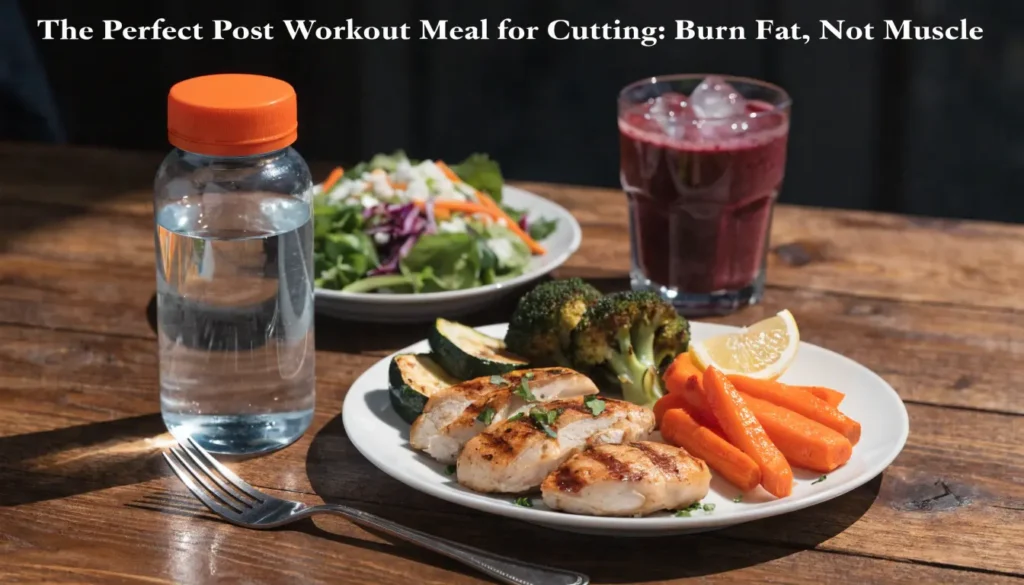
Here’s what took me years to figure out. That hunger you’re feeling isn’t a weakness. It isn’t a sign that your diet is too strict or that you’re doing something wrong. That hunger is actually your golden ticket—if you know how to use it correctly. The difference between spinning your wheels for months and actually seeing that shredded physique emerge from the fog comes down to what happens in the sixty to ninety minutes after your last rep.
Let’s walk through this together. No fluff. No complicated science lectures. Just the real mechanics of how to nail your post workout meal for cutting so you can strip away body fat while keeping every ounce of muscle you’ve worked so hard to build.
Why Cutting Completely Changes Your Post-Workout Rules
When you’re in a maintenance or bulking phase, your body has plenty of fuel floating around. You’ve got glycogen stored up. You’ve got calories from earlier meals still circulating. Your body is basically running on easy mode.
Cutting flips that entire script.

During a cutting phase, you’re deliberately keeping your body in a state of energy debt. That’s how fat loss happens—by forcing your system to tap into stored energy (aka body fat) to make up for the shortfall. But here’s the tricky part. Your workout doesn’t care whether you’re in a calorie deficit or not. When you lift heavy or push hard through those intervals, you create damage in muscle tissue that needs repairing. That repair process requires resources.
The Anabolic Window Isn’t a Myth—It Just Looks Different Now
You’ve probably heard about the “anabolic window” a thousand times. The old school thinking said you had exactly thirty minutes to pound a shake or your muscles would wither away. Science has softened that stance over the years. Researchers now understand that muscle protein synthesis stays elevated for four to six hours after training, which gives you more breathing room than previously thought.
But here’s where cutting changes the game. When you’re in a calorie deficit, your body is walking a tightrope. It needs energy, and if you don’t provide that energy through food, your body will look for it elsewhere. Muscle tissue becomes a convenient fuel source when you starve yourself post-workout. That’s the part nobody likes talking about—the possibility of working your tail off only to have your body eat away the very muscle you’re trying to reveal.
The research backs this up. Studies examining resistance training combined with calorie restriction show that individuals who consume adequate protein post-workout retain significantly more lean mass compared to those who delay nutrition or skip it entirely. One paper published in the American Journal of Clinical Nutrition demonstrated that protein timing played a critical role in body composition changes during energy deficit, with those consuming protein shortly after exercise showing better muscle preservation over twelve weeks.
Shifting from Glycogen Depletion to Fat Oxidation
Think about what actually happens during your workout. You walk into the gym with glycogen stored in your muscles and liver. You lift. You sweat. You push. And by the time you’re done, those glycogen stores are partially or significantly depleted, depending on how hard you went.
Immediately after training, your body exists in a catabolic state. That’s just a fancy way of saying muscle breakdown is happening. The goal of your post workout meal for cutting is to flip that switch from catabolic (breaking down) to anabolic (building up). You want to replenish just enough glycogen to support recovery without adding so many calories that you cancel out your deficit for the day.
This balancing act is what separates people who get lean and stay lean from people who bounce between bulking and cutting without ever looking the way they want.
The Macronutrient Blueprint for Your Cutting Window
If you’re going to nail this, you need to understand the roles that protein, carbohydrates, and fats play specifically during a cutting phase. These aren’t the same rules you’d follow during a bulk, and pretending they are will leave you frustrated and flat.
Protein: The Absolute Non-Negotiable
Let’s start with the star of the show. Protein during your post-workout window isn’t optional—it’s the foundation that everything else builds upon. When you train, you create microscopic tears in your muscle fibers. Those tears need amino acids to repair and grow back stronger. Without those building blocks present, your body simply can’t complete the repair job.
There’s another angle here that most people overlook. Protein has what researchers call a high Thermic Effect of Food, or TEF. This means your body actually burns a significant number of calories just digesting and processing the protein you eat. Estimates suggest protein requires about twenty to thirty percent of its caloric value just for digestion, compared to five to ten percent for carbs and zero to three percent for fats.
When you’re cutting, every little metabolic advantage counts. Choosing protein-rich foods gives you a slight edge in your daily energy expenditure while simultaneously providing the raw materials your muscles desperately need.
For your post-workout window specifically, aim for roughly 0.2 to 0.4 grams of protein per pound of body weight. For a one hundred eighty pound person, that translates to about thirty-six to seventy-two grams of protein in this single meal. That range gives you flexibility based on how you’re structuring the rest of your daily intake.
Carbohydrates: The Strategic Variable
Here’s where opinions start diverging and confusion sets in. Some coaches insist you need carbs post-workout. Others swear by keeping them low. Who’s right?
The answer, as with most things in nutrition, depends on context.
When you train, you deplete glycogen. Eating carbohydrates post-workout helps replenish those stores so you’re ready for your next training session. Carbohydrates also stimulate insulin release, and insulin happens to be a highly anabolic hormone that drives amino acids into muscle tissue. This is actually the one time during a cutting phase where a modest insulin spike works in your favor rather than against you.
But you don’t need to go overboard. The days of slamming hundreds of grams of carbs after training are behind you during a cut. Instead, think strategically about your workout timing.
If you train first thing in the morning, your glycogen stores are already somewhat depleted from the overnight fast. Including some fast-digesting carbohydrates in your post-workout meal makes sense here. You’ll replenish energy, support recovery, and set yourself up for better performance in your next session.
If you train later in the day, say late afternoon or evening, you can afford to be more conservative with carbs. Your body has had all day to take in fuel, so glycogen depletion isn’t as severe. In this scenario, focusing more on protein and fibrous vegetables while keeping carbs moderate or even low works perfectly fine.
Fats: The Digestion Decelerator
This section will be brief because the guidance is straightforward. Keep fats low in your immediate post-workout meal.
Fats slow down gastric emptying. They delay digestion. And while dietary fats are essential for hormone production and overall health, you don’t want them slowing down the delivery of protein and carbohydrates immediately after training. You want those amino acids hitting your bloodstream as efficiently as possible to kickstart the repair process.
Save your healthy fats—avocado, nuts, olive oil, fatty fish—for meals further away from your workout window. Give your body what it needs right now, which is rapid nutrient delivery without any digestive roadblocks.
Ten Post-Workout Meals That Actually Support a Cut
Theory is great, but you need practical options you can actually execute when hunger is screaming at you and willpower is running low. Here are ten meals that fit the cutting framework while actually tasting good enough that you’ll look forward to eating them.
Quick Options for When You’re Short on Time
The Whey Isolate Special
Mix one scoop of high-quality whey isolate with water. Toss in a handful of fresh spinach and blend until smooth. The isolate digests rapidly, the water keeps calories at zero, and the spinach adds micronutrients and volume without affecting the macros. This entire shake runs you about one hundred ten to one hundred fifty calories with over twenty-five grams of protein.
Rice Cakes with Tuna
Take two or three plain rice cakes and top them with a small can of tuna packed in water. Add a pinch of salt and some black pepper. Rice cakes provide quick-digesting carbohydrates without much fiber to slow things down, while tuna delivers pure lean protein. This combination satisfies that craving for something crunchy and savory without derailing your progress.
Greek Yogurt and Berries
One single-serving container of non-fat Greek yogurt mixed with half a cup of fresh or frozen blueberries or strawberries. The yogurt packs around twenty grams of protein, the berries add antioxidants and quick carbs, and the whole thing takes about forty-five seconds to assemble.
Whole Food Options That Keep You Full
Lean Ground Turkey and Sweet Potato
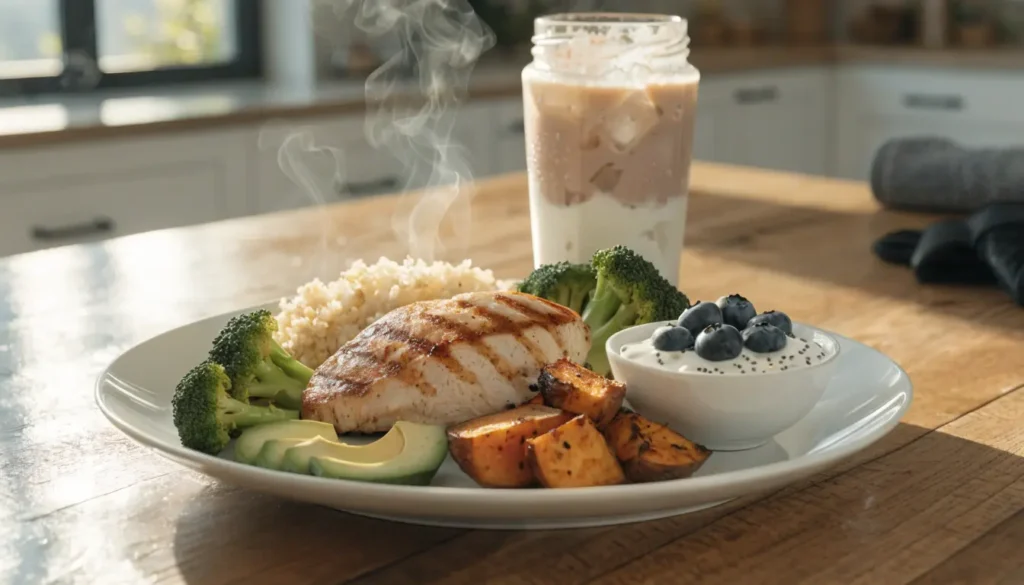
Cook one hundred fifty grams of lean ground turkey (ninety-three percent lean or higher) with your favorite seasonings. Pair it with one hundred grams of baked sweet potato. The sweet potato provides complex carbohydrates that replenish glycogen without causing a blood sugar crash later, while the turkey delivers substantial protein that actually feels like a real meal.
Grilled Chicken Over Massive Salad
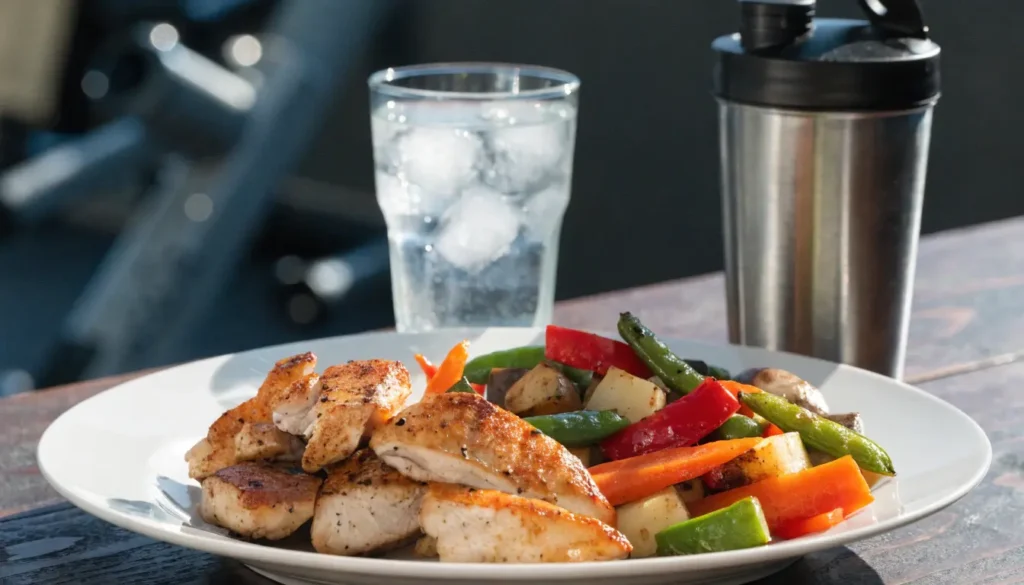
Take one hundred eighty grams of grilled chicken breast and slice it over a massive bowl of arugula or mixed greens. Add cucumber, cherry tomatoes, and maybe some bell peppers for crunch. Use a light vinaigrette where you measure the oil rather than guessing. The volume here is enormous—you’ll be physically full from the sheer amount of food—while the calories stay firmly in check.
Egg Whites and Oats
This combination sounds unusual if you haven’t tried it, but it works beautifully. Cook one cup of liquid egg whites in a non-stick pan until fluffy. Separately, prepare half a cup of rolled oats. You can eat them side by side, or you can get creative and mix the egg whites into the oats with some salt and hot sauce for a savory porridge situation. Either way, you’re looking at massive protein, steady-release carbs, and serious satiety.
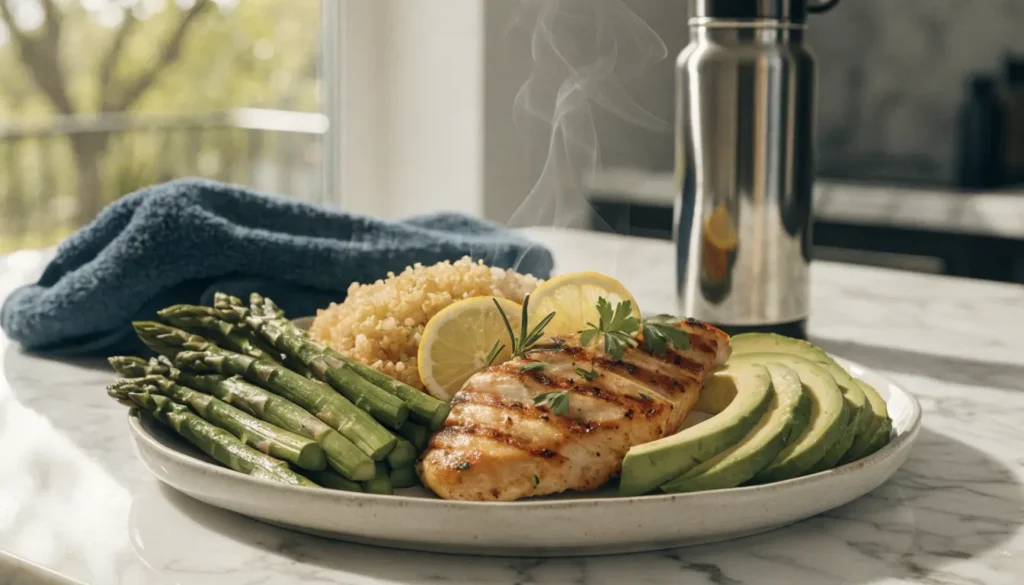
Salmon and Asparagus
Yes, salmon contains fat. But it’s the good kind—omega-3 fatty acids that support recovery and reduce inflammation. A four-ounce portion of wild salmon paired with roasted asparagus gives you high-quality protein, essential fats, and vegetables that fill you up without adding many calories. This works best if your post-workout meal isn’t your last meal of the day, since the fats digest more slowly.
Shredded Chicken Breast with Salsa
Take pre-cooked shredded chicken breast, warm it up, and top it generously with fresh salsa. The salsa adds flavor and volume for virtually no calories. Eat it on its own or wrap it in large lettuce leaves if you want that hand-held experience without the carbs from tortillas.
Lean Beef and Green Beans
One hundred fifty grams of lean sirloin or flank steak paired with steamed green beans. Beef provides creatine naturally, which supports strength maintenance during a cut, while green beans deliver fiber and volume. Season aggressively with garlic, pepper, and maybe some soy sauce or coconut aminos.
Protein Pancakes
Mix one scoop of protein powder with one whole egg and a small amount of water or unsweetened almond milk until you have a batter consistency. Cook like regular pancakes in a non-stick pan. Top with cinnamon and maybe a few berries. This feels like a cheat meal but fits perfectly within your cutting macros.
Timing Your Post-Workout Nutrition Strategically
The question of “when” often gets overcomplicated, but a few simple guidelines can help you optimize without driving yourself crazy.
If You Train Fasted
Training before eating anything means you’re starting with empty glycogen stores and low circulating amino acids. Your body is already in a slightly stressed state, and the workout adds to that stress. In this scenario, you want to eat sooner rather than later. Aim to consume your post workout meal for cutting within sixty to ninety minutes after finishing. Prioritize a combination of protein and fast-digesting carbs to stop muscle breakdown quickly and begin the recovery process.
If You Train Fed
When you’ve eaten a meal within three or four hours before training, you still have nutrients floating around. Your glycogen stores started the workout reasonably full, and amino acids from that pre-workout meal are still available. In this case, you have more flexibility. You can comfortably wait two to three hours post-workout before eating. Your meal can lean slightly heavier on protein and vegetables with fewer carbs, since you’re not trying to refuel from a completely empty tank.
The Bottom Line on Timing
Don’t let perfect become the enemy of good. If you’re stressed, busy, or dealing with life, eating within a few hours is absolutely fine. The research shows that total daily protein intake matters more than precise timing for most people. But when you’re cutting and every calorie counts, using the post-workout window strategically gives you a slight advantage that adds up over weeks and months.
Mistakes That Sabotage Your Cutting Progress
You can do everything right in the gym and still struggle to see results if you’re making these common errors around your post-workout nutrition.
The “I Earned This” Trap
This one hits close to home for me because I fell into it repeatedly for years. You finish a brutal workout, and your brain starts doing mental gymnastics. You burned five hundred calories, so surely you can eat back six hundred, right? That extra hundred is just a reward for working so hard.
The math doesn’t work that way. Most people overestimate calories burned during exercise by forty to fifty percent. That “hard” workout might have burned two hundred fifty to three hundred calories, not five hundred. Eating back what you think you burned usually results in a net calorie surplus, which is exactly the opposite of what you want during a cut.
Liquid Calories Sneaking In
You nail your post-workout meal. Grilled chicken, sweet potatoes, vegetables. Perfect. Then you wash it down with a sports drink, a glass of juice, or maybe a protein shake made with milk instead of water.
Those liquid calories add up frighteningly fast. A single sports drink can pack one hundred fifty to two hundred calories of pure sugar. That’s the equivalent of adding another entire food item to your meal without realizing it. Stick with water, black coffee, or unsweetened tea as your beverages, and save the liquid calories for situations where you actually need them—like during endurance training lasting over ninety minutes.
Completely Eliminating Carbohydrates
Some people hear “cutting” and immediately assume carbs are the enemy. They go zero-carb post-workout, thinking this will accelerate fat loss.
The opposite often happens. Without carbohydrates after training, you may feel flat and weak during subsequent workouts. Your performance drops, which means you lift less weight or do fewer reps. Less work output means fewer calories burned and less stimulus for muscle retention. Over time, this downward spiral leaves you smaller, softer, and more frustrated than if you’d simply included moderate carbs strategically.
Frequently Asked Questions About Post-Workout Nutrition During a Cut
Q: Can I just skip eating after my workout to save calories for later in the day?
Technically you can, but it’s risky business. When you skip post-workout nutrition during a calorie deficit, you increase the likelihood that your body will break down muscle tissue for energy. Muscle is metabolically expensive to maintain, and your body doesn’t care about your aesthetic goals—it cares about survival. A small, protein-focused option like a shake or some Greek yogurt costs maybe one hundred to one hundred fifty calories and provides massive protection against muscle loss. That small investment pays huge dividends in how you look and feel at the end of your cut.
Q: Is there any difference between how men and women should approach this?
The fundamental principles remain the same regardless of gender. Both men and women need protein for recovery and should keep fats low immediately post-workout. However, women often benefit from slightly higher overall dietary fat intake for hormonal health. That means if you’re a woman, you might want to shift some of your daily fat allocation to meals further away from your workout window rather than cutting fats across the board. Save the avocado or nuts for breakfast or dinner, and keep the post-workout window lean and clean.
Q: What if my workout happens at night? Will eating before bed make me store fat?
This myth refuses to die, despite ample evidence against it. Your body doesn’t have a magical cutoff time where it decides to store everything as fat. What matters is your total calorie intake over twenty-four to forty-eight hours, not the clock on the wall. If you train at nine PM, you absolutely should eat afterward. Going to bed with hungry muscles means you’ll spend the night breaking down tissue instead of repairing it. A light post-workout meal focused on protein and vegetables won’t make you fat—it will help you wake up less sore and more recovered.
Q: How do I handle post-workout nutrition if I’m doing cardio instead of weights?
Cardio creates less muscle damage than resistance training, so the urgency around protein intake decreases slightly. If you’re doing steady-state cardio for fat burning, your post-workout meal can be lighter—maybe just protein and vegetables without many carbs. If you’re doing high-intensity intervals that significantly deplete glycogen, treating it more like a resistance training workout makes sense. Listen to how your body feels. If you’re completely wiped out, you need more substantial nutrition. If you feel fine, a lighter approach works.
Putting It All Together
Here’s what this looks like in practice for a typical day during your cutting phase.
You train hard in the late afternoon. You’re depleted, sweaty, and hungry. You walk in the door and instead of heading straight for the pantry, you take five minutes to prepare a real meal. Maybe you throw together that lean ground turkey with sweet potato, or you quickly blend that whey isolate shake with spinach.
You sit down. You eat slowly. You actually taste the food and appreciate that you’re fueling your body intelligently rather than just feeding your cravings.
That meal does several things simultaneously. It stops the muscle breakdown that started during your workout. It replenishes just enough glycogen to support tomorrow’s training. It keeps you full and satisfied so you don’t raid the kitchen later tonight. And it does all of this while keeping you inside your calorie deficit, ensuring that the fat loss continues uninterrupted.
This is the difference between spinning your wheels for months and actually transforming your body. The people who succeed at cutting aren’t necessarily more disciplined or more motivated than you are. They’ve simply learned to work with their body instead of against it. They understand that the post-workout window isn’t a threat to their diet—it’s the most powerful tool in their arsenal.
You’ve got the blueprint now. You understand why protein matters, how carbs fit into the equation, and why keeping fats low immediately after training gives you an edge. You have practical meal options that fit real life, not just some fitness influencer’s perfectly staged kitchen. And you know which mistakes to avoid so you don’t undo all your hard work.
The only piece left is execution. The next time you finish a workout and that familiar hunger starts creeping in, you’ll know exactly what to do. You’ll stand in your kitchen, preparing a meal with purpose, knowing that every bite is moving you closer to the physique you’re working toward.
That’s a powerful feeling. Hold onto it.
Now I want to hear from you. Which of these post-workout meals are you most excited to try? Have you been making any of the common mistakes we covered? Drop a comment below and share your experience—your story might be exactly what someone else needs to hear today.