Picture this: You’ve just rolled out of bed, dragged yourself to the gym, and actually completed a workout. Not just any workout—your first real attempt at this fitness thing everyone keeps talking about. Your muscles feel like they’ve been put through a wringer. Your water bottle’s empty. And that triumphant feeling you expected? It’s buried somewhere under the realization that you have no idea what comes next.
Maybe you’re standing in your kitchen right now, staring into the fridge like it holds the secrets to the universe. Your arms are shaking. Your stomach’s growling. And somewhere in the back of your mind, a little voice whispers: “Was this a mistake? Am I really cut out for this?”
Here’s what nobody tells you when you start this journey: that moment of confusion isn’t weakness. It’s the most common experience among beginners. And the difference between someone who sticks with fitness and someone who quietly cancels their gym membership after three weeks often comes down to one simple thing—what happens in the hour after exercise.
When you understand what your body actually needs after physical effort, everything shifts. The soreness becomes manageable. The energy returns. And suddenly, going back tomorrow doesn’t feel like punishment. It feels like progress.
Why What You Eat After Exercise Shapes Your Entire Fitness Journey
Let’s get something straight right now: the work doesn’t end when your workout does. In fact, some would argue it’s just beginning. When you exercise—especially when your body isn’t accustomed to physical stress—you’re essentially creating small, controlled damage to muscle tissue. This sounds alarming, but it’s actually the entire point. Those microscopic tears need to repair themselves, and when they do, they rebuild stronger than before.
The Recovery Period Isn’t Optional
Your body operates on a simple principle after exertion: fix what got broken. But here’s the catch—it can’t fix anything without materials. Those materials come exclusively from what you consume.
Think of it this way: You wouldn’t expect a construction crew to build a house without lumber, nails, and concrete. Yet countless beginners expect their muscles to rebuild without protein, carbohydrates, and hydration. It doesn’t work that way. It never has.
- Muscle repair requires amino acids – These are the protein fragments that literally stitch your muscle fibers back together
- Energy stores need replenishing – Your body burned through glycogen during exercise; ignoring this leaves you drained for hours or even days
- Fluid balance affects everything – Even slight dehydration slows recovery and amplifies soreness
The Truth About That “Magic Window”
You’ve probably heard fitness enthusiasts mention the “anabolic window”—that supposedly brief period after exercise when your body desperately needs nutrients. Here’s what research actually shows: while there’s some truth to the concept, beginners don’t need to stress about eating within 17 minutes of finishing their last rep.
The post workout meal for beginners matters most when viewed through the lens of consistency rather than precision. Eating within two hours works perfectly fine. What matters more is actually doing it, day after day, until it becomes automatic.
According to research published in the Journal of the International Society of Sports Nutrition, the post-exercise nutritional window extends longer than previously believed, especially for those not training at elite levels. Your body remains receptive to nutrients for several hours.
Three Things Your Body Screams For After Exercise (Even If You Can’t Hear It)
When you finish exercising, your body initiates a complex series of processes designed to recover and strengthen. These processes demand specific resources:
- Protein – This provides the actual building blocks for muscle repair. Without adequate protein, recovery slows dramatically and soreness intensifies.
- Carbohydrates – These restore glycogen, which is essentially your body’s preferred fuel source. Skipping carbs after exercise often leads to that “hitting a wall” feeling later in the day.
- Fluids and electrolytes – Sweat removes water and essential minerals. Replacing them supports every single recovery process your body undertakes.
When Food Sounds Terrible (And You Need to Eat Anyway)
Here’s something that catches countless beginners off guard: intense physical activity can temporarily suppress appetite. You just worked hard. You should be hungry, right? Wrong. Your body diverts resources away from digestion immediately after exercise, which often creates that “I couldn’t possibly eat” sensation.
This is exactly when you need to eat anyway.
- Liquid nutrition becomes your best friend when solid food seems unappealing
- Smoothies, chocolate milk, and protein shakes slide down easily while delivering exactly what your body needs
- Waiting until hunger returns often means waiting too long, prolonging recovery and extending soreness
The Beginner’s Formula: No Math Required
Let’s simplify this to the point where it becomes almost laughably easy. Your post workout meal for beginners follows one consistent pattern:
Protein + Carbohydrates + Hydration = Effective Recovery
That’s the entire framework. No complicated ratios. No tracking apps required (though they can help if you enjoy that sort of thing). Just three components working together to support your body’s natural recovery processes.
Protein Amounts Made Simple
How much protein do you actually need? The fitness industry loves throwing around confusing numbers and personalized calculations. Let’s ignore all that.
- General recommendation: 20 to 30 grams of protein after exercise
- Visual reference: Roughly the size and thickness of your palm
- Practical approach: One standard protein shake or a typical serving of chicken, fish, or Greek yogurt
Your body can only process protein so quickly. Consuming more than this in a single sitting doesn’t provide additional benefits—it just gets processed and eliminated.
Carbohydrates Aren’t Your Enemy Here
Somewhere along the way, carbohydrates got labeled as the villain in nutrition stories. After exercise, this couldn’t be further from the truth. Those carbs you burned during your workout need replacement, and doing so supports faster recovery and better performance next time.
- Why carbs matter now: They replenish muscle glycogen, which directly impacts your energy levels for the next 24 to 48 hours
- Simple guideline: Aim for roughly double the volume of carbs compared to protein
- Timing consideration: This is actually when simpler carbohydrates (white rice, potatoes, fruit) work well because they digest quickly
The Academy of Nutrition and Dietetics confirms that carbohydrate intake after exercise significantly improves glycogen restoration, particularly when combined with protein.
Ten Beginner-Friendly Meal Ideas That Require Almost No Effort
Let’s be honest—after exercising, your motivation for elaborate food preparation hovers somewhere near zero. These options respect that reality while still delivering what your body needs.
When You Have Five Minutes or Less
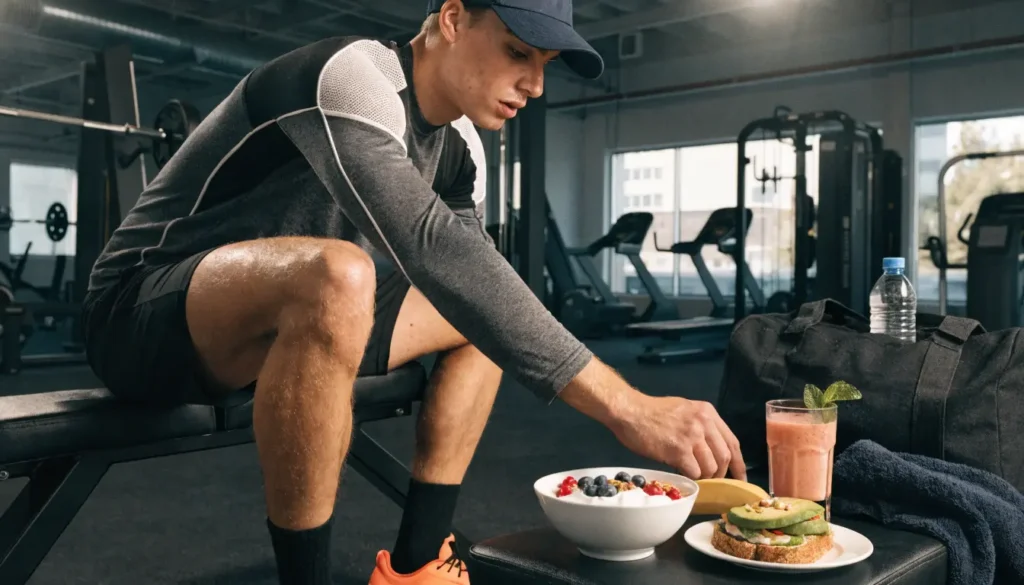
- Greek yogurt with berries and a sprinkle of granola – The yogurt delivers protein, berries provide carbs and antioxidants, granola adds texture. Choose plain yogurt to avoid excessive added sugar.
- Chocolate milk – This isn’t just nostalgia in a glass. Commercial chocolate milk contains an almost perfect 3:1 carbohydrate-to-protein ratio, backed by sports nutrition research. It’s affordable, available everywhere, and requires zero preparation.
- Apple with peanut butter – The apple offers quick-digesting carbohydrates while peanut butter contributes protein and healthy fats. Choose natural peanut butter without added sugar or hydrogenated oils.
- Protein shake blended with a banana – When solid food seems unappealing, this combination slides down easily while covering both protein and carbohydrate needs. Use water or milk as your base depending on preference.
- Cottage cheese with pineapple chunks – Cottage cheese provides slow-digesting casein protein while pineapple delivers carbohydrates and digestive enzymes that may reduce inflammation.
When You Can Operate a Microwave
- Microwaved sweet potato topped with canned black beans – Pierce the sweet potato several times, microwave for 5-7 minutes, top with rinsed black beans and salsa. Complete protein from the beans pairs with complex carbs from the potato.
- Instant oatmeal mixed with protein powder and berries – Prepare oatmeal according to package directions, stir in a scoop of protein powder while hot, top with frozen or fresh berries. The powder dissolves easily and transforms plain oatmeal into a recovery meal.
- Pre-boiled eggs with whole grain toast – Keep a batch of hard-boiled eggs in your refrigerator at all times. Two eggs plus a slice of toast takes exactly 47 seconds to assemble and covers your nutritional bases.
When You Actually Enjoy Cooking
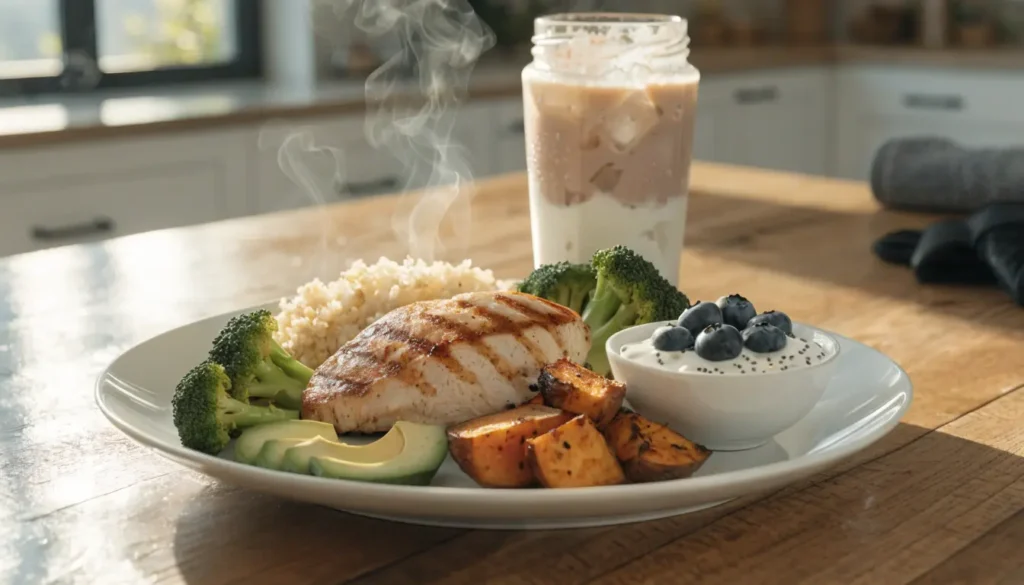
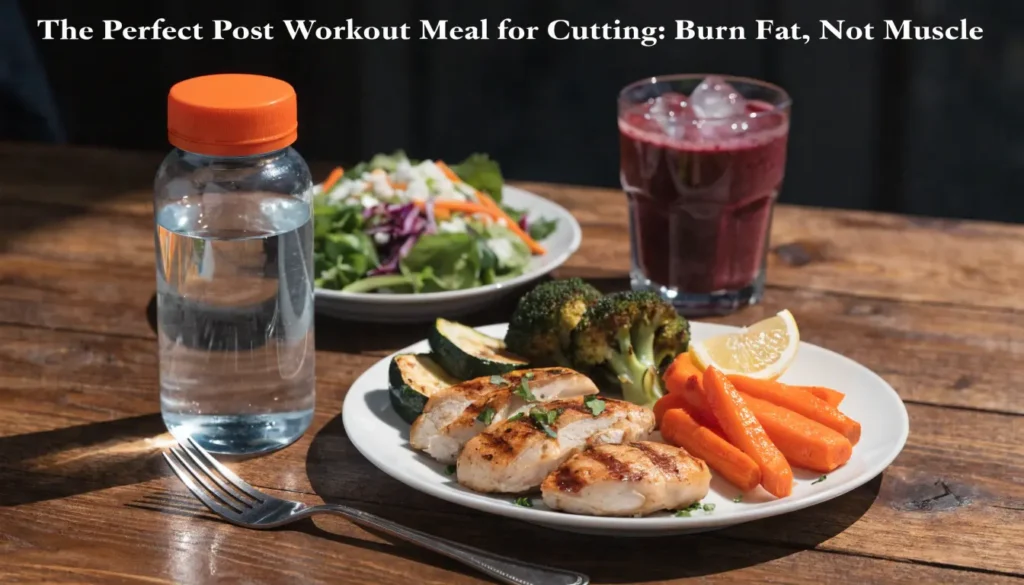
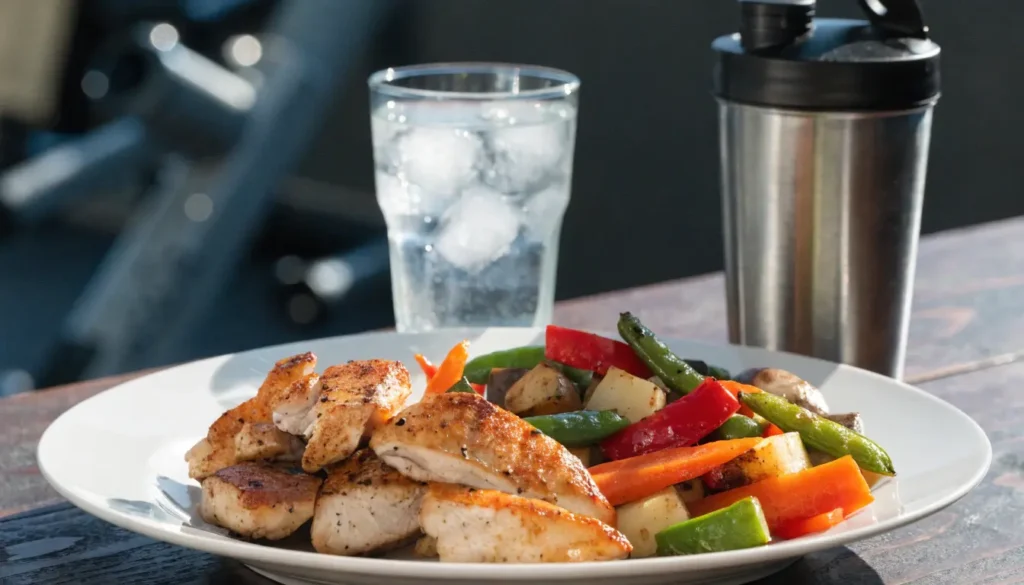
- Grilled chicken with rice and roasted vegetables – The classic combination exists for good reason. Chicken provides lean protein, rice delivers carbohydrates, vegetables contribute micronutrients and fiber. Batch cook this on Sundays for week-long convenience.
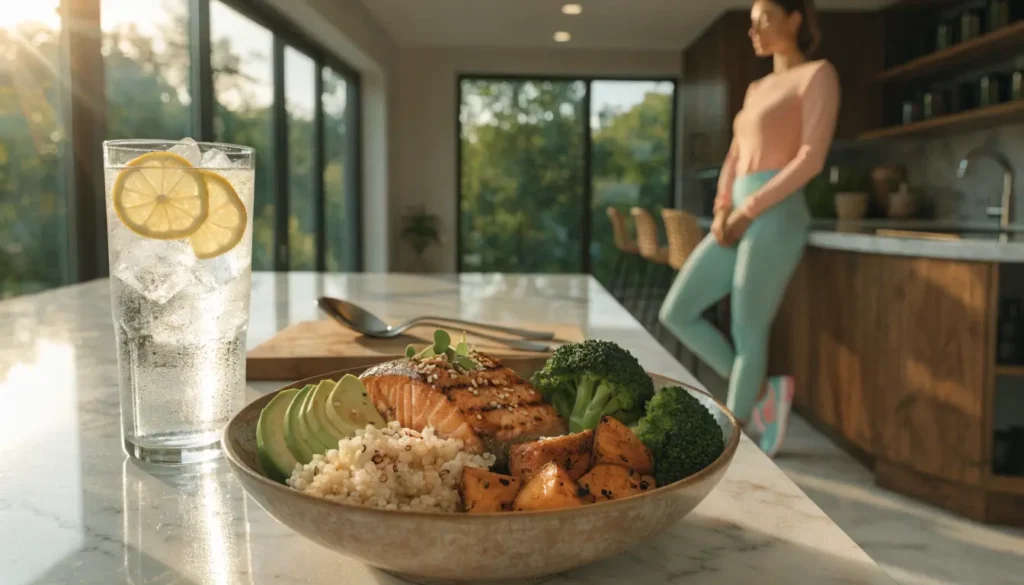
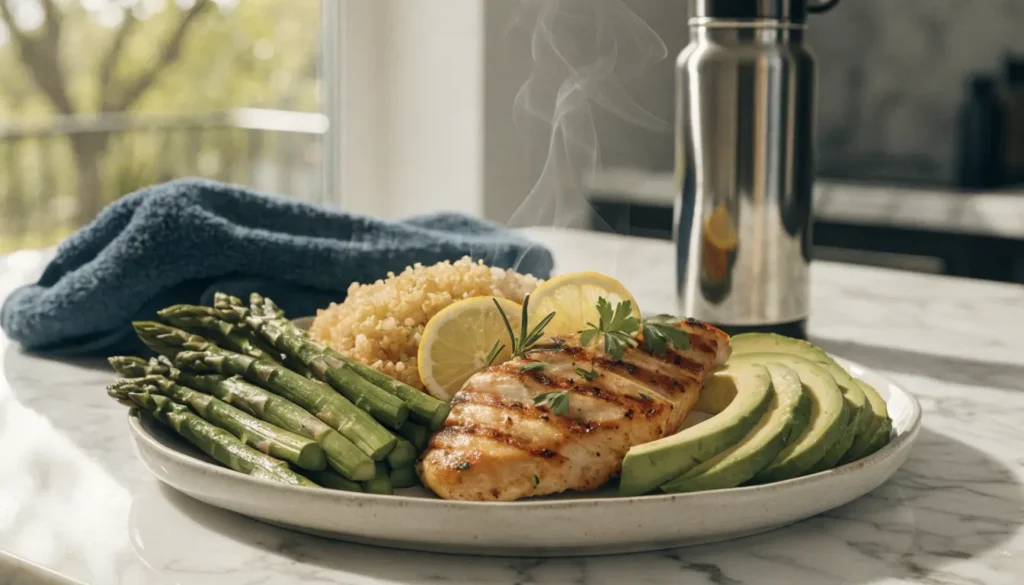
- Salmon with quinoa and steamed broccoli – Salmon offers protein plus anti-inflammatory omega-3 fatty acids. Quinoa provides complete protein and complex carbohydrates. Broccoli adds vitamins, minerals, and fiber. This combination supports recovery while tasting genuinely enjoyable.
Portion Guidelines That Prevent Overeating
Just because you exercised doesn’t mean unlimited eating applies. Your post workout meal for beginners should satisfy without overwhelming.
- Protein portion: About the size of your palm (not including fingers)
- Carb portion: Roughly what fits in two cupped hands
- Vegetables: Fill the rest of your plate without worrying about limits
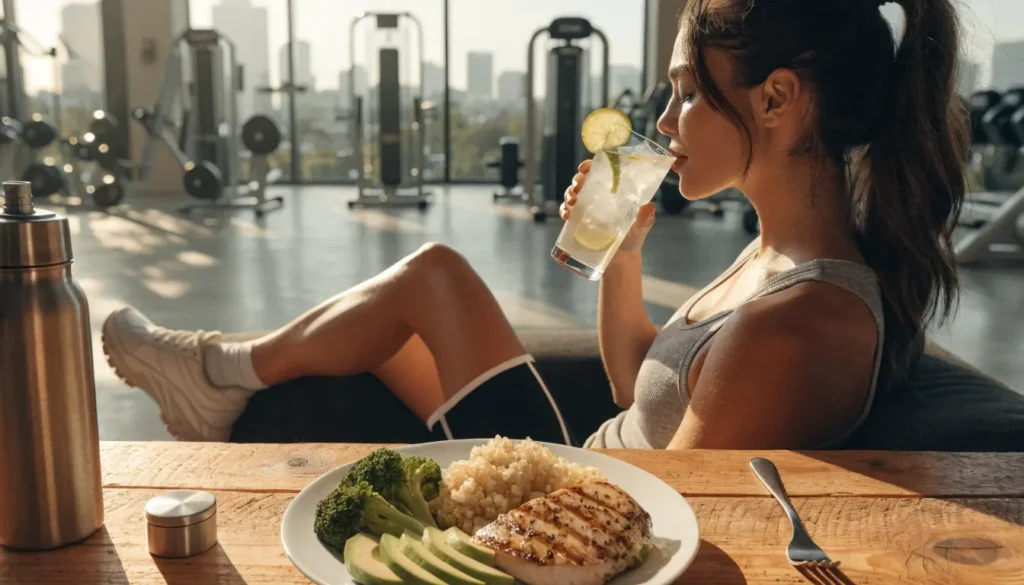
- Liquid: Drink 16 to 24 ounces of water alongside your meal
Common Beginner Mistakes That Delay Progress
Everyone makes these errors at some point. Recognizing them now saves weeks or months of frustration later.
The “I Earned This” Mindset Trap
You burned approximately 200 to 400 calories during your beginner workout. That post-exercise muffin or specialty coffee drink often contains 500 to 700 calories. The math creates a surplus rather than a deficit, yet the psychological reward feeling overrides logic.
The fix: Shift your mindset from “reward” to “refuel.” You’re not treating yourself for showing up—you’re preparing yourself to show up again tomorrow.
Protein-Only Tunnel Vision
Some beginners hear “protein builds muscle” and conclude that’s all they need. But without carbohydrates alongside that protein, your body doesn’t utilize the amino acids as effectively for repair and recovery.
The fix: Always pair protein with carbohydrates. If you drink a protein shake, add a piece of fruit. If you eat chicken, include rice or potatoes. The combination matters as much as the components.
The Perfectionism Paralysis
“If I can’t prepare an ideal meal right now, I’ll just skip eating until I can make something perfect.”
This thinking pattern destroys consistency. Something always beats nothing, even if that something comes from a vending machine or gas station.
The fix: Give yourself permission to eat imperfectly. A protein bar, a carton of milk, a peanut butter sandwich—these all move you forward more than waiting for perfection that never arrives.
Dehydration Disregard
Water supports literally every biological process involved in recovery. Even mild dehydration—the kind where you don’t feel particularly thirsty—slows muscle repair, prolongs soreness, and reduces next-day energy.
The fix: Drink water consistently throughout the day, not just when thirsty. Add electrolyte powders or tablets if your workouts produce significant sweating.
Building a Sustainable Routine That Actually Lasts
Consistency beats perfection every single time. Here’s how to make your post workout meal for beginners an automatic habit rather than a daily decision.
Preparation Eliminates Decision Fatigue
- Pack your post-workout fuel alongside your gym bag the night before exercise. Remove all barriers between finishing exercise and eating well.
- Keep emergency options everywhere – desk drawer, car console, gym locker. When you forget to prepare (and you will), these backups prevent complete failure.
- Prep ingredients, not elaborate meals – Cook a batch of chicken breasts, wash fresh fruit, portion nuts into small containers. Assembly always beats cooking when you’re exhausted.
Learning Your Body’s Signals
Beginners frequently misinterpret physical sensations after exercise:
- “I’m not hungry” often means “my appetite is temporarily suppressed, but my body still needs nutrients”
- “I’m too tired to eat” often means “I need food to address this fatigue”
- “Nothing sounds good” often means “I haven’t prepared options that appeal to me right now”
Simple Tracking Reveals Patterns
For two to three weeks, jot down minimal notes about:
- What you ate after each workout
- How you felt the next morning (energy level, soreness intensity)
- How your subsequent workout felt
Patterns emerge quickly. You’ll notice which meals correlate with better recovery and which leave you dragging. This personal data matters more than generic advice from strangers online.
Frequently Asked Questions About Post Workout Meals for Beginners
What if I exercise first thing in the morning on an empty stomach?
Morning exercisers face unique considerations. You’ve gone 8-12 hours without food, depleting liver glycogen and creating a state where your post workout meal for beginners becomes even more critical. Eat within 30-60 minutes of finishing. A banana with peanut butter, a smoothie, or chocolate milk works perfectly. Don’t let the early hour convince you that skipping food makes sense—your body needs fuel regardless of the clock.
Can I just drink a protein shake and consider it done?
You can, and it’s better than skipping entirely. But you’ll recover more effectively if you add carbohydrates to that shake. Toss in a banana, blend with fruit, or simply eat a piece of fruit alongside your shake. That combination accelerates glycogen restoration and supports more complete recovery.
Will eating after evening workouts cause weight gain?
This myth refuses to die despite overwhelming evidence against it. Your body doesn’t magically store more food as fat based on clock time. If you finish exercising at 8 PM, eating at 9 PM supports recovery and improves sleep quality. Going to bed hungry disrupts rest and impairs next-day recovery. Keep portions reasonable—no need for a massive meal at midnight—but don’t fear evening eating.
How soon after exercise should I eat?
Aim for within two hours. Earlier offers slight advantages, but consistency matters more than precision. If life prevents eating immediately, don’t stress. Eat when you reasonably can and focus on making that meal align with the protein-plus-carbs formula.
I follow a vegetarian or vegan diet. Can I still get enough protein?
Absolutely. Plant-based options that work well include:
- Tofu or tempeh – Fermented soy options that digest easily and provide complete protein
- Lentils and beans – Combine with rice or quinoa for complete amino acid profiles
- Edamame – Whole soybeans that deliver protein plus fiber and micronutrients
- Plant-based protein powders – Pea, rice, and hemp blends offer convenience
- Greek yogurt (if vegetarian) or soy yogurt (if vegan) – Fermented options support gut health alongside protein intake
- Quinoa – Technically a seed that functions as a grain, providing complete protein naturally
What’s the absolute easiest option for someone who genuinely hates cooking?
Chocolate milk. This isn’t a joke or oversimplification. Chocolate milk contains the carbohydrate-to-protein ratio that sports nutritionists recommend, requires absolutely no preparation beyond opening the container, and actually tastes good enough that you’ll look forward to it. Add a banana if you want to level up. Keep shelf-stable options in your car, desk, and gym bag so you’re never caught without something.
Your Journey Starts With One Meal
Remember that moment at the beginning—standing in your kitchen, shaking, confused, wondering if this fitness journey was a mistake you’d regret? That version of you didn’t know what you know now. Didn’t understand that recovery isn’t optional. Didn’t realize that food after exercise serves a purpose beyond simple hunger.
Your post workout meal for beginners doesn’t need to impress anyone. Doesn’t need to photograph well for social media. Doesn’t need to follow some influencer’s complicated recipe. It just needs to exist. Protein plus carbohydrates plus hydration, consistently applied, day after day.
Some days that means grilled salmon with quinoa and roasted vegetables. Other days it means a protein bar eaten in the car between obligations. Both count. Both move you forward. Both represent you showing up for yourself in a way that most people never manage.
Start with one meal after your next workout. Just one. Pay attention to how you feel tomorrow. Notice the difference in your energy, your muscle soreness, your motivation to exercise again. That single meal represents the beginning of understanding what your body actually needs—and giving it to yourself without guilt, without confusion, without overthinking.
You showed up for your workout. That took courage. Now show up for your recovery. That takes wisdom. And you’ve already proven you possess both.